
Week in Weed – June 3, 2023

Week in Weed – June 3, 2023

With the annual Lift Expo kicking off this week, the cannabis industry’s summer season is officially in full swing. At StratCann, we covered a few different subjects— the matter of fees in BC’s Direct Delivery program (‘too high!’ say some), rising sales figures coupled with falling workforce numbers, as well as an academic study showing that consumers are quality conscious, but remain stubbornly focused on THC when making purchasing decisions. Oh, and another recall of a CBD product containing melatonin. 

Elsewhere, it was a week filled mainly with corporate updates and maneuvers from Canada’s big producers. 


The headline news item of the week might be Canopy Growth purchasing a 20 percent stake in London, ON’s Indiva, in a deal that sees Canopy take over marketing and distribution of Wana Gummies, one of Indiva’s most successful products. (They have been manufacturing and distributing Wana Gummies since 2020.)

The head of the Ontario Cannabis Store, David Lobo, lamented the “race to the bottom” in terms of cannabis prices, suggesting in a Canadian Press report that it was threatening the entire industry. “Once you condition consumers to certain prices, it may take a generation to change perceptions and price tolerances,” Lobo said in a speech on the first day of the Lift Expo.  

Health Canada shared information on how licensed producers can work with the regulator’s 12-month plan to come back into compliance with regulatory fees

Speaking of Health Canada, Eric Costen—currently Senior Assistant Deputy Minister, Industry Sector, Innovation, Science and Economic Development Canada (ISED)—was appointed as Associate Deputy Minister of Health, effective June 26, 2023. Costen had previously been leading work at ISED to address industry issues

The federal health authority also rejected the request by the Victoria Cannabis Buyers Club (VCBC) for an exemption from the Cannabis Act. The club, operating since 1996, submitted their application to Health Canada in 2021. The VCBC argued that they needed the exemption to meet the needs of it’s clientele.

The price of Shoppers Drug Mart’s cannabis assets, which were purchased a couple of months back by Avicanna, has been publicized: $2.6 million, plus some revenue-based payouts for the next two years. The two companies also announced that the deal is set to close next month, at which point the existing Shoppers platform will be transitioned to Avicanna’s new sales platform. 

Canadian firm Cronos is pulling out of the U.S. CBD market, hoping to streamline its cost structure and “improve cash flow.” Like some of their competitors, Cronos has been sniffing around the US CBD and hemp markets mainly as a way to position themselves for hoped-for regulatory changes that haven’t materialized down south. Cronos CEO Mike Gorenstein said they still believe that the U.S. has the potential to be a major cannabis market—but progress has been slow. 

Organigram announced that it was investing $8 million in a Portland, Oregon-based genetics company called Phylos, in a bid to develop and bring to market more THCV products here in Canada (including a vape cart that they plan to launch this summer). “We know consumers are using cannabis products for a variety of purposes, which is why genetics with high concentrations of novel cannabinoids like THCV are of particular interest,” says Beena Goldenberg, Chief Executive Officer of Organigram. 

BZAM announced its Q1 financial results this week, recording record quarterly revenues of $35 million, up 41 percent over last year. Still, their EBITDA for the quarter was negative, coming in at a $3.9-million loss. 

Retail chain Fire & Flower is “reviewing strategic options” as the company struggles with cash flow. In a press release this week, the company said it had started working with a financial advisor to determine a way to raise more money, stating that the company “will require additional financing and is actively pursuing financing options” moving forward—all in all, not a great forecast for one of the first retail chains in Canada. 

And finally, some new research is suggesting an explanation for why stoners (sorry—“habitual cannabis users”) are statistically leaner than the general population, despite their proclivity for what researchers describe as “hedonic high-calorie eating—the ‘munchies.’” Researchers from UC Irvine studied mice and found that “adolescent exposure to THC may promote an enduring “pseudo-lean” state that superficially resembles healthy leanness but might in fact be rooted in adipose organ dysfunction.” (My advice? Berries and grapes make for the best summer munchies snack.) 


The SMART™ Evolution: A One-Two Knock Out Punch

The SMART™ Evolution: A One-Two Knock Out Punch

www.natureofhealing.org

The SMART™ Evolution:

A One-Two Knock Out Punch

By

What if the two party system is merely two sides of the same dirty coin?

What if the appearance of disagreement, called “gridlock” or “partisan politics,” is a ruse for working together in unison for a greater cause?

The SMART™ Evolution!

Part of the SMART™ Evolution means inviting a Cyber Being called Alexa into your family home to call your children to dinner so you don’t have to. It means having your energy consumption tracked by SMART™ meters™, SMART™ TVs, and SMART™ phones.  Traveling in the SMART™ Evolution means spending between $70,000 and 150,000 on an electric pickup truck that travels only 400 miles before needing to be recharged. It means living in Stack-n-Pack SMART™ cities that limit you to a “sustainable” space. It means trusting SMART™ politicians to know what you want when it comes to your health.

On the political surface, it may appear that a two party system is forever in conflict. One party favors the mRNA technology, aka, “the jab,” while the other side favors 5G telecommunications. But, what if both sides agree on the bigger picture?

As part of a ruse, both parties agreed to blame China as the reason for the deployment (military word) of both mRNA technology, and 5G technology. In this SMART™ Evolution, China is the scapegoat, the one to blame for everything; the one that brings the two sides together.

But what if the SMART™ Evolution has nothing to do with China? What if it is the DUMBEST Ruse of the century, meant to knock you out?

The Jib Jab

The mRNA jib jabs are here to stay. They are the first in a long line of jib jab technologies coming down the pharmaceutical pipeline.  Many researchers now distinguish mRNA “injections” as gene therapy, not vaccines. Whereas vaccines are intended to increase immunogenicity, mRNA therapies lower immunogenicity. [Read more how designer nanobots are changing humanity].

This nanotech therapy is known to contain nanobots. Nanobots are smaller-than-small robots that self-assemble in the body.  Nanobot metal technology acquires magnetic properties and is extremely toxic as it relies on electromagnetic radiation it absorbs. [The 2008 futuristic movie, Stargate: The Ark of Truth shows similar self-assembly technology called Replicators. In the future, they know how to disassemble them].

Once injected into a body, nanobots have an affinity for the central nervous system and electrical organs, such as the heart, endocrine system, and reproductive organs, such as the ovaries. Consequences of graphene hydroxide include fainting, arrhythmias, or syncope, infertility, endocrine disruption, and sudden death. To understand why boosters will be recommended to keep the graphene oxide in the body, watch this explanation.

The mRNA injections contain graphene. The toxicity of graphene (G) is dependent on the electromagnetic radiation it absorbs.

According to  2016 research, Graphene shows excellent electrical conductivity, high thermal conductivity, impermeability to liquids and gas, strong mechanical strength, and good biocompatibility.  Members of this group are graphene oxide (GO), reduced GO (rGO), and multilayered GO, widely used as the backbone in nanotechnology for countless applications in many fields.

Graphene can perform nanoscale (less than 35 nanometers) maneuvers to generate innovative structures complexed with biological molecules. Graphene can enter neurons to generate an artificial neural network that gradually replaces the natural neural network, and thus can also cross the blood brain barrier, for A.I. applications.

imageAndrew Martin from Pixabay” width=”300″ height=”225″>

5G Warning

Over the last decade, U.S. Telecom services have expanded to C-Band or Midband 5G.

The new, faster level of 5G connectivity will significantly augment Verizon’s “5G Ultra Wideband” network, which, until now, has relied solely on extremely-fast-but-very-hard-to-find millimeter wave spectrum.

In 2015, an international appeal of scientists wrote about its dangers. While US government websites such as the CDC and EPA would lead you to believe that this radiation is safe, over 240 scientists and doctors from 41 nations, who have published research in the field, had appealed to the United Nations calling for urgent action to reduce wireless exposures. They wrote the FCC for a moratorium on the roll-out of 5G citing the serious risks that to human health and the environment. The concerned scientists received no response.

Note: Millimeter waves are currently used by the U.S. Army as a crowd control dispersal weaponry called Active Denial Systems.

The G-Jab-5G Right Hook
imageBenoît DE HAAS from Pixabay” width=”249″ height=”300″>

The governmental systems have put together the Jab and 5G to create the G-Jab-5G Strategy in a very effective knock-out punch for a global government to exert more control over large populations, including the ability to reduce populations.

On June 29, 2019, China’s Vaccines Administration Law was promulgated. Soon after, 2 billion doses of mRNA vaccine were deployed in China, enough for 1 billion people, or 76 percent of China’s 1.4 billion population.

Later, in November 2019, China launched the largest 5G network, under the concept of “connectivity and faster downloads.” Reports followed of people suddenly “dropping dead in the street,” whether true or not. By March 31, 2020, China’s national vaccine tracking system was launched.

By mid-December 2020, 2 billion doses of COVID vaccine were deployed in the U.S. The CDC claims 210 million of 310 million people are “fully vaccinated.” Two years later, on January 19, 2022, the 5G network was switched on.

By now, it is widely known that 5G towers utilize frequencies that affect all life at the level of DNA. These are microwave, radio wave frequencies that range from 3 kilohertz (kHz) up to 300 gigahertz (GHz). Within this range is the range is the absorption spectrum of oxygen molecules, at 60 GHz.

imageMontavius Howard from Pixabay” width=”341″ height=”192″>

Since 2008, 5G research scientists have shown that the coiled portion of the sweat duct in the upper skin layer is regarded as a helical antenna in the sub-THz band. In 2018, the authors write:

While the promises of a glorious future, resplendent with semi-infinite data streaming, may be attractive, there is a price to pay for such luxury. We shall find our cities, workspace and homes awash with 5 G base stations and we shall live though an unprecedented EM smog. The benefits to our society of becoming so wired.

Helical is also a word used to describe DNA, in skin cells or any cell. DNA is more than a series of four base pairs (CGAT). DNA is a transmitter, a receiver, and a translator of information. There is a deep relationship between DNA, water, and your health. Water molecules surround the structure of your DNA, through hydrogen bonds, making it highly responsive to stimuli, such as light frequencies.

The authors warned:

One must consider the implications of human immersion in the electromagnetic noise, caused by devices working at the very same frequencies as those, to which the sweat duct (as a helical antenna) is most attuned. We are raising a warning flag against the unrestricted use of sub-THz technologies for communication, before the possible consequences for public health are explored.

One-Two Knock-Out Punch

An Editorial published in the July 2020 J Biol Regul Homeost Agents, suggests that 5G waves are a critical factor to sudden deaths attributed to an influenza-like condition dubbed COVID. Read that article in full (that has been retracted), here: 5G Technology and Induction of Coronavirus in Skin Cells:

In this research, we show that 5G millimeter waves could be absorbed by dermatologic cells acting like antennas, transferred to other cells and play the main role in producing Coronaviruses in biological cells. 

The shapes of these waves are similar to shapes of hexagonal and pentagonal bases of their DNA source. …. To produce these viruses within a cell, it is necessary that the wavelength of external waves be shorter than the size of the cell. Thus 5G millimeter waves could be good candidates for applying in constructing virus-like structures such as Coronaviruses (COVID-19) within cells.

After the jib jab was rolled out in the U.S. by December 2021, doctors presented strong evidence of its destructive effects on the immune system, at the Doctors for COVID Ethics Symposium.  In short, mRNA directs the DNA to express unnatural proteins, proteins it was never meant to express. The Doctors for COVID Ethics (DCE) write:

Image by Daniel Roberts from Pixabay

A natural infection with coronavirus will, in most individuals, remain localized to the respiratory tract. In contrast, the vaccines cause cells deep inside our body to express the viral spike protein, which they were never meant to do by nature. Any cell which expresses this foreign antigen will come under attack by the immune system, which will involve both IgG antibodies and cytotoxic T-lymphocytes.

These results support a November 2021 study in Abstract 10712: Mrna COVID Vaccines Dramatically Increase Endothelial Inflammatory Markers and ACS Risk as Measured by the PULS Cardiac Test: a Warning.

Population Decline

Since 2022, many sources suggest that the world is in the throws of a population decline, due to a fertility slump.  The CDC shows that by August of 2022, 58% of “coronavirus” deaths had been vaccinated. Numbers of vaccine-related deaths continue to rise.

We’re currently headed towards a population decline. And that’s everywhere in the world. The environment is going to be fine, the environment is going to be fine even if we doubled the size of the humans. – Elon Musk, 2022
All life is made up of water. Humans are 99.9% water on a molecular level. What happens when the structure of water is altered by incoherent frequencies before entering the human body, and then again once inside the body? What happens to the human soul if the “temple” is damaged?

What happens to DNA when changed by mRNA through nanobots? Do you wonder why governments have not vetted 5G technology/ sub-THz band frequencies for safety and health as it relates to water?

The symptoms of sub-THz band frequencies appears similar to “COVID” symptoms and includes: lack of oxygen, seizures, and a phlegm-less cough. While the 5G frequency network has been launched in every continent without verifying safety, millions of people have consented to experimental mRNA injections that utilize “gene therapy” technology.

The Centre for A.I. Safety warned that artificial intelligence (A.I.) could lead to the extinction of humans in this Statement of A.I. Risk.  Is it too late to heed their warning? The last two years of a global reset began with a Simulation Tabletop Exercise Event 201. What is next?

Another Simulation and Event?

Real Solutions

With contradictory media messages that serve to confuse, know who you are.

Under your Earth suit, you are first and foremost a part of Nature, a Being of light frequency, not artificial intelligence. Understand that artificial frequencies introduced into the environment scramble and alter your natural frequency. Your health is at stake.

Return to Nature. Opt out of the Pandemic Ruse that would eliminate choice.

Eliminate all WI-fi devices, or hard wire them to reduce artificial frequencies. If you have a SMART™ meter on your house or apartment, block its waves using a SMART™ Meter Guard or Block, or opt out.

Eat clean, organic foods to keep your immune system at peak performance. Drink clean, filtered water. Use herbs that promote a strong immune system. Research the use of the mineraloid, Shungite, as protection carried on your body. Make sure you cleanse Shungite regularly. All of these tools work to help to maintain a strong natural frequency.

Stop listening to media talking heads. Shut off the Tel-A-Vision, which emits a low frequency of programming. Scrutinize leaders who offer no real solutions, but only fear based sound bites. Raise your own frequency by spending time in Nature, and by meditating to keep you from believing the propaganda.  The goal is not money. The goal is to spend your days as you wish.

Understand that you are your own healer in this life journey called the self-healing journey.  Part of the journey is to see through fear-based illusions. Once you find your center, ground yourself in knowledge, then act on that knowledge. You can duck the jabs and right hooks that are directed at you. Know who you are and you can avoid the one-two knock-out punches, as they are sure to come again.

420 with CNW — Nevada Lawmakers Urge Congress to Approve Federal Marijuana Legalization Law

420 with CNW — Nevada Lawmakers Urge Congress to Approve Federal Marijuana Legalization Law

image

Last week, senators in Nevada passed a measure that called for Congress to legalize cannabis at the federal level. The approved measure states that marijuana has many medical uses that have been well documented, yet it is still classified as a Schedule I substance.

Under the Controlled Substances Act, marijuana is classified in the same category as drugs such as heroin, LSD, peyote, ecstasy and methaqualone. Drugs under this schedule are said to have a high potential for abuse and no accepted medical use.

The legislation also highlights that voters in Nevada have approved measures at the ballot to legalize recreational and medical cannabis, adding that in 2022, a district court in the state ruled that the designation by the Board of Pharmacy categorizing marijuana as a Schedule I drug was unconstitutional. It also notes that marijuana’s federal classification makes it difficult for patients to obtain medical insurance coverage for marijuana prescriptions, in addition to them not receiving coverage under health savings accounts.

In addition, the measure also explores financial barriers that cannabis businesses encounter under current prohibition, specifically the lack of access to banking services. This has forced many legal businesses to operate on cash solely, making these businesses crime targets. The resolution also requires that the chief clerk of the Assembly prepare and circulate a copy of this bill to every member of the Nevada Congressional Delegation, the Speaker of the House of Representatives and the presiding officer of the United States Senate, as well as the Vice President of the U.S.

Senators in Delaware approved a similar measure earlier this year, which also asked the federal government to stop cannabis prohibition.

During this session, legislators in Nevada have discussed other measures on drug policy, including a measure that would increase the possession limit of marijuana and eliminate barriers to employment in the cannabis industry.

The State Athletic Commission also held a vote to advance a proposed amendment to Gov. Joe Lombardo, which would protect athletes from penalization over the possession or use of legal cannabis. In 2021, this body voted to stop the penalization of professional fighters who tested positive for cannabis. However, the policy is yet to be integrated into the code. This recent amendment would alter that. The Nevada State Athletic Commission regulates unarmed combat sports within the state.

In other news, law enforcement regulators in the state also introduced a proposal to revise Nevada’s employment policy. If approved, previous conviction over the possession of cannabis for amounts that have been legalized would no longer be used to disqualify police recruits.

If the federal laws on marijuana are repealed, there will be a massive market created for various companies that service the cannabis industry, such as Advanced Container Technologies Inc. (OTC: ACTX), as well as companies that directly deal in marijuana or its products.

NOTE TO INVESTORS: The latest news and updates relating to Advanced Container Technologies Inc. (OTC: ACTX) are available in the company’s newsroom at https://cnw.fm/ACTX

About CNW420

CNW420 spotlights the latest developments in the rapidly evolving cannabis industry through the release of two informative articles each business day. Our concise, informative content serves as a gateway for investors interested in the legalized cannabis sector and provides updates on how regulatory developments may impact financial markets. Articles are released each business day at 4:20 a.m. and 4:20 p.m. Eastern – our tribute to the time synonymous with cannabis culture. If marijuana and the burgeoning industry surrounding it are on your radar, CNW420 is for you! Check back daily to stay up-to-date on the latest milestones in the fast -changing world of cannabis.

To receive instant SMS alerts, text CANNABIS to 21000 (U.S. Mobile Phones Only)

For more information please visit https://www.CNW420.com

Please see full terms of use and disclaimers on the CannabisNewsWire website applicable to all content provided by CNW420, wherever published or re-published: http://CNW.fm/Disclaimer

Do you have questions or are you interested in working with CNW420? Ask our Editor

CannabisNewsWire420
Denver, Colorado
http://www.CNW420.com
303.498.7722 Office
Editor@CannabisNewsWire.com

CNW420 is part of the InvestorBrandNetwork.

EU Parliament Unveils Working Group to Advance Medical Psychedelics

Psychedelics just may be what the mental health field needed to finally develop safe, effective and long-lasting treatments for patients with mental disorders. After decades of criminalization, territories around the world are loosening their psychedelic policies and making it possible for scientists to study the potential medical applications of these substances.

Most of this early research has delivered extremely promising results with researchers from around the world finding that several psychedelics can treat disorders such as post-traumatic stress disorder, treatment-resistant depression, anxiety and eating disorders. Lawmakers are now working to expand psychedelic policies and give researchers more room to study psychedelics with minimal financial and regulatory barriers.

Last week, the EU parliament announced the launch of a new entity that would be focused on advancing the nascent field of medical psychedelics in the EU. The announcement was made by the Psychedelic Access and Research European Alliance (PAREA) after members of the European Parliament met in France during the Mental Health Week in Europe. Tadeusz Hawrot, the founder of PAREA, attended the launch of the group. He said that its “ultimate goal” is to revolutionize mental health care on the continent.

According to the psychedelic organization, the World Economic Forum’s Global Risk Report has pointed out deteriorating mental health as an extreme risk to modern societies and economies. Data from the World Health Organization (WHO) shows that more than 150 million people in the EU are afflicted with at least one mental health condition. Furthermore, only one in three people in the region who have depression are currently receiving the treatment they need to manage the condition.

On a global scale, a whopping 970 million people are grappling with either mental illness or drug abuse and around 8 million lose their lives each year to mental disorders. The world is desperately in need of alternative mental health treatments that are safe to use and can offer relief over the long term.

Portugal MEP Sata Cerdas said at last week’s meeting in France that bringing MEPs from across the political spectrum together would help the EU develop “sound policies and regulations” that would significantly increase access to “affordable and safe novel psychedelic-assisted treatments” in the European Union.

The Action Group will be in charge of advancing research into psychedelic-based treatments and medicines as well as promoting drug policies that rely on scientific evidence and human rights.

It would also be responsible for systematically removing the barriers that make psychedelic research too costly or inaccessible to interested researchers and providing guidance to the European Parliament.

The EU is looking to play catch up to jurisdictions that have allowed the likes of Delic Holdings Corp. (CSE: DELC) (OTCQB: DELCF) to conduct research and commercialize psychedelics treatments. Only time will tell to what extent they succeed.

NOTE TO INVESTORS: The latest news and updates relating to Delic Holdings Corp. (CSE: DELC) (OTCQB: DELCF) are available in the company’s newsroom at https://ibn.fm/DELCF

About PsychedelicNewsWire

PsychedelicNewsWire (PNW) is a specialized content distribution company that (1) aggregates and distributes news and information on the latest developments in all aspects and advances of psychedelics and their use, (2) creates PsychedelicNewsBreaks designed to quickly update investors on important industry news, (3) leverages a team of expert editors to enhance press releases for maximum impact, (4) assists companies with the management and optimization of social media across a range of platforms, and (5) delivers unparalleled corporate communication solutions. PNW stays abreast of the latest information and has established a reputation as the go to source for coverage of psychedelics, therapeutics and emerging market opportunities. Our team of seasoned journalists has a proven track record of helping both public and private companies gain traction with a wide audience of investors, consumers, media outlets and the general public by leveraging our expansive dissemination network of more than 5,000 key syndication outlets. PNW is committed to delivering improved visibility and brand recognition to companies operating in the emerging markets of psychedelics.

To receive instant SMS alerts, text “Groovy” to 844-397-5787 (U.S. Mobile Phones Only)

For more information please visit https://www.psychedelicnewswire.com

Please see full terms of use and disclaimers on the PsychedelicNewsWire website applicable to all content provided by PNW, wherever published or re-published: https://www.psychedelicnewswire.com/Disclaimer

Do you have questions or are you interested in working with PNW? Ask our Editor

PsychedelicNewsWire (PNW)
San Francisco, California
www.psychedelicnewswire.com
415.949.5050 Office
Editor@PsychedelicWire.com

PsychedelicNewsWire is part of the InvestorBrandNetwork.

Why Rastafari smoke marijuana for sacramental reasons and the faith’s other beliefs

Members of the Rastafari religion and political movement have for decades been persecuted and imprisoned for their ritualistic use of marijuana. But the tiny islands of Antigua and Barbuda recently became one of the first Caribbean nations to grant Rastafari official sacramental authorization to grow and smoke the herb that they deem sacred.

Antigua and Barbuda Prime Minister Gaston Browne told The Associated Press in an interview that his government took this step to try to end the persecution and bring respect to the Rastafari faith.

Rastafari elsewhere are pushing for similar religious protections. Experts and stakeholders think the Antigua and Barbuda law could give a boost to these efforts worldwide at a time when public opinion and policy are continuing to shift in favor of medical and recreational marijuana use.

Here is a quick look at the faith’s beliefs and history:

Advertisement

Origins

The Rastafari faith is rooted in 1930s Jamaica, growing as a response by Black people to white colonial oppression. The beliefs are a melding of Old Testament teachings and a desire to return to Africa. Its message was spread across the world in the 1970s by Jamaican music icons Bob Marley and Peter Tosh — two of the faith’s most famous exponents.

A Rastafari’s personal relationship with “Jah,” or God, is considered central to the faith.

Sacramental marijuana

Rastafari followers believe the use of marijuana is directed in biblical passages and that the “holy herb” induces a meditative state and brings them closer to the divine. The faithful smoke it as a sacrament in chalice pipes or cigarettes called “spliffs,” add it to plant-based organic stews and place it in fires as a burnt offering.

But adherents, many of them Black, have endured both racial and religious profiling due to their ritualistic use of cannabis.

Ganja

“Ganja,” as marijuana is known in the Caribbean, has a long history in Jamaica, and its arrival predates the Rastafari faith. Indentured servants from India brought the cannabis plant to the island in the 19th century, and it gained popularity as a medicinal herb.

Haile Selassie

Most of its many sects worship the late Ethiopian Emperor Haile Selassie. This is rooted in Jamaican Black nationalist leader Marcus Garvey’s 1920s prediction that a “Black king shall be crowned” in Africa, ushering in a “day of deliverance.” When an Ethiopian prince named Ras Tafari, who took the name Haile Selassie I, became emperor in 1930, the descendants of slaves in Jamaica took it as proof that Garvey’s prophecy was being fulfilled. When Haile Selassie visited Jamaica in 1966, he was greeted by adoring crowds, and some Rastafari insisted miracles and other mystical occurrences took place during his visit to the island.

Cannabis price ‘race to the bottom’ hurts market’s future: OCS CEO

By Tara Deschamps

Toronto — The head of Ontario’s cannabis distributor says the “race to the bottom” happening with pot prices risks hurting the market’s future.

“Once you condition consumers to certain prices, it may take a generation to change perceptions and price tolerances,” David Lobo, Ontario Cannabis Store president and chief executive, said in a speech at the Lift cannabis conference in Toronto on Thursday.

“In an economy where inflation has impacted every other consumer good, we can’t keep pushing lower.”

Advertisement

His remarks come as the cannabis boom that materialized in 2018, when the substance was regulated and money poured into the sector, has since dissipated. Pot companies are taking multimillion-dollar writedowns, laying off staff and rethinking their product mixes as the industry gets a better sense of consumer demand and regulatory hurdles.

All the while, the illicit market, where weed is much cheaper and sellers operate outside restrictions imposed on the legal market, has remained mighty. The OCS estimated in Ontario alone, the illicit market still made up 43 per cent of the province’s cannabis market last March, down from June 2020, when it held onto 75 per cent.

Many believe the illicit market has a far greater share of pot sales than governments and their pot distributors capture in such statistics because there is still a stigma around cannabis, so users may not admit weed use when surveyed.

To stay competitive, cannabis producers have been dropping prices. Statistics Canada said a gram of legal cannabis cost $10.29 on average in 2019, whereas the OCS had some dried flower products selling for under $4 this week.

The price compression has meant prices can also be much lower in Canada than in the U.S., said David Schewede, chief executive of Heritage Cannabis, which is behind the Rad and Purefarma brands.

“In Missouri, we sell the same (product) for $70 U.S. that we sell here for $31 Canadian,” he said, in a session after Lobo’s speech.

“It’s the same product, same terpene, same supplier, same manufacturer, same secondary package and label supplier. There’s a lot more money being made down there.”

However, Schewede cautioned that lower prices don’t always amount to more sales. His company has released products “that were so cheap that I don’t even know if we were making money,” but they wound up being an “absolute stinker” because shoppers were looking for more than a low price.

Lobo maintains the OCS is doing its part in fighting the race to the bottom with a plan to lower its margins this fall, which he estimates could hand $60 million to licensed pot producers next year.

However, the OCS, which distributes cannabis from producers to stores, will not require pot companies to pass along savings from the margin to drop to consumers by lowering their prices.

Canopy Growth Corp., one of Canada’s largest pot producers, has said it will hold its prices.

The Smiths Falls, Ont. cannabis company behind the Tweed, Ace Valley and 7Acres brands is not budging on its pricing because the pot market is already “highly competitive,” chief executive David Klein told The Canadian Press in February.

Lobo also used his speech to remind the industry that conditions have shifted since legalization, when investors were highly optimistic about the industry and a sales rush was expected.

“We are no longer in the early days of legalization anymore. That dank new car smell of legal cannabis has worn off,” he said.

“The attention of the country has shifted to other topics like COVID, geopolitical tensions, inflation and now emerging platform shifts like green technologies and artificial intelligence.”

Despite cannabis being a substance with a lengthy history and being almost five years past legalization, Lobo feels the industry still doesn’t know how it would fare in some crisis times.

“We don’t yet know how fragile consumer trust and social license with Canadians truly is,” he said.

“What happens if we have a major recall resulting from adverse product reactions, negatively impacting the health of many Canadians?”

The integrity of the industry could be impacted by a “lapse in judgment” from a few people, he warned.

“How large of an impact can a few unfortunate events have on the moral high ground we have in positioning legal cannabis as a better alternative to illegal?

“The types of events I’m speaking of are not something I believe anyone in this industry wants to see occur and they are difficult to forecast … but the marketplace needs to be watched carefully.”

SURVIVING THE PATHOCALYPSE

SURVIVING THE PATHOCALYPSE

michaeltsarion.com

SURVIVING THE PATHOCALYPSE

From recorded observations, we do know that sociopaths, by various names, have existed in all kinds of societies, worldwide and throughout history – Martha Stout

Robert Hare, Harvey Checkley, Martha Stout, and other psychiatrists, tell us that one in twenty-five people are sociopathic personality types. Other experts think this is a low estimate. They are right.

This is because we’re talking about full-blown sociopaths. What about the person who is 75 percept sociopathic? What about the man or woman who is 50 percent deranged, or 15 percent? Add them all together and we’re way beyond a demographic of one in twenty-five.

Add to these the common-or-garden varieties of neurotic. Add the full-blown and/or borderline multiple-personalities, narcissists, obsessives, sado-masochists, paranoics, bipolars, schizophrenics and psychotics, etc. What’s left?

Strange is it not that most of us haven’t a clue what it means to be pathological? Most people can’t tell the difference between a neurotic and a psychotic.

there are more sociopaths among us than people who suffer from the much-publicized disorder of anorexia, four times as many sociopaths as schizophrenics, and one hundred times as many sociopaths as people diagnosed with a known scourge such as colon cancer – Martha Stout

In my work on female psychology, I make mention of four other neurotic types: Schizoids, Depressives, Compulsives and Hysterics – the four riders of the pathocalypse.

A person can embody more than one of these pathologies, and every one of them is the Frankensteinean product of schizogenic domestic and social environments.

A hysteric can also be schizoid, while a depressive can embody compulsive traits. It’s not uncommon to find depressives with hysterical traits, and many compulsives are also somewhat schizoid.

Alarmingly, these odd combinations are also found in relationships. A depressive may find themselves attracted to a compulsive or even a hysteric, and vice versa. The reasons for this become clear once we know what distinguishes each of the four types.

Basically, the schizoid type is characteristically wooden, cynical, apprehensive and withdrawn. They are armored and incapable of emoting. Showing their feelings is considered a sign of weakness. Consequently, the schizoid develops an impenetrable shield against others who cannot reach them. This attitude and behavior does not stop them functioning efficiently in society. Indeed, the schizoid type works well in offices and corporations. He doesn’t let emotion get in the way of his “performance.” He actually becomes prideful about his professionalism and doesn’t like working with people who are relaxed, spontaneous, sloppy and expressive.

Many psychotherapists have pointed out that more and more patients exhibit schizoid features and the “typical” kind of psychic problem in our day is not hysteria, as it was in Freud’s time, but the schizoid type that is to say, the problem of persons who are detached, unrelated, lacking in affect, tending towards depersonalization, and covering up their problems by means of intellectualizations and technical formulations…There is also plenty of evidence that the sense of isolation, the alienation of one’s self from the world is suffered not only by people in pathological conditions, but by countless “normal” persons as well in our day – Rollo May

The compulsive type is similar in kind to the stiff schizoid. They may even get along quite well together. The compulsive is an obsessive type whose relations with external objects is controlling. He obsesses about the height of the grass in his garden. He obsesses about the wrinkles in the sheets, blankets and curtains, about the disorganized jars and cans in the cupboard and dining-table arrangement. He never drives over the speed-limit, and is always super-concerned with his appearance. Like the schizoid, he usually makes an exceptional employee. He prefers being in a superior position, and usually makes an obnoxious boss or headmaster. He’s attracted to jobs allowing him to regiment others. We find him working for the police, army or state. Disorder unnerves this type enormously. Even though everything is clean, neat and precise in their lives, there’s no love involved. Nothing owned is cherished for its own sake. If they have relationships of an intimate kind it is always with people who are submissive, dependent and weak.

When studying pathological types, we must at all times remember what Wilhelm Reich taught. For Reich, Lowen and Janov the Freudian superego is not strictly “in the head.” In fact it makes greater sense to equate it with the structure of the body, particularly with the musculature. In bioenergetic terms, compulsives and schizoids are highly “armored,” insensitive and frigid. In each of the four cases, and with neuroses in general, the person’s subconscious desire is to avoid legitimate suffering.

The depressive is superficially a feeling-type and comes across as far more “human” than the previous two. They do not appear withdrawn and indifferent, and certainly do not focus on orderliness. They are, however, ridden with anxiety and are no lovers of independence and individuality. They often have difficulty taking control of their lives, experiencing bouts of deep doubt and insecurity. Their way out of anxiety is to depend almost entirely on other people. They are clingy and addicted to pleasing everyone. Although this trait actually makes them repulsive, they never twig it, and carry on servicing others for as long as they can. This does not mean that those on the receiving end deserve their attention. It’s not the important thing for the depressive. Their wish to “live through others,” is all that matters, not the other person’s actual needs or morality.

Those “entitled” types infesting society today get to be the loathsome creatures they are because of depressive mothers and fathers who worked to make them feel privileged and special. We see that the depressive is, therefore, a rather dangerous type. Their presence and influence prevents people taking personal responsibility and providing for themselves. The so-called “Welfare State” is due to the mindset of depressive personality types. The other three neurotic types are not naturally inclined to make life easy for others. Indeed, compulsives and schizoids get a great kick out of the suffering of others. They are often sado-masochists.

The hysteric is usually also gregarious and outgoing. They are the most friendly and carefree type of the four. One does not feel judged in their company, and they are generally a pleasure to be with, at least for a time. Eventually one sees their pathological side. They do not dwell on the past, and are ever on the go. Their need is for constant change and distraction, which the world provides in plenty. Regardless of what befalls the hysteric, there’s always tomorrow, and always something new and exciting around the corner. This is true even for relationships. The hysteric enters and exits relationships frequently. Each one is captivating, but only for a short period. A hysteric will not maintain a serious relationship for more than six to nine months. As they tire of an involvement, they will accuse the partner of being boring, unspontaneous, critical and controlling. Off they dart without a qualm. Like amoral adolescents they flaunt obligations and promises. They are the busiest and most extrovert of the types. By thirty they’re exhausted with pleasuring themselves. It’s downhill from there.

The hysteric and schizoid are often attracted to joining mass movements. They gravitate toward the Crowd. For the hysteric the Thugocracy is a source of ever-changing sensations, while for the schizoid it works to disguise their congenital fear of intimacy. He can say to himself …I’m in love with the cause and my comrades in arms…I’m a thorough-going humanitarian fighting poverty and injustice…

Hysterics and schizoids have another thing in common. Being the two most unproductive and uncreative types, they are motivated to appear other than they are. Joining the Crowd allows them to engage in an anxiety-lessening  charade. Since they already wear a mask, it’s not difficult for them to don another. It’s actually easy for both types. Since self-deception is at the root of their neurosis, they must at all costs convince themselves that they are among the most creative and productive people alive.

Schizoids and hysterics are often plagiarizers who scavenge and reproduce the ideas and creations of others. Our world of endless cheap and banal reproductions wouldn’t exist without their insidious industry. Genuine fakes are made by genuine fakes.

My task is to free man from man – Ayn Rand

The four pathological types are what they are primarily because of anxiety. We choose one of the types to shield ourselves against suffering and anxiety. Whatever we suffer at the hands of toxic parents inevitably sends us down a pathological path. Reality is sacrificed in the name of self-protection and escapism. The schizoid type becomes frozen and indifferent against experience. The compulsive compensates for feelings of inadequacy and weakness by robotic controlling behavior. Objects around him are taken in hand and forced into place. People in his life are also dominated and “organized” in a similar way.

The depressive escapes from anxiety into the lives of other people. All feeling is directed toward the needs of others that are not genuinely loved for their own sake. This device allows the depressive to forget about themselves and ignore their own feelings and needs. Their love for others is, therefore, insincere and shallow.

The hysteric escapes feelings of anxiety by perpetual extroversion. Life is just one big party. The world is full of tantalizing distractions and sensations. There’s so much to do, so many places to go, there’s no time for stillness and contemplation. The hysteric is a social butterfly, always hip to what’s happening and turned on by the next big thing. They join the Crowd in their flight from themselves, that is from Selfhood. There’s no time for that, says the hysteric to themselves …we’ve got to think of the minorities, single mothers and victims of inequality.

While hysterics and schizoids prefer political causes and mass movements, the average depressive personality type uses intimate relationships as their bolthole. They take their domestic and social duties toward friends and family to the extreme. They become obsessive fixers and planners, and are the most “selfless” of the four neurotic types. They often make their partners and friends embarassed and uncomfortable because of their over-attentive behavior. Others soon deduce that the depressive’s care and concern is born from a total lack of self-interest and self-care. There are times when a depressive finds themselves attracted to a hysteric.  In these cases the depressive’s hope is that their buoyant, extroverted partner will “take them out of themselves.” It usually works well enough for a time, although it often ends badly. They’re bound to finally exhaust each others tolerance.

Since the Thugocracy is chock full of other hysterics and schizoids, the deranged ideas in one’s mind get amplified. It’s a good feeling and very addictive. What we know as “Socialism,” is attractive to pathological types convinced they’re changing the world for the better. Any sane person can see it’s far from the case. The pathological type brings ruin to everything they touch and everyone they contact.

Fortunately, we are now in an age when we can, if we so desire, to get a handle on pathological people – these constitutional moral inferiors. We can learn to pick them out and thereby protect ourselves from their baneful influence.

However, we must remember that we each embody one or more of the four traits. No one on earth is free from it. There are compulsive, schizoid, depressive and hysteric aspects to each and every personality, and everyone seeks in irrational ways to escape suffering and anxiety. After a little study, each of us can learn to discern pathological tendencies within ourselves. It helps to do the same with others.

THE SCHIZOID
My childhood needs were not met, so I ceased feeling altogether. I’m strong and superior because I never reveal my needs and desires to anyone. I abjure intimacy and harden myself against the false love of others.THE DEPRESSIVE
My needy, infantile parents couldn’t take care of themselves. I ended up looking after them, and was valued and praised for doing so. I carry on servicing others whether they deserve it or not and by doing so I forget about my own needs and desires.THE COMPULSIVE
I was hurt when young. My caregivers were sloppy, disorganized and frazzled. Everything else was prioritized and I was neglected. I felt unwanted, unnoticed and useless. Therefore, I make sure everything is properly sorted and arranged in a precise manner. Life needs to be organized and controlled. There can be no spontaneity, mutability, dirt and disarray. Inanimate objects submit to my will, and I feel good when everything is neat, clean and in perefect order. I Iove the smell of napalm in the morning.THE HYSTERIC
My parents were self-absorbed hypocrites who treated me as a toy to play with. I learned to be sunny, playful and extroverted. It gets me the attention I crave. It helps me avoid looking deeply into myself. Being on display and admired by others is what it’s all about. One must live for experience and fortunately the world provides endless distraction. I never need confront my inner rage and pain. Let the good times roll.
Hey doc, if it weren’t for reality, I’d be just fine – Scott Peck (citing a patient’s complaint)

Sanity is hard won. It requires discerning the neurotic or pathological traits within us, and fathoming why they exist. This in turn may mean breaking the fifth commandment, and not automatically forgiving abusive mothers and fathers whose demagoguery (or Adultism) made us what we are.

Anxiety is a basal mood and state. It need not have an obvious external cause. Most of one’s life is spent suppressing and evading it. The four neurotic types mentioned here come about as attempts to alleviate anxiety. Observing society today confirms that the preferred method of escape is via compulsive and schizoid patterns of behavior. These types are found in plenty as one ascends the corporate ladder. In everyday life we are more likely to encounter depressives and hysterics. The average masochist irrationally escapes anxiety by being hurt (punished for supposed badness), whereas sadists escape anxiety by inflicting pain on others, thinking to themselves that as long as I see others suffering, I must be okay. In general, psychotics punish others, while neurotics punish themselves
intrinsic weakness and helplessness toward a world perceived as potentially hostile and dangerous – Karen Horney (on neurosis)

As the ancient Vedic sages said, Self-realization is necessary before God-realization. In other words, one must gently analyse themselves and identify those traits born from one’s evasion of legitimate feeling. We must confront and defy any and all cop-outs, beliefs or paradigms preventing us from committing to this “holy work.” Only the man who heroically faces his own psychology and typology is in a position to change the world for the better. He does not need the assistance of others, and as a hygienic, sovereign being, he joins no crowds.


. . .

Michael Tsarion (2022)

image

Renewal & Integration in a Time of Decline & Conformity

Renewal & Integration in a Time of Decline & Conformity

Renewal & Integration in a Time of

Decline & Conformity

We should be cautious of prophecies that claim we are on a path of infinite political progress or infinite economic growth – or, conversely, headed toward civilisational collapse.

Things are more complicated, and opportunities remain for creating interesting new cultural movements and for personal transcendence and integration (though perhaps not for those who are determined to conform to some outdated societal mould).

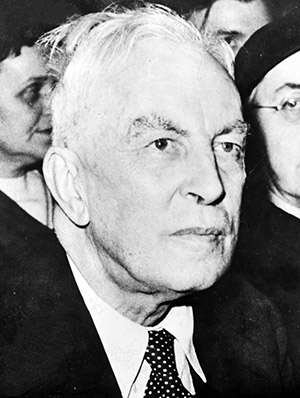
Oswald Spengler (1880-1936) 

A century ago, the German intellectual Oswald Spengler (1880-1936) argued that civilisations are organic and, like plants, they take root, blossom, whither, and die. According to Spengler, the West is now in its dying phase. His thesis was countered by another German thinker, Jean Gebser (1905-1973), who argued that human consciousness evolved through the emergence of new stages. The previous stages remained part of the psyche but were superseded. These stages (the archaic, magic, mythical, and mental) were characterised by new developments in language, art, and even perception (e.g., the development of perspective in art).

Jean Gebser (1905-1973)

Perhaps more important was the thesis of British historian Arnold Toynbee (who was influenced by Spengler). While Spengler preferred “culture” to its more developed and complicated phase – civilisation – Toynbee believed that the former type of society preserved itself by worshipping the dead and sticking, unquestioningly, to the rules that the ancestors had laid down. But a civilisation, Toynbee argued, constantly renews itself through the actions of a “creative minority” – a small group of individuals who think differently and create new culture. (One such creative minority was the Beatniks of the 1950s, who attempted to live authentically, creatively, and spiritually in the context of a West in decline, introducing many Americans to Eastern religion, alternative spirituality, and psychedelics.)

Arnold Toynbee (1889–1975)

Spengler’s thesis can be detected in the warnings of feminist social critic and author Camille Paglia. She suggested a few years ago that America may well be in a stage of decline and cited the transgender movement as proof, suggesting that transgenderism gains popularity in the “late phases of culture, as a civilisation is starting to unravel,” e.g., the late Roman Empire, the Weimar Republic, and so on.1 The people of such societies, says Paglia, think of themselves as very sophisticated, but yet, out on the margins of society, or just beyond the borders of the state, those – from the Hun to ISIS – “convinced of the power of heroic masculinity” are gathering, waiting to strike.

Camille Paglia

Paglia is not the first to contrast the militant jihadist with young, effeminate Western men and modern Western culture that “no longer believes in itself.” Nor is she the only one worrying about the emergence of hyper-masculine men, though she is unusual, as a feminist and progressive of sorts, for her criticism of the latest political fads. The target of the more “sophisticated” members of our societies tend to be those representing traditional culture, pro-masculinity groups, or groups advocating physical and mental strength. But Paglia is an actual thinker, of course, and not merely another establishment apologist posing as one.

Disintegration

Who are the barbarians? When we look at television and movies today, we see that men are not infrequently portrayed as clueless, weak, ignorant, stupid, cowardly, or thuggish. Heroes are dead. And we do not need strength and courage. Of course, this angers a lot of men – especially in the “men’s rights” movement – and some are convinced that it’s a Hollywood conspiracy to deracinate masculinity. But, let’s be honest, if these images of men caught on, it is because that was the experience that so many people had of men.

I have spoken to men across the United States, and the vast majority told me their father gave them no real attention or guidance growing up or that he was a workaholic, an alcoholic, a “yes man,” a womaniser, a bully, or worse. If they received guidance on how to behave, it usually came from their mother or their first real girlfriend. Unsurprisingly, many young men feel resentment toward older men in power and are suspicious of “masculinity” (a term they equate with working too much, bullying, watching sport, hitting on women, and talking nonsense).

Beyond which team to support and which political party to cheer for, the stock advice from fathers to their male children is often little more than “get good grades and get a good job” – or at least some kind of job – or “don’t do what I do; do what I say.” This doesn’t really grab most young men as a satisfactory plan for life. A lot of pain in men goes unnoticed.

I mentioned the portrayal of men and women on television. In one op-ed a few years ago, the ‘90s sitcom Friends was blamed for the downfall of Western civilisation.2 For the op-ed writer, Ross was the show’s hero – or, at least, he should have been. He was an intellectual (or at least intelligent). But he was boring in comparison to the rest of the Friends gang. As such, society was given the message that intelligence is bad. He got the girl he deserved, the writer tells us: “Rachel, the one who shops.”

Apparently, not all Rosses are boring. While the writer assures us that there is now a “resistance” forming, made up of “new Rosses” – people of “grit” who are “hiding” in art museums, chess clubs, and so on – Rosses aren’t going to save civilisation from the nightmare Paglia imagines – its collapse and takeover by new barbarians. In real life, Rachel (by which I mean the actress Jennifer Aniston) married (and then divorced) Brad Pitt.

We don’t need to pick through Aniston’s off-screen love life and its ups and downs to know that the dithering and undynamic Ross wouldn’t have got a look-in with Rachel. And, frankly, why should he? He wanted a woman that was, physically, well out of his league. He could have gone across the hall and asked Joey for some pointers on working out and then set to work improving himself physically – but he didn’t. And, unlike most people, he didn’t want to, or couldn’t, adapt his conversation to his friends, either.

Ross (and the Friends gang as a whole) reflects the West’s compartmentalisation of people into types: the intellectual (the intellect), the jock (the body), the artistic dropout (the soul), the Democrat, the Republican, the independent, the non-binary, the genderqueer, the two-spirit, and so on, and so on. (Effectively, Friends is a comedic Planet of the Apes without the ape costumes or post-apocalyptic NYC backdrop.) And while compartmentalisation may have helped us create civilisation, it is now contributing to its disintegration.

Revolt Against The Shrinking Brain

Rosses may represent a clumsy resistance to the dumbing down of society. Some of those becoming transgender may, as Paglia suggests, be the sort of people who would have become Beatniks or Hippies in decades past and might be rebelling against the very limited, clichéd 1950s-type notions of gender (pushed in some online “masculinity” and politically conservative circles). Men’s rights groups may be an angry resistance to men not being taken very seriously on a range of issues (e.g., divorce and child custody). And as Paglia suggests, culture may be “starting to unravel” into different types, none of them whole in themselves. But opportunities remain.

As Paglia notes, that opportunity is open to those who would destroy us and take our liberty away. But that is not the final word. Opportunities are open, too, to the creative, adaptable, and integrated. (The integrated are entirely opposite to the mass of compartmentalised individuals: Rosses, Joeys, and Rachels, etc.)

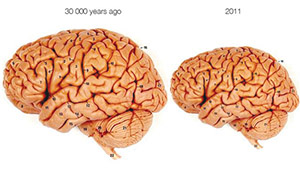
The human brain 30,000 years ago and today.

The human (genus Homo) brain quadrupled in size over six million years but, strangely, appears to have decreased in size since the last Ice Age. Diet and environmental factors are blamed. A more recent hypothesis suggests that human brain shrinkage occurred in response to the expansion of our societies and the need for greater compartmentalisation of tasks to sustain and develop those societies (i.e., civilisations).

Jeremy M. DeSilva et al. note that “brain differentiation can occur in association with division of labor in the absence of striking changes in body size, illustrating how selection may have operated in humans as social groups increased in size.”3

Formed into large and increasingly complex organisations, human beings needed specialists, not generalists. It needed some people to focus on medicine and others to focus on engineering, some to focus on creating art and others to focus on fighting wars, and so on, effectively distributing functions throughout the community. DeSilva says, “multiple brains contribute to the emergence of collective intelligence.”

The collective brain is most visible in the realm of politics. The ideas of a particular movement are thought up by a handful of individuals at most (these original thinkers are usually dead before their ideas catch on). The average voter and political fanatic (the compartmentalised individual) merely receives these ideas and passes them along, acting as a node in a network. He believes them to be “true” because, unaware of their history, the ideas appear to have emerged out of nowhere, suddenly to be accepted by everyone (every other node) around him. Nevertheless, the more the compartmentalised individual is convinced he arrived at his own conclusions, the more likely he will parrot the latest political mantra, spreading the message to other nodes. And tied into his self-image and survival as a node in a network – if the information is challenged or shown to be false, his response is usually anger, outrage, and ad hominem accusations. In authoritarian societies, detractors are prosecuted and either imprisoned or executed. Typically, though, such societies fail.

Let’s consider Western civilisation as a brain (or an organism). The current obsession with “diversity and inclusion” can be regarded not as an expression of a moral conviction (as it is presented) but as a survival mechanism: i.e., as an attempt to expand the network so that new nodes can pass along new information about possible threats from outside as well as new opportunities. Racial, sexual, gender and religious diversity within the workforce is often presented as a way for companies to gain an advantage over competition (which seems amoral at best). And notably, although the registration of patents (probably the most concrete marker of innovation in any society) has gone up in the United States over the last few decades, half of these were registered by foreign-born inventors.4 Everyone’s favourite entrepreneur, Elon Musk – founder of Tesla, SpaceX, and Paypal – immigrated from South Africa, first to Canada and then to the US.

Renewal & Reintegration

The integrated individual – capable of thinking, creating, and problem-solving – might be a throw-back to a time before civilisation, but that individual is essential to its survival and renewal. He, or she, is one of Toynbee’s creative minority. Even in more ordinary lines of work, in a fast-changing society, developing different skills and interests will be an advantage and might be essential to remaining relevant to the economy. “Holding a solid grasp of many concepts or decent proficiency in multiple skills,” says Forbes, “can allow for flexibility, in a life and career.”5

But there are things more essential to life and the human spirit than commerce, of course, though it may be crucial both to the individual and their society. The Renaissance saw a renewed interest in ancient Greek and Roman thought and classical learning, as well as new developments in the arts (such as perspective in painting) and sciences. And epitomised by Leonardo DaVinci (artist and inventor) and, perhaps, more so, by Leon Battista Alberti (architect, mathematician, scientist, painter, poet, expert horseman, and a man keen to demonstrate his physical prowess). The notion of the Uomo Universale (“Universal Man,” usually called the “Renaissance Man” today) was born during this time.

We can, of course, find such integrated human beings in different times and places. The ancient Greek philosopher Plato was also a wrestler and believed that youths should be educated through philosophy, music, and wrestling. In Shi‘i Islam, ‘Ali is regarded as both the ideal warrior and ideal mystic and as the exemplar of futuwwa (the Muslim code of “chivalry” or, more literally, “young manhood”). The samurai warrior Miyamoto Musashi was also a renowned painter and calligrapher, and Viking warrior Egill Skallagrímsson was also a renowned poet.

Closer to our own time, we find the Renaissance Man turning up primarily in, or on the margins of the occult, with the ability to break the taboos of a spiritually disintegrating culture being, perhaps, necessary to begin the journey towards personal reintegration. Rudolf Steiner was a mystic, educator, painter, author, and architect. G. I. Gurdjieff was a mystic, hypnotist, and (sacred) dance teacher. Carl Jung was both a pioneer of psychoanalysis as well as an artist and visionary author.

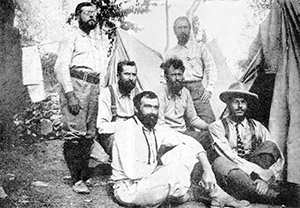
Aleister Crowley played many roles including that of mountaineer, and notable for being one of the first Westerners to attempt K2, the second-highest mountain on Earth after Mount Everest, in 1902. He is seen on K2 in the above photo, sitting, fourth from left.

Known primarily as a ceremonial magician, author (fiction and non-fiction), and founder of his own religion (Thelema), Aleister Crowley was also a boxer, mountaineer, adventurer, painter, and poet. If we take half his accomplishments, he is a clichéd “man’s man.” If we take the other half, he is an effeminate, dandyish “girly man.” But, as he advised his adepts, in himself he managed to embrace and develop the “Angel” and the “Demon” – what society might call the “male” and the “female,” the “left brain” and the “right brain,” the body and the spirit, etc.

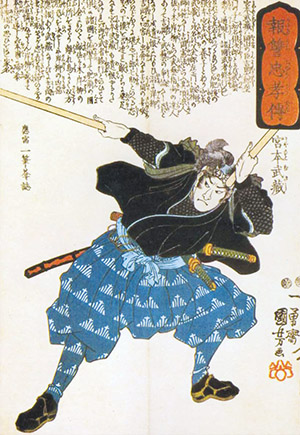
Depiction of samurai warrior Miyamoto Musashi

Modern culture has hemmed us in. Today, painting, poetry, calligraphy, etc., are all seen as “feminine” or “girly.” In contrast to Musashi or Skallagrímsson, modern-day “real men” do not write poetry. In fact, “real men” don’t seem to do much at all. Whether we like it or not, in part, it is against the backdrop of fatherless families and men more interested in gaming and chasing women than in mental, physical, spiritual, and cultural self-development, that the pro-transgender, pro-pan-gender, pro-gender-fluid movement is reacting. And we must agree with them that the 20th-century clichés of gender – the compartmentalised man or woman, individuals who act merely as nodes, passively absorbing and regurgitating whatever they hear – are inseparable from the disintegration of the West and the lack of energy it displays in the arts, philosophy, and other areas of culture.

We mentioned Toynbee’s belief that civilisations differ from cultures by constantly renewing themselves through the “creative minority.” Perhaps the best example of a renewal is the Renaissance (literally “Rebirth”) which we already mentioned. But there have been other, smaller revivals, such as artistic movements (Cubism, Surrealism, etc.) and musical movements (Punk, Hip-Hop, etc.). It might even be argued that the emergence of transgenderism, pangenderism, and gender-fluidism into the mainstream is part of a revival (perhaps emanating from the unconscious of the collective intelligence) of the shamanic (since shamans often wore the clothes of the opposite gender and were regarded as neither or both male and female) and, as such, as part of a centuries-long occult revival that includes, at its softer edges, the now virtually omnipresent New Thought movement and New Age spirituality.

We mentioned the union of the mystic and the warrior in the figure of ‘Ali, as well as Plato, the philosopher and wrestler. The average person might remain a node in a network of the collective brain, merely absorbing and transmitting ideas to others without ever questioning those ideas, even as the disintegration of their society continues. A new Renaissance will only be brought about by the work of creative minorities. And, today, in a time of increasing hostility towards the body (particularly as an embodiment of strength or beauty), when life is increasing online and virtual, and thinking is increasingly done for us (or against us) by algorithms and artificial intelligence, such a minority must work to elevate the physical body and reintegrate it (as Plato suggested, with his schema of music, philosophy, and wrestling) with the mind and spirit. We must be part-barbarian and part-sophisticated cultural thinker and creator.

The future is uncertain but it remains open to the integrated – to those who push forward in different ways, creating new art, new ways of thinking, new movements, new rituals, and new routines, all awakening us to a recognition we are more than nodes in a disintegrating network: that inside of each of us burns a barbarian fire – a spirit – for adventure, for struggle against our limits, for strength and beauty, and wholeness.

If you appreciate this article, please consider a contribution to help maintain this website.

Footnotes

1. www.youtube.com/watch?v=I8BRdwgPChQ
2. David Hopkins, “How a TV Sitcom Triggered the Downfall of Western Civilization,” March 21, 2016, gen.medium.com/how-a-tv-sitcom-triggered-the-downfall-of-western-civilization-336e8ccf7dd0
3. Jeremy M. DeSilva, James F. A. Traniello, Alexander G. Claxton, and Luke D. Fannin, “When and Why Did Human Brains Decrease in Size? A New Change-Point Analysis and Insights From Brain Evolution in Ants.” Frontiers in Ecology and Evolution, 22 October 2021, doi.org/10.3389/fevo.2021.742639
4. Richard Florida, February 1, 2013, “Innovation and the Wealth of Cities,” www.bloomberg.com/news/articles/2013-02-01/innovation-and-the-wealth-of-cities
5. Jodie Cook, May 13, 2021, “Why Being A Jack Of All Trades Is Essential For Success,” www.forbes.com/sites/jodiecook/2021/05/13/why-being-a-jack-of-all-trades-is-essential-for-success

© New Dawn Magazine and the respective author.
For our reproduction notice, click here.

About the Author

ANGEL MILLAR is the author of The Crescent and The Compass: Islam, Freemasonry, Esotericism, and Revolution in The Modern Age (revised and expanded edition published in Spring 2017). His writing has also been published in the Journal of Indo-European Studies and Quest magazine, among others. He is also the editor of Phalanx (http://phalx.com ), a webzine dedicated to the development of mind, body, and spirit.