(CNW) Montreal — The Good Shroom Co Inc., which owns and operates a portfolio of brands that include traditional cannabis products as well as mushroom-based wellness beverages, announces its first profit since the commencement of operations and reports on its financial results for the quarter ended April 30, 2023.
Q3 – Financial Highlights
Fiscal Quarter
Q3-2023
Advertisement
Q2-2023
Q3-2022
Net Profit (Loss)
$13,660
($95,116)
($229,995)
Net Revenue (net of excise taxes)
$1,024,884
$670,276
$ 419,397
Gross margin
27 %
27 %
22 %
First Profit: Net Profit of $13,660 for Q3-2023.
3X increase in Sales:$1,266,186, compared to $419,397 for Q3-2022; 1.4X increase in sales from previous quarter (Q2-2023), $670,276.
Debt: Long-term debt of $40,000.
“We are pleased with today’s results; brand recognition is increasing sales, bolstering loyalty and we are seeing gains in terms of operational efficiency. We also expect to begin realizing economies of scale into the near future. As we execute on our asset light business model and leverage our network of manufacturing partners, we are moving forward with limited capital assets all the while having the flexibility to rapidly scale up and meet growing sales and consumer preferences as most of our resources have been geared towards our cannabis division, with good results, sales for wellness beverages (of $29,775 for Q3), remain flat. However, we see growth opportunities for this division as well and we intend on allocating additional resources, to implement a new marketing strategy before calendar year-end.” — Eric Ronsse, CEO, The Good Shroom
Q3 – Business Highlights
New Products:
Habibi Kush (hash) launched in ~25% of Quebec cannabis stores
Transition from ~25% of Quebec cannabis stores to all stores
Le Kush X (hash), Sky Cuddler Kush (dried flower) and Cherry Blossom (dried flower) transitioned in Q3.
New Markets:
The Company breaks into the edibles category with THC infused Beef Jerky named OG Jerk, which launched in all Quebec cannabis stores in February of this year, remaining within the top three selling products of its category in terms of weekly units sold (quebec.weedcrawler.ca/best_sellers).
Approval of CBD capsules in Ontario for August 2023 launch.
Top Products: Afghan Gold Infused Joint is consistently within the top three products in its category in terms of weekly units sold. Afghan Gold hash remains in the top ten
100% Ocean reclaimed plastic is used for some of the Company’s packaging and it expects to continue increasing its use.
Events Subsequent to Quarter
Three new edible cannabis products are expected to launch late summer/early fall in the province of Quebec: crunchy coated peanuts, dried ramen noodle mix and saucissons (cured charcuterie).
Approval from the Alberta Liquor and Gaming Commission to become a vendor in the province with several products expected to be available during the fall of 2023.
Approval of CBD capsules in Ontario for August launch.
Currently, the government of Quebec limits the choices of edibles to ensure that they don’t appeal to children, such as cookies and candies. Consequently, there are few high performing edibles at this time, but management also sees this as an opportunity and expects that the only THC infused beef jerky in Quebec, a commonly consumed savory snack, will continue to appeal to many consumers, as will it’s new edible products expected to be available this summer/early fall.
Moreover, the current legal and tax landscape has been increasingly putting pressure on the cannabis industry which has seen low investor returns and several small and large players ceasing operations or undertaking important restructurings in the last 12 months. The current restrictions, in terms of marketing and product offering, as well as tax obligations, have led to shrinking margins and are making it harder to compete with the illicit market.
Management expects positive steps will be taken to modernize the legal framework for the benefit of businesses, consumers and the industry following the ongoing legislative review of the Cannabis Act by the Federal Government, and that some of the recommendations made by the Competition Bureau in May of this year, will be reflected, namely reducing marketing restrictions and allowing for more flexibility for THC limits in edibles.
When one party to a contract commits a breach, the innocent party may elect to sue for ‘damages,’ which is a fancy legal term for monetary losses.
In some instances, the damages that have been suffered are fairly straight forward and easy to establish. However, in many instances, ascertaining what damages have been sustained is more difficult.
For example, if I grant you an exclusivity agreement to sell my products in a given territory and I breach that agreement by allowing someone else to sell my products within the same territory, what are the losses that are properly attributable to my conduct?
One could argue that your decrease in sales may be a good indicator of your losses. However, who is to say that market conditions did not happen to coincidentally also contribute to your decrease in sales? One could also argue that the sales of the other vendor may be representative of the sales that you in turn lost. Possibly, but who is to say that some of those sales occurred on account of the new vendor’s efforts and therefore they were sales that you would have not been able to generate even if I had not breached our arrangement?
Advertisement
These are fairly straightforward examples of a problem that can in real life become quite complicated.
The cannabis industry may demonstrate similar cases for a number of reasons, including the fact that the industry itself is still relatively nascent. For example, if a party breaches a contractual obligation to manufacture products for another party thereby depriving the innocent party of the revenue from the sales of those products, how can we accurately calculate those lost revenues? If there are no meaningful historical sales figures, how do we know what the revenues would have been?
While there are different ways to go about attempting to quantify those losses, often times parties will attempt to get out in front of the issue in advance and set out the damages within the contract itself. These types of clauses are known as liquidated damages provisions.
Liquidated damages provisions explained
A liquidated damage provision is a clause in a contract that stipulates an amount that the breaching party must pay to the innocent party if a breach of the agreement occurs. These types of provisions can be highly useful as they allow the parties to understand precisely what the consequences will be in the event of a breach, and also to simplify the resulting legal process since the issue of attempting to determine what damages are payable is effectively eliminated. However, these clauses can also be dangerous because courts are sometimes not prepared to enforce them.
There is a fine line between stipulating what the liquidated damages would be in the event of a breach and inserting what is effectively a penalty provision in the event of a breach. The courts have repeatedly stated that its power to strike down a penalty clause is a blatant interference with freedom of contract and is designed for the sole purpose of providing relief against oppression for the party having to pay the stipulated sum. The court’s power to strike down a clause has no place where there is no oppression.
Generally, liquidated damages clauses will be enforced so long as they represent a genuine attempt to pre-estimate the loss arising from the breach. Where, however, such a clause is not based on an estimate of damages and represents a sum that is “extravagant and unconscionable in amount in comparison with the greatest loss that could conceivably be proved to have followed from the breach,” the clause will be considered an unenforceable “penalty clause.”
The takeaway is that liquidated damages clauses are useful tools that can be inserted into commercial agreements to give the parties more certainty as to their rights and obligations in the event of a breach. This is especially useful in the cannabis industry where attempting to establish actual losses at trial can be difficult and costly.
However, care should be taken when the clause is drafted to ensure that thought is given to the nexus between what sort of losses may be incurred and the amount provided for in the contract.
As mentioned above, if the amount stipulated is found to be “extravagant and unconscionable” in comparison with the greatest loss that could conceivably be proved to have followed the breach, the court will not hesitate to strike down the clause and decline to enforce it.
Matt Maurer is a partner and co-chair of the Cannabis Law Group at Torkin Manes LLP in Toronto, Ont.
By Michelle Gamage, Local Journalism Initiative Reporter and Jen St. Denis
Before Brian O’Donnell was prescribed the opioids hydromorphone and methadone by his doctor, he used cocaine, heroin and fentanyl to manage chronic pain from injuries he sustained earlier in life.
“If I didn’t have access to tested, safe drugs I’d probably be dead, just like a lot of my friends,” O’Donnell says.
O’Donnell, who lives in Vancouver, accesses British Columbia’s prescribed safer supply program, where clinicians prescribe pharmaceutical alternatives to illicit drugs in order to separate people from the dangerous illicit market.
Advertisement
It’s a program that users, doctors, advocates and researchers say saves lives, but it has also come under fire: Conservative Leader Pierre Poillievre recently introduced a motion in the House of Commons in May to end the program, saying it was fuelling addictions to opioids.
Poillievre’s motion, which did not pass, proposed redirecting money spent on safe supply programs to addiction treatment programs.
Dr. Caroline Ferris, a doctor who prescribes safe supply as part of addiction treatment, says safe supply programs should not be stopped. But Ferris said there are problems with the reliance on hydromorphone — also known by its brand name Dilaudid — in safer supply programs. She said hydromorphone doesn’t match the strength of fentanyl, the drug most opioid users are now addicted to, leading some to sell their prescriptions.
That in turn could be fuelling new opioid addictions, Ferris said. She said the studies that have been done of the program so far have focused on qualitative data — stories from people prescribed safe supply. “But we don’t really have data to crunch and there’s been a few problems with collecting that data for various reasons,” Ferris said.
Safer supply is designed to reduce harm, but experts are divided when it comes to weighing its pros and cons. Some experts worry access to pharmaceutical-grade drugs could encourage people to try drugs, or continue using drugs. Others say expanding safer supply reduces overdoses from illicit street drugs.
Bernie Pauly, a scientist with the Canadian Institute on Substance Use Research who has participated in evaluations of safer supply programs in Canada, says it’s clear that illicit fentanyl, not diverted safe supply, is killing people. She pointed to research by the BC Centre for Disease Control that found less than two per cent of illicit drug deaths in 2020 and 2021 involved hydromorphone with no fentanyl. Of those 45 deaths where no fentanyl was detected, there was an average of seven other substances in the person’s body. There were no deaths where only hydromorphone was detected.
Should we be concerned about diversion of safer supply?
Ferris says data collection on safe supply is in the early stages and individual anecdotes about young people using hydromorphone shouldn’t be discounted.
“We knew [Oxycontin] was out there before it hit the headlines, we knew fentanyl was out there long before it was declared a public health crisis — because we see people and we talk to them and we test the urine and we know what they’re using,” she said.
While prescribed drugs are safer than drugs bought from the illicit supply because pharmaceutical drugs have a known potency and purity, they still carry a risk, Ferris says. If someone is buying diverted hydromorphone, for example, they may not know what dose of pill they are getting and for those who aren’t used to taking opioids, two tablets of eight milligrams of hydromorphone could be fatal.
“I’m not sure that it’s doing a favour for youth,” said Ferris, who says she knows of several teens under the age of 15 who recently died from suspected overdoses that included hydromorphone.
“If the person for whom it’s prescribed is taking it, yes, it probably benefits them. But if they’re diverting it, I think it’s doing a lot of harm. And I think we have to acknowledge that diversion does occur.”
Data on youth drug toxicity deaths from the BC Coroners Service shows that between 2017 and 2022, there were 12 deaths in youth under 18 where hydromorphone was detected. One of the deaths happened in 2020, three occurred in 2021, and eight deaths were from 2022. In all of the deaths, at least one other substance that contributed to the death was found.
The data also shows that the vast majority of young people who died of drug toxicity used fentanyl: of the total 142 youth deaths between 2017 and 2022, fentanyl or its analogues were found in 112.
Not everyone agrees that diversion of hydromorphone is a problem. Garth Mullins, a drug user advocate who has been on methadone for 20 years, said he sometimes relies on diverted hydromorphone given to him by friends who have a prescription. Mullins said he takes hydromorphone when he’s having an off day and might be tempted to get drugs from the illicit market instead. He said many of the people he knows who have a hydromorphone prescription take a mix of hydromorphone and fentanyl because hydromorphone doesn’t completely replace fentanyl — but having the prescription allows them to use less illicit fentanyl.
Mullins said hydromorphone pills have always been sold on the street, but the cost has dropped dramatically over the years: from $10 a pill in the late 1990s to $1 a pill today.
It can also be hard to judge how much hydromorphone sold on the street has been diverted from prescribed safer supply programs. A B.C. government report said hydromorphone was dispensed 585,000 times to over 80,000 patients in 2018-19. That’s prior to introduction of the prescribed safer supply program in 2020, which Dr. Alexis Crabtree, a public health physician with the BC Centre for Disease Control, says around 5,000 patients — about 5 per cent of people who have been diagnosed with opioid use disorder in B.C. — have accessed so far.
Opioid use disorder is defined by the BC Centre on Substance Use as a chronic relapsing illness associated with high risk of death. It doesn’t matter if someone gets their opioids from their family doctor or an illicit dealer. People can get better if they can access treatment, the BCCSU adds.
Public health officer Dr. Bonnie Henry and B.C. chief coroner Lisa Lapointe have stressed all people with opioid use disorder are at risk of overdose if they use drugs from the illicit market.
What exactly is safe supply and how did we get here?
There’s a long history of successful prescribed safer supply pilot projects in B.C.
The 2008 North American Opiate Medication Initiative and 2011 Study to Assess Longer-term Opioid Maintenance Effectiveness found patients could benefit from access to doctors and opioids to treat severe opioid use disorder.
B.C. has been in a public health emergency since April 2016, when drug dealers in the illicit market started adding the powerful synthetic opioid fentanyl to their supply.
This led to a spike in deaths from drug poisoning. Harm reduction initiatives like safe consumption sites, where people could take drugs while being supervised by health-care workers who would intervene if they overdosed, and naloxone distribution programs, which can temporarily reverse opioid overdoses, were successful in starting to lower the rate of death by 2019.
But in early 2020, the COVID-19 pandemic erased any progress that had been made: closed borders and supply chain disruptions led to an unpredictable, and often deadly, supply of illicit drugs.
Around 200 people a month — more than six people a day — are currently losing their lives to toxic drugs in this province, the highest death rate ever recorded. Since 2013, 13,497 British Columbians have lost their lives due to unregulated drugs according to the BC Coroners Service.
In an effort to help people who use drugs isolate without going into withdrawal at the start of the COVID-19 pandemic, the BC Centre on Substance Use published “Interim Clinical Guidelines: Risk Mitigation in the Context of Dual Health Emergencies,” which gave clinicians guidance on what they could prescribe as an alternative to toxic street drugs, including recommended doses.
Doctors have always been able to prescribe medication for pain, says Crabtree. These medications can include a family of drugs known as opioids, such as morphine, fentanyl, hydromorphone and heroin. If you’ve ever had a surgery you may have been prescribed an opioid for pain management — hydromorphone is very commonly prescribed for short-term pain, like knee surgery, or longer-term pain like pain associated with cancer, Crabtree says.
A year after the BCCDC published its guidelines, the provincial government introduced a policy that supported the guidelines and recommended prescribed safer supply as a way to reduce toxic drug deaths.
Under the provincial policy clinicians can prescribe fentanyl patches, fentanyl tablets, injectable hydromorphone, tablet hydromorphone and other opioids “as determined by programmes,” Crabtree says. These drugs are sourced from regulated pharmaceutical producers so clinicians and patients can know for certainty the dosage, potency and purity of the product.
The BCCSU guidelines also cover morphine, stimulants, benzodiazepines and alcohol withdrawal medication, she says. Clinicians are given guidance on dosages but ultimately choose what they should prescribe for their patient.
This policy allocated funding to the health authorities for prescribed safer supply, which they offered as part of a comprehensive addiction medicine program that also offered opioid agonist therapy and other treatments, Crabtree says.
Opioid agonist therapy is designed to treat opioid use disorder by giving people longer-lasting drugs that don’t provide a euphoric rush but do prevent people from experiencing withdrawal. It is different than prescribed safer supply which is designed to replace a person’s illicit drug supply.
Under the current policy, patients don’t have to pay for prescribed safer supply or opioid agonist therapy — they get it for free, similar to other drugs covered by the provincial Medical Services Plan. The policy also allowed clinicians not associated with health authorities, such as family doctors, to offer their patients prescribed safer supply.
Why hasn’t safer supply reduced drug deaths?
Safer supply was supposed to reduce overdose deaths, but the number of overdose deaths continue to rise — fuelling criticism that the program is misguided.
While safer supply programs have rolled out across the province the illicit drug supply continues to increase in potency and with added substances that can increase the risk of overdose, like benzodiazepines, which depress the central nervous system and can increase the risk that someone stops breathing during an overdose.
Supporters say the program does save lives, and works for those who can access it. They also point out that judging the program before it’s been scaled up — only 5,000 of B.C.’s 100,000 people with diagnosed opioid use disorder have accessed prescribed safer supply — is premature.
When a person wants to access safer supply, they start by talking with a doctor or nurse who will do a full assessment, including the person’s full history of substance use, current substance use, past diagnoses or treatment they’ve gone through and personal goals for their substance use, Crabtree says. This program is targeted at people with opioid use disorder.
What people are prescribed will be based on the assessment, but patients should also come in with an idea of what substances they take and at what potency they take them so they can ask for their prescription to replace that, Crabtree adds.
It’s important for prescribed safer supply to meet people where they’re at, says Guy Felicella, a peer clinical advisor with the BC Centre on Substance Use.
He says safer supply is about reducing how much people access the illicit market. For him, it’s still a win if someone accesses prescribed safer supply and the illicit market five times in a day rather than the 10 times they would have before their prescription. This is similar to a nicotine patch helping people reduce the number of cigarettes they smoke in a day, said Felicella.
To keep people away from the toxic street supply you need to provide the right substances and right potency to fully replace what they were taking before, Felicella says. Otherwise they’ll likely turn to the illicit market if they’re not getting their needs met by the prescription.
But that can be tricky for a number of reasons. First, someone might not know what they’re buying from the illicit market. Most street drugs look the same, taste the same and seem the same but can contain several different substances with wildly different potencies, Felicella says.
Second, prescribed safer supply needs to source drugs from regulated pharmaceutical manufacturers, and there just aren’t that many people making diacetylmorphine, also known as medical-grade heroin, Crabtree says.
The drugs that people can access through prescribed safer supply were chosen largely because they were what was available, she adds.
Where to go from here
None of the experts The Tyee spoke to are calling for the end of safe supply, but they all had ideas to improve and expand the program.
Ferris said addictions doctors are frustrated by the role of gatekeeping, and called for more non-prescribed models for safe supply. Crabtree echoed this.
“I think that [drug] prohibition should end and that people should be able to go buy whatever they want to get high on,” Ferris said, comparing the end of this prohibition to the end of prohibitions on alcohol and cannabis.
“If they’re in a rural or remote area, it’s really difficult to access safe supply,” Ferris adds. “So there’s a terrible inequity about the availability of safe supply and there’s a real fatigue on the part of prescribers.”
Crabtree advocates for a non-prescribed safer supply where people can access substances of known purity and potency, similar to how people currently access other psychoactive substances. She says she doesn’t know exactly what that would look like and couldn’t point to another jurisdiction with regulations like she’d want to see here, but added regulations would need to be much stronger than how alcohol or cannabis are controlled.
There’s no clear solution for how to avoid diversion. Doctors can require witnessed consumption or ask users of safer supply to take urine tests, but that creates barriers to access and can make drug users feel as though they’re being constantly policed.
When it comes to the concern about young people using hydromorphone, Mullins said young people have always experimented with drugs — in the 1980s, Mullins said, he went to a middle-class high school in Vancouver and had no problem getting heroin.
“I just think that kids need to know what’s the difference between down that you buy on the street and dilly,” Mullins said. Dilly is the street name for hydromorphone and “down” refers to opioids.
“What’s in the pill? What does it mean? What’s an opiate? People need that good drug education. They need good support.”
In a room located next door to a cannabis store on Yonge Street in downtown Toronto, Lit Research offers producers a way for consumers, store owners, and budtenders to learn about and experience new, up-and-coming cannabis products.
Launched in the fall of 2022, Lit Research bills itself as a hub for the cannabis community, helping cannabis producers and brands to provide a unique, value-added educational experience to anyone looking to learn more about their products.
Al Shefsky, the founder of Lit, as well as the neighbouring business Body and Spirit Cannabis, has been hosting multiple cannabis tasting and sampling events every week at his location just up the street from Dundas Square since first opening.
He’s quick to clarify that Lit Research is not a consumption lounge. The business operates under a federal cannabis research licence that allows for sensory testing of products. Licence holders can conduct organoleptic/sensory testing to evaluate factors such as the taste, touch, sight, and smell of cannabis products with human participants.
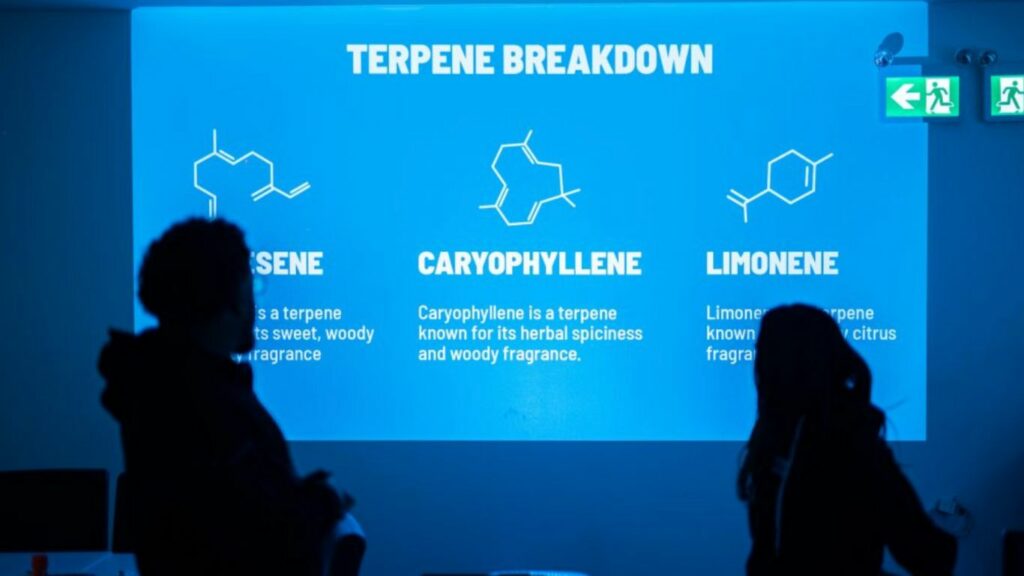
A presentation during an event at Lit Research
“The producers come in to educate about who they are, about the product, and then you get a guided tasting opportunity where consumers test cannabis by smoking it. It’s unique. There are no other companies doing it like this to my knowledge. So it’s great for the consumers.”
“Participants value the experience and say it’s a special opportunity for them to see and try new products before and after they reach the market,” he continues, explaining this can then be beneficial for buyers, store owners, and budtenders.
“They also like the idea that their feedback matters. Every participant fills out a Participant Evaluation Form, and then we report that data back to the licensed producer. So they’re feeling empowered.”
In order to get the licence, which he says took about a year, he also had to undertake a significant remodel of the room to be used for research, including installing a high-grade HVAC air exchange system to allow consumers to comfortably smoke or vape products indoors.
Those participating in the study must also fill out information on their experience as a consumer and their thoughts on the products sampled.
Shefsky says Lit Research has held several research sessions every week since opening, with some producers using it as a chance to share products expected to be launched soon in the Ontario market, while others use it as a chance to determine which products they end up bringing to market at all.
“We quickly realized we had more room than we needed and were finding it hard to compete with all the new stores—especially since unlicensed stores continued opening and operating with significant competitive cost advantages in our area. I was looking at all the options, reading the regulations, when we decided a research licence could allow us to create something unique for the community.”
Al Shefsky – Lit Research
The idea for the research centre started as a way to optimize the high rent space occupied by Body and Spirit in the increasingly competitive and saturated retail market in Toronto. Shefsky says his retail store at 361 Yonge St. was the fifth cannabis retailer licensed in Ontario’s second round, following a lottery in 2019 to open the first 50 stores in the province. Body and Spirit opened in May 2020, just as covid restrictions were beginning to come into place, meaning they quickly had to find new ways to stay relevant and economically sustainable.
“We got into the market early,” continues Shefsky,” but we quickly realized we had more room than we needed and were finding it hard to compete with all the new stores especially since unlicensed stores continued opening and operating with significant competitive cost advantages in our area. I was looking at all the options, reading the regulations, when we decided a research licence could allow us to create something unique for the community.”
Anyone over the age of 19 can take part in the sensory testing at Lit Research, although some events are invitation only. Participants are vetted to ensure they understand any potential risks involved. The room itself has a capacity of 48 people. Each table has a vaporizer and various smoking and vaping accessories like grinders and rolling trays, and participants have access to plenty of water as well as games and snacks.
Producers and brands have an opportunity to engage directly with participants, giving not only their brand story but also information about each product or cultivar, and talking points that retailers and producers may be interested in.
Shefsky advises anyone else looking into a similar approach to do their homework beforehand and understand the process, the timelines, as well as the fairly strict parameters around Health Canada’s research licence. Participants cannot be asked, for example, about any medical effects, but can only convey information about sensory attributes such as taste or aroma.
Nowhere does the Transhumanist Age show its cold, shiny glare than through the cloning of genetically modified animal species. But why stop there? From nano-biotech to frequency-technologies, the biological human is turning into a Cyborg.
Cyborg: a being with both organic and biomechatronic body parts. It applies to an organism that has enhanced abilities due to the integration of some artificial component or technology that relies on some sort of feedback to support group, or collective intelligence.
The Cyborg evolution is popularized in such films as Immortals,Terminator, Blade Runner, and SheBorg. One of the earliest stories on Artificial Intelligence is the novel, Over the Range, by Samuel Butler, published anonymously in 1872, and based on an earlier 1863 article called Darwin Among the Machines. Was the Darwinian evolution intentional to direct the way people think?
Thus, Transhumanism is an introduction to the concepts of Post humanism, and of immortality. It is a transition from Human to Artificial Intelligence (A.I.). A transmutation from emotion to emotionless, from Identity to loss of Identity, and from the Universe to the Metaverse.
Fortunately, Posthumanism is not yet athing, since humans are not yet a thing of the past.
Hiding in Plain Sight
The transgenesis of humanity is hiding in plain sight. As thoughts are planted in the psyche through predictive programming, and then accepted as normal across the human collective, these collective thoughts determine what makes up the future. That’s because thoughts are things. The mind is influential. As such, thoughts are seeds, one step away from sprouting a reality near you.
Does the Sci-fi genre: 1984, Dune, Spin, New World Order, and others, intentionally insert thought-forms into human Consciousness to accept self-replicating machines that might supplant humans as the dominant species? Are these stories created by chance, or are they creating the path in front of us? Do they disclose a plan that already exists? Are the authors complicit in the underlying agenda?
The development and deployment of injectable nanotechnologies not only target human DNA, but also human microbes, and human minds. The purpose of vaccine nanotechnology is gene therapy. Once injected inside the body, nanobots are self-replicatingbased on the use of plasmid DNA.
From graphene to hydrogels, to graphene-hydrogel combinations, all inorganic, nanotechnologies are made to be directly injected into organic organisms for the purpose of cellular transmutation. Add to this, frequency technologies, and the human body becomes a walking, talking battery-magnet for energy storage and ongoing manipulation by nano biotech industry leaders.
These ideas are long buried in PDF files on the internet going back a decade. They are described as “guidelines,” and “theories.” By design, there are never concrete boundaries, especially when talking about “progress” in the material mainstream. However, there is an overlooked group, TheDoctors4CovidEthics.
Protection of biotech vaccine technologies can be traced to the 2016 National Biodefense Strategy Act. Because this Act still lingers as Senate bill, S2967, in Congress, it could be altered to include the many new concepts being hatched in the mammalian transgenesis business model.
Thor Deichmann from Pixabay” width=”397″ height=”275″>Who’s Who Of Trans BioTech
Due to the concern for transmission of vaccine virus, vaccine recipients should attempt to avoid whenever possible close association with susceptible high-risk individuals for up to six weeks following vaccination with VARIVAX.
Gene-edited sheep and goats, generated using these tools, provide valuable models for investigations on gene functions, improving animal breeding, producing pharmaceuticals in milk, improving animal disease resistance, recapitulating human diseases, and providing hosts for the growth of human organs. – Frontiers in Genetics, 2019
Food products from GMO bacteria are commonly used in Industrial food enzyme production, animal food and medical substances. Biotechnological drug manufacturing, relying on GMO bacteria, such as Escherichia coli and the yeasts Saccharomyces cerevisiae and Pichia pastoris, is an industry standard.
A DNA copy of the gene for the spike protein is inserted into a bacterial plasmid. This is a ring-shaped, double-stranded DNA molecule which can exist in a bacterial cell independently of the cell’s own chromosomal DNA, and which can also be copied and passed on to both daughter cells when that cell divides. – Doctors4CovidEthics.org
Scientists are always looking for new ways to manipulate and modify bacteria. So, in 2020, scientists created Franken Bacteria programmed to produce living concrete.
What could go wrong by playing host to Franken bacteria that are unnatural to the body? After all, there is plenty of evidence showing that mosquitoes are genetically engineered and patented.
“The larvae enter the lymphatic vessels of the mammary gland, causing lymphangitis, fibrosis, and disruption of lymphatic drainage.” In late, inactive phases, the larvae appear on mammography as serpiginous calcifications. – Rustagi V, El-Feky M, Knipe H, et al., “Breast filariasis.”
The information slowly worming its way out into the public, shows that parasitic infestations can represent “cancer.” All cancers are, in fact, parasitic infections (with high levels ofCandida), even if not all parasitic infections present as cancer. Parasitic worms may cause cancer. which represents an acidic tissue environment, perfect for parasites.
Scientists at the CDC have discovered cancer cells originating in a common tapeworm may take root in people with weakened immune systems, causing cancer-like tumors. The report, in the Nov. 5 issue of the New England Journal of Medicine, raises concern that other similar cases, if they occur, may be misdiagnosed as human cancer.
Just Add Frequencies
Gerd Altmann from Pixabay” width=”300″ height=”212″>
If the growing list of injectable trans nanotech is not enough by itself, just add frequencies.
Injectable nanobots are designed to work with frequency technologies, by design. Nanobots self-assemble in the body under programmed commands. They have similarities to electrolysis rods used in batteries as well as biosensing devices. Compare this to “self-driving” cars. Are you really in control? Are you hackable?
The direct effects of using “frequency therapeutics” mean negative health effects to the nervous system and brain receptors, hormone receptors, and all cell receptors in between. This is not limited to only a physical level. Got ringing in the ears?
Sound, or frequency, medicine is the core of homeopathic medicine. There is evidence of efficacy in clinical studies of Homeopathy, but much of it has been suppressed or buried.
Australia’s NHMRC did a homeopathy review, twice. One report was released in July 2012, and one was released to the public in March 2015. The existence of the first report was not disclosed to the public – it was only discovered through Freedom of Information (FOI) requests. The second report published in 2015 was based on a “rigorous assessment of over 1800 studies.”
Unfortunately, the Homeopathy report was buried and the NHMRC’s final government report claimed, “no reliable evidence from research in humans that homeopathy was effective for treating the range of health conditions considered.” The Smithsonian also attempted to disqualify the results. In other news, Australia recently opened its first needle-free patch vaccine patch facility.
It’s human responsibility… If I have the education and the ability to see something alarming and a threat to all humanity. There is no way out. Always question what so-called experts tell you. Solidarity demands you step forward and come out when you see something going wrong. If I see a car heading for a child on the street, I have to do something. I cannot just turn my back and say bad luck. – Prof. Dr. Arne Burkhardt, Pathologist, investigator of COVID vaccine injuries and deaths
With all the focus on a material world, who is guarding the spiritual body? What happens when an organic human becomes inorganic?
Human Initiation & Steiner
Stefan Keller from Pixabay” width=”417″ height=”192″>
The transgenesis of the human species is upon us, complete with neural network hookup to the Metaverse. A connection to the Meta-Collective will provide “users” with a new biometric digital ID to utilize digital currencies. Then, the transformation from human to cyborg will be complete.
Will humanity take a path that regresses the soul to a divergent timeline? Or is humanity ready to rise to a new level of Consciousness?
Is humanity doing the Cha Cha?
One step forward and two steps back.
One thing is clear: Humanity is undergoing a spiritual test, an initiation.
Everything people do in this respect is under the influence of elemental spirits. They are always involved and helping us in this. People are not taking the initiative on their own in this field — they are guided. – Rudolf Steiner
Rudolf Steiner described this time of initiation as a bifurcation of Earth.
Pexels from Pixabay” width=”374″ height=”249″>
Such initiations have been ongoing through the Ages, since humans first “fell” to Earth. To attend Earth School for soul lessons is to experience the “I” of Individuality, unique, but also connected to the Collective Consciousness.
Steiner suggests that the Ages are identified as Dark Ages and Light Ages for spiritual reasons. In a Dark Age, there is an inversion. Humans are tested on what was learned during the Light Age. Everything is dense during this “might-is-right” Dark Age, an Age that asks us to integrate, consolidate, push for transparency during corrupt times. The Darkness asks us to heal any trauma to anchor the soul in the body. It asks us to think independently.
As the Light Age comes, the Aquarian Age, a new Golden Age, density shifts. All the darkness rises to the surface.
Some Initiates are well known, and come with a message for all. They sacrifice themselves to raise Consciousness.
The Kingdom of Heaven is Within – Christ Consciousness
Humanity does not evolve through hybridization and cloning. The idea that science can genetically manipulate humans into a higher form is the new Transhuman religion. A “religion without revelation.”
Still, the initiation cycle happens on an individual level, by your choice, and by your soul. All humans have a Higher Self to consult. As we each go through our lives, we face many spiritual challenges that shape the soul. As new frequencies are attained, the soul reaches a higher plane. Eventually, all souls “graduate” to reach a higher Consciousness.
This will be an unpalatable truth for people who never tire of making great speeches on the tremendous advances made in modern civilization, for they see things in abstract terms and know nothing of the rise and fall which is part of human evolution. – Rudolf Steiner,
Avi Chomotovski from Pixabay” width=”300″ height=”200″>
For initiation purposes, humans can access higher dimensions through “guides” or higher spiritual beings. While some entities in the lower dimensions may connect at a psychic or a spiritual level, they cannot initiate humans. The initiation process happens only through the higher spheres of Earth.
Because humans are energy, that energy can be manipulated if they are not aware. Fortunately, there are things to do to protect your energy.
The challenge is to develop a spiritual practice, to be self-aware through meditation or prayer. And choose wisely.
Nevada Governor Joe Lombardo recently signed a measure into law that makes a number of changes to the state’s marijuana legislation. The Republican governor signed the bill — State Bill 277 — on June 14, 2023.
The recently enacted legislation makes significant changes to Nevada’s cannabis laws. Notably, there will be a more than twofold increase in recreational cannabis purchase and possession limitations. One ounce of cannabis will now be replaced by 2.5 ounces as the maximum amount that one person may own or purchase. A quarter ounce will be the new maximum for cannabis concentrates, which will increase from one-eighth of an ounce currently.
Additionally, the legislation grants permission for all adult-use marijuana dispensaries in the state to sell their products to medical cannabis patients. However, starting next year, state marijuana regulators will no longer issue new licenses for medical cannabis businesses, except in areas where recreational marijuana dispensaries are prohibited.
SB 277 also relaxes Nevada’s prohibition on those with felony records working for or engaging in cannabis-related enterprises. The bill gives the Nevada Marijuana Compliance Board the authority to grant licenses to organizations whose stakeholders have a history of felony convictions.
Nevertheless, the board must determine whether issuing such permits would risk public health and safety or have a negative effect on the state’s cannabis sector. The board has the power to establish the required restrictions and requirements to protect the general welfare, prevent injury or death, and decrease any unfavorable consequences for the cannabis business.
Under the new law, individuals with prior marijuana-related felonies can petition the state to work in a licensed marijuana enterprise without the requirement of expunging their records. According to Vicente LLP’s law firm partner Meg Nash, these SB 277’s provisions reflect a fundamental principle of contemporary marijuana legalization plans.
Nevada’s new marijuana reform law also charges the state’s Cannabis Advisory Commission with undertaking research. The goal of the study is to investigate any potential repercussions of abolishing the federal prohibition of cannabis and delisting marijuana from Nevada’s Uniform Controlled Substances Act.
The act also mandates that state authorities consider any potential negative environmental effects of any proposed modifications to Nevada’s cannabis laws. If such unfavorable impacts are found, regulators must consider ways to reduce or eliminate those impacts without placing a financial burden on those who have licenses for adult-use or medical cannabis establishments.
The Nevada cannabis reform law will fully take effect on January 1, 2024, with some of the approved provisions taking effect right away.
It is expected that the increased possession limits will boost sales. That could, in turn, have positive knock-on effects upon the sales of ancillary entities such as Advanced Container Technologies Inc. (OTC: ACTX) as well as those of marijuana companies.
NOTE TO INVESTORS: The latest news and updates relating to Advanced Container Technologies Inc. (OTC: ACTX) are available in the company’s newsroom at https://cnw.fm/ACTX
About CNW420
CNW420 spotlights the latest developments in the rapidly evolving cannabis industry through the release of two informative articles each business day. Our concise, informative content serves as a gateway for investors interested in the legalized cannabis sector and provides updates on how regulatory developments may impact financial markets. Articles are released each business day at 4:20 a.m. and 4:20 p.m. Eastern – our tribute to the time synonymous with cannabis culture. If marijuana and the burgeoning industry surrounding it are on your radar, CNW420 is for you! Check back daily to stay up-to-date on the latest milestones in the fast -changing world of cannabis.
To receive instant SMS alerts, text CANNABIS to 21000 (U.S. Mobile Phones Only)
Please see full terms of use and disclaimers on the CannabisNewsWire website applicable to all content provided by CNW420, wherever published or re-published: http://CNW.fm/Disclaimer
Do you have questions or are you interested in working with CNW420? Ask our Editor
The Surrey Board of Trade says the city’s mayor and council have not yet taken any action on the board’s call to allow cannabis retailers to operate in Surrey.
A statement from the board says it released its cannabis industry policy paper three months ago, but Surrey council has not yet created a framework that would open the door to pot shops.
Board of trade president Anita Huberman says marijuana retailers have had unprecedented success elsewhere in B.C. and Surrey can create a safe, efficient regulatory framework that uses zoning, licensing and bylaw enforcement to manage pot retailers.
The board says the cannabis industry contributes more than 17 billion dollars to the Canadian economy every year and legal marijuana businesses also create thousands of direct jobs and even-more spin-off employment.







 Thor Deichmann from Pixabay” width=”397″ height=”275″>Who’s Who Of Trans BioTech
 Victoria_Regen
 Gerd Altmann from
  Stefan Keller from
  Pexels from
  Avi Chomotovski from




Recent Comments