“We also live in our dreams, we do not live only by day. Sometimes we accomplish our greatest deeds in dreams.”
Carl Jung, The Red Book
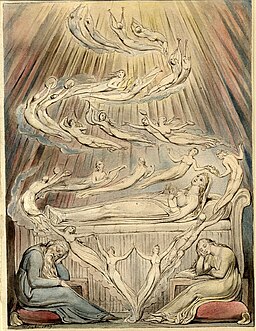
Are dreams the product of random brain activity, or a side effect of the mind consolidating its memories? Are they, as Sigmund Freud suggested, the expression of repressed wishes and desires? Or is there something richer and more meaningful to dreams that escapes the notice of many in the modern day? Carl Jung believed there was, and in this video, we are going to explore why dreams are of vital importance to our mental and physical health and how the art of dream interpretation can revitalize our life.
“It is only in modern times that the dream, this fleeting and insignificant looking product of the psyche, has met with such profound contempt. Formerly it was esteemed as a harbinger of fate, a portent and comforter, a messenger of the gods. Now we see it as the emissary of the unconscious, whose task it is to reveal the secrets that are hidden from the conscious mind, and this it does with astounding completeness.”
Carl Jung, Two Essays on Analytical Psychology
The interpretation of dreams was an integral part of Jung’s therapeutic approach. According to his own estimate, he analyzed no less than 80,000 dreams. In his Seminar on Dreams, Jung stated that “dreams are messages sent up from the unconscious”. And so to grasp the significance of dreams, we must understand how Jung conceived of the unconscious psyche. In a lecture given in 1934, Jung wrote that “It is as if our consciousness were…a ship on the great sea of the unconscious.” (Carl Jung, ETH Zurich) The fate of a ship is partially determined by the activity of the sea and likewise the direction of our life is highly influenced by the unconscious. Furthermore, just as the sea contains resources, treasures, and dangers that are not easily seen from the surface, so too potentials for good and evil are hidden in our unconscious depths. Psychological development, according to Jung, is facilitated by bringing unconscious contents into the light of consciousness, for this enriches our conscious personality, increases our knowledge, and promotes psychological wholeness. “One does not become enlightened by imagining figures of light, but by making the darkness conscious.” (Carl Jung, Alchemical Studies) More than any other phenomenon dreams can facilitate this process as they act as a window into the unconscious mind, or as Jung explains:
“…the dream is a spontaneous self-portrayal, in symbolic form, of the actual situation in the unconscious…The dream is specifically the utterance of the unconscious.”
Carl Jung, Structure and Dynamics of the Psyche
Paying attention to our dreams, and therein making more of the unconscious conscious, bestows many benefits. One of which is that dreams contain insights which in waking life we are unable, or unwilling, to see.
“When we sleep the soul is lit up completely by many eyes; with them we can see everything that we could not see in the daytime.”
Aeschylus
Intuitions or gut feelings that are not consciously processed, subtle hunches about the true character of other people, as well as blind spots and self-deceptions that are inhibiting our development – all are examples of insights which our unconscious can reveal in dreams. This ability of a dream to disclose knowledge otherwise unavailable to waking consciousness is why throughout history, in the words of Jung, “the dream has been regarded as a truth-telling oracle.” Or as Jung explains in more detail:
“The unconscious is the dark being within that hears what our conscious ears do not hear, and sees what our conscious eyes do not perceive…We only become aware of this unheard hearing, this unseen seeing, when the unconscious sends us these forgotten images in dreams.”
Carl Jung, ETH Zurich 1933-41
As windows into the unconscious, dreams also provide us with information about the health, or sickness, of our body. For the unconscious is intimately connected to the biology of the body and involved in regulating the functioning of organs. It is thus capable of detecting subtle abnormalities in the body, and it is not unusual for the unconscious to disclose these abnormalities in dreams, long before any overt symptoms show. Or as the Jungian psychoanalyst James Hall explains:
“It is by no means an easy matter to make organic diagnoses from dream material, although there are many striking examples of such predictions: the dream of an inner “explosion” preceding the leaking of an aortic aneurysm, the appearance of dream figures with gall bladder disease prior to that illness being suspected in the dreamer, etc.”
James Hall, Jungian Dream Interpretation
Dreams can also warn us of the type of future that may manifest if we continue in our errant ways.
“Dreams prepare, announce, or warn about certain situations, often long before they actually happen.” wrote Jung, “This is not necessarily a miracle or a precognition. Most crises or dangerous situations have a long incubation, only the conscious mind is not aware of it. Dreams can betray the secret.”
Carl Jung, The Symbolic Life
Jung provides an example of a dream of this type. Jung’s colleague, an amateur mountaineer, told Jung of the following dream: He was climbing a mountain, and the higher he climbed, the better he felt. When he reached the summit of the mountain he wanted to continue to climb and so he stepped off the summit into thin air, and suddenly he awoke.
Jung intuitively felt this dream to be a warning from the unconscious. He implored his colleague to take extra precautions on any future climbs or avoid them altogether. But the man did not heed the advice. Three months later the man went climbing, and in the words of Jung:
“A guide standing below saw him literally step out into the air while descending a rock face. He fell on the head of his friend, who was waiting lower down, and both were dashed to pieces far below.”
Carl Jung, Practice of Psychotherapy
Dreams also play an important role in the creative process. We know from the history of philosophy, science, art, and literature, that many great creations and discoveries have been inspired by dreams. A dream informed the Russian chemist Dmitry Mendeleyev of the correct order of the elements based on atomic weight. August Kekule was shown the structure of the benzene ring in a dream. The basic theme of Robert Louis Stevenson’s novel Dr. Jekyll and Mr. Hyde came to him in a dream. While Carl Jung stated that all his greatest ideas were conceived in dreams:
“In the end, the only events in my life worth telling are…inner experiences, amongst which I include my dreams and visions. These form the prima materia of my scientific work. They were the fiery magma out of which the stone that had to be worked was crystallized.”
Carl Jung, Memories, Dreams, Reflections
Dreams also have the capacity to break us free from a worldview that is too constricting and from a day-to-day existence that is too mundane. The dreams that do this are sometimes called “big dreams”. Big dreams are the highly significant dreams that are often remembered for a lifetime, and some even prove to be among the most valuable experiences of life. These are the dreams that possess a religious or spiritual significance, provide insights regarding the eternal questions of life, and even transform how we view ourselves and the world. Regarding the nature of big dreams, the Swiss psychologist Marie-Louise von Franz writes:
“Occasionally, one has a dream that is so remote from one’s life, so numinous (Jung’s favorite word for intensely moving experience), and so strange and uncanny that it does not seem to belong to the dreamer. It is like a visitation from another world, which in truth it is, the other world being the subterranean one of the unconscious. In ancient times, and even today among some people, such dreams are regarded as messages from the gods or ancestral figures. These dreams are called “big” dreams by Jung.”
Marie-Louise von Franz, Dreams
Jung recounted a particularly striking big dream he experienced in 1944, just after suffering a heart attack that nearly killed him. Jung dreamt that he was walking in the wilderness and stumbled upon an old chapel. When he entered the chapel, he saw a yogi seated in the lotus position, in deep meditation. Jung continues:
“When I looked at him more closely, I realized that he had my face. I stared in profound fright, and awoke with the thought: ‘Aha, so he is the one who is meditating me. He has a dream and I am it.’ I knew that when he awakened, I would no longer be.”
Carl Jung, Memories, Dreams, Reflections
Big dreams are rare. Most people experience no more than a handful of them. The dreams that most frequently populate our sleeping hours are what Jung called compensatory dreams. The function of such dreams is to compensate, or correct for, the one-sidedness, errors, deviations, or other deficiencies of our conscious attitude. The more our conscious mind is ill-adapted to reality, and the more we are evading the tasks of life, the more we will be visited by dreams of a compensatory nature.
“When we pay attention to our dreams a self-regulating tendency in the soul comes into play which counterbalances the one-sidedness of consciousness or completes it so that a kind of wholeness and a life’s optimum is achieved.”
Marie-Louise von Franz, Dreams
A few examples will help clarify the nature of compensatory dreams. A man who is not fulfilling his duties as a father will have dreams that his children hate him in order to bring him to the awareness that he is avoiding one of the most important tasks of life. A woman who is too identified with her persona, or social personality, will have dreams of committing crimes or engaging in immoral behavior so that she sees the shadow, or unconscious dark side of her personality, that she needs to integrate to develop a more complete character. Or a man who approaches middle age, yet remains dependent on his parents, will have dreams that portray him as a helpless child, or as being smothered to death, so that he becomes aware of the perilous situation which his lack of independence is creating.
“…the compensatory function of dreams offers welcome assistance. [Compensatory dreams]…illuminate the patient’s situation in a way that can be exceedingly beneficial to health. They bring him memories, insights, experiences, awaken dormant qualities in the personality, and reveal the unconscious element in his relationships. So it seldom happens that anyone who has taken the trouble to work over his dreams…remains without enrichment and a broadening of his mental horizon.”
Carl Jung, Development of Personality
But if dreams are significant messages sent from the unconscious, why are they so difficult to decipher? Why doesn’t the unconscious present these messages to us in a form that is easier for our conscious mind to understand? While the conscious mind is capable of rationality and logic, the unconscious is by nature irrational – it does not operate by the laws of logic and it communicates primarily in symbols, not words.
“As a plant produces its flower, so the psyche creates its symbols. Every dream is evidence of this process.”
Carl Jung, The Symbolic Life
The fact that the conscious and unconscious mind communicate in different languages explains why dreams are enigmatic. Yet just because we do not fully understand the meaning of the symbols presented to us in dreams, does not mean they do not influence us. For just as fairy tales, myths, religious teachings and rituals transcend rational understanding yet have influenced human beings for thousands of years, dreams can influence the course of our life even if we do not fully understand them.
“Dreams pave the way for life, and they determine you without you understanding their language.”
Carl Jung, The Red Book
Or as Jung explained elsewhere:
“It is often objected that the [dream] must be ineffective unless the dream is understood. This is not so certain, however, for many things can be effective without being understood. But there is no doubt that we can enhance its effect considerably by understanding the dream, and this is often necessary because the voice of the unconscious so easily goes unheard.”
Carl Jung, Structure and Dynamics of the Psyche
To understand dreams and thereby enhance their effects, we should make a habit of recording our dreams first thing in the morning – for memories of dreams quickly fade as we go about our day. When we come across a dream which we feel is particularly significant, we can engage in what Jung called dream amplification. Amplifying a dream involves reflecting on the dream and weaving ideas, concepts, and associations around it. This might include recalling memories that we think are related to the dream, allowing our intuition to freely speculate on its meaning, or thinking about whether the dream is related to a task we are not fulfilling or if it is compensating for a conscious attitude that is ill adapted to the demands of life. In interpreting a big dream, amplification is aided by knowledge of mythology and religion, for big dreams are often composed of the recurring symbols and motifs that are found cross-culturally in religions and myths. We will know that we have stumbled upon a correct dream interpretation when, in the words of Jung,
“…the interpretation “clicks”; when there is the feeling that it absolutely hits the fact, one knows one is on the right track.”
Carl Jung, Seminar on Dreams
Or as von Franz elaborates regarding Jung’s method of dream amplification:
“Jung did not interpret his dreams by immediately forming a clear idea of what they meant; instead, he carried them around within himself, lived with them inwardly, as it were, and asked questions of them. If he came across something in a book or in an outer experience which reminded him of a dream image, he would add it to that image, so to speak, so that a fabric of ideas developed, with a constantly increasing richness.”
Marie-Louise von Franz, Dreams
If we pay more attention to our dreams and devote more time to understanding them, we will possess an effective antidote against many of the collective sicknesses of our age. For in Jung’s analysis, much of what plagues modern society, be it endemic levels of neurotic illnesses, mass-delusions, a widespread level of cowardice amongst the general population, an extreme susceptibility to propaganda, or a sheeplike obedience to corrupt authority figures, is the result of a dangerous disconnect between the conscious mind and the unconscious. Modern man has lost touch with his instincts, with the basic facts of human nature, and with a commonsense wisdom that is millions of years old. As it is dreams that help forge a connection to this ancient ground of our being, the more we pay attention to our dreams, the more we will find the inner strength and intuitive wisdom needed to thrive in a sick society. Or as Jung explains:
“Dreams are impartial, spontaneous products of the unconscious psyche, outside the control of the will.”, explains Jung. “They are pure nature; they show us the unvarnished, natural truth, and are therefore fitted, as nothing else is, to give us back an attitude that accords with our basic human nature when our consciousness has strayed too far from its foundations and runs into an impasse.”
Cannabis has been the most used illegal drug in America for decades. Even now that dozens of states have legalized either medical or recreational cannabis, the cannabis black market is still responsible for a majority of the country’s marijuana sales.
In California, which is home to the largest legal cannabis market in the world, licensed players in the market are struggling to get by, thanks to the state’s behemoth illicit cannabis industry. With more states looking to launch recreational cannabis markets in the near future, regulators are keen on reducing the influence of illicit sellers to give licensed retailers a better chance at success.
Combating the illicit cannabis market would also ensure states obtain millions of dollars in cannabis taxes and halt cash flows to the criminal enterprises behind the illegal market. Many states are trying. Last week, Governor Kathy Hochul of New York announced that state regulators would begin clamping down on the 1,500 illicit cannabis shops in the state. The government announced measures such as seizures of illegal marijuana products, raids on illicit cannabis shops, and the launch of an interagency program to deal with the sale of untested cannabis products in illicit retail premises.
Speaking of the state’s recent legal recreational cannabis rollout, Hochul said that regulators would not stand idle while illegal operators sold untested cannabis products, particularly to minors. She said that the impending measures are meant to protect New York’s fledgling recreational marijuana industry and give citizens a shot at entering the industry and succeeding.
According to Hochul, officers from the Department of Taxation and Finance (DTF) and the New York State Office of Cannabis Management (OCM) have already begun inspecting storefront businesses that aren’t licensed to sell marijuana in New York. Businesses that are found in violation of the state’s cannabis policies are receiving Notices of Violation and Orders to Cease Unlicensed Activity; the governor also promised to deliver similar action to other illicit businesses across the state.
Tremaine Wright, the chair of the Cannabis Control Board, said that “successful enforcement actions” against unlicensed trucks and storefronts selling marijuana in New York sends a solid message that the state is actively dealing with illegal sellers. She said the enforcement efforts are meant to ensure public safety and maintain the integrity of New York’s nascent recreational cannabis industry.
These efforts are designed to foster a “fair and regulated environment” that keeps consumers safe while supporting licensed businesses and protecting them from unfair competition.
As this clampdown weeds out illicit actors and leaves those who are licensed to operate in the cannabis industry, there is likely to be a bigger market for the products made by entities such as Advanced Container Technologies Inc. (OTC: ACTX), since growers will be encouraged by the sales they are making to expand their operations.
NOTE TO INVESTORS: The latest news and updates relating to Advanced Container Technologies Inc. (OTC: ACTX) are available in the company’s newsroom at https://cnw.fm/ACTX
About CNW420
CNW420 spotlights the latest developments in the rapidly evolving cannabis industry through the release of two informative articles each business day. Our concise, informative content serves as a gateway for investors interested in the legalized cannabis sector and provides updates on how regulatory developments may impact financial markets. Articles are released each business day at 4:20 a.m. and 4:20 p.m. Eastern – our tribute to the time synonymous with cannabis culture. If marijuana and the burgeoning industry surrounding it are on your radar, CNW420 is for you! Check back daily to stay up-to-date on the latest milestones in the fast -changing world of cannabis.
To receive instant SMS alerts, text CANNABIS to 21000 (U.S. Mobile Phones Only)
Please see full terms of use and disclaimers on the CannabisNewsWire website applicable to all content provided by CNW420, wherever published or re-published: http://CNW.fm/Disclaimer
Do you have questions or are you interested in working with CNW420? Ask our Editor
Statistics Canada says nearly five per cent of cannabis users are at risk of developing an addiction to the drug, according to a survey of households.
Data for the annual Canadian Community Health Survey was collected from more than 101,000 respondents aged 15 and older and showed 4.7 per cent of people were at risk of cannabis addiction.
The finding is based on phone and in-person surveys done in 2019 and 2020, but StatCan says the pandemic lowered the response rate by nearly half in 2020, from 54 per cent a year earlier.
StatCan found several factors contributed to a cannabis user’s increased risk of dependence, including being male, between the ages of 18 and 24, single or never married, having an anxiety or mood disorder, and being from lower-income households.
Advertisement
Respondents at risk of addiction were also likely to have started using cannabis by age 15 and consumed it at least monthly, though it can’t be legally bought or used by anyone under age 18.
StatCan says a better understanding of people who become addicted to cannabis could help with the development of more effective education, prevention and treatment strategies.
While getting some much-needed garden therapy at my local nursery recently, I came across a spectacular-looking plant that I decided I must have in my raised beds: borage. I didn’t know much about it then, but it was impressive-looking, with its tall, fuzzy stem, lush leaves, and purple-blue, star-shaped flowers. It was calling my name! A stunning plant like this must offer some benefits. Lucky for me and organic-regenerative gardeners everywhere, it does!
The Pros
Borage is part of the same family as comfrey; if you’re related to comfrey, you must be good.
To some, borage may not seem more than a common weed. Yes, this annual self-seeds and will spread quickly in the garden if you don’t collect and destroy flower heads going to seed. But I say let it spread. You’ll understand why after reading all the pros!
Companion Planting
Borage looks fantastic and is an excellent companion plant for beans, tomatoes, strawberries and squash, repelling pests such as tomato hornworms and the imported cabbageworm.
Pollinator-Attracting
It also produces dozens of flowers and a ton of nectar, attracting honeybees, bumble bees, native bees, and butterflies in droves! If pollinators love it, I do too.
Soil-Feeding
It works overtime as a living mulch and can be chopped and dropped into the soil to add fertility to the garden after the growing season.
Need we say more about why you should include borage in your vegetable garden? Okay, if we must!
Eating Borage
How about the fact that it’s a historic medicinal herb used to treat fever and cough? The leaves and flowers are edible and taste a bit like cucumber. Eat the leaves in salads, soups, and more.
But according to The Old Farmer’s Almanac, some herbalists believe borage can be toxic to the liver. Fresh leaves can also cause contact dermatitis, so please research and speak with an expert before harvesting.
Borage In My Garden
I’m using my borage plant as a pollinator-attractor, pest-deterrent, and living mulch.
I’ve already noticed an abundance of bees around the plant!
Borage likes full sun and filtered sunlight, so I’ve tucked it between my tomato plants, and it seems very happy there. The soil in my raised beds is excellent, but it will grow almost anywhere, including sandy and slightly poor soils.
This plant grows anywhere between one and three feet tall and doesn’t like to be transplanted, so try to find one in a peat pot that you can plant directly into the ground.
So, that’s the buzz about borage. I’m glad it’s in my garden, how about you?
A Canadian research team has published findings indicating that psychedelic use may lower substance abuse rates among users. The study, whose findings were reported in the “International Journal of Mental Health and Addiction,” sought to understand changes in patterns of substance abuse among Canadians after they took psychedelics.
As in the United States and Australia, Canada has loosened its psychedelic policies in recent years to finally allow researchers to study their potential benefits and risks. These preliminary studies have revealed that several psychedelics can alleviate the symptoms of mental disorders, such as eating disorders, treatment-resistant depression, anxiety and PTSD.
The study involved a cross-sectional online poll of more than 1,500 participants aged 19 years and older and was conducted by researchers from several universities. Study participants reported their past and current use of 11 psychedelics including salvia divinorum, MDMA, 2C-B, ibogaine, MDA, ayahuasca, psilocybin, 5-MEO-DMT, mescaline and nitrous oxide. They answered a total of 655 questions with the researchers collecting data on gender, age, relationship status, annual income, employment status, self-identified racial background and education.
The poll revealed that close to 44% of the participants had reduced or completely halted their alcohol consumption, 42.5% reduced or stopped their antidepressant intake, and 42.4% either reduced or stopped taking cocaine. According to the participants, the main reasons for these significant substance use changes were reduced feelings of depression or anxiety and an increased sense of connectedness to the self, others or nature.
According to the researchers, participants more likely to have reported reduced substance use were younger, female, with more micro-and macro-dosing experience and a history with more psychedelics. Furthermore, the participants who reported a drop in substance use were likelier to be younger people who had generally used more psychedelics. More men than women reported a reduction in their drug use and more individuals who identified as nonbinary reported a decrease in substance use.
Interestingly, researchers found that people who took psychedelics with the aim of addressing a medical condition reported reduced substance use at higher rates compared to people who were not motivated to treat a health condition. The study also revealed that psilocybin and LSD were the most effective at either reducing or halting drug use at 58% and 13% respectively.
These studies paint a clearer picture about the potential of psychedelics to combat substance abuse. As companies such as Delic Holdings Corp. (CSE: DELC) (OTCQB: DELCF) conduct more thorough studies, actual approved treatments for various disorders could soon become available on the market.
NOTE TO INVESTORS: The latest news and updates relating to Delic Holdings Corp. (CSE: DELC) (OTCQB: DELCF) are available in the company’s newsroom at https://ibn.fm/DELCF
About PsychedelicNewsWire
PsychedelicNewsWire (PNW) is a specialized content distribution company that (1) aggregates and distributes news and information on the latest developments in all aspects and advances of psychedelics and their use, (2) creates PsychedelicNewsBreaks designed to quickly update investors on important industry news, (3) leverages a team of expert editors to enhance press releases for maximum impact, (4) assists companies with the management and optimization of social media across a range of platforms, and (5) delivers unparalleled corporate communication solutions. PNW stays abreast of the latest information and has established a reputation as the go to source for coverage of psychedelics, therapeutics and emerging market opportunities. Our team of seasoned journalists has a proven track record of helping both public and private companies gain traction with a wide audience of investors, consumers, media outlets and the general public by leveraging our expansive dissemination network of more than 5,000 key syndication outlets. PNW is committed to delivering improved visibility and brand recognition to companies operating in the emerging markets of psychedelics.
To receive instant SMS alerts, text “Groovy” to 844-397-5787 (U.S. Mobile Phones Only)
Please see full terms of use and disclaimers on the PsychedelicNewsWire website applicable to all content provided by PNW, wherever published or re-published: https://www.psychedelicnewswire.com/Disclaimer
Do you have questions or are you interested in working with PNW? Ask our Editor
(Globe Newswire) Toronto — TerrAscend Corp., a leading North American cannabis operator, today announced its intention to complete two concurrent private placements for total gross proceeds of approximately US $15 million.
The company has received indicative orders of approximately US $15 million. The private placements consist of an offering of units of the company of approximately US $7.5 million and a non-brokered offering of senior unsecured convertible debentures of approximately US $7.5 million. The net proceeds from the private placements will be used to qualify for the company’s proposed TSX listing, to fund Maryland dispensary acquisitions, and for working capital and general corporate purposes. The first closing is expected to occur on June 22, 2023.
Equity Offering
An aggregate of 5 million units are being issued in the proposed equity offering at a price of US $1.50 (CAD $2.00) per unit for aggregate gross proceeds of approximately US $7.5 million (CAD $10 million). Each unit is comprised of one common share of the company and one-half of one common share purchase warrant (each whole common share purchase warrant). The issue price is equal to a 7.4 per cent discount to the closing price of the common shares on the Canadian Securities Exchange (CSE) on June 14, 2023. Each warrant will entitle the holder to acquire one common share from the company at a price of US $1.95 per common share (CAD $2.60) for a period of 24 months following the closing of the equity offering.
Advertisement
Debenture Offering
The company is offering approximately US $7.5 million of debentures in the principal amount of US$1,000 per debenture. Unless earlier repaid or converted, the outstanding principal and accrued and unpaid interest on the debentures will be due and payable 36 months following the closing of the debenture offering. Each debenture will bear interest at a rate of 9.9 per cent per annum from the date of issuance, calculated and compounded semi-annually, and payable on the maturity date. Each holder may, at the option of the holder upon signing of the subscription agreement, elect to receive up to 4.95 per cent per annum of such interest payable in cash on a semi-annual basis. Each debenture will be convertible into common shares, at the option of the holder, at any time or times prior to the close of business on the last business day immediately preceding the maturity date, at a conversion price of US $2.01 (CAD $2.68), representing a 25 per cent premium to the three-day volume weighted average trading price of the common shares on the CSE on June 14, 2023. Holders converting their debentures will receive accrued and unpaid interest for the period from and including the date of the last interest payment date, to and including, the date of conversion.
The securities offered pursuant to the private placements have not been and will not be registered under the U.S. Securities Act of 1933, as amended (the 1933 Act), or under any state securities laws, and may not be offered or sold, directly or indirectly, or delivered within the United States absent registration or an applicable exemption from the registration requirements. This news release does not constitute an offer to sell or a solicitation to buy such securities, and shall not constitute an offer, solicitation or sale in any state or jurisdiction in which an offer, solicitation or sale would be unlawful. This news release is being issued pursuant to and in accordance with Rule 135c under the Securities Act of 1933.










Recent Comments