The Société québécoise du cannabis (SQDC) will have a new interim President and Chief Executive Officer as of June 26, 2023, as the agency begins the recruitment process for a permanent replacement.
Robert Dalcourt, CPA, CGA, is replacing Jacques Farcy for the presidency of the Société des alcools du Québec (SAQ). Farcy has served as CEO since October, 2021 and oversaw a shift for the SQDC from rapid expansion of their retail footprint across the province to one focussed more on refining customer experience in those stores. Farcy spoke recently with StratCann about this shift.
Cannabis sales were flat in the SQDC’s most recent annual report, compared to the previous year Consumers in Quebec bought $601.9 million worth of cannabis in 2022 during the fiscal year ended March 25, 2023, compared to $600.5 million in the previous year. The estimated share of the total market the province captured declined slightly, from 58.5% in 2022’s annual report to around 56% this year.
Despite that small decrease, according to Quebec’s most recent annual survey on cannabis, fewer consumers bought from illegal suppliers compared to the year prior, meaning while few people use the illicit market, those who do are purchasing more. The SQDC’s target for 2022-2023 was to capture 75% of the total market.
Dalcourt first joined the SQDC in 2018, where he first held the position of Director, before taking the role of Vice-President of the Finance Department. The SQDC notes he is also an active member of the agency’s Management Committee, and provided “significant leadership” in the SQDC’s 2024-2026 strategic plan.
Dalcourt brings over 35 years management experience to the SQDC, primarily in the manufacturing and food distribution sectors, as well as accounting and finance.
The recruitment process for the next officer will be overseen by the SQDC’s Board of Directors, and is expected to begin quickly.
Michael Forbes is a BC entrepreneur who has brought his experience in medicine, business management, production, and retail into several successful cannabis outfits in the province and across Canada.
In addition to an array of businesses outside of the cannabis space— pharmacies in BC and Alberta, a brewery on Salt Spring Island, and a storage facility in Sooke, BC—Forbes has also founded the micro-business park Sitka Weed Works in Sooke, opened numerous cannabis stores across the country, and is the CEO of Adastra Labs, a cannabis extraction facility in Langley BC.
Background
Michael Forbes
With a BSc. in Pharmaceutical Sciences from the University of British Columbia, Forbes is also certified in cannabis plant production and facility management, as well as age management medicine and hormone restoration, and he owns three methadone clinics.
Bringing his array of experience into the cannabis space on both the medical and “recreational” side is as much about his passion for people and plant medicine as it is about developing thriving businesses and navigating a highly regulated industry.
“I am an advocate for helping patients have a better life, and I believe in plant medicine,” says Forbes. “Our bodies have evolved over thousands of years with nature, so the medicines that plants provide typically work better in the body and are safer than alternatives. And more specifically, cannabis has been shown to provide relief for chronic pain, anxiety, and insomnia.
“My decision to enter the cannabis space was informed by this knowledge of its benefits and wanting to enhance the quality of life for patients, as well as my personal passion for solving complex problems.”
Sitka Weed Works
Ever since he started his first pharmacy in his early 20s in the early 2000s, Forbes realized his knack for operating a retail business, scaling up to a workforce of 350 people. This eventually aided in his development of a chain of retail cannabis stores across Canada, and led him to develop a business park for micro-growers on Vancouver Island and a processing facility in Langley.
“Sitka is unique,” he explains. “It was set up to help bring higher-end craft products to market while also working with legacy growers in the micro space. The cannabis market has been constantly evolving, and consumer demands are shifting. We are seeing that the market is now starting to desire (and demand) higher and higher quality cannabis.
“Since Sitka was created to be a high-quality, high-end brand, it is extremely well positioned to provide the products consumers are looking for and play a key role in this niche area.”
Sikta is currently home to several micro producers who can sell through Sitka’s in-house processor or to third-party processors, ideally giving clients a leg up on entering provincial markets.
Avoiding common mistakes
With the number of people investing a lot of their own money to enter the cannabis industry, especially micro producers transitioning from the legacy space, he says his business experience can be an asset.
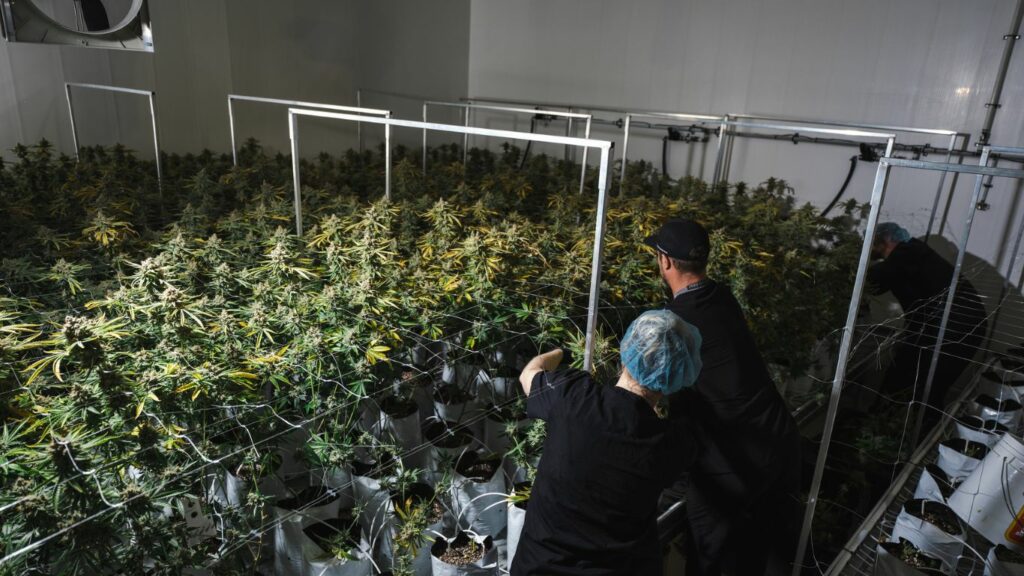
Grow Facility
“My recommendation for those looking to avoid making common mistakes is to educate yourself or bring on expertise that will help you navigate all the regulations. Ensuring that you’re aware of what the regulations mean will help you make decisions regarding the future of your business that will pay off in the long run.”
While some might think the industry is easy money, the reality is quite the opposite.
“I think a lot of people rushed in thinking it would be easier to operate and make it in this market than it is. Regulation is a convoluted and tricky part of the industry that few have the experience to navigate. On top of that, banking regulations have also made it very difficult. I hope those can be changed to be like any other legal Canadian business.
I recommend others in the industry buckle up, watch overhead, and plan to be in a marathon. It is critical to pace your growth and make sure you stay in positive cash flow. And, of course, try and enjoy the ride!”
Navigating provincial markets
A key to Sitka’s success, he continues, is providing the additional knowledge and infrastructure for smaller growers who may not have the interest or ability to navigate the often complex process of being able to sell into a provincial market.
“I think that producers struggle in this area because there can be a tendency to direct all focus on growing, or alternatively, all focus on business functions like sales and marketing. I think that being a skilled grower is only half the business, and quality assurance, distribution, team management, and sales and marketing make up the other half. Both sides of the business need to be mastered, as they work in lockstep with each other to achieve success.”
Another piece in any business, he says, is building strong, cohesive teams.
“It is imperative to learn how to build teams with individuals that have unique and diverse skill sets. It may sound cliché, but you need to surround yourself with people who share your passion and have specific talents that you don’t have. This has always helped keep me from working in an echo chamber and ensures that different perspectives and considerations are brought to the table.”
By Miranda Leybourne, Local Journalism Initiative Reporter
After successfully running the historic Plaza Petals Flower Shoppe for a year, Souris entrepreneur Cindy Russell is setting her sites on bringing a different kind of greenery to her community — marijuana.
Russell, who moved to Souris, located 47 kilometres southwest of Brandon, around 17 years ago, stepped into the role of owner of Plaza Petals Flower Shoppe last June. After celebrating her one-year anniversary at the store on June 1, Russell said she’s looking forward to starting another business in the town — a cannabis store.
“I was kind of looking for something else to add 1/8to the building 3/8,” Russell said.
Advertisement
Partnering with Nikki Moreau, Russell’s friend and the former owner of the Plaza Petals Flower Shoppe, just made sense, since the pair have worked together before. After she applied to run the business, Russell reached out to Moreau and asked if she’d like to become partners in running the cannabis store.
So far, the community of Souris has been incredibly supportive of both the flower store and the soon-to-open cannabis store, Russell said.
“We’ve been so supported in the community, with not only our town council and staff, but also with the future customers and people that live in town coming up to us and saying that they can’t wait for it to open.”
Moreau isn’t surprised by the support and enthusiasm the cannabis store has received, saying that most people in Souris understand an “everything in moderation” approach to cannabis.
“It’s one of those new things. Like every new thing, it’s going to take a little bit 1/8to get used to 3/8, but we plan on being very professional,” she said.
Moreau and Russell said they are excited to offer a “speakeasy” sort of experience at their new store — where customers can feel free to walk in and buy what they need, but in a discreet way. The way the store is laid out now, it’s not even possible to tell that a cannabis store is in the same building as the flower shop.
“You don’t even know that it’s really in the building until you’re in the building. And if somebody does have a problem with bringing out a marked bag, we can wrap it in flower paper, like you’re taking a bunch of roses,” Russell said.
The shop will also offer home delivery and “click and collect” pickup from the flower store. In addition to marijuana in its raw form, the shop’s inventory will include edibles, chocolate drinks, lip balms, lotion and more. It will also offer cannabidiol (CBD) products, which are made of an active ingredient in cannabis that is derived from the hemp plant but does not cause a high and is not addictive. Many people, including Moreau, use it as supplements for pets with arthritis, and others ingest it to aid in sleeping, pain management and anxiety and depression.
“We want to be able to carry a diverse range of all kinds of things to be able to help anybody out there,” Russell said.
If all goes well with the final inspection from the Liquor, Gaming and Cannabis Authority of Canada, the store could even be open at the time this story is published. At the latest, Russell says it should be open by Canada
Taking over the flower shop and calling on Moreau for help in that process has shown just what a great partnership the two women make, Russell said.
“She’s been amazing. She comes here when I’m like, `I need you now, please!”’ Russell said. “I’m still learning. There’s so many different flowers and plants, and I was never a green thumb, so I’m learning a lot.”
It’s that ability to learn something new every day that makes Russell’s job at Plaza Petals Flower Shoppe so exciting, she said. The support that the residents of Souris have shown the shop — which has been running since 1976 — is also heartwarming, Russell said.
“We have a great community here. People get involved.”
Being able to work with flowers every day, which Russell said are a delight to the senses, is also a huge part of her job satisfaction, as is being able to help people pick out the perfect bouquet or gift for their loved ones for all sorts of different occasions.
“Coming up with something so beautiful, that’s going to make someone smile or make someone feel better, it just shows all sorts of caring that people do when they give flowers,” she said.
Moreau, who ran the shop with her mother for eight years before Russell took the reigns, says her friend has adapted incredibly well in her new role as the owner of the store, and has carried on her and her mother’s legacy of providing an important service to the people of Souris.
“She jumped right in. She’s such a quick learner,” Moreau said of Russell. “She’s so good with customers. It’s just awesome.”
The fact that the business has always been women-owned, and has always featured women supporting women, is the icing on the cake, Moreau said.
“To be able to pass it over to Cindy, who is already such a strong supporter of women in the community — there just couldn’t have been a better fit.”
A Senate committee says the current cannabis market and legislation has kept Indigenous Peoples from sharing in the economic opportunities that the legalization of recreational pot created.
The standing Senate committee on Indigenous Peoples said Thursday that it wants the country to shift its approach to cannabis to help Indigenous communities and entrepreneurs better benefit from the pot market.
A review the committee undertook left members “severely disappointed but not surprised” to hear that Indigenous Peoples found themselves often shut out of or facing additional barriers in the cannabis market.
Advertisement
“Once again, Indigenous Peoples have been excluded from participation in the economic prosperity of the country,” said Brian Francis, a P.E.I senator hailing from Lennox Island First Nation, at a press conference in Ottawa.
“And once again, little regard has been given to how our lives have been impacted.”
The committee he sat on found the Indigenous community’s difficulties in fully taking advantage of cannabis legalization stem from legislation around the sale and distribution of cannabis, licensing and even the regulation and policing of the substance.
Many problems the community faces were identified before legalization happened in October 2018 in consultations that were “inadequate at best” and “could and should have been addressed five years ago,” Francis said.
“This oversight, to put it as charitably as I can, cannot readily be corrected,” he said.
“The cannabis market is now largely saturated. First Nations entrepreneurs will have to work twice as hard to gain a foothold in this market.”
The committee found some First Nations are completely blocked from participating in the cannabis market because the federal government set the scope of the legal sale and distribution of pot, but left regulation of legal activity to provinces and territories.
This meant some First Nations groups had to enter into regulation and sale agreements with provinces and territories
While agreements have been reached in British Columbia, Ontario and Saskatchewan, Indigenous communities told the committee Quebec and the Northwest Territories have not made similar moves.
Thus, the committee would like the Minister of Health to amend the Cannabis Act to permit First Nations to regulate the possession, sale and distribution of cannabis on their lands. It is also recommending a meeting be held with First Nations, federal, provincial and territorial governments to solve jurisdictional challenges they face.
Legislation has also left few Indigenous communities with the licenses from Health Canada and the Canada Revenue Agency (CRA) that are necessary to operate in the cannabis industry.
As of last September, the committee counted 55 Indigenous-affiliated applicants for commercial cannabis licenses, with 12 of those located in First Nations communities. Some 47 Indigenous-owned or affiliated businesses have received commercial licenses, including six in First Nations communities.
The committee feels this number is small and indicates Indigenous cannabis entrepreneurs may face additional barriers in the licensing process, so it would like the CRA to review the licensing process.
The committee also turned its attention to the excise tax, which is imposed on cannabis products when they’re delivered to buyers and shared between the federal, provincial and territorial governments.
For dried and fresh cannabis, plants and seeds, the tax amounts to the higher of $1 per gram or a 10 per cent per gram fee.
For edibles, extracts and topicals, it’s a flat rate based on the number of milligrams of total THC in the product. There are additional duties in Alberta, Nunavut, Ontario and Saskatchewan.
First Nations communities do not receive a portion of the tax, but the committee wants the government to look at how they could share in the levy.
Rounding out the recommendations were suggestions around the policing, research and medical insurance related to cannabis, along with the committee urging the government to hear from the Inuit and Metis communities, which it did not reach because of the COVID-19 pandemic.
“There’s certainly some work that still has to be done, but I would say this is a golden opportunity for the government to act,” said David Arnot, a Saskatchewan senator, at the same conference as Francis.
“We’ve given them clear recommendations and if they follow those recommendations, that will really set the stage for a reconciliation, certainly, economic reconciliation.”
Guillaume Bertrand, a spokesperson for Minister of Health Jean-Yves Duclos, said his office has no comment on the report, but will review it.
“We thanks the senators for their important work,” he said in an email.
Everyone has a favorite summer annual they rely upon every year to add color to bare garden spots or containers. It may be the classic geranium, the bright yellow marigold, or the heat-loving petunia. But, for me, impatiens are my summer stalwart.
A Love For Impatiens
They grow and spread quickly, offering instant gratification. Their flowers range in shades from crimson red to calming mauve. Once established, impatiens will last through to the first frost.
Impatiens are hardy to climate zones 10 and 11 and are perennial in sub-tropical and tropical climates. However, in colder regions, they can’t withstand temperatures below freezing and die back annually.
They get their name from how quickly and impatiently the seed pods form and open after flowering. But they also go by several aliases, including busy Lizzie, patient Lucy, or touch-me-not plant.
Part of the Balsaminaceae or balsam family of plants, the most popular garden varieties are Wallariana or super elfin impatiens, SunPatiens, and New Guinea impatiens.
Wallariana or Super Elfin Impatiens
These are the most popular but were the hardest to find in recent years. Nine years ago, they endured their own form of pandemic.
Downy mildew, a fungal disease, wiped out these summer flowers across Europe and North America. It took several years, but breeders worked hard to re-establish strains and colors. Now, downy mildew disease resistance Wallariana and Super Elfin impatiens are in garden centers everywhere.
There are only a few simple things to keep in mind when planting. First, despite not liking to bake in the hot sun, they also don’t like it too cold, so wait until nighttime temperatures are a steady 10°C.
Enjoying a sun/part shade location and well-draining soil, water them regularly until established. These plants with tiny 2.5 cm flowers will surprise you as the growing season goes on and will spread and grow to about 25cm tall and wide. So make sure to give lots of space between each plant – about 10cm apart.
New Guinea Impatiens
New Guinea impatiens are tropical plants from, of course, New Guinea. Arriving in North America in the 1970s, they are much bigger than their Wallariana cousins. They have large 2.5 to 3cm five-petalled flowers and tapered dark green or variegated leaves, which make a bold statement in the garden.
Growing into rounded mounds up to 38cm tall and wide, they are excellent in hanging baskets or containers. They’ll be happiest if left planted in dappled shade and will droop if not watered consistently, so keep the ground or pot they’re in moist. If given monthly feedings of a low-nitrogen fertilizer or compost, they will continue to the first heavy frost.
SunPatiens
SunPatiens are a New Guinea hybrid developed in Japan and introduced to North America in the early 2000s. These impatiens have recently become popular because they adapt to almost any condition.
Easily confused with New Guinea impatiens (although nothing alike), they’ll thrive in the hot sun and poor sandy soil. They bloom more prolifically than New Guinea impatiens; their leaves are slightly darker and thicker.
You can plant all three varieties in cold climates until the middle to end of June. So easy to grow, beautiful to look at, and lasting through to frost – what more can you ask of any plant?
Thai Ganja TV has been a platform where marijuana enthusiasts have closely followed the remarkable transformation of the drug from being a banned substance to a legalized medicinal plant and eventually a recreational indulgence. However, a year after the decriminalization of cannabis in Thailand, the platform’s approximately 90,000 followers are now witnessing with bemusement the threats from rival politicians who seek to once again outlaw or strictly regulate open consumption and dispensaries.
At the forefront of this debate is the soon-to-be prime minister, Pita Limjaroenrat, whose party MFP surprisingly emerged as the winner in the May 14, 2023, general elections. Although MFP is generally seen as the most progressive political party in Thailand, marijuana advocates argue that it is spearheading the movement to curtail recreational use, casting a shadow over the nation’s multibillion-dollar marijuana industry.
Pita now asserts that the marijuana boom should be temporarily halted to control recreational use until the next government passes the proposed marijuana act, which would establish clear guidelines on the sale and consumption of the drug. This aligns with the perspective of Pita’s alliance, comprised of eight parties, several of which are from the conservative, largely Muslim provinces of southern Thailand.
The alliance’s position on cannabis has infuriated Health Minister Anutin Charnvirakul, who championed the substance’s liberalization and refuses to support any government that aims to retract the current laws, even on a temporary basis. Anutin’s party, Bhumjaithai, holds 71 seats, which gives it considerable influence in determining the next government’s composition.
While politicians engage in disputes, marijuana advocates are growing increasingly frustrated with the uncertainties surrounding their industry. The legal ambiguity has eroded investor confidence, despite the industry’s rapid growth after decriminalization. Thailand has experienced a visible transformation with regard to cannabis, as it swiftly transitioned from a country with severe penalties for cannabis possession to one of the most permissive environments for its use and sale.
Exploiting the legislative gaps resulting from the failure to enact the marijuana act, both Thai residents and tourists openly consume cannabis on the streets. The market has also been flooded with illegal imports, primarily from North America, providing ample ammunition for opponents of the liberal marijuana culture.
Kobboon Chatrakrisaeree, a small-scale farmer in a Bangkok suburb, says the initial excitement following decriminalization has subsided. He claimed that due to the lack of appropriate restrictions, cannabis is now polluted by careless company owners who sell to minors and by people who openly smoke on the streets as if they were in Canada.
The regulatory uncertainty seen in the marijuana industry around the world has created an opportunity for enterprises such as IGC Pharma Inc. (NYSE American: IGC) to develop medicines from marijuana. These entities plan on getting FDA approval for those therapeutics so that patients can easily access the novel treatments sans fearing that they could run afoul of prohibitive laws or complex state-level marijuana regulations.
NOTE TO INVESTORS: The latest news and updates relating to IGC Pharma Inc. (NYSE American: IGC) are available in the company’s newsroom at https://cnw.fm/IGC
About CNW420
CNW420 spotlights the latest developments in the rapidly evolving cannabis industry through the release of two informative articles each business day. Our concise, informative content serves as a gateway for investors interested in the legalized cannabis sector and provides updates on how regulatory developments may impact financial markets. Articles are released each business day at 4:20 a.m. and 4:20 p.m. Eastern – our tribute to the time synonymous with cannabis culture. If marijuana and the burgeoning industry surrounding it are on your radar, CNW420 is for you! Check back daily to stay up-to-date on the latest milestones in the fast -changing world of cannabis.
To receive instant SMS alerts, text CANNABIS to 21000 (U.S. Mobile Phones Only)
Please see full terms of use and disclaimers on the CannabisNewsWire website applicable to all content provided by CNW420, wherever published or re-published: http://CNW.fm/Disclaimer
Do you have questions or are you interested in working with CNW420? Ask our Editor
“Meaning and morality of One’s life come from within oneself. Healthy, strong individuals seek self-expansion by experimenting and by living dangerously. Life consists of an infinite number of possibilities and the healthy person explores as many of them as possible. Religions that teach pity, self-contempt, humility, self-restraint and guilt are incorrect. The good life is ever changing, challenging, devoid of regret, intense, creative and risky.” ~Friedrich Nietzsche
We’ve all made mistakes. We’ve all been weak. We’ve all made poor decisions that led to painful results. But it gets us nowhere to wallow in misery. To remain stuck in a rut, whining at the Powers That Be or vainly railing against the universe. Likewise, it gets us nowhere to squander our hard-earned pain on sentimental placation, mawkish feel-good tropes, and pretend forgiveness.
There comes a time, after we’ve licked our wounds and after we’ve healed enough, to rise out of our misery and get down to brass tacks. A time to dig down into the roots of the self. A time to alchemize medicine out of madness. A time to grab the bull by the horns and wrestle it into a more adaptable form. A time to use our suffering as a steppingstone into higher suffering. A time to take the ashes of our anger and begin the search for the Phoenix hidden within.
1.) Seek self-expansion; live dangerously:
“When seeking guidance, don’t ever listen to the tiny-hearted. Be kind to them, heap them with blessing, cajole them, but do not follow their advice.” ~Clarissa Pinkola Estés
Take risks. Do it despite the tiny-hearted. Do it despite any so-called authority. Be an unapologetic risk-taker. Just be strategic about it. Be fluid. Be smart.
So, you’ve fucked up in the past. Big deal! We’ve all fucked up in the past. Some more than others. But comparing your worst to another person’s best is the worst thing you can do. Take your power back and then take risks with it. Push your comfort zone over the edge. Push it until it hurts. Then come back and heal.
Make more mistakes if need be. Make bigger and better mistakes that you can use later on to build something greater than anyone could have possibly imagined.
Live dangerously. Live fleetfooted and precarious. Challenge the gods. Disobey the Powers That Be. Keep your power. Sometimes you just need to shrug your shoulders, grit your teeth, laugh at your past mistakes, stare into the void of your future, take the Bull of the Present by the horns, and say fuck it! Time to turn this shit into gold.
2.) Be adventurous; explore:
“The greatest obstacle to living is expectancy, which hangs upon tomorrow, and loses today. You are arranging what lies in Fortune’s control and abandoning what lies in yours. What are you looking at? To what goal are you straining? The whole universe lies in uncertainty. Live immediately.” ~Seneca
There’s a whole world out there. Use your badness to give you the bravery needed to take a leap of courage. Life is either a series of ‘leaps of courage’ or it is a handicap of stagnations. Choose to take leaps of courage into ever new soul-awakening, heart-breaking adventures. Avoid daily grinds, especially those that suck the spirit out of you. Live on purpose, not with expectations.
Make the obstacle the path. Use your ruthlessness to your advantage. Don’t vacillate in the face of vicissitude. Flip the script. Turn the tables. Take the reins of your life out of the hands of whoever or whatever has control over them. Take control of the only thing you somewhat have control over—yourself. You have from this moment until the day you die to live the life you’ve always wanted to live.
Death is a compass. Use the compass to guide you into adventure. Take the ceiling of your heart and crucify it. Existentially crush out. Set your teeth firmly into the pulp of experience. Open your heart and keep your soul’s hand fast upon the helm as you sail away into the horizon of a new way of being human in this world.
3.) Be creative; transform pain into art:
“This moving away from comfort and security, this stepping out into what is unknown, uncharted and shaky –that’s called liberation.” ~Pema Chödrön
Harness your badness. It will give you courage. And there is nothing more courageous than the creative act. Artistically expand yourself. Don’t worry about if it’s good or not. Imaginatively magnify your pain into art. Don’t worry if it seems silly or eccentric. Eccentricity is Innovation’s best friend.
What matters is the catharsis of it all. What matters is healthy transformation. It’s especially effective on latent emotions that have been repressed. The drawback is that you feel the pain again, but that is vastly trumped by the upshot of feeling healthier for having co-created art with that pain. In fact, it is precisely the renewal and renegotiation with the pain which prevents it from becoming further repressed and thus further cloaked in unhealthy and unreconciled shadow energy.
The result is a kind of cosmic catharsis, which takes suffering greatly to the next level. It Channels death anxiety into a work of art that symbolically transforms pain into power and death into life.
The art created from cosmic catharsis becomes the art of life. It’s the unfolding of life as art and art as life. What Ernest Becker called our “immortality project,” which is essentially a creative and heroic engagement with life that creates meaning, purpose, and significance in the grand scheme of things. It’s a way of transforming mortal pain into immortal art.
4.) Live intensely; transform wounds into wisdom:
“To change, a person must face the dragon of his appetites with another dragon, the life-energy of the soul.” ~Rumi
The life energy of the soul cannot be stopped. Except by you. You and you alone have the power unstop it. So, what are you waiting for? Use your badness to propel you into greatness. Live passionately despite the passionless. Life is too short to remain tight inside the comfortable bud of your less-than-exciting life. Break free. Face your demons, or they will demonize you.
If you really want to live greatly, you must open yourself up to being present to your wounds. you must open yourself up to reconciliation with your demons. The wound of yesterday has the potential to be the wisdom of tomorrow, but it must be embraced and reconciled in the present. This moment is all you have. Right now, is always the time for transformation. Is it ‘one day’ or is it ‘day one’? You decide.
Transforming wounds into wisdom is an act of love toward the darkest part of ourselves. This act of love can dissolve mountains. It can melt down hardened repressions, revealing the sacred darkness beneath: your struggling shadow. It’s then and there where you learn one of the most powerful secrets that exist. And the secret is this: the shadow can be your worst enemy or your greatest ally.
5.) Live adaptively; shatter the façade:
“And the day came when the risk to remain tight in a bud was more painful than the risk it took to blossom.” ~Anais Nin
Look into a mirror, preferably a broken one. Look past your plethora of masks. Strip your soul naked, then love what’s left. Shed your too-thick skin. Reinvent transformation. Don new masks: Hero, Trickster, Warrior; Crow, Whale, Wolf. Realize that finding yourself is not an end or a beginning but a story constantly unfolding itself. Your story, if you have the courage to be its author.
Shatter the façade. Everything is changing anyway. Nothing remains the same. There is no permanence except impermanence itself. Embrace that fact. Everything is moving in and out of itself. You are moving in and out of “yourself.” Let yourself move.
A façade is anything saying otherwise, anything fixed and rigid, anything unwilling to change and therefore forced into becoming a living deprivation, a wanton suppression, a whiny expectation. Shatter it. Break it across the world.
Smash it into a thousand pieces at the feet of all who wish to remain stagnant and complacent. Staple it to a wall and throw darts at it. Pull it down from all its high and mighty pedestals, then force it to dance in the abyss with you performing insouciant pirouettes around it. This is your life. Nobody is coming to save it. This is your pain. Nobody else is going to feel it. This is your badness. It is your responsibility, and yours alone, to transform it into your best.
Gary Z McGee, a former Navy Intelligence Specialist turned philosopher, is the author of Birthday Suit of God and The Looking Glass Man. His works are inspired by the great philosophers of the ages and his wide-awake view of the modern world.
This article (5 Ways to Baptize your Badness into Your Best) was originally created and published byThe Mind Unleashed and is re-printed here under a Creative Commons license with attribution to Gary Z McGee and themindunleashed.com. It may be re-posted freely with proper attribution, author bio, and this statement of copyright.












Recent Comments