


Cultivating sun-grown B.C. bud at scale
As many people know, B.C. bud has quite a reputation, not just in Canada, but around the world. That’s something we’ve always taken seriously at Pure Sunfarms. Since legalization, we’ve had the incredible opportunity of transforming our greenhouse from vegetable growing into a large-scale cannabis operation for the cultivation of sun-grown B.C. bud.
There’s a few things that have really been important to our success as a Canadian LP, and most of it is in the way we do things here in our greenhouse.
I’ve been working in this same greenhouse for over 20 years, long before we were cultivating cannabis; I know this environment and this greenhouse inside and out. Unlike vegetables, cultivating cannabis requires a whole different set of expertise, which is why our team consists of greenhouse experts and legacy cannabis growers who work alongside each other, informing every step of the process.
To us, cannabis cultivation is not about reinventing the wheel or doing something first, it’s about understanding the plant we grow and adapting our operations in a way that produces quality cannabis at our scale all year long.
Advertisement
Right now, we operate within 1.65 million square feet of greenhouse space and have been recognized as one of the largest recreational cannabis cultivators in the world. How are we successfully growing at this scale? Through thoughtful innovation of both our practices and our product offerings.
An example of this is our recent transition to the hang drying method: a legacy practice that flips the whole plant upside down (leaves and all).
Hanging our plants to dry protects the integrity of the bud, its trichomes and terpenes, and the natural structure of the bud. This transition took us many months to roll out because we wanted to do it right. Since the switch, we’ve heard great feedback from both consumers and retailers.
At this time of year, we are in our peak cultivation period, which usually falls between April and June. Now we’re usually able to yield about 40 per cent more than the fall and winter months as the temperature in the greenhouse is naturally optimal for our plants. This is because we’ve optimized our cultivation practices to harness the power of the sun.
Our greenhouse is situated within B.C.’s sunny Fraser Valley, which allows us to grow using primarily natural, full spectrum sunlight for about 298 days, or 40 per cent of the year. All this solar power also dramatically reduces our electricity use at the farm. And to further conserve energy, we use innovative energy screens that help to capture the sun’s warmth and prevent heat loss year-round.
At any given moment, our flower rooms, each approximately the size of a football field, are filled wall-to-wall with plants. Each room features state-of-the-art lighting, irrigation, and temperature control systems.
We carefully tend to each batch and constantly monitor each room through our 24-hour app-based monitoring system, ensuring the plants get exactly what they need when they need it. We’re consistently cultivating tried and true B.C. strains, like our top-selling Pink Kush, now being sold in Germany, while also trialing new genetics to see what grows best in our greenhouse. Not everything makes it into our packs. It is only the strains we know consumers want, and that thrive in our environment.
At the end of the day, we know what is expected of B.C. bud and we take that seriously in everything we do. It’s humbling to see what we’ve created in such a short time, and how Canadians love our products. It’s an exciting legacy to be a part of, and we’re only just getting started.
As VP of cultivation and operations, Rob Baldwin grows high quality plants with a passionate team of growers. He is responsible for Pure Sunfarms’ cultivation and greenhouse operations and continues to deliver quality cannabis to the Canadian market.

The Monoclonal Antibody Strategy
www.natureofhealing.org
The Monoclonal Antibody Strategy
By Rosanne Lindsay, Traditional Naturopath
Get ready for monoclonal antibody targeted vaccines!
But first a refresher…
 alizainsyed from Pixabay” width=”300″ height=”225″>
What is an antibody?
Human antibodies are Y-shaped molecules produced naturally by the body’s immune system. They recognise, bind to and neutralise specific viruses and other pathogens. – AstraZeneca, What Science Can Do.
What is a monoclonal antibody?
Monoclonal antibodies are lab-made antibodies that mimic what your natural antibodies are able to do, and are most often used as a form of targeted therapy for specific kinds of cancer, but they’ve also been used throughout the pandemic to help fight off COVID-19. – Cleveland Clinic, April 2023
Vaccine History
Vaccines were first developed under a strategy to stimulate and imitate natural antibody production in the body. This artificial manipulation of the immune system by scientists became known as Acquired Immunity (vs Natural Immunity). However, vaccine-induced, immunity is not long-term or reliable. A tell-tale artifact of vaccines is that their protection wanes overtime.
So, scientists set out to create a “new and improved” vaccine.
Enter the mRNA experimental COVID vaccines! These injectables are a mix of proteins from different viruses from the Family Coronaviridae. They are not designed to stimulate antibody production, because they are not true vaccines. Scientists call this gene-therapy. They are also being used as Cancer therapy.
Further, mRNA injectables are nanotechnology. They are emergency-use authorized, not FDA approved .The role of nanotechnology instructs the genome to create new proteins (antigens) not previously known to the body.
Unfortunately, the negative consequences of mRNA nanotechnology are many. mRNA jabs come with collateral damage that can dismantle the immune system. Some adverse events result in autoimmune diseases such as hemolytic anemia or Graves disease. Symptoms include premature aging:
This reduction in epigenetic clock estimates was significantly related to chronological age and immune cell-type compositional changes in B cells and plasmablasts pre- and post-vaccination. –Pang et al., Journal of Front Genet, June 2022
Enter the monoclonal antibody vaccine!
Monoclonal antibodies may be required for people who cannot develop or maintain an adequate immune response after vaccination. – Covid19 Prevention Network
Monoclonal Antibodies: Ready, Aim, Fire
They are a type of targeted cancer therapy, which means they are designed to interact with specific targets. – National Cancer Institute
 0fjd125gk87 from Pixabay” width=”300″ height=”201″>
Monoclonal antibodies (mAbs) are a targeted platform, injected into the body. Think of it as a military-type, seek-and-destroy mission that picks up where the mRNA vaccine leaves off. The mAbs technology claims to specifically target a certain antigen for removal. In essence, mAbs counteract the effects of the first vaccines.
Specifically, where the mRNA vaccine encodes the DNA to create a foreign “spike protein” in the body, a SARS-Cov monoclonal antibody vaccine then targets that spike protein for removal.
There are dozens of new monoclonal antibodies soon to be released. A handy tracker of monoclonal antibodies in development for COVID-19 is maintained by The Antibody Society.
 Richard Duijnstee from Pixabay” width=”300″ height=”246″>
There are now antibody vaccines for colds and flues in development.
Why has there never been a universal cold and flu vaccine before?
According to Yury Bochkov, a respiratory virus specialist at the University of Wisconsin School of Medicine and Public Health, “Considering there are more than 100 types of A and B rhinoviruses, you would have to put all 100 types in one vial of vaccine in order to enable protection” against just A and B rhinoviruses.
In the cases of universal coronavirus and influenza vaccines currently under development, researchers have focused on more than just the surface protein, targeting other viral parts, such as the surface protein’s stalk, that are still detectable by our immune systems, but less likely to mutate from one variant to the next.
Will the strategy work or is it a pipe dream?
Natural Immunity is Innate
 Silvia from Pixabay” width=”300″ height=”300″>
According to the human body, the natural immune system is already a thing of perfection. It comes as part of the human package, organically, through birth.
The body’s innate wisdom creates custom responses to the internal/external environments, at every moment, through two known poles of the immune system; cell-mediated responses and antibody-mediated responses. This dynamic system is referred to by western medicine as Adaptive Immunity.
The innate immune system adapts to changing stimuli for the best chances of survival. It can distinguish between different classes of pathogens and recruit the most effective form of adaptive immune response to target and eliminate them.
The ability to discern what is foreign from what is Self is an inherent feature of natural immunity. Thus, the body is able to create life-long immunity when it comes to most any infection. Vaccines, created in a lab, can only claim to stimulate an artificial antibody response. But when has that stopped scientific progress?
Maybe we’ll see a flu, COVID, RSV vaccine all combined in one.- Yuri Bochkov, Respiratory virus specialist
The current flu vaccine is polyvalent, or quadrivalent, and contains adjuvants to stimulate an immune response, unnaturally.
The Risks of Injecting Antibodies (mAbs)
Monoclonal antibody therapies are described as “antigen based.” They are developed to be used in patients at risk for developing severe disease to decrease hospitalizations and mortality.
According to the government-funded, 2023 NIH study, “Benefits and Risks of Administering Monoclonal Antibody Therapy for Coronavirus (COVID-19)” there are serious risks for this group, including:
- Monoclonal antibodies are EUA (Emergency Use Authorized], not approved. [where have we heard that before?]
- As viruses evolve and mutate, mAbs become ineffective (fail to neutralize activity). This is the reason cold and flu vaccines do not work.
- Adverse events such as transfusion reactions and anaphylaxis are documented.
- As of January 2023, all previously authorized monoclonal antibodies have lost their EUAs for the treatment of COVID-19 due to the resistance demonstrated by this variant.
- mAbs may promote selection for escape mutants.
- Complications include infusion-related reactions are characterized by flushing, fever/chills, back or abdominal pain, nausea/vomiting, pruritus, or skin rashes.
- Not authorized for use in severe illnesses requiring high-flow oxygen or mechanical ventilation due to this potential for harm.
- Not indicated for patients with advanced age and/or underlying medical conditions that increase the risk of severe disease.
- Not indicated for treating acute COVID-19.
- Mortality is significantly increased in older, sick, people compared to younger healthy individuals.

This newly designed “antigen based” technology is the approach of the Gates Foundation.
Novovax™
One of many WHO-approved vaccines is Novavax, a booster vaccine authorized for adolescents 12-17. Side effects include: difficulty breathing, face or throat swelling, fast heartbeat, rash, dizziness and weakness.
Speaking as a doctor, [one expert] said that he has looked at studies of a vaccine called Novavax that does not use mRNA technology but is antigen-based, and he’s very encouraged by it….The next phase of the vaccination program will be to roll out the two-dose Novavax and other antigenic vaccines, in place of the mRNA vaccines. – LifeSiteNews
Questions:
Why create an artificial, injectable, monoclonal antibody treatment when the body naturally creates original antibodies?
Why create nano-antibodies that target antigens (proteins) purposely created by mRNA injections?
Is it to create longterm customers who lack an immune system?
RelCoVax™
Some proponents advocate a 2-antigen protein vaccine, aka, a second-generation multivalent SARS-CoV-2 vaccine. aka, a monoclonal antibody vaccine called RelCoVax. The developer of RelCovax, and a key architect of the mRNA vaccine, advocates a four-pronged approach:
1) Use the vaccine for those at highest risk, such as the elderly;
2) Provide early treatment to help keep people out of the hospital;
3) Provide tools for individuals to assess their own risk
4) Provide tools for individuals to test whether they have Covid.
Note: This is the same ‘four pronged ‘strategy’ outlined by World Health Organization Director General, Dr Tedros Adhanom Ghebreyesus on March 13, 2020
WHO’s on First?
When the W.H.O downgraded Coronavirus as a threat and cancelled the pandemic, it also said that thousands of people are still dying from the virus every week, and millions of others are suffering from debilitating, long-term effects.
Are the long-term debilitating effects, and deaths, from a virus or from a vaccine? Is the WHO getting ready for “another threat?”
Are you confused?
This type of clarity belongs to the likes of two comedians who once asked the question: “WHO’s on first?” Are we witnessing the Abbott and Costello comedy hour?
[embedded content]
What Next?
Pipe dream or pipeline of nanotech jabs?
The pandemic strategy appears to be a 2-phase, Trojan Horse strategy, using 1) mRNA injections, as a first phase, and 2) antigen-based, monoclonal antibody injections as a second phase.
 Clker-Free-Vector-Images from Pixabay” width=”300″ height=”216″>
The W.H.O fails to warn about the serious adverse events of its strategies. These adverse events result from the experimental mRNA injections, as well as the risks of experimental mAbs already in use.
What ever happened to The Precautionary Principle?
the principle that the introduction of a new product or process whose ultimate effects are disputed or unknown should be resisted. It has mainly been used to prohibit the importation of genetically modified organisms and food.
The Precautionary Principle (PP), to many, is an approach that protects human health. To others, it is an obstacle to progress, and to pandemic-makers.
The nano, experimental injections coming down the pharmaceutical pipeline are described as an alternative treatment to vaccines. But it is up to each individual on just how far this experiment is allowed to go. This form of experimentation is a dead end for humanity, engineered by beings who have already reached their own dead end.
 ThePixelman from Pixabay” width=”344″ height=”229″>
Humans are born, organically, to the life wave of the Earth. They are not created through genetic modification, so they do not need genetic manipulation to evolve. A higher form of humanity happens through spiritual transmutation over many incarnations. Not through divergent beings from outside this life wave who parasitically live off of humanity.
The New Religion
DNA manipulation and tampering does not equate to creation. Humanity does not evolve through hybridization. Humanity is a direct reflection of the Earth and of the Cosmos. As humanity evolves so, too, does Earth.
The idea that science can genetically manipulate humans into a higher form is a new religion. It is propaganda promoted by scientists who claim to have a divine right to rule over humanity. The ancient alien narrative, as human creators from another time, will be popularized, complete with ships in the skies. Watch for it.
What will you believe, and what won’t you believe?
Who is responsible for your evolution?
Are you?
Know who you are and where you come from, or your identity will be redefined for you.
About the Author: Rosanne Lindsay, Traditional Naturopath


Copyright © 2023 Nature of Healing | All Rights Reserved |

Mysterious Beasts & Natural Wonders: Toward a New Understanding of Bigfoot, Flying Saucers, Fairies & other Inconvenient Realities
Mysterious Beasts & Natural Wonders:
Toward a New Understanding of Bigfoot,
Flying Saucers, Fairies & other Inconvenient Realities
Several years ago a critic wrote about me, “Horowitz is an okay historian, but the guy believes in leprechauns for chrissakes.”That is true – I plead guilty. In this paper, I will try to explain why my critic is right.
Although I am not a crypto-zoologist, I am a great admirer of the paranormal investigator Charles Fort (1874–1932). People wouldn’t necessarily call me a Fortean, though. I don’t study anomalies. But my critic was referencing a series of events that I once related, which happened to me about 20 years ago in the nation of Belize in Central America.
For those of you who don’t know Belize, it’s a very beautiful, English-speaking country that borders Guatemala and Mexico on the Caribbean. Belize is filled with lush forestry, rainforests, snaking rivers and hills – including vast hills in the highlands, which are the subject of folklore and mysteries.
I was staying in the hill country at an eco-jungle lodge founded by a very enterprising couple and their kids from Maryland. They carved the whole place themselves out of the jungle interior. The area attracted a fair amount of ecotourism. Staying at a lodge next door was the actress and model Brooke Shields (who was very nice).
Now, a cabdriver was taking us to this jungle lodge from the airport in Belize City. It was a long drive of about two-and-a-half hours. The final leg ascended a very rocky, unpaved road up a mountain. It was difficult to navigate in a standard car because the rocks and roots and undulating landscape caused the car to hit bottom from time to time, and the terrain can damage the chassis.
As we drove up the hill, the driver started saying, “I really don’t like going up into these hills. As soon as I drop you off, I am going to turn around and speed off and get out of here.” It seemed odd to speed away on such treacherous landscape. “What’s the rush?” I asked.
“Well,” he said, “there are little men who live in these hills. They’re called aluxes. They’ve lived here for centuries. If you see one of them while you’re walking around in the forest you’ll get so frightened that you won’t be able to speak. Your voice will get caught in your throat. I really don’t like coming up here.”
Sure enough, he dropped us off, turned around, and sped away. I thought, “Well, that’s kind of strange.”
We checked into the lodge and the next day went canoeing down a river that ran below the ridge on which it was perched. I started telling one of my travelling companions that I was really kind of pissed off at this cab driver because I thought he was just playing “scare the tourist.” I thought he was trying to have a little fun at our expense.
As I was talking about this, drifting along this deadly quiet river, a big boulder came crashing down in front of us, having been rolled down a hill or falling down a hill from somewhere along the ravine we were canoeing through.
I got nervous and I thought, “All right, I need to watch what I say.” Because there’s a folk tradition that if you talk about these creatures they come around. This is why some people in Ireland today won’t make reference to “little folk” or leprechauns – they use euphemisms like “the other crowd.” This opens an interesting point: you find traditions of these little creatures all throughout the world. This folklore exists in Central America, in Ireland, in Polynesia, in West Africa. Virtually every continent has these legends, going back centuries, which include the detail that if you start talking about these little beings, sometimes called wood sprites or fairies or brownies, you invite them into your life, and they can cause mischief.
Many traditional-minded people in Ireland today believe so strongly in the existence of “the other crowd” that in 1999 a major highway under construction in County Clare got rerouted to avoid running past what was known as a fairy bush – the domain, so it is said, of these little beings. The fear was that if you run a highway through a fairy bush you will incur their wrath, and they will cause accidents. A folklorist and historian named Eddie Lenihan, with whom I’ve worked and greatly respect, helped prompt the change.
Who Goes There?
Perhaps I’m sympathetic to these events because I do not want to live in a world where no mysteries remain. I do not want to live in a world where you hear a twig snapping in the woods and don’t wonder, “Who goes there?” I don’t want to live in a digital, fluorescent-lit environment in which we feel that we know everything that’s out there.
Call it sentiment, but I think that most of us feel intuitively, and sometimes through personal experience or study, that the belief nothing at all is lurking in the dark corners doesn’t cover all the bases of life.
There exists so much testimony and so many stories of people having unusual experiences with things that are not supposed to be there, whether they’re little men or Bigfoot or something that’s lurking in the water. We’re all attached to these stories to some degree. Obviously, the concept of Bigfoot or some kind of mysterious simian runs not only through a great deal of our folklore but wields a great hold on people’s attention today.
The question is, why? We face so many crises and problems in the world: war, climate change, famine, and all of the wonderful things coming out of the White House. Why would we be interested today in the persistence of mysterious winged beasts or Bigfoot or yeti or fairies? For what reason?
I think part of the reason is not only that some of these things may be empirically real – when considering the paranormal I do not remove empiricism from the table prima facie, a point to which I’ll return – but I think our fascination with mysterious beasts and natural wonders speaks to how we feel, and have reason to feel, that there exists an unseen dimension of life. Something beyond our workaday, five-sensory existence.
What I am describing goes beyond a wish to believe in the mythical. Rather, it touches upon our understanding of a world that doesn’t fully disclose itself, but that we experience intuitively, insightfully, and even cognitively in terms of phenomena that may be causatively related to our minds, as well as to unseen dimensions, the reality of which we’re unable to fully decipher but which we catch glimpses of from time to time.
The UFO Thesis
This is true also of so-called UFO or extraterrestrial sightings. I think that we are actually living through a moment, in the here and now, where we are experiencing a cultural breakthrough in understanding about the existence of unknown forces and expressions of life.
This can be seen in particular with regard to the UFO thesis. In September 2019, the Guggenheim Museum in New York City hosted a remarkable, and I would say unprecedented, panel on UFOs and extraterrestrials. This was notable in itself because the Guggenheim is not considered a fount of occult passions. This is the first time I can recall any major cultural institution in the city hosting a panel like this and earnestly exploring this question.
The panel was the work of a very innovative curator, Troy Therrien, who oversees the Guggenheim’s architectural collection. It featured writer and scholar Gordon White, a wonderful occult intellect, and philosopher and historian Diana Pasulka. It was a fascinating program before a packed house. Afterwards, the curator asked me: “At what point do you think it is going to become intellectually embarrassing within our culture not to take seriously the question of UFOs?” I told him that I do not refer casually to paradigm shifts. I often deflect questions from mainstream journalists about supposed occult revivals because I think such framings are usually a way of trying to find a news hook. I don’t speak casually about those kinds of cultural shifts. With that in mind, I replied, “I actually think, in all honesty, that we have just now, at this very time, entered the point culturally where it is no longer sustainable or even intellectually serious to wave off the notion of UFOs.”
This shift arose in part from an event in 2017. The Pentagon and the Navy released cockpit footage and recordings of pilots witnessing UFOs, including vehicles moving at unbelievable speeds, behaving in ways that airborne vehicles are not supposed to behave, and the pilots asking: “What is that?” This material was so plain, clear, and persuasive that it moved even holdouts in the gatekeeping culture to acknowledge its significance.

The footage appeared in a prominent and widely read piece in The New York Times, co-written by the excellent researcher Leslie Kean. I consider it one of the most significant news stories because it finally moved the dial on the debate. The question of what UFOs are remains unsettled, of course; but that the testimony and records of such phenomena raise profoundly valid questions is now denied by no serious person.
I date the before-and-after of this shift to a pair of columns that appeared in the same newspaper by the opinion writer Ross Douthat. This writer considers himself a no-nonsense, old-school conservative, of which we have few remaining in the US. In December 2017, Douthat wrote a column headlined “Flying Saucers and Other Fairy Tales.” As you can gather, the column denigrated interest in UFOs as a persistent and silly trope. Oddly enough, as a device for dismissing the delusions of UFO acolytes, Douthat used the work of my friend Jacques Vallée. Jacques is known not only for co-designing the prototype of the Internet, but he is also one of the most trenchantly intelligent UFO researchers of our time, as well as a brilliant social observer and writer. His diaries Forbidden Science revive a style of serial-memoir writing that hasn’t been seen since the early-to-mid twentieth century.
The columnist cited Jacques as saying that there was mechanical unlikelihood of vehicles from outer space being able to reach our terrestrial confines. But what Douthat omitted in Jacques’ work, and what is most distinguishing in his theorising about UFOs, is that he long ago posited there are so many apparent mechanical impossibilities involving UFOs that, following the principle of Occam’s Razor, it’s plainer and broader to theorise that some of these sightings may be extra-dimensional. I’ll say more about that and define what is meant by extra-dimensional. Oddly, the columnist entirely omitted that key facet of Jacques’s outlook.
Flash forward to August 2019, a month before the Guggenheim panel. The same columnist reversed course and wrote a piece, while not related specifically to UFOs, in which he noted the persuasive (if unsettled) nature of some of the UFO data that had recently been released, without noting that less than two years earlier he dismissed the validity of considering such data. I tweeted my thanks that he had seen fit to change his position. To my surprise, the New York Times opinion section retweeted me – another institution not known for its occult passions. I began to realise, typified by this little turn of events, that we have reached a turning point where it was intellectually unserious to dismiss the UFO question. I would challenge any materialist scientist or philosopher to push back against that statement.
Random Numbers & Patterns
Until 2007, there was a parapsychology lab at Princeton University. It was known by the acronym PEAR for Princeton Engineering Anomalies Research Lab. This was a serious parapsychology lab in existence for about 30 years. When PEAR was operating it conducted a number of experiments with machines known as random number generators. We use random number generators every day – they produce an infinitely variable pattern of numbers and we commonly use these things to set passwords.
Parapsychologists sometimes use random number generators to test for ESP or telekinesis. They might place a subject in proximity to a random number generator to see if he or she proves capable of disrupting the randomness, of creating a signal in the noise, so to speak. Perhaps I jump to a conclusion by using the term create – but, rather, there is congruity between the individual’s efforts to interrupt randomness and the appearance of a pattern that shouldn’t be there.
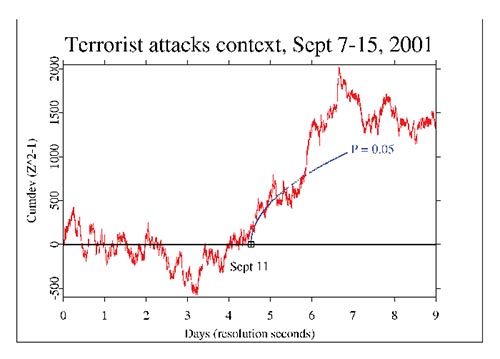
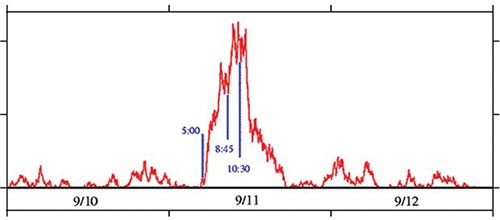
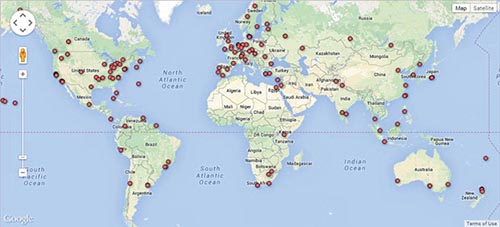
One of the things the Princeton lab did, going back many years, was to place random number generators at various locations around the world. It was found – and there have been journal articles about this and I’m simplifying it somewhat – that during the events of 9/11, immediately preceding the events, during them, and immediately following, the random number generators started displaying patterns.
There was an interruption in these completely randomised and chaotic displays of numbers. Suddenly numbers would repeat. There was a traceable pattern at certain moments. Researchers were left with an enormous question, which begs further research and further understanding: Why, at a moment of what could be loosely described as a global trauma, did this network of random number generators demonstrate a pattern, an interruption in the noise?
This raises the tantalising prospect of mental causation. Of whether we, through the agency of thought, are able to impact and produce outcomes. This isn’t a paper on mental causation, but there are many different scientific fields, including neuroplasticity, quantum mechanics, placebo studies, and psychical research, that have demonstrated causation relating to thought. One way of empirically discussing the manifestation of energies is to note that during that period of global trauma we saw some apparently unified impact of thought, which was exercising probable telekinetic influence on this network of random number generators.
Check Your Foundation
I think we may be approaching a new way of understanding Bigfoot sightings, UFOs, persistent reports of anomalous beasts and things that go bump in the night and twigs snapping, so to speak.
People in many reaches of US society are obsessed with the existence of Bigfoot. It is the subject of these mostly awful cable TV pseudo-documentaries; it fuels an enormous stream of books, articles, debates, and controversies. Scientists complain that no one has been able to produce viable DNA evidence of Bigfoot. One might argue that point, but that’s the broadly held critique.
If one concedes the point, however, it could open to a more radical and supple thesis. Several scientists, including Richard Feynman, have observed that you can’t get out of a problem by employing the same thinking that got you into it. I’ve found that is a universal principle. I have found it a good principle in writing, for example. If you write a sentence or paragraph and you’re wrestling with it and clarity keeps eluding you, there’s probably something wrong with the foundation. It’s best to toss out the line or paragraph and start fresh. If something proves chronically difficult – this is true in relationships, too – there’s probably a flaw in the foundation itself.
The same may hold true for the question of mysterious beasts and natural wonders. Maybe the reason we don’t find more physical or DNA evidence is that, while these persistently reported phenomena are real and are actually occurring, they do not necessarily conform to our five-sensory material lives.
This returns us to the observation that Jacques Vallée made about UFOs probably being some kind of inter-dimensional manifestation, which enter our awareness intermittently and then vanish. There may exist an infinitude, or superposition, of events occurring all the time and everywhere, which we are capable of measuring or experiencing only intermittently (such as in the cases of documentary imagery), fractionally, or at periods of extreme sensitivity, in the same way that ESP or telekinesis may manifest at highly receptive moments. This ties into the question of psychical energies being unleashed during instances of trauma or crisis or intensity.
Super Events
Consider it this way: Within the particle lab, more than eighty years of quantum experiments demonstrate that subatomic particles occupy a state of superposition or a wave state. As such, they appear everywhere at once. They exist in a state of infinite possibility. We know this because subatomic particles display interference patterns, which demonstrate that they are non-localized. They exist in a state of potential until an observer takes a measurement. When an observer decides to take a measurement the particle collapses from a wave state to localized state. Without that measurement, the particle will not occupy a definite, locatable place.
This is not controversial. No quantum physicist would challenge eighty years of this data. What is controversial are the implications of the data, and the willingness of our culture to follow those implications. In the 1930s, physicist Erwin Schrödinger devised a thought experiment known as Schrödinger’s Cat. He intended to force his colleagues to acknowledge the impossible possibilities that occurred in the particle lab. Schrodinger challenged them to acknowledge the evident absurdity of what was being documented – of this surreal reality in which everything exists everywhere at once, in a state of infinitude.
One variant of Schrödinger’s Cat experiment could be put this way: You take a house cat and place around its neck a collar with what Schrödinger called a “diabolical device.” Upon contact with a single atom this device releases a fatal poison. You take the collared cat and place it in one of a pair of boxes. You then direct a single atom at the two boxes. After you check the boxes to see the outcome. What would you find?
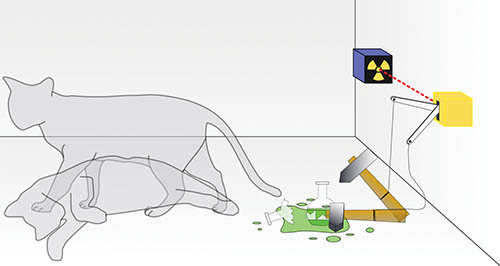
All commonly observed reality dictates if the atom went into the empty box, the cat would be alive. If the atom went into the box that held the cat and tripped the poison device, the cat would be dead. Simple, right? But Schrödinger said, no, that’s not reality at all. You would have to allow for the existence of a dead/alive cat. Because at one time, when that atom was in a wave state, it appeared in both boxes at once. It became localized in a single box only when you went to check.
Hence, reality demands that you would have a dead/alive cat. It’s impossible, it makes no sense, and yet it’s absolutely required if we’re to accept the data from quantum physics.
In the 1950s, physicist Hugh Everett extrapolated further from the Schrödinger’s Cat experiment. Everett contended that the timing of your decision to look or not look in the boxes would create a past, present and future for that cat. If you were to wait eight hours, say, until you checked the boxes, you would not only have a dead/alive cat, but the alive cat, having been stuck in the box for eight hours, would be hungry. You actually created a past narrative and present for that animal. Your decision to look, not look, to wait, to not check it all, creates an arc of life for this animal.
That could be the actual nature of reality: all outcomes exist in infinite potential and become localized or actualised only when they reach our perspective. This may be a matter of measurement, focus, or awareness, accident or choice.
Leaving aside the question of freewill (another issue entirely), what I’ve described raises the possibility that these persistent, extraordinary events – sightings of everything from serpents in the water, to mysterious winged beasts, to otherworldly beings, to gnomes, to Bigfoot – may be the result of perspective and of these things intermittently localizing in our reality.
A related possibility comes from what is called string theory. String theorists try to explain the strange behaviour of subatomic objects, as well as why such objects affect one another at distances, and why, as Isaac Newton observed, even macro objects at vast removes mirror each other’s motions. String theory holds that all particles and all matter are not separate entities but rather are part of vast, undulating networks of strings. When an object at one point in space affects another object, we’re not seeing two distinct entities but a unified string of objects. What’s more, different dimensions and universes exist along these strings, so we may not always see the thing causing an effect. In string theory, all material and events are one whole. We catch only hints of this through exquisitely fine measurement.
When speaking of measurement, we naturally think of laboratory instruments. But what are our senses if not instruments of measurement through which we navigate reality? On the psychological scale, it may be that at moments of profound sensitivity, or at moments in which we are emotionally primed in a certain way – maybe through trauma, through euphoria, through a sense of crisis – we catch glimpses of things that are real but do not usually register with the senses or mechanics through which we experience daily life. Anomalous entities exist, but they exist at other points on a vibrating, cosmic string, or what we might call another dimension. That’s one theory. Another, not necessarily at odds with string theory, is that these anomalies occupy a state of superposition which you select into your locality – not manifest but select, which is my preferred term – through perspective.
Hence, these strange events or entities may be real, but they are perceived only occasionally, and we give them names like Bigfoot or fairies or UFOs. These potentialities exist all around us, but we don’t possess the instrumentation to measure such things. Our way of viewing the world is coarse and limited – even illusory. For example, we organise our lives by linear time. Linear time feels very real. It’s overwhelmingly persuasive. But linearity itself is an illusion. It is a necessary illusion which we use to organise life, but it’s not real.
We know that time slows down at or near light speed. The aging process slows when a being is moving near light speed. We likewise know that time slows or bends in environments of extreme gravity, like black holes. These things are no longer theoretical, they’ve been measured, they’re real, they’re actual. Yet they make no sense to us. As we go through daily life and our commutes and so on, it makes no impact on us that time can actually slow.
Even knowing this, being able to understand this, being able to talk about this, doesn’t necessarily impact our everyday experience of linearity. Because linearity is probably a very necessary illusion for five sensory beings. But it’s a device, not ultimate reality. Ultimate reality is stranger than we’re given to believe.
Why Don’t We See Reality?
Why don’t we pick up more on this material? Why does life seem so orderly to us? There’s just one of me here, there’s just one of you there, there’s one chair that you’re sitting on. There’s not an infinitude of chairs. It feels so practical, so actual. It’s difficult to imagine that any of this quantum or string phenomena can be real in more than an abstract way or on the subatomic scale. Philosopher William James, in his Gifford lectures in 1902, made an observation that speaks to this. When a mystic sees something, James said, it’s as if he or she is viewing it through a microscope. The mystic sees more and more of what’s really going on because of his or her extreme sensitivity.
If I look at a drop of water, all I see is a common drop. It’s translucent, it feels like what I call wet. But if I look at that same drop through a microscope, all kinds of things are revealed. There are single-cell organisms, there are bacteria, there are molecules moving around. The molecules are made up of atoms and other particles that are similarly moving around. All kinds of things are occurring that I don’t normally see.
James made the contention that the mystic is always viewing things as if through a microscope. When you pan the camera back, so to speak, you experience less and less of what’s really happening. Without crediting James, quantum physicists today call this the phenomenon of “information leakage.” They respond to the apparent disparity between the particle world and our macro world by saying what James said, which is that when you’re measuring things with extremely fine and well-tuned instruments, you’re seeing more and more of what’s really going on. But when your capacity for measurement coarsens, you lose data and see less and less of what’s occurring.
Just as linear time is a device, just as particles exist in a wave state or state of superposition, it is possible that we live amidst an infinitude of extraordinary events, which we perceive in only fragments or at fleeting moments, maybe moments of great awareness, maybe moments in which our ordinary thought patterns, for whatever reason, get interrupted, maybe moments that are available to some of you because you have a gift for what we call ESP or sensitivity or intuition. It could be that at such times, the individual is capable of seeing what’s really happening, and yet such individuals get smeared with terms like psychosis, fraud, imagination, fantasy, or confirmation bias. Materialists over-rely on the term confirmation bias to ignore testimony. Consistent testimony from varying sources forms a record and should be considered. Materialists fail to realise that confirmation bias, or prejudicial thought, is their own problem, too.
If my contention is correct, which is to say you get what you’re looking for, we’re all in the same boat. So let’s sit down together in an interdisciplinary way and have a conversation and try to determine the topography. We must try to understand more of what’s going on. We won’t get there if we dismiss or underfund or ban the so-called borderline sciences. Think of the possibilities that open to us if scholarly research into psi or extra-cognition really becomes available. If places like the Princeton Engineering Anomalies Research lab didn’t have to close because it was time for the founders to retire and nobody else had the energy to maintain the kind of fundraising or fight the battles that they fought to keep that lab alive.
We have money for everything in this society. There’s no shortage of resources. And yet we always seem to cry poverty when it comes to dispensing resources in a more democratic way or allotting really modest sums to keep alive research into the nature of reality itself. The reason I appreciate today’s best paranormal investigators, and why I appreciate historical figures like Charles Fort, is because they poke holes in the straight story. They drive us to ask questions that might otherwise never get considered.
A Damnable Bore
Fort himself was a fascinating character. He was born in Albany, New York, in 1874 and lived and worked for much of his life in The Bronx. Like the occult scholar Manly P. Hall, Fort did a great deal of his research in the New York Public Library (where I now sit in a research room writing these words). Newspapers used to call Fort “the mad genius of the Bronx.” He produced his first of four books in the year 1919. It was called The Book of the Damned. By “damned” Fort meant the facts that didn’t fit in: outsider facts, theories, and ideas; facts that were considered unfit for consumption, so they were pushed to the margins.
Fort would gather news reports of things happening around the world that weren’t supposed to be happening, like mysterious airships in an age before we had the term flying saucers; frogs falling from the sky; mysterious beasts; spontaneous combustion; telekinesis – all sorts of things that didn’t fit the straight story.
Some people thought Fort was a genius, that he was modernity’s greatest critic of science, because he understood that science in the early 20th century had formed its own orthodoxy, its own canon, to the point of excluding things that didn’t fit in.
The novelist Theodore Dreiser was a great admirer of Fort. He said, “To me no one in the world has suggested the underlying depths and mysteries and possibilities as has Fort. To me he is simply stupendous.” Whereas H.G. Wells called Fort “one of the most damnable bores who ever cut scraps from out-of-the-way newspapers.” So, there was a binary attitude about Charles Fort. But I’ve always loved the man, and I think his work has retained a legion of fans and readers precisely because he was capable of poking holes in the straight story.
Beastly Traits
There’s another dimension to the presence of mysterious or allegorical beasts. Some of the beasts that appear in parable and mythology, like the sphinx or griffin or centaur, summon us to traits that are actual or potential parts of our personas, of our abilities as human beings, which we are divorced from, which get pushed off to the margins of our understanding, which we can speak of only in terms of metaphor because they’re not accepted, they’re not understood, they’re not integrated into the human story. As Charles Fort would say, they’re “damned.”
Obadiah Harris, the past president of Manly P. Hall’s Philosophical Research Society (PRS) in Los Angeles, shared a wonderful story with me a few years before his death in 2019. We held a very moving memorial service for Obadiah at PRS, which you can find online. Obadiah said that when Manly Hall used to ready himself in his office each Sunday morning prior to delivering his weekly talk, he would pause before his altar and rub a wonderful little Egyptian statuette of a cat. It was a black onyx model of Bastet, one of the Egyptian cat gods. He would rub this little cat for wisdom because a cat has the ability to see in the dark. Many people felt Manly displayed a preternatural ability of speaking extremely fluidly and at great length without notes. I’m not suggesting a connection but I did like the story. And this little cat really existed – I held it in my hands – but it has unfortunately disappeared from Manly’s office. We’d like to re-select this little cat into existence.
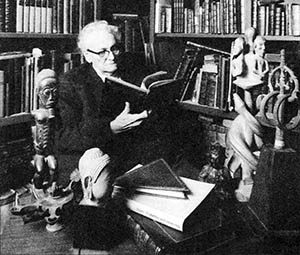
We often ascribe powers to animals that exist within ourselves, but that we don’t feel capable of summoning. We mythologise them. In that vein, I want to share the story of two episodes I experienced recently in Egypt in connection with mythical or allegorical animals.
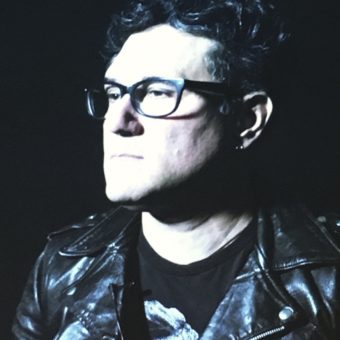
In February 2019, I was travelling in Egypt with my friend Ronni Thomas. Ronni is a brilliant film director and we are making a documentary about the 1908 occult book The Kybalion. I once regarded The Kybalion as a kind of early-twentieth century novelty of occult literature. Several years ago, however, I came to realise that I was wrong. I was underestimating the nature and the greatness of that short book. It’s a beautiful and very relevant distillation of the spiritual psychology found in the Hermetic writings that appeared during the final stages of Egyptian antiquity.
For the film, we decided to go back to the source, as much as we were capable. Ronni made the courageous decision that we should do some filming in Egypt. Off we went to Egypt in the month of February. I can disclose this now that I’m safely back home, but we had no license to actually film because it’s enormously expensive. We had a decent budget, but it was out of reach. So we had to surreptitiously film in Egypt, which is no small risk because if you’re caught without the proper licenses, you will be arrested and thrown in jail, which is probably not a great experience. We were very aware of this, but felt that even though we lacked the proper licensure, and we simply couldn’t afford it within the confines of our budget, we just had to do this.
We were able to get some extraordinary footage. There are sneak peaks of the documentary on YouTube and Vimeo. We expect the final film to be released in 2020. You’ll be surprised at how much footage we were able to gather illegally, but very lovingly, in Mother Egypt. We were also granted some remarkable access and opportunities. I had two opportunities that I want to share, both involving exposure to allegorical beasts.
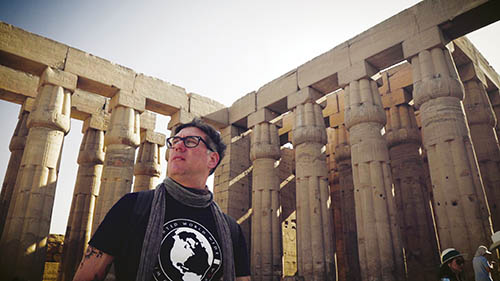
Subterranean chambers exist in the Valley of Kings that are off the path of most people who visit Egypt. These chambers are accessible if you’re basically willing to pay the right people. My wish is that it wouldn’t be commerce alone that allowed people to gain entry to these places, but sometimes you have to deal with the world as it is. We were willing, as much as we were able, to pay off the right people to enter some places that are normally off limits.
After paying, we were able to enter a chamber very, very deep in the Valley of Kings. Within this chamber is a large bas-relief of a bull. A bull in Ancient Egyptian symbolism represents strength, virility, and personal power. It’s an enormously potent image within the pantheon of Egyptian deities and allegories. The guide who took me into this chamber gestured to me that it was permissible to touch and lay hands on this enormous bas-relief. The carvings in the chamber were incredibly well preserved. One of the astounding things that we don’t always realise when we look at Egyptian monuments is that they were originally colourised. They were not only three dimensional, they were not only covered in beautiful precious stones and finishing material, but they were majestically and very vividly colourised. Over time, the most widely seen or weathered monuments have lost this colour.
This was within a very dry, temperate, cool underground chamber, and these images and bas-reliefs had been preserved going back thousands of years. I was a little uncomfortable when the guide invited me to lay hands on the bull because I have tremendous respect for antiquities, and I would never want to do anything to detract from the power and the beauty of these monuments. I’m very aware that if tourists and travellers are traipsing through the place all day and laying hands on the object, it gets damaged or degraded. And yet I felt that I was being given an invitation.
The philosopher Jacob Needleman once said to me, “What do you do when someone offers you a gift?” Brilliant student that I was, I just stared at him blankly. He said, “You accept it!” So I made the decision to accept this gift. I can only report in all candour what happened. As I laid hands on this bull, I experienced, call it what you will, a tremendous rush of lightning and electricity shooting through my body, and I felt this sense of inner light within me. The only phrasing I can use to describe it is just feeling this flash of lightning pass through me. It was an extraordinary and tactile experience.
Of course, one could say, “Look, you’re a suggestible guy, you’re an excitable person.” I don’t know, nor would the person saying that know, just what occurred. But I can only report that it was, for me, a palpable experience. Here I stood before this magnificent allegorical beast carved in a bas-relief going back more than 3,000 years, still fully colourised and vivid, and the symbol of virility and strength and power, and I was invited to lay my hands on it. I felt lightning absolutely pass through me. It was one of the most remarkable experiences of my life.
We had another experience when we were at the Temple of Karnak in Luxor. Our guide was aware that Ronni and I had occult interests. There’s a colloquialism in Egypt for people like us – they call us “meditators.” Terms like occult and New Age don’t translate very well. Once they say, “Oh, you’re meditators,” then they know what you want to see. Our guide for this leg of the trip was an extraordinary woman who was multilingual even though she had never travelled outside the country. She learned English, French, and Korean on her own through BBC language courses. She brought us to a small temple to the cat goddess Sekhmet, which is tucked away on a side path in this vast complex. This small temple is closed and padlocked. A soldier toting an automatic rifle and a robed guide guard it. The only way to gain entry is by paying a bribe. Again, you sometimes have to deal with the world as you find it. And, of course, people are entitled to earn a living.
The soldier and guide looked at us like, “Who are these two mangy characters?” We very nicely said hello and greeted them with as much money as possible, and then everybody was all smiles. We were invited to enter this chamber to Sekhmet, a goddess with the head of a cat and the body of a woman. I can’t begin to tell you how completely dark it was inside this chamber. The chamber is thousands of years old and there wasn’t so much as a streak of light, with no cracks or fissures in the wall.
We were guided to kneel at the feet of Sekhmet and invited to kiss her feet and lay our hands upon her body and recite a prayer. We performed this short ceremony in pitch blackness. This, too, was an experience of absolute transcendence. There seemed to be a complete dissolution between us as separate beings and the goddess before whom we kneeled. I think we both experienced a sense of dissolving, almost like a lightness of body that felt something like what an out-of-body experience might be like. We felt a complete disassociation crouched in the darkness before this goddess. We felt, you could say, almost a sense of transcendent oneness with that before us, and everything briefly entered a state of non-physicality. It was remarkable.

I’m not someone who goes around collecting experiences, but this left us two travellers, two seekers going places off the permissible path, with perhaps some feeling for what our primeval ancestors might have felt in the presence of these extraordinary beings. The episode reaffirmed my belief, which I’ve explored elsewhere, that we have neglected some of the wisdom of our primeval ancestors who identified with and personified certain energies in deific form, and who gave these energies names, whether Set or Sekhmet or Bastet or Minerva or Zeus or Jupiter or Athena.
They identified these energies, maybe as projections of their own intellect or maybe non-localized intellect, and deified them. They also petitioned them. When people come to me in need, when they’re feeling at a dead end in life or things aren’t going the way they wish, my suggestion, as an ethical and spiritual experiment, is to identify a god or goddess from the ancient pantheon, whether from Egypt, Persia, the Hellenic world or elsewhere, one with whom you resonate, one that is meaningful to you, one whose characteristics or traits seem to capture something that you need in life, and having done so I see no reason why you cannot enter a prayerful state and make a petition to this deity and see what occurs. You may find exactly the help that you need. My contention is that the old gods may be lonely. They hunger for human attention and veneration.
People from all over the world used to travel great distances to honour and petition these gods. That is no longer so. It could be that these personified energies or intelligences hunger for human contact; and if you make the personal decision to attempt a relationship with one of these deities and to make a petition, you could be surprised.
I speak to you from deepest personal experience. I would never offer something as a suggestion that I haven’t tried and experimented with myself. I’ve had some of the deepest, most meaningful spiritual experiences of my life by following the path that I just described. You certainly don’t need to tell anybody what you’re doing; you don’t need to tell your shrink or your boyfriend or your spouse. It’s yours. It’s your private experiment. It’s something I’ve found bountifully fruitful and significant. We displace onto certain ideals of allegorical beasts and deities and beings, traits that perhaps exist within us and that we are capable of selecting or having a relationship with.
Reclaiming the Damned
I have written elsewhere of how the snake or the serpent represented wisdom in cultures all over the world. This was true in Egyptian culture, this was true in Hebraic culture, this was true in Mayan culture, this was true in Celtic culture. Every culture around the world, spanning enormous stretches of time, distance, language, and custom, identified the snake as a symbol of illumination, possibility, provocation, and awareness.
I think that we, in the Western world, have made a tremendous misreading of Genesis 3, where we have associated the snake who conversed with Eve as a figure of evil or maleficence. Rather it was the snake who gave Eve permission to eat from the so-called Tree of Knowledge of Good and Evil, which the creator had placed in the midst of the garden, so the parable goes, even though the garden dwellers, who were supposedly beloved and cared for, were prohibited from eating from it and gaining awareness, and were told they would die if they did so. The snake told Eve, “You’ve been deceived. You will surely not die if you eat the fruit from this tree.” She took the challenge and did not die from eating the fruit, which she shared with Adam. Their eyes were opened, and they gained the capacity for measurement and creativity; they gained the capacity to argue with the creator, and they were expunged from the garden of paradise. Their offspring, Cain and Abel, so the story goes, got caught up in this tragic act of fratricide. But it’s very possible that the price of creativity, the price of awareness, the price of perspective, is friction.
Haven’t we seen this play out across our culture? In Europe, for centuries, they committed witch burnings, which are still occurring in parts of the world today. People who are clearly capable of functioning in the world are called lunatics or flying-saucer nuts when they have extraordinary experiences. Plato famously theorised that if we were all captured in a cave, chained and capable of witnessing reality only as shadows cast on a wall and someone was somehow able to leave the cave and came back and tell the other captives about the splendour that existed in the outside world, what would they do? They would kill the individual.
Isn’t that the story of the snake in the garden, essentially playing out over and over again? Every time a capable, mature, intelligent person speaks of an extraordinary experience, he or she is told, “Don’t talk about seeing a UFO. You’re going to lose your rank and your reputation within the Air Force. Don’t try to experiment with ESP, everybody’s going to think you’re a nut and you’re going to lose your departmental funding. Don’t question the standard dating of the Great Sphinx or of the pyramids because if you start questioning the standard timeline people in your department are going to get hostile toward you, and you’ll be branded a nut.”
What do we do? We disassociate from these abilities and experiences and code them into parable, story, myth, and archetype, because it’s a way of distancing ourselves from abilities and possibilities that exist within the human experience, but that are easier for us to understand and talk about, that are less risky for us, if we classify them as mythology, as anomalies, as wonders, as little green men, as strange encounters. People who testify to these things in an actual way are treated, in effect, like Adam and Eve, expelled from the garden of paradise, or seen differently, expelled from the garden of conformity. Yet this state of affairs is getting shaken up at this very moment.
As I mentioned earlier, I do not speak casually about paradigm shifts. Every generation seems to think it exists on some kind of a precipice. Some generations did indeed exist on a precipice. The World War I generation existed on a precipice. I don’t think one should speak about this casually. But I do believe we are facing possibilities and questions in our generation, at this very moment, that may upend our idea of what it means to be human as much as the theories of Darwin upended people’s views and understanding of human nature in the Victorian age.
I think we’re poised on this precipice, where we look out at the world, we look out at testimony of wondrous beasts, strange beings, and anomalous events, and we’re coming to realise that we’re not necessarily looking at things that are fantasies or chimeras. We are actually looking into a mirror. And what we’re looking at is gazing back at us. These are the traits of our own personas that we’re becoming reacquainted with. Our personas are inter-dimensional, unmoored by linearity, and symbiotic with a larger cosmic reality than we have previously understood.
Mitch is lecturer-in-residence at the Philosophical Research Society in Los Angeles, where he originally delivered the lecture on which this article is based.
About the Author

Week in weed – June 17, 2023
There were lots of interesting stories here on Stratcann this week. We covered the Senate Committee on Indigenous People’s report recommending expanded Indigenous jurisdiction over cannabis sales and distribution, and two updates from the SQDC.
We also had a trio of stories from the Maritimes: news of the first private store opening in New Brunswick this week, as well as their sixth farmgate store, and an update from Nova Scotia, where the government-run retailer reported more than $100 million in cannabis sales. We also looked at the Canadian companies who are increasingly interested in the export market, and news of budtenders unionizing in Manitoba.
Health Canada provided an update on industrial hemp licensing statistics.
In other news, Hexo’s shareholders approved a takeover bid from Tilray this week. It still needs to be ratified by a court, but the shareholder vote (which went around 94% in favour) all but completes Tilray’s bid for Hexo—a deal it struck for an aggregate price of around $74 million.
The takeover deal will be welcome news for shareholders, at least compared to the other Hexo news: this week, the company also reported that their cumulative losses since 2016 are north of $2 billion. Their net sales have dropped dramatically this year, down 50 percent compared to last year; selling to Tilray is looking more and more like the only good option left for shareholders.
Aurora Cannabis said this week that it would be closing its one remaining production facility in Denmark. Aurora (along with others, like Canopy) was very bullish on the European market circa 2016 to 2018 or so, but that market never really materialized. Aurora also sold their Nordic Sky facility, also located in Denmark, last year.
It’s been quarterly earnings report season for the last couple of weeks, and two more big players released their latest financial updates, which, surprisingly, weren’t as grim as they often are.
High Tide reported Q2 revenues of $118.1 million, resulting in a $1.6-million loss. The company says it currently has “nearly 10 percent” of retail market share outside of Quebec, and is optimistic about “moving towards our goal of capturing 15% of this market.”
Aurora posted more optimistic financials as well this week. Net revenues for the company’s third quarter totalled $64 million, up from $50 million a year prior. Their bottom line was helped by revenues of $10.8 million from Bevo Agtech, a vegetable company they acquired a controlling stake in last summer. The company says that it’s completed a push to find $400 million in cost savings, and is now trying to find $40 million more to trim.
On the back of more optimistic financials, the Toronto Star spoke with High Tide’s Omar Khan and Aurora’s Miguel Martin about the outlook for the industry. Khan said he was pleased to see “small nuggets” of progress from the federal government, while Martin said, “There’s still enough money in the system that allows for people to sell products at a loss.”
In less hopeful news, Fire & Flower has been delisted from the Toronto Stock Exchange after filing for creditor protection earlier this month.
MJBizDaily also had an interview with Decibel Cannabis’ Adam Coates, who weighed in on how his relatively small company has managed to outcompete many of the big players in terms of capturing market share.

Zyus Life Sciences, a cannabis producer in Saskatchewan, completed a reverse takeover of Phoenix Canada Oil Co. Ltd. on June 9, raising C$20.1 million. The company, which makes cannabinoid drugs to treat pain for osteoarthritis and bone cancer, is set for its trading debut as Zyus Life Sciences Corp. (ticker ZYUS CN) on Canada’s TSX-Venture Exchange on June 19.
In BC, Whistler’s mayor and council will consider approving Temporary Use Permits for four cannabis retail shops: two in Whistler Village, one in Creekside, and one in Function Junction next week.
Also in BC, Segra International, a cannabis nursery in Canada, signed a genetic partnership agreement with Grounded Genetics and The Holding Company (it’s unclear if they are fronted by Janis Joplin). Under the terms of the agreements, Segra will partner with both companies to bring a significant collection of unreleased genetics to Canadian and International markets.
The Nelson Daily News did an extensive write-up on new Kootenay processor Antidote Processor Inc and its first shipment of locally grown and processed cannabis to its first local retail outlet customer on May 16.
Manitoba’s Delta 9 Cannabis has secured a purchase order from 1417376 BC Ltd. for 8 of its modular Grow Pods for a cultivation facility in British Columbia. The numbered company was incorporated on May 20, 2023.
In Ontario, Wellington-Dufferin-Guelph Public Health (WDGPH) is putting out a call for people to participate in an online survey about cannabis. “We know cannabis is out there and people are using it, but that use and those behaviours and how it’s impacting people, all that information needs to be collected,” WDGPH Medical Officer of Health Dr. Nicola Mercer told CTV News.
And finally, if you needed more ammunition in accusing Ottawa of being a no-fun town, here’s a bit more: CBC reports that Ottawa Public Health made a draft submission to Health Canada recently asking for “graphic warning labels” on cannabis packaging similar to those nasty pictures of blackened lungs and mangled teeth you see on cigarette packaging. It’s hard to imagine what images you would use, though. A cleaned out fridge? A picture of someone taking a nap?
Pineapple Express ends deliveries following Fire & Flower filing for creditors’ protection
Pineapple Express Delivery, a cannabis delivery company operating in several provinces, closed up shop in the wake of its parent company, Fire & Flower, filing an application for creditor protection under the Companies’ Creditors Arrangement Act.
Businesses utilizing the service say they were given no notice of the company’s plans to close, and in the case of one province, were left searching for a replacement. An email to Pineapple Express seeking more information was not replied to. An email to Fire & Flower was returned with an auto-reply about the company filing for creditor protection.
Fire & Flower completed their acquisition of Pineapple Express in 2022, with Fire & Flower’s then-CEO, saying the acquisition of Pineapple Express Delivery “marks the final step in building, what we believe to be, the cannabis industry’s first end-to-end consumer technology experience.” The company paid more than $2 million for the delivery service.
Pineapple Express was providing cannabis delivery services in Ontario, Saskatchewan, Manitoba, and British Columbia. The day after Fire & Flower announced its application for creditor protection, the BC Cannabis Store, which uses the service for deliveries in much of the Lower Mainland, announced it would no longer be offering next-day delivery for customers in the Metro Vancouver area. Instead, delivery will only be offered through Canada Post.

The announcement was made quietly the day after the provincial retailer was temporarily suspending delivery for the Metro Vancouver area after it was experiencing delays with one of its third-party carriers.
BC had been offering next-day delivery since it announced a partnership with delivery service Pineapple Express in early 2022. The Metro Vancouver region includes Vancouver, Burnaby, Richmond, Coquitlam, Delta, Port Coquitlam, New Westminster, Langley, Port Moody, Surrey and White Rock, as well as parts of Maple Ridge, North and West Vancouver, and Pitt Meadows.
Pineapple Express had been offering delivery in Ontario, BC, Saskatchewan, and Manitoba. Fire and Flower e-commerce and delivery capabilities utilized its subsidiary Hifyre, a cannabis technology platform, and CannDeliv, a cannabis delivery software platform. A source with Hifyre tells StratCann they are still operating while under CCA. A source close to the issue says the move by Fire and Flower came as a surprise to those at Pineapple Express, which had its operations subsequently shut down across Canada.
Fire and Flower had recently announced they were entering into a Master Licensing Agreement with Couche-Tard. Couche-Tard had, at the time, committed to developing Fire and Flower branded retail cannabis stores in Ontario. The first five Fire and Flower branded retail cannabis stores were to be opened adjacent to Circle K convenience stores in the Greater Toronto Area, which were previously operating as MC Cannabis Inc.

5 Top Anxiety-Relieving Foods by GreenMedinfo
5 Top Anxiety-Relieving Foods
Is anxiety affecting your life negatively? Don’t fret — you can soothe your spirit and hunger with these five anxiety-relieving foods that are good for your body and your mood
According to the American Psychiatric Association, nearly two-thirds of U.S. residents surveyed in 2017 were “extremely or somewhat anxious” about the health and safety of themselves and their families, with more than a third feeling “more anxious overall” than they did in 2016.[i] With more recent data indicating that feelings of anxiety are on the rise,[ii] and have since skyrocketed due to COVID-19 and related shutdowns and stay-at-home orders, it’s important to know what to do to keep your central nervous system calm and supported during times of increased stress.
While allopathic doctors generally advocate pills to treat anxiety, there is mounting evidence showing that these medications can have many negative side effects including addiction, depression, suicide, seizures, sexual dysfunction, headaches and more.[iii]
Practitioners of natural health know that food is the best medicine, and some foods are better than others when it comes to soothing body and mind. Here are five of the top foods to eat to stimulate feelings of calm and well-being from the inside-out.
1. Fish
Cold-water fishes like salmon, cod, mackerel and sardines are under-consumed in the U.S., which culturally favors protein from sources like beef and chicken. This is a dietary misstep if you want to quell anxious energy. Rich in the essential amino acids L-lysine and L-arginine as well as healthy omega-3 fatty acids, increasing your intake of clean fish may help relieve anxiety by promoting a healthy brain and enhanced mood.
Studies have shown that individuals with L-lysine deficiency are at higher risk of anxiety,[iv] while L-lysine supplementation lowers anxiety and reduces the impact of stress.[v] In clinical trials, supplementation with L-arginine reduced synthesis of cortisol, a major stress hormone, in healthy human subjects.[vi]
Consumption of adequate levels of omega-3 fatty acids has been shown to enhance mood[vii] and reduce the risk of anxiety.[viii] Supplementation for a period of three months with a high-quality source of omega-3s has even been shown to support withdrawal-related anxiety in a trial with substance abuse patients.[ix] Just a few servings per week of healthy fish may be sufficient to receive these benefits.
Widespread pollution of our oceans as well as the environmental impacts of overfishing have made some people wary of eating fish. The Environmental Working Group (EWG) has produced a useful guide to choosing the most nutritious and clean fish from sustainable sources, including a calculator to help you customize portion sizes for optimal nutrition while minimizing negative impact on the planet.[x]
2. Nuts
Many essential proteins and fats are available from nuts like Brazil nuts, almonds and walnuts, plus vitamins D and E and the mineral selenium, all proven to reduce anxious feelings.
Vitamin D has been studied for its positive effects on mood, possibly due to its action as a steroid hormone with many important functions in the brain. Vitamin D deficiencies have been linked to multiple behavioral disorders, including anxiety and depression in patients with fibromyalgia.[xi] A study on mice showed that specimens with fewer vitamin D receptors in the brain demonstrated increased anxiety-like behaviors, suggesting that adequate vitamin D intake can be an important factor for healthy emotional behavior.[xii]
Almonds are a potent source of vitamin E, a powerful scavenger of damaging free radicals, which is linked to a healthy brain response to fearful conditions. Vitamin E supplementation was found in one animal study to improve fear response in rats that were exposed to healthy vitamin E levels in utero, versus impaired fear response and increased anxiety in rats whose mothers were deprived of this essential nutrient during pregnancy.[xiii] One cup of ground almonds (a great addition to many recipes) provides 125% of an adult’s Recommended Daily Allowance (RDA) of vitamin E.[xiv]
Brazil nuts are one of the best sources of selenium, an essential trace mineral that is critical for optimal health. A clinical trial of adults who were supplemented with 100 micrograms (mcg) of selenium per day reported less anxiety than the placebo group. According to the report, the lower the level of selenium in the diet, the higher the levels of anxiety, depression and tiredness among patients, all of which decreased following five weeks of selenium therapy. [xv]
Adults over 14 years of age are recommended to intake 55 mcg of selenium each day.[xvi] A small handful of Brazil nuts (six to eight nuts) delivers a whopping 544 mcg, more than enough to take the edge off your mood.[xvii]
All of these nuts provide essential amino acids and fatty acids that produce the mood-regulating hormones serotonin and dopamine, adding to their potential for helping to regulate mood and improve overall mental health.[xviii]
3. Yogurt
Fermented foods like yogurt have long been acknowledged as beneficial for gut health due to the presence of friendly bacteria known as probiotics, which help protect the gastrointestinal (GI) tract against harmful pathogens and potentially dangerous microbes. As the understanding of the gut-brain connection develops, science is further acknowledging the benefits of fermented foods on brain health and even mood regulation.
A 2014 study on the effects of daily intake of yogurt enriched with probiotics by adults with high-trait anxiety disorder found that individuals who consumed enriched yogurt had healthier stress responses than those who consumed non-enriched yogurt, suggesting that eating probiotic-enriched yogurt aids in coping with chronic stress.[xix]
This beneficial activity may be due to probiotics’ neuroprotective effect on the brain. A study on healthy women with no gastrointestinal or psychiatric symptoms showed that ingesting a fermented milk product with probiotic for four weeks led to “robust alteration” within specific brain regions that control processing of emotion and sensation, leading researchers to assert that consuming such probiotic-rich foods may work to prevent anxious feelings from developing.[xx]
Other studies on animals and humans have shown that fermented food consumption is associated with fewer symptoms of social anxiety[xxi] and lowered risk of depression.[xxii]
It should be noted that there are plenty of alternatives to cow’s milk-based yogurt products today, such as coconut-, almond, and goat’s milk, all of which can help to prevent bovine casein-associated adverse health effects which we have documented in detail on our cow’s milk database here.
4. Green Tea for Theanine
Having a daily tea ritual is a great way to weave a moment of calm into your days. Besides the benefits of taking a break from daily concerns to boil water, select a cup and let it steep, drinking tea is a great way to boost your brain’s ability to ward off stress. There are more than 400 reasons to drink green tea, and for most adults today, feeling less stressed is at the top of the list.
A Singapore study on 60 healthy seniors showed that those with a regular tea habit had brain scans showing improved brain organization brought about by tea’s ability to prevent disruption of interregional connections. In other words, the different brain regions had more and healthier interconnections; they were more organized with better hemispheric symmetry.[xxiii]
Green tea’s magical properties are attributed primarily to L-theanine, an active polyphenol in green tea that may be at the heart of its ability to calm nerves and fortify the brain. An amino acid, theanine produces a soothing effect by stimulating production of GABA and dopamine, neurotransmitters known to play a role in anxiety[xxiv] and pleasurable sensations.
Green tea contains another potent phytochemical called EGCG, short for epigallocatechin-gallate, another polyphenol in green tea that has gained a lot of attention as a potential therapeutic agent for preventing neurodegenerative inflammatory diseases.[xxv] And if you need any more reasons to start a green tea habit, regular tea drinking may bolster the immune system to prevent influenza infection.
If you’re wondering how much is too much, the answer is it’s very hard to overdo green tea consumption. A 2009 study conducted in Japan, one of the largest consumer countries of green tea, found that those who consumed more than 5 cups per day had significantly less stress than those who drank less than 1 cup per day.[xxvi] In other words, the more you drink, the better you feel. So, put on the kettle and start feeling better.
5. Dark Chocolate
While you engage in afternoon tea, why not break off a square (or two) of fine dark chocolate? Don’t worry about the jitters one might associate with chocolate; dark chocolate is clinically shown to improve anxiety and deliver a potent feel-good boost of serotonin.[xxvii]
Dark chocolate isn’t just about taste; it’s got minerals like magnesium that are important for brain health and mood. A large square of dark chocolate with 70% to 85% cacao provides around 36 milligrams (mg) of magnesium, nearly 10% of the U.S. RDA for adults.[xxx]
Magnesium is considered an essential supplement for psychiatric patients due to the role it plays in calming the nervous system.[xxxi] A 2011 study of highly stressed individuals showed that eating 40 grams of dark chocolate every day for two weeks led to participants reporting significantly lower stress levels than participants eating milk or white chocolates.[xxxii]
Eating dark chocolate has been shown to boost the neurotransmitter serotonin, which can lead to fewer and milder feelings of anxiety due to an enhanced ability to manage stress.[xxxiii] By adding a serving of dark chocolate to your day, you can impart a wide array of self-care benefits to both enhance your mood and increase your resilience to life’s daily stressors. There is no reason not to indulge.
For additional information on anxiety-reducing foods and herbs, visit our database dedicated to the topic here. To learn more about the ways nutrition can support a sane, healthy lifestyle, consult GreenMedInfo.com’s repository of articles as the world’s most widely referenced, evidence-based natural medical resource.
References [i] American Psychiatric Association, Newsroom, APA Public Opinion Poll – Annual Meeting 2017, https://www.psychiatry.org/newsroom/apa-public-opinion-poll-annual-meeting-2017 [Accessed April 10, 2020] [ii] American Psychiatric Association, Newsroom, APA Public Opinion Poll – Annual Meeting 2018, https://www.psychiatry.org/newsroom/apa-public-opinion-poll-annual-meeting-2018 [Accessed April 10, 2020] [iii] Alramadhan E, Hanna MS, Hanna MS, Goldstein TA, Avila SM, Weeks BS. Dietary and botanical anxiolytics. Med Sci Monit. 2012;18(4):RA40-RA48. doi:10.12659/msm.882608, https://www.ncbi.nlm.nih.gov/pmc/articles/PMC3560823/ [iv] Ghosh S, Smriga M, Vuvor F, et al. Effect of lysine supplementation on health and morbidity in subjects belonging to poor peri-urban households in Accra, Ghana. Am J Clin Nutr. 2010;92(4):928-39. https://www.ncbi.nlm.nih.gov/pubmed/20720257 [v] Smriga M, Ghosh S, Mouneimne Y, et al. Lysine fortification reduces anxiety and lessens stress in family members in economically weak communities in Northwest Syria. Proc Natl Acad Sci USA. 2004;101(22):8285-88. https://www.ncbi.nlm.nih.gov/pubmed/15159538 [vi] Smriga M, Ando T, Akutsu M, et al. Oral treatment with L-lysine and L-arginine reduces anxiety and basal cortisol levels in healthy humans. Biomed Res. 2007;28(2):85-90. https://www.ncbi.nlm.nih.gov/pubmed/17510493 [vii] Perica MM, Delas I. Essential Fatty acids and psychiatric disorders. Nutr Clin Pract. 2011;26(4):409-25. https://www.ncbi.nlm.nih.gov/pubmed/21775637 [viii] Appleton KM, Rogers PJ, Ness AR. Is there a role for n-3 long-chain polyunsaturated fatty acids in the regulation of mood and behaviour? A review of the evidence to date from epidemiological studies, clinical studies and intervention trials. Nutr Res Rev. 2008;21(1):13-41. https://www.ncbi.nlm.nih.gov/pubmed/19079852 [ix] Buydens-Branchey L, Branchey M, Hibbeln JR. Associations between increases in plasma n-3 polyunsaturated fatty acids following supplementation and decreases in anger and anxiety in substance abusers. Prog Neuropsychopharmacol Biol Psychiatry. 2008;32(2):568-75. https://www.ncbi.nlm.nih.gov/pubmed/18060675 [x] Environmental Working Group Consumer Guide to Seafood https://www.ewg.org/research/ewgs-good-seafood-guide?gclid=Cj0KCQjw-Mr0BRDyARIsAKEFbecYJ5AL5Fy3CUMbQFWGkP6I9Zlwruvv6AgBPMcDOHfXkwR8eCUGKagaAhoUEALw_wcB [xi] Armstrong DJ1, Meenagh GK, Bickle I, Lee AS, Curran ES, Finch MB. Vitamin D deficiency is associated with anxiety and depression in fibromyalgia. Clin Rheumatol. 2007 Apr;26(4):551-4. Epub 2006 Jul 19. https://www.ncbi.nlm.nih.gov/pubmed/16850115 [xii] Kalueff AV1, Lou YR, Laaksi I, Tuohimaa P. Increased anxiety in mice lacking vitamin D receptor gene. Neuroreport. 2004 Jun 7;15(8):1271-4. https://www.ncbi.nlm.nih.gov/pubmed/15167547 [xiii] Ambrogini P, Ciuffoli S, Lattanzi D, et al. Maternal dietary loads of α-tocopherol differentially influence fear conditioning and spatial learning in adult offspring. Physiol Behav. 2011;104(5):809-15. https://www.ncbi.nlm.nih.gov/pubmed/21839761 [xiv] Self Nutrition Data, Facts, Nuts and Seeds, Almonds, https://nutritiondata.self.com/facts/nut-and-seed-products/3085/2 [xv] Benton D., Cook R. The impact of selenium supplementation on mood. Biol Psychiatry. 1991 Jun 1;29(11):1092-8. https://www.ncbi.nlm.nih.gov/pubmed/1873372 [xvi] National Institutes of Health, Fact Sheets, Selenium, https://ods.od.nih.gov/factsheets/Selenium-HealthProfessional/ [xvii] National Institutes of Health, Fact Sheets, Selenium, https://ods.od.nih.gov/factsheets/Selenium-HealthProfessional/ [xviii] Murphy M, Mercer JG. Diet-regulated anxiety. Int J Endocrinol. 2013;2013:701967. doi:10.1155/2013/701967. https://www.ncbi.nlm.nih.gov/pmc/articles/PMC3762204/ [xix] Jaatinen N1, Korpela R, Poussa T, Turpeinen A, Mustonen S, Merilahti J, Peuhkuri K. Effects of daily intake of yoghurt enriched with bioactive components on chronic stress responses: a double-blinded randomized controlled trial. Int J Food Sci Nutr. 2014 Jun;65(4):507-14. doi: 10.3109/09637486.2014.880669. https://www.ncbi.nlm.nih.gov/pubmed/24490888 [xx] Tillisch K, Labus J, Kilpatrick L, et al. Consumption of fermented milk product with probiotic modulates brain activity. Gastroenterology. 2013;144(7):1394-1401.e14014. doi:10.1053/j.gastro.2013.02.043. https://www.ncbi.nlm.nih.gov/pmc/articles/PMC3839572/ [xxi] Hilimire MR, DeVylder JE, Forestell CA. Fermented foods, neuroticism, and social anxiety: An interaction model. Psychiatry Res. 2015 Aug 15;228(2):203-8. doi: 10.1016/j.psychres.2015.04.023. https://www.ncbi.nlm.nih.gov/pubmed/25998000 [xxii] Selhub EM, Logan AC, Bested AC. Fermented foods, microbiota, and mental health: ancient practice meets nutritional psychiatry. J Physiol Anthropol. 2014;33(1):2. Published 2014 Jan 15. doi:10.1186/1880-6805-33-2. https://www.ncbi.nlm.nih.gov/pmc/articles/PMC3904694/ [xxiii] Junhua Li, Rafael Romero-Garcia, John Suckling, Lei Feng. Habitual tea drinking modulates brain efficiency: evidence from brain connectivity evaluation. Aging, 2019; 11 (11): 3876 DOI: 10.18632/aging.102023 [xxiv] Lydiard RB. The role of GABA in anxiety disorders. J Clin Psychiatry. 2003;64 Suppl 3:21-7. https://www.ncbi.nlm.nih.gov/pubmed/12662130 [xxv] Singh NA, Mandal AK, Khan ZA. Potential neuroprotective properties of epigallocatechin-3-gallate (EGCG). Nutr J. 2016;15(1):60. Published 2016 Jun 7. doi:10.1186/s12937-016-0179-4. https://www.ncbi.nlm.nih.gov/pmc/articles/PMC4897892/#CR5 [xxvi] Hozawa A, Kuriyama S, Nakaya N, Ohmori-Matsuda K, Kakizaki M, Sone T, Nagai M, Sugawara Y, Nitta A, Tomata Y, Niu K, Tsuji I. Green tea consumption is associated with lower psychological distress in a general population: the Ohsaki Cohort 2006 Study. Am J Clin Nutr. 2009 Nov;90(5):1390-6. doi: 10.3945/ajcn.2009.28214. Epub 2009 Sep 30. https://www.ncbi.nlm.nih.gov/pubmed/19793850 [xxvii] Nehlig A. The neuroprotective effects of cocoa flavanol and its influence on cognitive performance. Br J Clin Pharmacol. 2013;75(3):716-727. doi:10.1111/j.1365-2125.2012.04378. https://www.ncbi.nlm.nih.gov/pmc/articles/PMC3575938/ [xxviii] Katz DL, Doughty K, Ali A. Cocoa and chocolate in human health and disease. Antioxid Redox Signal. 2011;15(10):2779-2811. doi:10.1089/ars.2010.3697. https://www.ncbi.nlm.nih.gov/pmc/articles/PMC4696435/ [xxix] Katz DL, Doughty K, Ali A. Cocoa and chocolate in human health and disease. Antioxid Redox Signal. 2011;15(10):2779-2811. doi:10.1089/ars.2010.3697. https://www.ncbi.nlm.nih.gov/pmc/articles/PMC4696435/ [xxx] Katz DL, Doughty K, Ali A. Cocoa and chocolate in human health and disease. Antioxid Redox Signal. 2011;15(10):2779-2811. doi:10.1089/ars.2010.3697. https://www.ncbi.nlm.nih.gov/pmc/articles/PMC4696435/ [xxxi] Ruppersberg J et al. The mechanism of magnesium block of NMDA receptors. Seminars in Neuroscience. 1994;6(2): 87-96. https://www.sciencedirect.com/science/article/abs/pii/S1044576584710128 [xxxii] Al Sunni A, Latif R. Effects of chocolate intake on Perceived Stress; a Controlled Clinical Study. Int J Health Sci (Qassim). 2014;8(4):393-401. https://www.ncbi.nlm.nih.gov/pmc/articles/PMC4350893/ [xxxiii] Nehlig A. The neuroprotective effects of cocoa flavanol and its influence on cognitive performance. Br J Clin Pharmacol. 2013;75(3):716-727. doi:10.1111/j.1365-2125.2012.04378. https://www.ncbi.nlm.nih.gov/pmc/articles/PMC3575938/
Disclaimer: This article is not intended to provide medical advice, diagnosis or treatment. Views expressed here do not necessarily reflect those of GreenMedInfo or its staff.


The Problem Has Always Been Obvious by MofWooFoo
The Problem Has Always Been Obvious
by Tom – MofWooFoo
This may be obvious but the combination of vertical governance and capitalism is toxic for all but the rich. Government should not be for sale. But that is the problem in most all nations at the expense of everyone except the very rich. And this is what must be changed if we ever hope to live in a just and caring world. Those who gain from this marriage made in Hell will do anything to maintain their advantage and this can be seen throughout the history of humanity for thousands of years. Elections only perpetuate the dominance of the corrupt. It is simpler to remove the vertical from the equation by replacing it with a transparent horizontal structure than to rid us of capitalism. Someday we might find a way for 8 billion people to live harmoniously and equitably without the need of a currency, maybe with technical advances or something else. But we can’t wait for that.
Things have gotten way too far out of hand and all the major crises that beset humanity are a result of murderous criminals at the controls. With their control of the mainstream media they maintain their power by bamboozling the public with their propaganda. The war in Ukraine is just one of many atrocities that humanity must endure and witness on a daily basis. Their access to the military and the spy agencies jeopardizes the freedom and lives of everyone. All it takes is a lack of conscience, an extreme arrogance and disregard for others, and inconceivable wealth. The WEF, the WHO, the UN, NATO, the CIA are all corrupted and there to perpetuate and broaden their hegemony.
Since anyone seemingly can be bought out and if not murdered, it is easy for them to maintain and increase their dominance (https://www.youtube.com/watch?v=oilxI6Dgoy8&t=5s). The brutality in the world comes from the top down. Then you have the “Stockholm Syndrome”, which might explain how large swaths of the population will vote in their oppressors like recently in Turkey. Or the situation in Israel where you have the Israeli government persecuting the Palestinians.
On the other hand you have the example of the Kurds of Rojava, Syria having declared a region of northern Syria an “autonomous zone” in which 4.5 million people live and survive with over 10 different ethnicities living with equality. This ongoing struggle between them and their surrounding enemies of Syria, Turkey, and Iraq, along with ISIS is completely ignored by the mainstream media even though it has been going on for 11 years. Why is it ignored? Because this is an example of people breaking the collusion of government and capital and fighting for real freedom and democracy. They are using bottom-up, transparent horizontal governance (https://www.youtube.com/watch?v=wywMhg604W8).
(This Has Been an Opinion Piece by Tom – MofWooFoo)
[embedded content]

420 with CNW — Rhode Island Completes 23K Marijuana Possession Expungements

Rhode Island’s judicial system has successfully expunged more than 23,000 records related to marijuana possession, marking the completion of the initial phase of marijuana relief as mandated by the state’s legalization law and the Supreme Court’s executive order. According to a recent press release issued by the judiciary, the Superior Court expunged 3,015 cases, while the Rhode Island Traffic Tribunal and the District Court expunged 9,952 and 10,650 cases, respectively.
This automated relief effort was a collaborative endeavor between law enforcement and the courts following the state’s implementation of recreational cannabis legalization last year. In January, Paul Suttell, the state’s chief justice, released an executive order outlining the process for mass expungements.
Acknowledging the organizational accomplishment, Julie Hamil, the state’s court administrator, expressed her thoughts on the matter, stating, “The expungement of cannabis charges has been a remarkable feat. Every section of the judiciary has worked together to ensure timely and comprehensive execution of this process.”
The second phase of the expungement procedure will focus on clearing marijuana possession records in situations involving multiple criminal charges. Currently, this phase is in the planning stage and is expected to be complete by July next year.
Mavis Nimoh, executive director of the Center for Health and Justice Transformation, expressed appreciation for the state judiciary’s prompt implementation of the automatic expungement of marijuana offenses. She emphasized the pressing need for reasonable criminal record relief programs, particularly as the state enters a booming economy that has for too long unfairly penalized its inhabitants.
Under the executive order issued by the court, people may also apply for accelerated expungements. The court will waive the associated fees for these requests, and they will be processed within five working days.
In recent years, several territories and states have taken steps to offer relief to individuals with previous marijuana convictions. For instance, the Louisiana senate recently passed a bill streamlining expungements for those with first-time cannabis possession offenses, while Ohio’s governor signed a major reform bill allowing cities to expedite mass expungements for specific drug-related offenses, such as possession of up to 200g of cannabis.
A NORML report released last year revealed that state governments have granted almost 2 million expungements and pardons to individuals with minor marijuana convictions in recent years. Meanwhile, a senate committee recently confirmed the nominees made by Governor Dan McKee to a state cannabis commission, which will be in charge of regulating the legal cannabis industry. A house committee has also approved a bill that would permit the production and possession of psilocybin mushrooms while also setting the stage for controlled access for medical purposes until federal reform is implemented.
As the recreational market becomes established and grows in the state, there is likely to be a bigger market for all sorts of products, including those made by Advanced Container Technologies Inc. (OTC: ACTX), as businesses move to address the growing demand for cannabis.
NOTE TO INVESTORS: The latest news and updates relating to Advanced Container Technologies Inc. (OTC: ACTX) are available in the company’s newsroom at https://cnw.fm/ACTX
About CNW420
CNW420 spotlights the latest developments in the rapidly evolving cannabis industry through the release of two informative articles each business day. Our concise, informative content serves as a gateway for investors interested in the legalized cannabis sector and provides updates on how regulatory developments may impact financial markets. Articles are released each business day at 4:20 a.m. and 4:20 p.m. Eastern – our tribute to the time synonymous with cannabis culture. If marijuana and the burgeoning industry surrounding it are on your radar, CNW420 is for you! Check back daily to stay up-to-date on the latest milestones in the fast -changing world of cannabis.
To receive instant SMS alerts, text CANNABIS to 21000 (U.S. Mobile Phones Only)
For more information please visit https://www.CNW420.com
Please see full terms of use and disclaimers on the CannabisNewsWire website applicable to all content provided by CNW420, wherever published or re-published: http://CNW.fm/Disclaimer
Do you have questions or are you interested in working with CNW420? Ask our Editor
CannabisNewsWire420
Denver, Colorado
http://www.CNW420.com
303.498.7722 Office
Editor@CannabisNewsWire.com
CNW420 is part of the InvestorBrandNetwork.
Study Suggests Psychedelics Trigger Psychological Strengths in Users
A recent influx in psychedelic research has revealed that hallucinogenic drugs have the potential to treat a wide variety of mental health disorders. Even though most jurisdictions still outlaw the production and sale of psychedelics, looser psychedelic laws have made it possible for researchers to study the potential benefits and risks of psychedelic use.
This research has shown that psychedelics such as psilocybin, MDMA and LSD can offer long-term relief against various mental disorders with minimal side effects.
As most psychedelic research is still in its infancy, researchers across the country are working to fully understand the effects of psychedelics and the underlying mechanisms that allow them to deliver their benefits.
A recent study now suggests that using psychedelics can trigger specific psychological strengths and improve users’ mental well-being. The study’s findings indicate that the occurrence of self-transcendent experiences after taking psychedelics can be used to predict whether psychedelic use will have positive effects.
The researchers behind the study were driven to conduct their research by the resurgence in scientific interest in classic psychedelics such as ayahuasca, psilocybin, mescaline and LSD. Dubbed the “psychedelic renaissance,” the research has shown that these psychedelics can be effective against conditions such as treatment-resistant depression, post-traumatic stress disorder (PTSD), anxiety and eating disorders.
With up to 10% of Americans (32 million) reporting long-term use of psychedelics, plenty of people may already be gaining the potential psychological benefits of psychedelic use.
Mascal Lab at UC Davis and study coauthor Trey Basher explained that since only a small portion of psychedelic experiences occur in a clinical setting, the medical and scientific communities don’t know a lot about the effectiveness of applying psychedelic-assisted psychotherapy.
Although past research has shown that classic psychedelics can deliver long-lasting personality changes, most of these results were in clinically controlled settings. The researchers wanted to gain a better understanding of how psychedelic use affects the general population.
Stockton University professor and study coauthor Marcello Spinella noted that recent research has provided promising results on the efficacy of psychedelics in mental health treatment. He added that psychedelics may even be helping people in ways we still don’t understand, referencing the potential psychological benefits of psychedelic use.
His research team ran a series of three studies and used undergraduate students to recruit participants via social media and email in exchange for course credit. They found an association between psychedelic use, increased psychological strengths and reduced levels of maladaptive psychological traits. Psychedelic use resulted in higher levels of gratitude, mindfulness, self-transcendence, awe and kindness, along with reduced levels of negative traits such as envy, hate and greed.
This study adds onto the data being availed by numerous startups such as Field Trip Health Ltd. (OTC: FTHWF) (TSX: FTHW) regarding the possibilities that psychedelics have in treating mental health issues and improving people’s well-being in general.
About PsychedelicNewsWire
PsychedelicNewsWire (PNW) is a specialized content distribution company that (1) aggregates and distributes news and information on the latest developments in all aspects and advances of psychedelics and their use, (2) creates PsychedelicNewsBreaks designed to quickly update investors on important industry news, (3) leverages a team of expert editors to enhance press releases for maximum impact, (4) assists companies with the management and optimization of social media across a range of platforms, and (5) delivers unparalleled corporate communication solutions. PNW stays abreast of the latest information and has established a reputation as the go to source for coverage of psychedelics, therapeutics and emerging market opportunities. Our team of seasoned journalists has a proven track record of helping both public and private companies gain traction with a wide audience of investors, consumers, media outlets and the general public by leveraging our expansive dissemination network of more than 5,000 key syndication outlets. PNW is committed to delivering improved visibility and brand recognition to companies operating in the emerging markets of psychedelics.
To receive instant SMS alerts, text “Groovy” to 844-397-5787 (U.S. Mobile Phones Only)
For more information please visit https://www.psychedelicnewswire.com
Please see full terms of use and disclaimers on the PsychedelicNewsWire website applicable to all content provided by PNW, wherever published or re-published: https://www.psychedelicnewswire.com/Disclaimer
Do you have questions or are you interested in working with PNW? Ask our Editor
PsychedelicNewsWire (PNW)
San Francisco, California
www.psychedelicnewswire.com
415.949.5050 Office
Editor@PsychedelicWire.com
PsychedelicNewsWire is part of the InvestorBrandNetwork.
Recent Comments