(Newsfile Corp.) Toronto — Psyched Wellness Ltd., a life sciences company focused on the production and distribution of health and wellness products derived from the Amanita Muscaria mushroom announces today that Amanda Galbraith has resigned as a director of the company effective June 19, 2023.
Psyched Wellness would like to thank Galbraith for her services as a director of the company and wishes her all the best in her future endeavours. The company is pleased to announce that Harrison Aaron has been appointed as director effective June 19, 2023.
Harrison Aaron
Harrison Aaron is a principal at Santa Monica-based investment firm Gotham Green Partners, LLC having joined the firm in early 2019. During his time at Gotham Green, in addition to helping lead the firm’s broader investment efforts, he co-founded cannabis e-commerce retail and delivery business Amuse.com (currently serving Los Angeles, the Bay Area, and Sacramento), as well as co-founding Sandland Sleep, nationwide seller of highly-effective natural sleep aids, and is currently serving on the boards of both companies, as well as serving on the boards of VIOLA Brands and Engin Sciences.
Advertisement
Prior to his time at Gotham Green, from 2013 to 2019, Aaron covered the consumer sector as a senior analyst on the investment team at NYC-based JANA Partners, a multi-billion-dollar hedge fund investing in companies undergoing, or with the potential to undergo, value-unlocking changes. The new director began his career on Goldman Sachs’ Hedge Fund Strategies and Cross Asset Sales teams from 2009-2013, after graduating magna cum laude and Phi Beta Kappa from Colgate University, with high honours in Mathematical Economics.
About Psyched Wellness:
Psyched Wellness is a Canadian-based health supplements company dedicated to the distribution of mushroom-derived products and associated consumer packaged goods. The company’s objective is to create premium mushroom-derived products that have the potential to become a leading North American brand in the emerging functional food category.
The company is in the process of developing a line of Amanita muscaria-derived water-based extracts, teas and capsules designed to help with three health objectives: promote stress relief, relaxation and assist with restful sleeping.
Changing climatic conditions, extreme weather events like flooding, and increasingly cloudy days have been more common in the last year. Unseasonal challenging weather conditions have made it difficult for many people to grow a food garden. Since I moved house six months ago, the area I now live in has experienced three floods.
Thankfully, while my garden was not flooded, I have seen firsthand the devastation in our region. Despite excellent drainage in my raised garden bed, I lost a hundred garlic to rot. As the garlic was shooting and establishing, they didn’t have mature root systems and couldn’t hold up against continuous rain.
Drought, And Then Rain
Many plant species have adapted to less rain after years of drought in Australia. However, extensive rainfall without letup caused the water table to rise in many gardens, and soils became saturated. In some places, it took many days to recede. Those gardens devastated by contaminated floodwaters have lost plants, trees and biodiversity and destroyed the soil’s food web.
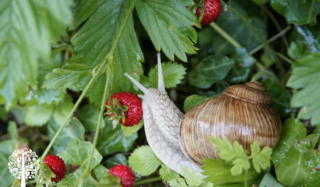
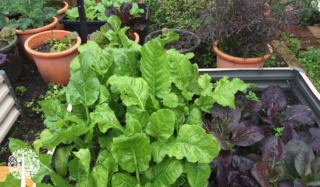
Leafy greens that generally thrive in cooler months were largely ruined by rain, too much moisture and unseasonal fungal diseases. Like farmers, many home gardeners lost seedlings of delicate plants like lettuce and spinach. Heavy rain smashes the leaves. Wet conditions bring the slugs and snails out to take what’s left. When I could finally get out to my garden after the rain stopped, most of my spinach plants were skeletonized stalks!
Paying The Price
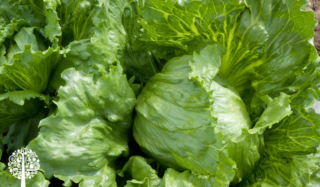
Weeks of heavy rain made it too wet for most bees, pollinators and flying insects to go about their normal activities. So many crops lost their flowers, and few fruits were pollinated. This has delayed the production and harvesting of fruiting crops we usually enjoy during cooler months. As a result, leafy greens that are available in the supermarket have skyrocketed in price. Head lettuces like Icebergs have been selling for $10-12 each. Fast-food chains have been substituting lettuce with cabbage as it’s more resilient to wet conditions and still available. Luckily, lettuce easily self-sows over the cooler months. So post-rain, many gardens had volunteer lettuces popping up to replace those demolished. When fresh produce costs are escalating, we need our food gardens more than ever.
Cloudy Skies
Prolonged periods with extensive cloud cover and little sunlight affect plant growth as they don’t photosynthesize. After the rain, flooding, and disappointment come the clean-up and heartbreak over lost crops.
Yet a garden also offers hope and lessons for what we can do better to prevent future issues or mitigate loss. So, on a sunny day, I spent time reflecting on ways to improve the garden design. We can still get a good harvest by working with aspects of our gardens that we control. Even when the elements and external factors swing the odds against us! We need a backup plan with potential ‘insurance policies’ built into our garden design that enable us to adapt and be flexible in inclement weather conditions.
‘Design out’ Problems
Observe and reflect when it’s wet. Grab an umbrella and gumboots even if it’s pouring rain! Get out and look at your garden in the worst weather conditions. This will show you the weak areas you need to work on. These are a few potential issues to check for:
• Does water pool or backup? If so, do you need to address drainage in this area? How long does the water pond before draining away? Under intense rainfall in storms, flash flooding often occurs. However, this doesn’t mean there’s a permanent problem. It’s just the symptom of a vulnerable area that may require attention. What can you do to help the water move away to prevent damage to plants or property? Block, divert or drain it? Do you need to relocate garden beds to avoid damage?
• Where does water runoff? Does it flow onto your property from a neighbor? Could you redirect it or control it to minimize erosion or damage? Swales and raised beds could be possible options.
• Is rainwater being wasted during heavy downfalls by overflowing downpipes? Could you passively harvest this resource in a water tank or collection point? Turn the ‘problem’ into a solution!
Build UP. If you have persistent issues with waterlogged soil, it may be better to change your garden design. Wet weather only exacerbates anaerobic soil conditions. Raised garden beds and containers offer an opportunity to control drainage, improve water flow and grow plants in oxygenated soil.
Filter the Sun. Intense UV sunlight and heat waves can cripple crops. Consider filtering the sunshine to minimize sunburn, transpiration and plant loss. Shadecloth and greenhouses may be options. On a smaller design scale, you may be able to use taller species or shade structures to provide some protection during the day.
Practical Crop Protection Strategies
Watch the weather forecast and plan accordingly
Be prepared with data whenever possible. If storms, long periods of heavy rainfall, or intense heat waves are predicted, install crop protection covers if possible. For example, move container gardens undercover temporarily. You may be able to use tarps, awnings, patios, decks or other covered structures. Relocate small pots under trees where the canopy provides some protection from heavy rain and sun. Put heavy pots on mobile castors so they can be moved around quickly if inclement weather comes on suddenly. It can mean the difference between saving or losing your plants.
“Make hay while the sun shines”
When the weather is sunny, get out, plant, make compost, maintain your garden, and harvest. When we get the opportunity to be productive, we have to grab it.
Harvest regularly
Minimise losses by staying on top of picking produce when ripe or almost ready. It’s better to get some food on the table than risk total loss. That means daily observation, so you get your timing right! So grab a cuppa and observe your garden.
Choose shade-tolerant edibles
Consider planting species that don’t need full sun or can tolerate partial to full shade positions. This may open up the foods you can grow in cloudy conditions, such as leafy greens, carrots and spring onions.
Hand pollinate
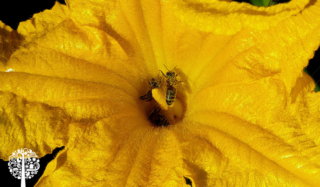
If crops are flowering, but bees and pollinators are inactive due to rain, you may have to pollinate them by hand. Some crops like pumpkins only open their female flowers for a limited time, so the window of opportunity may be short. Pollinating by hand takes commitment but ensures you still get your crops fertilized in inclement weather.
Watch your watering practices
If you have had recent heavy rain, you may be able to delay watering for longer than average. Use a moisture meter to check soil moisture levels. If your soil contains humus, clay and organic matter, it also tends to hold water for longer than sandy-based soils that drain quickly. Mulch-covered soil also retains moisture far longer than uncovered soil. Take these factors into consideration before watering. If your plants need nutrients, consider foliar spraying rather than adding to a waterlogging problem.
Replace soil nutrients
Heavy, persistent rainfall often leads to the leaching of soluble soil minerals. Look for plant clues that they are becoming nutrient-deficient. Changes in leaf color or pattern are a good visual aid. Consider quick fix foliar sprays. Liquid seaweed, kelp, compost tea or vermicast sprays can help replace essential trace elements via the leaves. Reapply all minerals to your soil or potting mix as needed under the mulch. Side-dressing with compost or worm castings, organic soluble fertilizers and soil conditioners can help replace nutrients in a form plants can take up relatively quickly.
Restore soil biology
It’s hard to take when you lose your valuable soil microorganism community. It’s a major setback. The living soil food web is vital for plant health and growth. Try inoculating your soil or potting mix with worm castings, microbial products and compost to help restock beneficial soil worker populations.
Protect worm farms and compost systems
Ensure standalone worm farms are not subjected to rain or intense sun. They need a protected, dry, cool position so the compost worms don’t drown or fry in hot weather. Similarly, covering open compost bays and systems during long periods of wet weather can help prevent valuable nutrients from leaching.
Match species to soil conditions
Most plants hate wet feet, but some can tolerate such conditions and still thrive. Consider your potentially boggy zones as opportunities for growing water-loving species. A few examples are bananas, taro, vetiver grass and comfrey.
Spread the risk
Rather than putting all your eggs – or plants – in the one’ basket’ or garden bed, split your plantings. If you have the space, spread your edibles around the garden in different zones or grow at least some in pots you can easily protect. I found the garlic I sowed in pots survived the destructive rain event, which saved me money, time and energy. Spreading the risk allows you to control the potential damage and increase the likelihood of a successful harvest.
Armed with these strategies, hopefully, we can be better prepared to protect our gardens from future challenging weather conditions and minimize financial loss and disappointment.
Control is the strategy that fear uses to create security. which sounds like a good idea only there’s one tiny problem.
It doesn’t work.
It doesn’t work because a fear based control strategy can only produce more fear and, therefore more control. It’s an endless downward spiral that always ends up in a catastrophic failure.
Do I need to control the cells dividing in my body? Should I control my heartbeat? Does my breath need to be supervised?
If fear breeds control, what breeds fear?
Fear is the direct result of spiritual error. Spiritual error is the direct result of false assumptions.
For example, if I was a Neanderthal who had never seen or heard a radio, I would be amazed and would want to take it apart and find the tiny musicians inside. My false assumption about tiny musicians would leave the radio in pieces in the same way that my heart and soul go to pieces when I falsely assume that consciousness is in the brain and when I die it means that my existence gets annihilated.
Fear.
Consciousness is not in the brain in the same way musicians are not in the radio.
Why do I assume that consciousness arises in the brain?
The assumption that consciousness arises in the brain and is annihilated at death is the work of the apparently separate self, the one who mistakes uniqueness and individuality as evidence of separation and isolation. If the leaf doesn’t notice that it is inherently intimate with the tree, it will create a false dichotomy that cannot be solved on the same level in which it was created.
Therefore, when the false assumption is eliminated, the fear disappears and is transformed into wickedly funny humor and paradox.
Instead of fear, there is astonishment, wonder and humility.
Trust occurs naturally and does not have to be manufactured.
Trust is not a technique nor yet another strategy.
Trust is what happens when love is unstrangled.
Love is unstrangled when we see that it is our hands around our throats.
We were born into the Great Lie and have repeated it endlessly.
However, as Gandhi pointed out, a lie does not become the truth because everyone believes it, nor does the truth become a lie because no one sees it.
What is true is always true and is prior to and senior to what is believed. When belief hijacks truth, expect trouble.
The only remedy that I know of that actually works is to stop the strangulation. Taking my hand off my throat is easier than choking myself to death.
I can’t become myself (because I already am myself) but I can un-become what I am not.
I can stop the self strangulation of false assumptions. Scientific Materialism. Religious Superstition. Philosophical Nihilism. Cultural Suicide. Spiritual Pedophilia.
This is what Jesus Christ meant by Repentance.
Repentance is the refusal to swallow lies. It has nothing to do with self improvement techniques or positive intentions.
Repentance is the decision to be open to what is true. It is a militancy and a vigilance, a courageous heart which will not be ruled by fear.
Fear is incredibly weak compared to love. It produces extremely meager results and always creates more fear and control.
The rise of the Control Freak known as Technocratic Biomedical Fascism is the demon child of the fear that grips humanity.
100% baseless fear.
Fear does have a legitimate place, though, like when you’re running from a tiger, but it’s supposed to disappear when the danger is over.
The Governments of the world have learned to never let the danger be over, to use that fear control entire populations. They play fear card because it’s the only one they have, so they invent monsters and diseases to manipulate us. The invention of Covid is only the latest example of fear-based control systems.
Covid and the Medical Mafia have literally nothing to do with public health. The virus has never been isolated nor has it ever been proven to cause disease. Do you find this hard to accept? The fact of the matter is the presence of a virus in the body of a sick person does not prove it caused the sickness. That’s because correlation is not causation. Correlation is correlation. Causation is causation. They are not the same.
When a tree falls in the forest, it rots and is dissolved into soil by bacteria, mold and fungi. When tissues in our bodies die, microbes reduce it to atoms and use them to rebuild the tissue.
Did the microbes cause the tissues to die? No.
Does the virus cause disease? No.
It is the false assumptions about the virus that cause disease. The mRNA injections have killed and crippled millions of people worldwide, a fact that is actively suppressed by the media, government and agencies like the WHO, FDA, NIH and CDC.
In the same way, the false assumptions we make about ourselves, along with the draconian strategies of the fearful, separate self to find remedy in consoling beliefs, are ineffective, harmful and worthless.
Here is a way to shift the attention back to what is true: Understand that Reality, whatever it is altogether, is Truly Great. Therefore, you are Truly Great and every theory you have about yourself should match Life’s Greatness. If it doesn’t, then its back to the Drawing Board for you.
The return to your self will produce Trust and Trust will outshine and replace Fear.
Guaranteed.
Robert Cinque
In addition to writing essays like these, Robert Cinque also builds beautiful, affordable and comfortable yurts for homeowners and businesses in the fabulous Skagit County. Throughout the past three decades, his work has included building and installing wood art at local landmarks like the Cascadian Farm Organic Fruitstand in Rockport (WA), the Birdsview Brewery at the foot at “the American Alps” in the Pacific Northwest’s Skagit Valley, and many others. He has worked with visionary architect and organic designer Sunray Kelley for over 20 years on many beautiful projects. Together, they formed Radiant Homes and are actively engaged in the development of the Living Home, the Bioshelter, the no-mortgage, no-permit, food and energy producing home. Their work has been featured on National Geographic, MTV, Better Homes and Gardens, and represents the Greening of Architecture, a movement they consider to be the most important development since the Industrial Revolution.
He says: These essays are about “dungeons of mind, the root of suffering, true sanctuary, and the glorious imperative to live intimately with That Which Is Alive As All Things. They are painful, bloody and hard-hitting (the “truth will set you free, but it will piss you off first”). They are designed to destroy what’s false and cultivate what’s real. They are not merely my opinions or philosophy; they are field reports from the underground where the Lie was deconstructed.
They are wrecking balls, cosmic insults to vanity and arrogance, bulldozers and firebombs that burn out the tangled underbrush. They are intended to water the Seeds of Life buried under mountains and centuries of false beliefs, inherited “culture” and ego cults, so-called “religions”, including scientism, masquerading as truth. Idols are routinely lampooned and sacred cows are turned into hamburger as quickly as possible. I really don’t mean to offend any one personally. I’m not after them. I’m after the beliefs that are harming them: the Big Lie, the belief in separation from Love and Truth that strangles the heart and creates terrible, unbearable suffering. I love to help create Sanctuary and Shelter. I am a green builder and enjoy showing others how to build a no-mortgage, no-permit bio-shelters that also provide food and energy. shelter@nwlink.com cell 360-393-5663
Here above is the latest contribution to the Consciousness
Part of our 4 ‘Sees’ Forum –
We are enticing, let’s say, others to the same, that is contribute their art!
Let’s join together then, here in this forum, in practical ways that can be shared, starting with comments, growing into conversations, flowering into contributions of ideas, dreams, projects, works of all kind, Art, and other expressions of a people who intend to make their freedom theirs, to live a wonderful life, together.
There are already many helping and working with us, some seen, some unseen and as yet mysterious. It is our life’s work: to see a Beautiful World Become A Reality.
Our Intent is aligned with Life itself, growing, loving and free.
Cheers Lorenzo!
Join in the creation and send to: newnow@newagora.ca We are waiting for you!
You feel suffocated and weighed down by some kind of invisible force.
And you don’t really know why, but this force is relentless … No matter what you do, you carry this knotted heaviness inside everywhere you go.
Nothing feels right anymore.
You look at your life and marvel at how it doesn’t feel like ‘yours’ at all. You desperately want to escape, you badly want to do something … but you’re terrified of destroying everything you’ve built so far.
You just can’t seem to move. You feel paralyzed.
All of us will feel trapped at some point, whether that be in a job, house, neighborhood, financial circumstance, religion, family, or relationship.
Usually, feeling trapped can be easily remedied by simply doing something new – but it’s not always that easy. When feeling trapped becomes a persistent problem, one that makes you feel hopeless, then it’s time to take a serious look at your life.
Table of contents
5 Reasons Why You’re Feeling Trapped
Feeling trapped and defeated are experiences common to people who face anxiety and depression, according to psychological research. In other words, feeling trapped can create anxiety and depression, which further reinforces the feeling of being trapped. And so the cycle continues.
But the question is, why do we feel trapped in the first place? Anxiety and depression may trigger this experience, and also be the byproduct of it, but what actually creates the anxiety and depression?
Here are some common psychological and spiritual reasons why you might be feeling trapped:
1. You were conditioned to be passive
Passivity is often a learned behavior that we’re taught in childhood by our parents, teachers, and societies. For example, being headstrong is generally a trait that is discouraged in society because it makes you less governable, meaning that others have less influence over you.
As such, in childhood, many of us were taught to be submissive, compliant, and docile because these traits made us “good members” of a society that revolves around control and power.
As young people, how many of us felt empowered and encouraged to take a proactive approach to our life, and to be and do whatever we desired, even if that went against “the norm”?
Of course, most people pay lip service to this “empowerment” ideal (such as our teachers and even parents), but only within the confines of doing socially acceptable things like going to university, chasing after money and status, and getting married and having kids.
On one hand we’re encouraged to be “proactive” about our lives, but on the other hand, this “proactivity” is a disguised form of passivity which is all about following the crowd and doing what everyone else does.
Is it really any wonder that so many of us struggle with feeling trapped? Unless we have the wisdom to see through the futile and unfulfilling pursuits of society from a young age, we end up following the herd and letting others dictate our lives.
Passivity is, therefore, a major cause of feeling trapped and stuck in a life that seems empty. When we’re passive, we’re literally giving others the permission to make our decisions and dictate our existence on this earth. When we’re passive, we’re resigned to accepting our “lot” in life, without realizing that it is actually in our hands to create a life of our own choosing.
If you have just realized that you’ve taken a passive approach to life, don’t worry. Most people on this planet have. It’s not that you choose to be passive, it’s that you’re psychologically programmed and conditioned to be this way. But with this new knowledge, you can pull off the blindfold and start consciously being proactive and self-sovereign with your life again.
Here’s the thing, people are not static beings. As human beings, we are forever changing, evolving, and transforming.
Anything that does not change, dies, as we can quite clearly see in the world around us. When species, ecosystems, and even business and trends don’t evolve, they fade away into oblivion. This natural law is evolution in process.
And the same goes for us as people: we are changing each and every day. We might not be consciously aware of it (because we’re usually evolving in minuscule ways), but we are not the exact same person as we were this time yesterday.
Ask yourself, “Am I the exact same person as I was a year ago?” Likely, your answer will be no, you’ve changed! And this is completely fine!
Feeling trapped is therefore often a product of simply outgrowing your current life. Perhaps you don’t have much in common with your friends anymore, your career interests have changed, or you just don’t relate as deeply to your partner anymore.
This is all completely normal, yet as humans, we tend to pathologize change. We become neurotic and fearful about it because we desperately want to control life to give us a sense of comfort and security. But the truth is that change is inevitable – resistance is futile!
When you aren’t willing to upgrade or change your life, even when you’ve outgrown it long ago, you feel suffocated. Just imagine how uncomfortable it would be squeezing yourself into the clothes you wore ten or twenty years ago! Yes, you might feel comforted in some small way … but is the comfort and familiarity you feel worth the experience of dying inside?
Remember that it’s completely normal to not want to let go, so be gentle and compassionate towards yourself. It’s OK to grow and change. It is your birthright.
3. You desperately want to fit in and feel “normal”
All of us want to feel like we belong. In fact, craving to “fit in” with others is deeply embedded into our DNA: it’s a biological survival mechanism.
But we’ve come a long way in our evolution, and the proof is that the more we force ourselves to be “normal,” the more we suffer. Evolution, or rather involution, is now calling us to honor our authentic needs in order to grow as a species.
Conformity is an old paradigm we no longer need to chase after. In fact, the more we conform, the more empty we feel inside. The more we try to be like others, the more we lose contact with our inner voice. The more we mold our lives to be “socially acceptable,” the more we sacrifice our inner values, dreams, beliefs, and desires.
Trying to fit in with others because we fear what they think about us, is a recipe for suffering. Understand that wanting to be accepted is completely normal, but it’s time that you start looking inside of yourself for approval, rather than outside.
Responsibilities are a normal part of life; they teach us to be mature, accountable, patient, and empathetic.
But there can come a point in our lives when we take on more responsibilities than we can handle … and we start to feel TRAPPED.
Why? Usually, we fill our lives with pointless or excessive commitments because we’re trying to escape from something, whether that is our pain, our insecurities, our past, our traumas, or some kind of buried emotion that haunts us like grief, emptiness, or anger.
If you’re feeling trapped, closely examine your life. Have you bitten off more than you can chew? Why? And furthermore, what can you do to decrease your workload?
5. Soul loss and lack of life purpose
Probably the biggest reason why many of us undergo the excruciating feeling of being trapped is soul loss.
When we have lost contact with our souls we feel the unshakable sense that ‘something is missing’ from our lives.
Soul loss occurs for many reasons such as a traumatic life experience or simply situations where we’ve had to consistently shape ourselves into who others want us to be (causing us to feel repressed and withered inside).
The ego is our false self, the concept of “me” that we have inside of our brains which is based on stories about the past or future.
The more we serve our ego and its desires, the more empty and unfulfilled we feel because the ego is obsessed with power, control, and self-gratification – something that is ultimately unfulfilling.
Our soul, on the other hand, is focused on love and unity: on learning how to love, behaving from a place of love, speaking with love, and ultimately, embodying love as our True Nature.
When we are in contact with our souls, we discover our unique life purpose which helps us to stop feeling trapped by our circumstances. We start to feel empowered and begin to listen to the voice of the heart rather than the voice of the mind.
Feeling trapped, therefore, is often a sign that you’re undergoing not just a loss of soul connection and therefore lack of life purpose, but you’re starting to “wake up” on a deeper level. You’re beginning the spiritual awakening process where you sense that there’s much more to life than meets the eye.
How to Stop Feeling Trapped (9 Paths)
Feeling trapped can be a self-perpetuating cycle: we begin to look for more and more proof to confirm our belief that we are victims. And that feeling of self-victimization fuels the feelings of being trapped.
Can you see how powerful the mind, and the hidden inner parts of the psyche, can be here?
For example, we might try to stop feeling trapped, but then, our inner saboteur might do something that causes us to fall back into that feeling again. As a result, we confirm the belief that we’re trapped, thus becoming a self-fulfilling prophecy.
So be careful. Understand that feeling trapped can actually be a very addictive role because it makes us feel like a victim – and the ego loves feeling like a victim.
Ironically, feeling like a victim is actually very empowering because this role revolves around blaming, justifying, and making excuses – and all of these behaviors deflect self-responsibility.
With that in mind, let’s explore some methods which can help you to stop feeling trapped:
1. Take responsibility for your life
As I just mentioned, feeling trapped can cause us to adopt the victim role which revolves around avoiding self-responsibility. It’s normal to feel sad about your situation, but self-pity ultimately gets you nowhere.
In order to feel better, you need to take responsibility for your life, which means deciding to create change from a conscious and intentional place. Realize that happiness is what happens when you step up and claim ownership of your life.
2. Make little changes each day
Do something new each day. Approaching your life differently little by little will help you to regain faith in your own power. Even if you’re in a really tight, oppressive, and constricting situation where it feels like there’s no escape, what one little thing can you do to regain a sense of self-sovereignty each day?
For example, maybe you decide to take a new route to the shops or set the habit of researching one new way to become financially independent each day. No matter how small and seemingly inconsequential the change is, do it. Commit to it with religious fervor. If no one is coming on their white horse to save you, you need to find a way to save and free yourself.
3. Make a bullsh*t list
Sit down and think about all the things in your life that you believe are limiting you.
For example, on your bullsh*t list you might write things like:
going to after work parties with colleagues that I secretly dislike
commitments with old friends who I have nothing in common with
pretending to like what my partner likes
“mandatory” luncheons with extended family members who are toxic
being passed over at work for promotions and taken for granted
being interrupted in conversations
not dividing the household chores equally with my partner
By becoming very clear about what is making you unhappy, you’ll find it easier to escape the cage that has been built around your life by stepping up and saying “no, this isn’t acceptable.”
4. Throw away social norms
Trying to be socially acceptable wastes so much time, energy, and money. Try to keep only what is essential in your life. If you have to step on a few toes, so be it!
If you’re not pissing someone off, you probably aren’t doing anything meaningful with your life!
No matter what we do, we’ll always have naysayers. Be courageous and do what makes you happy, even if that means cutting some people off or accepting that you’ll be thought of as “weird” or “crazy.” Those that do not support you tend to hang around you like dead weight, so throw social norms to the wind, and let it go.
5. Create energy barriers
Are you over-extending yourself and getting bogged down by too many commitments? Learn how to notice your energy levels and step away when you’re getting too overwhelmed. Ask yourself questions such as:
Where in life am I giving more than getting? Is it really worth it?
Who or what is an energy vampire, draining my vital life force energy?
What kind of energy barriers do I need to set up in my relationships and work life?
How much time am I really ready to dedicate to _____ ?
Draw a line and don’t let anyone cross it, not even yourself.
6. Say “no thank you”
There is nothing wrong or impolite about saying “no thank you” or “thank you for thinking of me, but I can’t.” Yes, you may offend a few insecure people, but most people will respect your assertiveness and self-respect. You have the right to say no to doing things you’re not interested in or don’t believe in. So don’t let “yes” become a cage that entraps you.
7. Embrace fear of the unknown
One reason why we remain stuck in feeling trapped is that we’re scared of the unknown, i.e., what will our lives look like if we make a leap into drastic change? How will we deal with all of the intimidating newness in our lives?
Remember that it’s normal to fear the unknown: we are wired to be that way. The reptilian fight-or-flight and mammalian hunter-gatherer brain within us is always scanning the environment for threat – that’s just part of being human.
But we also have the prefrontal cortex or the thinking brain that needs challenge to thrive and feel alive. So take care of all three parts of your brain by going slowly (what your reptilian brain needs), comforting yourself and reaching out to others for advice (what your mammalian brain needs), and making plans and goals (what your prefrontal cortex needs). Embrace the fear of the unknown, and go ahead anyway.
8. Take a plant medicine
Obviously there is a disclaimer here: plant medicine is best taken with an experienced shaman or healer and you should seek professional advice if you suffer from mental illness (and abide by local laws, etc. etc.).
But going through such an experience can quite literally change your entire perspective of life.
Try to locate experienced and trustworthy practitioners who hold San Pedro, Peyote, Ayahuasca, or Psilocybin Mushrooms ceremonies either in your country or one nearby (if traveling is accessible to you). Even small quantities of marijuana which is now legalised in many countries, can be tremendously healing when done meditatively and intentionally.
Taking plant medicine is a sacred and profound experience which can help you develop new perspectives on your life, and even significantly reduce mental illnesses such as depression and anxiety. I always recommend trying a very small amount first, with someone you trust.
9. Reconnect with your soul
Plant medicine is one powerful and foolproof way of reconnecting with your soul. However, if you prefer other methods, you might like to explore various soul work practices such as vision quests, journaling, spiritual meditation, mindfulness exercises, catharsis, artistic self-expression, music, and other alternative forms of medicine that can help awaken this deep presence within you.
My favorite ways of soul searching involve using art, music, and creative written expression to connect with my deeper essence and meaning of life. I recommend that you choose one practice that you feel drawn toward, and stick with it for at least two months (the time a new habit takes to form).
Here are some guides I’ve written surrounding the soul which may be of help:
I hope this article has give you some helpful advice to help liberate yourself and has supported you in understanding why you may feel trapped.
Tell me, why are you feeling trapped? When did it start, and most importantly, what are you planning to do about it?
Support Our Work
We spend hundreds of hours every month writing, editing and managing this website. If you have found any comfort, support or guidance in our work, please consider donating:
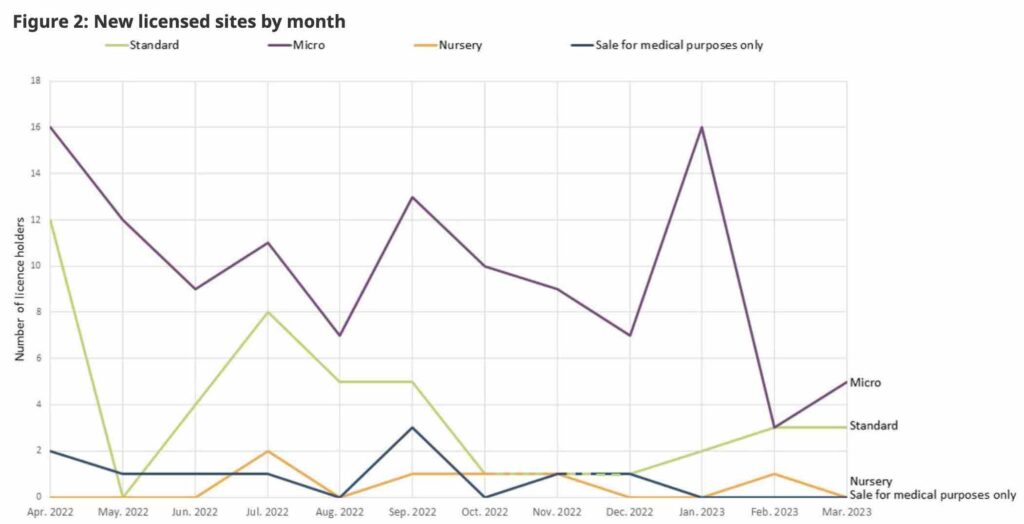
Micro cannabis licences continue to grow in popularity in Canada, at almost 42 percent of all licences as of March 31, 2023. Just over half (51 percent) of licences were standard, three percent were nursery licences, and nearly four percent were medical-sales only licences.
At the current pace of licensing, the total number of micro licences could surpass standard licences in 2024.
There were also 151 cannabis production licences in the queue and 913 active production licences in Canada as of March 31, 2023, according to Health Canada’s newest figures.
Of those active cannabis production licences, as of March 31 this year, 470 were standard licences, 381 were micros, and 26 were nurseries. Fifty-five of these licences were Indigenous-affiliated (six percent of all licences), and 158 were outdoor growers.
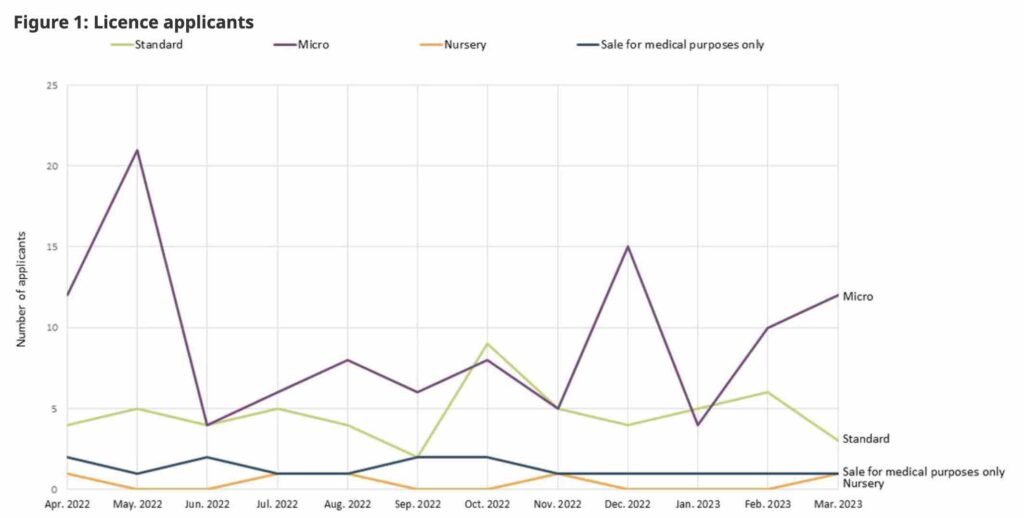
Of those applications seeking a licence, 44 were Indigenous-affiliated and 37 were for outdoor licences. Fifty-six of the applications were for standard production licences, 84 for micros, and two for nurseries. Most applications were in BC, Ontario, and Quebec. Prince Edward Island, Newfoundland and Labrador, Yukon, Nunavut had no applications in the queue.
Image via Health Canada
BC is still the home to the most micros, with 91, followed by Quebec with 87, and Ontario with 76. Micros are the majority of licences in Manitoba, Quebec, Nova Scotia, PEI, and Saskatchewan. Indigenous-affiliated applications—which have access to a special Indigenous Navigator program through Health Canada—were also more likely to be for a micro, with 29 out of 55 licences being micros. Thirty-six of these are medical-only sales licences.
As of June 16, another 36 micro licences were issued, and another 13 standard licences were issued, along with one nursery and four medical-only sales licences. A medical-sales only licence allows a business to manage cannabis sales, generally through an online platform, without ever producing or touching cannabis.
This represents a decline in applications in the queue compared to the previous update posted in March, when there were 175 applications to grow or process cannabis commercially in Canada in 2022, the majority of them micros.
Of those 175 applications by the end of 2022, 65 were for standard licences, 99 were for micros, and four were for cannabis nurseries. Of those, 44 applications were from Indigenous applicants, and 44 were for an outdoor cultivation licence. Similar to the first three months of 2023, Newfoundland and Labrador, Northwest Territories, Nunavut, Prince Edward Island, and Yukon Territory also had no applicants in 2022.
Image via Health Canada
While new applications continue to come in, the number of licences throwing in the towel continues to increase, as well. As of March 31, 2023, there were 166 licences either revoked or expired—146 of these were revoked at the request of the licence holder, while three were revoked by Health Canada and 17 expired. Thirty-three of those revocations were in the first three months of 2023.
Between March 31 and June 16, 2023, there were another 24 new licences issued, along with 21 licence revocations, four expiries, and one licence suspension.
Toronto — Entourage Health Corp., a Canadian producer and distributor of award-winning cannabis products, has partially repaid its senior secured credit facility with Bank of Montreal (BMO) from the net proceeds of the sale of its Strathroy facility and cash, and that the remaining balance of the Credit Facility of approximately $14.6 million has been assumed by its other senior secured lender, an affiliate of the LiUNA Pension Fund of Central and Eastern Canada, allowing for the full repayment of BMO.
In connection with the assignment of BMO’s rights, interests and obligations under the credit facility, BMO has also assigned certain related security of the company. Following such assignment, the company has no further obligations to BMO under the terms of the credit facility and the related security and obligations previously existing in favour of BMO have been assigned to LPF.
The terms of the credit facility were not amended in connection with the assignment. By restructuring its senior secured debt, the company simplifies its capital structure in line with the strategic decisions made to simplify its business operations.
The company previously announced it would be ceasing its cultivation activities and has signed a three-year supply agreement with HEXO Corp. to buy bulk cannabis for its expanding retail distribution and increased medical offerings.
Advertisement
The company recently closed the sale of its Strathroy facility enabling them to achieve greater financial flexibility. The company has also entered into a two-year agreement with the University of Guelph to store its genetics in-vitro and conduct research on its proprietary genetics. This collaboration allows the company to ensure that the maintenance and advancement of proprietary genetics continue to be a priority for its long-term business model.
“Through diligent financial management and strategic planning, we have completed the restructuring of our senior debt facilities. This achievement demonstrates our commitment to fiscal responsibility, simplification of our business at the operational and corporate level and paves the way for future growth opportunities with fewer restrictions. With our operations centralized at our production site in Aylmer, we have achieved full optimization and efficiency in our processes. The initiatives have already shown promising results, improving productivity and reducing production costs, aligning with the long-term best interests of our patients, customers, and shareholders.” — George Scorsis, CEO & executive chairman, Entourage
Calgary — Canadabis Capital Inc., a leading Canadian cannabis company, has launched its new super slim style pre-roll line. The company aims to provide its consumers with a wide range of premium quality products and believes that the new line will cater to those looking for a more sophisticated smoking experience.
“We are thrilled to be introducing our new super slim style pre roll line under DAB BODS and HIGH PRIESTESS brands. These pre rolls have been expertly crafted to offer a truly premium smoking experience, and we can’t wait for our customers to try them out.” — Travis McIntyre, CEO, Canadabis Capital
According to McIntyre, Canadabis Capital is committed to driving innovation in the cannabis industry. “As the cannabis market continues to grow and evolve, we are looking forward to seeing the evolution of enhanced and infused pre-rolls over the next 12-24 months,” he added.
The new super slim style pre-roll line will be available for purchase from select retailers in Canada.
Advertisement
CanadaBis Capital Inc. has granted options to two directors and one employee under its Stock Option Plan, to purchase up to 1,000,000 common shares for a period of five years commencing on June 19, 2023, at an exercise price of $0.24 per share. The options will vest one-half in six months and the remaining half shall vest one year from the date of grant.
Our integrated subsidiaries:
Stigma Pharmaceuticals Inc. – 100% held
1998643 Alberta Ltd. (operating as “Stigma Grow”) – 100% held
Full Spectrum Labs Ltd. (operating as “Stigma Roots”) – 100% held
2103157 Alberta Ltd. (operating as “INDICAtive Collection”) – 100% held






















Recent Comments