Earlier this year, Grow Opportunity celebrated five years in trade media as our inaugural issue went to print Fall 2017, pre-dating the legalization of cannabis in Canada by one year. As we return for the semi-annual Lift Events & Experiences on domestic soil, marked changes in the show guide from previous years demonstrate a pivot away from investment financing to the more tangible topics of production, data collection, marketing and retail.
International expansion remains high on the list of industry priorities as the Lift Cannabis Business Conference (LCBC) presented a review on how new and established international markets compare to the Canadian industry, moderated by Deepak Anand head of international consulting at GPS Global.
Panelist Trina Fraser partner at Brazeau Seller Law relays lessons learned from a taxation perspective that other countries might learn from Canada. Mainly: “don’t overtax the regulated industry.”
Anna-Sophia Kouparanis, co-founder of Bloomwell Group (Germany) spoke of the many options for international cultivators in the medical cannabis market in Germany today, as well as the tremendous opportunity the country faces once further and final details emerge on the recreational front.
Advertisement
Guillermo Delmonte, founder of NDLATAM (Uruguay) provided his thoughts on the growing and burgeoning LATAM markets such as Uruguay and Colombia — the former being the first country to legalize non-medical cannabis, while the latter recently shifted to allow flower export.
Yet industry excise duty is still the most problematic tax in this country, implemented beneath the theory that regulators can “start strict and loosen restrictions over time,” said Fraser, “because this is easier than tightening up later.” Though clearly it’s a challenge to reclaim tax revenues from levels of government after they’ve been receiving them.
Fraser encourages international players to “start lower and increase over time if needed.”
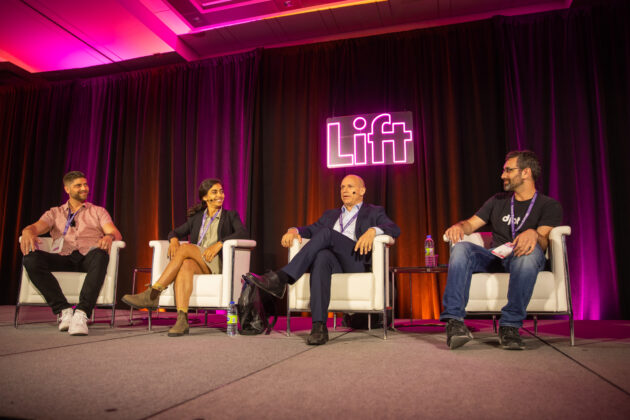
Photo: Lift Events & Experiences
Five years in trade media
Fraser told Grow Opportunity: “in the 10 years I’ve been in this industry, I’m constantly surprised by changes.” For that reason, she reserves predictions but indicates general perceived trends. “Over the next five years, there will likely be fewer retailers and fewer producers. But eventually, we will achieve some sort of equilibrium.”
“Virtually none of my corporate clients are the same as they were five years ago,” said Fraser, touching on the second or perhaps third wave the industry has recently entered where those joining the market now are buying up assets and starting over without the debt load of the first wave.
“Five years ago, stores couldn’t hire fast enough; they couldn’t find product. And now [producers] can’t get a listing in the OCS. Even international is up and down,” she concluded.
“Truth to Power” presentations
Attorneys Carlo DiCarlo and Gerald Chan at Stockwoods LLP disclosed critical lessons from the CannTrust class action case.
DiCarlo and Chan pinpointed the regulatory ambiguity and potential misunderstandings that played a role in this case with the key takeaway that in any business, there’s the temptation to move quickly but because cannabis is a highly regulated, highly visible new market, “there is virtue in slowing down when dealing with the regulations.”
There may be confusion surrounding what is and what isn’t required for compliance, yet regardless of the “build-up of public pressure,” it’s important to slow down and ensure that those enforcing the regulations understand them, and if not, it gets sorted at the moment of compliance rather than down the road in the public eye.
The concentrate panel during LCBC addressed how extraction and processing is outpacing all other segments of the industry. Moderator Adam Temple, CEO of Evolved Extraction Solutions, was joined by Brishna Kamal, president of Whistler Therapeutics, Andrew Fisher, CEO of Protonify, and Elad Barak, co-founder and CEO of Dijot.
The panel pointed to the absence of expiration dates and the degradation of products, such as hash that lose potency at the one-year mark and must leave the facility within six months of being packed. Fisher encourages trade as international companies have largely “overcapitalized,” shipping mere kilos per month. Whereas in Canada, of course, “we do volume. And now we can go compete in the international markets,” he said.
Kamal emphasized the necessity of B2C marketing in this category, specifically due to the unregulated market offering “value and price we can’t touch.” Fisher added: “it’s not just about price, it’s about value — conveying value to the consumer.” A consumer “might buy a cheap ‘x’ but expensive ‘y’ if it gets them to where they want to go,” he said.
On the thread of cannabis marketing, the guerilla tactics needed in this industry were presented by a panel where ADCANN founder and editor Colin Bambury advocated for the potential of Canadian homegrown brands that must push the envelope in order to succeed.
Bambury explained how different or lax marketing regulations in other countries could enable companies to then come to Canada and capitalize off international brand recognition, instilling the need for homegrown brands to continue hashing out innovative marketing strategies such as optimizing social media, cross-promotion and PSAs for public health.
Chris Day, David Brown, Haley Nagasaki & Deepak Anand. Photo: Annex Business Media
Expo floor
International markets as well as consumer marketing continued to dominate conversations on Friday, along with data and operational efficiencies, and quality control — a C-45 panel moderated by StratCann’s David Brown.
Agility and brand loyalty achieved through trust is one way independent retailers have demonstrated an area of preparedness in this industry, said Shakir Tayabali, CEO of Independent Retail Cannabis Collective during a panel called “Independent retailers: thriving & surviving?”
Legacy cannabis brands were built upon trust while fulfilling a niche interest and the regulated market needs to get back there. To put it bluntly, shifting away from the mentality that views individuals as dollar signs is imperative at this point in the game. “Cannabis has always been about community and if we go back to that mentality then we can start to repair,” said Tayabali.
The retail, brand ambassador and budtender branch of the cannabis ecosystem that closes the loop — uniting producer and consumer — will help determine who will advance and who will perish in this uniquely friendly but fiercely competitive industry.
To top it all off, years of successful diner’s club demos and private events have spurred the evolution of Lift Events & Experiences.
Congratulations to Chef Jordan Wagman, author and director of cannabis food and beverage growth at Lift, who will begin a new chapter with Taste at Lift: Cannabis food and beverage experience, kicking off August 4, 2023 in San Francisco.
Chef Jordan Wagman. Photo: Lift Events & Experiences
Earlier this year, Grow Opportunity celebrated five years in trade media as our inaugural issue went to print Fall 2017, pre-dating the legalization of cannabis in Canada by one year. As we return for the semi-annual Lift&Co. Expo on domestic soil, marked changes in the show guide from previous years demonstrate a pivot away from investment financing to the more tangible topics of production, data collection, marketing and retail.
International expansion remains high on the list of industry priorities as the Lift Cannabis Business Conference (LCBC) presented a review on how new and established international markets compare to the Canadian industry, moderated by Deepak Anand head of international consulting at GPS Global.
Panelist Trina Fraser partner at Brazeau Seller Law relays lessons learned from a taxation perspective that other countries might learn from Canada. Mainly: “don’t overtax the regulated industry.”
Anna-Sophia Kouparanis, co-founder of Bloomwell Group (Germany) spoke of the many options for international cultivators in the medical cannabis market in Germany today, as well as the tremendous opportunity the country faces once further and final details emerge on the recreational front.
Advertisement
Guillermo Delmonte, founder of NDLATAM (Uruguay) provided his thoughts on the growing and burgeoning LATAM markets such as Uruguay and Colombia — the former being the first country to legalize non-medical cannabis, while the latter recently shifted to allow flower export.
Yet industry excise duty is still the most problematic tax in this country, implemented beneath the theory that regulators can “start strict and loosen restrictions over time,” said Fraser, “because this is easier than tightening up later.” Though clearly it’s a challenge to reclaim tax revenues from levels of government after they’ve been receiving them.
Fraser encourages international players to “start lower and increase over time if needed.”
Photo: Lift Events & Experiences
Five years in trade media
Fraser told Grow Opportunity: “in the 10 years I’ve been in this industry, I’m constantly surprised by changes.” For that reason, she reserves predictions but indicates general perceived trends. “Over the next five years, there will likely be fewer retailers and fewer producers. But eventually, we will achieve some sort of equilibrium.”
“Virtually none of my corporate clients are the same as they were five years ago,” said Fraser, touching on the second or perhaps third wave the industry has recently entered where those joining the market now are buying up assets and starting over without the debt load of the first wave.
“Five years ago, stores couldn’t hire fast enough; they couldn’t find product. And now [producers] can’t get a listing in the OCS. Even international is up and down,” she concluded.
“Truth to Power” presentations
Attorneys Carlo DiCarlo and Gerald Chan at Stockwoods LLP disclosed critical lessons from the CannTrust class action case.
DiCarlo and Chan pinpointed the regulatory ambiguity and potential misunderstandings that played a role in this case with the key takeaway that in any business, there’s the temptation to move quickly, but because cannabis is a highly regulated, highly visible new market, “there is virtue in slowing down when dealing with the regulations.”
There may be confusion surrounding what is and what isn’t required for compliance, yet regardless of the “build-up of public pressure,” it’s important to slow down and ensure that those enforcing the regulations understand them, and if not, it gets sorted at the moment of compliance rather than down the road in the public eye.
The concentrate panel during LCBC addressed how extraction and processing is outpacing all other segments of the industry. Moderator Adam Temple, CEO of Evolved Extraction Solutions, was joined by Brishna Kamal, president of Whistler Therapeutics, Andrew Fisher, CEO of Protonify, and Elad Barak, co-founder and CEO of Dijot.
The panel pointed to the absence of expiration dates and the degradation of products, such as hash that lose potency at the one-year mark and must leave the facility within six months of being packed. Fisher encourages trade as international companies have largely “overcapitalized,” shipping mere kilos per month. Whereas in Canada, of course, “we do volume. And now we can go compete in the international markets,” he said.
Kamal emphasized the necessity of B2C marketing in this category, specifically due to the unregulated market offering “value and price we can’t touch.” Fisher added: “it’s not just about price, it’s about value – conveying value to the consumer.” A consumer “might buy a cheap ‘x’ but expensive ‘y’ if it gets them to where they want to go,” he said.
On the thread of cannabis marketing, the guerilla tactics needed in this industry were presented by a panel where ADCANN founder and editor Colin Bambury advocated for the potential of Canadian homegrown brands that must push the envelope in order to succeed.
Bambury explained how different or lax marketing regulations in other countries could enable companies to then come to Canada and capitalize off international brand recognition, instilling the need for homegrown brands to continue hashing out innovative marketing strategies such as optimizing social media, cross-promotion and PSAs for public health.
Chris Day, David Brown, Haley Nagasaki & Deepak Anand. Photo: Annex Business Media
Expo floor
International markets as well as consumer marketing continued to dominate conversations on Friday, along with data and operational efficiencies, and quality control – a C-45 panel moderated by StratCann’s David Brown.
Agility and brand loyalty achieved through trust is one way independent retailers have demonstrated an area of preparedness in this industry, said Shakir Tayabali, CEO of Independent Retail Cannabis Collective during a panel called “Independent retailers: thriving & surviving?”
Legacy cannabis brands were built upon trust while fulfilling a niche interest, and the regulated market needs to get back there. To put it bluntly, shifting away from the mentality that views individuals as dollar signs is imperative at this point in the game. “Cannabis has always been about community and if we go back to that mentality then we can start to repair,” said Tayabali.
The retail, brand ambassador and budtender branch of the cannabis ecosystem that closes the loop, uniting producer and consumer, will help to determine who will advance and who will perish in this uniquely friendly but fiercely competitive industry.
To top it all off, years of successful diner’s club demos and private events have spurred the evolution of Lift Events & Experiences.
Congratulations to Chef Jordan Wagman, author and director of cannabis food and beverage growth at Lift, who will begin a new chapter with Taste at Lift: Cannabis food and beverage experience, kicking off August 4, 2023 in San Francisco.
Chef Jordan Wagman. Photo: Lift Events & Experiences
Thailand’s winning party, Move Forward, has suggested reclassifying marijuana as a narcotic, even though it was legalized only a year ago. This idea has sent shock waves across a sector expected to be worth $1.2 billion in the coming years.
Since the legalization of marijuana consumption and growth, a slew of new businesses have sprung up, with multiple outlets in prominent tourist destinations such as Bangkok catering to thrilled tourists and local smokers with their selection of cannabis goods. However, business owners are concerned about a potential rollback of the liberal market by a new government.
Interestingly, a party from the departing military-backed government initially championed the decriminalization of marijuana, primarily for medical purposes. However, the drug’s legal status has remained ambiguous. Despite promises of legislation to establish clear regulations, the bill failed to pass through parliament, creating a legal vacuum that allowed a flourishing recreational marijuana industry to take shape in a nation known for its tough stance on drugs.
The Pheu Thai is one of the opposition parties that Move Forward hopes to join in a coalition government. The latter had promised during its campaign to ban recreational marijuana, citing concerns about public health and youth abuse. In its recently published political agenda, Move Forward and its partners propose reclassifying cannabis as a regulated substance with new regulations that support its beneficial applications.
This proposal has sparked unease among procannabis advocates, particularly progressive young individuals who played a significant role in the parties’ electoral success. By March, approximately one million individuals had registered as cannabis growers, though it remains uncertain whether they are all actively cultivating the plant. The exact number of unregistered growers is also unknown.
In response to the probable regulatory escalation, 200 businesses and 5,200 people have signed an online petition against the categorization of marijuana as a narcotic, claiming that doing so would violate people’s rights. Move Forward seems to be treading carefully as it traverses a sector that is expected to be worth $1.2 billion by 2025.
Sirikanya Tansakun, a party official, defended the proposal to reschedule marijuana and emphasized the need to fill the legal gap. She reassured businesses that they would have backing as the party navigated the parliamentary process of enacting laws. Tansakun declared that unlicensed street vendors and the smuggling of illegal marijuana imports would be targeted and forbidden, notwithstanding the likelihood of a broad crackdown.
The rollercoaster that efforts to legalize marijuana in Thailand are being taken through is something that companies such as IGC Pharma Inc. (NYSE American: IGC) are unlikely to experience given that their focus is on coming up with marijuana-based formulations that meet the criteria of the FDA and other regulators in the different markets where those companies hope to sell their medicines. The path to gaining regulatory approval is clear.
NOTE TO INVESTORS: The latest news and updates relating to IGC Pharma Inc. (NYSE American: IGC) are available in the company’s newsroom at https://cnw.fm/IGC
About CNW420
CNW420 spotlights the latest developments in the rapidly evolving cannabis industry through the release of two informative articles each business day. Our concise, informative content serves as a gateway for investors interested in the legalized cannabis sector and provides updates on how regulatory developments may impact financial markets. Articles are released each business day at 4:20 a.m. and 4:20 p.m. Eastern – our tribute to the time synonymous with cannabis culture. If marijuana and the burgeoning industry surrounding it are on your radar, CNW420 is for you! Check back daily to stay up-to-date on the latest milestones in the fast -changing world of cannabis.
To receive instant SMS alerts, text CANNABIS to 21000 (U.S. Mobile Phones Only)
Please see full terms of use and disclaimers on the CannabisNewsWire website applicable to all content provided by CNW420, wherever published or re-published: http://CNW.fm/Disclaimer
Do you have questions or are you interested in working with CNW420? Ask our Editor
“There is one path in the world that none can walk but you. Where does it lead? Don’t ask, walk!” ~Nietzsche
Do you ever feel frustrated with who you are? Do you ever feel restless? Like you’re not living your best life? Like you’re severed from it? I’m not talking about hating your job, or wishing you had more money, or why you can’t leave the dead weight of your significant other behind. I mean do you ever feel frustrated with yourself, with who you are at the core of yourself?
Do you ever feel manufactured? Like the culture has molded you into a thing that you can’t quite shake? Like your mind has been hijacked by a billion status quo anxieties? Like your soul has been put on layaway for some other life?
If so, it’s time to take your own hero’s journey. It’s time to take a leap of courage. It’s time for self-inflicted adventure. It’s time to be less egocentric and more soul-centric. It’s time to settle the score between the one you feel burning deep inside you and the one society has conditioned you to be.
These feelings are the whispers of a wakeup call. They are the premonitions of a call to adventure. They are your intuition attempting to ignite a fire under your ass. They are the foreshadowing of your shadow’s attempt to reconcile itself with the whole of you. As Rumi said: “There is a voice that doesn’t use words. Listen.”
Somewhere within the silence, between the clunking clatter of society and the cheeky chatter in your head, is a voice full of the wisdom of what you love, of what makes you tick, of what draws you upward, of what makes you uniquely “you.” Heed that voice. Feel it in your bones. Let its thunder rise from r
Stop making things easy for yourself:
“Run from what’s comfortable. Forget safety. Live where you fear to live. Destroy your reputation. Be notorious.” ~Rumi
Security is overrated. So are reputations and comfort, for that matter. There’s a wealth of wisdom in insecurity. Alan Watts wrote an entire book about it (The Wisdom of Insecurity). Amazing read!
When I say Fuck security, I don’t mean jump off a cliff or pet scorpions. I don’t mean haphazard fuckery. I mean get out from under the security blanket of the mollycoddling culture, of your pampered domesticity, of your spoiled-rotten creature comforts, of the overprotective and oppressive society that breathes down your neck and kisses you with lies when all you want is to be slapped by the truth. I mean go have an adventure. As Nietzsche profoundly stated, “Any human being who does not wish to be part of the masses need only stop making things easy for himself.”
Embracing difficulty is essential for living a fulfilling life. Taking the hero’s journey is the epitome of embracing difficulty. And it will be different for everyone. No two people are alike. Similarly, no two hero’s journeys are alike. You are a devastatingly unique individual. There has never been another like you and there never will be. Why give in to the homogenization of your soul? Why kowtow to a killjoy culture? Choose to “know thyself” instead. Choose a life well-lived. Choose to be the hero of your life’s story. Choose adventure over comfort.
Choosing adventure over comfort is grabbing the bull by the horns and daring to guide it in the direction you want, even at the risk of being dragged or tossed or even trampled. The “bull” represents what you love. It’s your deepest connection to this life. It’s the thing that moves your soul, that stirs your spirit, that grabs you by the heart even as you attempt to grab it by the horns. So what if it tosses you? So what if you get trampled? So what if you get lost in the labyrinth? You are in love goddammit!
Abandon the chains of opinion and fear:
“Real generosity toward the future lies in giving all to the present.” ~Camus
Don the compass of self-expression and courage instead. Dare to challenge the gatekeepers. Whoever or whatever they are. Ride up to the edge of your comfort zone, with your courage in full flutter, and challenge the gods. Stretch yourself —mind, body, and soul. Transform your secure boundaries into an adventurous horizon. Only you can.
Forget about the haters. Forget about the fearful many who quibble and shudder at the immensity of life, their teeth chattering as they urge you to stay. They may love you, but their fear blinds them, and it will blind you too if you let it. Don’t let it. Absorb their love. Hug them and honor them. But deflect their fear with the shield of your courage and go about discovering and becoming the best version of yourself deep in the throes of your own hero’s journey.
Don’t worry if you can or cannot handle the blinding light outside the Cave. Don’t worry if you can or cannot withstand the Desert of the Real outside the Matrix. Don’t worry if you might die. The only way you know for sure is to give it a shot. Choose the red pill. Take a leap of courage into the unknown. Throw off the weight of society. Throw off the too-heavy comfort. Stop clinging to the safety of the shore. There’s adventure to be had. As Leonard Cohen said, “If you don’t become the ocean, you’ll be seasick every day.”
The hero’s journey beckons. There’s the experience of getting to know your most authentic self. It won’t be easy. It will hurt like hell. It will be the hardest thing you’ll ever do. Many trials and tribulations await you on the crooked path of the hero’s journey. There’s the annihilation of your former self inside the cocoon. There’s ego death. There’s the bleeding out of your sacred wound. There’s crossroads that will tear you in half. There’s buckling thresholds and sinister abysses. There’s the dark night of the soul just waiting to destroy what’s left of your innocence. But in the end, it will all be worth it.
You’ll have discovered a “magic elixir” that you can regift to the “tribe.” Sure, you probably had to count coup on the gods and steal it from them while they slept, but you earned that shit. You’ll have your integrated shadow to pal around with. You’ll have all the demons-turned-diamonds filling up your satchel, which is worth more than money can buy. You’ll have wisdom radiating from the scars left behind by your sacred wounds. You’ll have discovered that the journey is the thing. More importantly, you’ll have the polished pearl of your most authentic self to marvel over.
Sharpness does not just come to a knife. The knife must be tested. It must be sharpened. So too is it with the Self. Taking the hero’s journey is daring to take the grit of your current self and test it against the rub of the universe. It’s daring to take the coal of your current self and test it against the pressure of a challenging world. If you survive, then you’ll have become a pearl because of the rub. You’ll have become a diamond because of the pressure. You’ll have become sharp from the sharpening. But without the rub, the pressure and the sharpening, all you’d have is grit, coal and dullness.
If you don’t survive? Well then, that’s that. Death is always a possibility. But as the stoic Seneca said, “It matters how well you lived, not how long. And often the “well” lies in not living long.” So be it.
As Mark Twain said, “The fear of death follows from the fear of life. A man who lives fully is prepared to die at any time.” I dare you to live fully.
Gary Z McGee, a former Navy Intelligence Specialist turned philosopher, is the author of Birthday Suit of God and The Looking Glass Man. His works are inspired by the great philosophers of the ages and his wide-awake view of the modern world.
This article (Fuck Security! Take the Hero’s Journey) was originally created and published byThe Mind Unleashed and is re-printed here under a Creative Commons license with attribution to Gary Z McGee and themindunleashed.com. It may be re-posted freely with proper attribution, author bio, and this statement of copyright.
As we delve further into the digital age, we are becoming increasingly aware of the vast amounts of data that are being collected and stored by governments, corporations, and institutions. While the idea of data collection for security purposes may seem rational, there is a growing concern that our personal information is being used against us. This lack of sovereignty and the resulting docility has made us indifferent to the principles that are being broken, such as privacy.
In this article, we will explore the idea that our lack of sovereignty and passivity in the face of overreaching surveillance has far-reaching consequences. We will examine the ways in which our silence is complicit, the impact of learned helplessness, and why we must take a stand for our principles. Ultimately, we must ask ourselves, what kind of cultures and traditions do we want to create as a society, and how can we ensure that they benefit us all?
As we move further into the digital age, the issue of data privacy has become increasingly prevalent. In today’s world, it is becoming more difficult to escape the constant reach and influence of technology. The very devices we use to communicate, connect, and work often require unfettered access to our personal information, a fact which can be uncomfortable to consider.
The reality is that much of the data we willingly provide to technology companies is supposedly for our protection and security. In this way, it can be argued that giving up some of our privacy is a small price to pay for greater security, peace of mind, and best, convenience.
While it may be true that these companies already possess some degree of personal information on us, it is equally true that the more data we allow them to collect, the greater their ability to analyze and exploit it. I often argue that there is roughly 25% of base information, that’s required such as name and address, on every individual on the internet to access. But when we purposely give access to apps like Instagram, and most notorious of them all, TikTOK, that 25% skyrockets to darn near 85%.
Moreover, it is imperative that we remain vigilant about who can access our data and how it is used. The old saying “out of sight, out of mind” cannot be more relevant in this context and here’s a personal story to paint the picture.
If anyone has experienced those awkward moments on a flight, it’s me. As I sat dozing on the flight, my attention was grabbed by a movie playing on the phone of the gentleman ahead. I leaned in close to watch it from behind, and he instinctively reached to cover his phone once he felt my gaze. We give unknown apps the power to watch our movies, but when someone is peeping from behind, you know it feels downright wrong.
When we don’t see the person or entity that is accessing our data, it becomes easy to forget about it and rationalize away the breach of privacy as necessary. However, when it is clear that someone is actively accessing and utilizing our personal information, it is difficult to ignore the feeling that something is wrong. Our principles are not aligned, when it’s out of sight, out of mind.
The notion of remaining silent when faced with wrongdoing or injustice is not a new phenomenon. It is a learned response to the often-aggressive nature of our society, where speaking out can be seen as a form of rebellion. However, while we may believe that we are making a conscious decision to abstain, in reality, we are actively choosing to be passive. And as many of us have discovered through recent virtual meetings, silence is, in fact, a form of consent.
But the truth is, our silence is just as powerful as any spoken consent. By choosing to stay out of it, we are indirectly supporting the very thing we claim to oppose. Our passivity is an endorsement of injustice, and it’s a decision we need to actively fight against.
Studies have shown that the concept of learned helplessness, observed in dogs subjected to electric shocks, applies to humans as well. We are more likely to accept a situation as unchangeable if we feel helpless or if we have been conditioned to feel that way. And the longer we accept it, the more impossible it seems to break free from it.
Furthermore, the idea that remaining silent means we are not accountable is flawed. Inaction is a decision in itself, and the consequences of that choice will still affect us in the long run. It’s a dangerous game to play, and it’s one that we cannot afford to indulge in any longer.
As individuals living in a society, we have a moral and ethical obligation to raise our voices against injustice. We have the power to effect change by starting a conversation, by speaking out against wrongdoing, and by holding ourselves and others accountable for our actions. We owe it to ourselves and to the world around us to take a stand.
And if we chose to not take a stand, we must realize that we are suffering from docility. This itself is empowering because we now have the opportunity to chose, if we want to, to take meaningful action. Unfortunately, there is a lot of meaningless action that gets taken.
In a society where people feel powerless and insignificant, it’s easy to become complacent and assume that others will take care of the problems facing us. Unfortunately, this attitude is a reflection of the “learned helplessness” seen in dogs and it is a dangerous thought process that ultimately leads us down a road of docility and inaction. This mindset is deeply troubling, as it directly contradicts the idea of individual sovereignty, an idea that forms the very foundation of democratic societies.
The idea that one person’s actions cannot make a difference is a fallacy, propagated to perpetuate inaction. Everywhere throughout history, numerous examples exist of individuals who have changed the world with their resilience. But we must realize that these individuals always started by taking action. Not staying passive, not complaining, but they took action. They did not defer action.
Furthermore, if we are to believe that it’s the politicians’ job to solve the world’s problems, then we must also acknowledge the fact that politicians are elected and accountable to the people. If politicians are not held accountable, they will not act to the best of their ability, nor will they feel the pressure to address the concerns of the people they represent. It is essential to remember that ultimately, we are the ones in control. As the electorate, we alone have the power to choose who represents us and what issues they address. And we don’t have the choose the options they give us. Since we have the power, we can create a choice for ourselves. And if that choice is to exit the current system, then that’s the choice that we have taken.
Indeed, this is not a debate on the outcome, but a fight for principles. Do we stand on the right principles or not? We cannot hope to see change without first recognizing the power we possess as people. The bystander effect is not only real, but it is a leading cause of inaction in communities facing grave challenges. Instead of leaving it to someone else to solve our problems, we must embrace our responsibility as citizens and act against injustice in all its forms.
In conclusion, our population is suffering from a lack of sovereignty, presented as docility. We know the broken principles are wrong, but instead of making any meaningful action, we would rather stay silent or take no action at all like the dogs in learned helplessness. If we can understand the power that we have individually to make meaningful changes through upholding our principle, then together, we can start to turn things around and create the world we want to live in.
Taking personal sovereignty shouldn’t be viewed as a daunting task because it starts from the small things in life. Inaction and deference may have become an aspect of our modernity, but this does not mean that it cannot change. We have a chance to stand up for our principles and ourselves, take meaningful action, and reclaim sovereignty. Not an inclusive list, but some of the actions that can be taken include:
increase the effort to continue open dialogue
amplify truth-seekers rather than increasing echo chambers
learning about different perspectives
become more assertive in voicing disagreement with systems working against individuals’ best interests
foster healthy debate while pushing back against tactics intended to shut down conversations towards shared objectives;
By doing these, we can take a stance in restoring the power that should be inherent within each individual. Our sovereignty is a journey never completed. Taking the time to reflect on how silence or minor change can have larger repercussions is essential if we want more options than suffering docility or knocking at closed doors.
Every single one of us has an integral part to play within this cause for change so let’s use that knowledge to rally people together in solidarity – how can you take action today?
Thank you for reading this article! I hope you found it insightful and thought-provoking. If you enjoyed it, there are a few ways you can take action. You can give it a ‘like’ or leave a comment down below. If you found it powerful, I encourage you to subscribe and share it with someone else who would benefit from it.
And if this article really resonated with you and you want to support more content like this, please consider becoming a paid subscriber. Your support helps us continue to deliver high-quality writing like this.
Have you ever considered how your silence and passivity towards data breaches and privacy violations only perpetuates the problem?
Have you ever thought about the underlying patterns of behavioral conditioning that contribute to our culture of docility and learned helplessness and how it affects us?
In what ways can we reclaim our sovereignty and stand by our principles, even when it seems like our actions may be futile?
Beginning June 5, all cannabis retail stores in Saskatchewan are no longer required to ask for proof of age on every retail transaction for in-store purchases and pickups.
The changes are part of several listed by the Saskatchewan Liquor and Gaming Authority (SLGA) in an email sent to retailers on June 5.
Retailers will still be required to check ID on anyone who looks to be under the age of 25. Retailers doing deliveries of cannabis are still required to check ID regardless of age. SLGA plans to amend provincial regulations later this year to make the same age-related ID changes for deliveries as in-store purchases.
The email sent to retailers also notes several other changes that will be updated by June 9 to the province’s Cannabis Regulatory Policy Manual.
In addition, effective immediately, the SLGA will only require the personal and corporate disclosures for the applicant and any individuals, corporations, and other entities with an ownership stake of at least 10 percent of the applicant.
Retailers who have received a cannabis store permit from First Nations Cannabis Licence Authorities (FNCA) will be able to purchase cannabis from registered suppliers and permitted wholesalers in the province. That legislation was passed and received Royal Assent in May.
They can, with FNCA approval, also sell cannabis wholesale to other provincially-approved retailers. SLGA recently passed legislation providing this licensing authority to First Nations, who must adhere to provincial and federal cannabis regulations.
The SLGA has also recently launched their Minors as Test Shoppers program to ensure retailers are checking ID on anyone who appears under 25.
A separate secure camera viewing area is also no longer required. Retailers must use a camera with at least 15 fps and may be a motion activated device outside of operating hours.
Retailers must inform the SLGA by the end of the following business day if they have been the victim of theft or break in.
Retailers also no longer need to provide a copy of Health Canada’s consumer health document for cannabis.
Retailers with any questions can reach out to their licensing specialist at the SLGA.
Saskatchewan currently lists 171 retail cannabis stores. SLGA is currently accepting retail store permit applications for all communities in the province. The legal age of access for cannabis in Saskatchewan is 19.
Cannabis New Brunswick has posted an RFP for a third-party logistics provider to handle storage and distribution services in the province.
The Request for Proposal (“RFP”) was issued on May 29 and is open until June 28. The successful applicant will need to manage “all activities necessary to operate a CNB Distribution Center (DC), as well as all logistics activities associated with inbound and outbound shipments, and any reverse logistics operations.”
Applicants can ask questions about the process until June 13, 2023, at 4:30 PM ADT.
Cannabis NB has outsourced its warehouse services with a third-party logistics provider since it first launched.
A communications representative with Cannabis NB notes that this is a standard process and a continuation of this type of partnership under provincial rules pending the end of the current third-party contract next year.
“As per the Procurement Act, we are required to go to market when existing agreements expire, as our current one does in January 2024.”
The Cannabis Management Corporation (CMC) is the Crown corporation in New Brunswick that is responsible for the distribution and sale of (non-medical) cannabis for the province. The CMC has a service provider agreement with Cannabis NB to create a cannabis retail and distribution network in New Brunswick. The CMC provides oversight of that process, while outsourcing the management of the distribution centre to a third party. Several other provinces take a similar approach.
New Brunswick’s Conservative government has been trying to increase opportunities for the private sector since it first suggested privatizing cannabis retail in the province in 2019. That attempt was later rescinded after Cannabis NB began turning a profit.
In 2021, the provincial government announced their plan to allow up to ten new privately-owned retail stores, with an RFP process that ended in October 2021. The province now says some of those stores could be opening in the coming months.
Cannabis NB currently has 25 stores in 18 communities and has opened several cannabis “pop-up” stores in areas with high seasonal traffic. It has also licensed five cannabis farmgate locations.















Recent Comments