There is a lot more to selling cannabis in Canada than just taking your harvest to market. Each province and territory has its own approach to managing how cannabis is bought, sold, and even consumed within its boundaries. Some provinces take a very strict hands-on approach, a few take a more friendly direction, but each has its own nuances that growers and processors, residents and visitors must navigate.
Below is an overview of each of these jurisdictional approaches to the retail and distribution models, as well as fees and taxes imposed across Canada.
ALBERTA
Distribution Model
Albertans can buy cannabis products from private retailers that receive their products from Alberta Gaming, Liquor & Cannabis (AGLC). Licensed retailers are the only stores that can sell cannabis, with cannabis retailers able to sell cannabis online. These retailers cannot sell cannabis if they also sell alcohol, tobacco or pharmaceuticals.
Fees
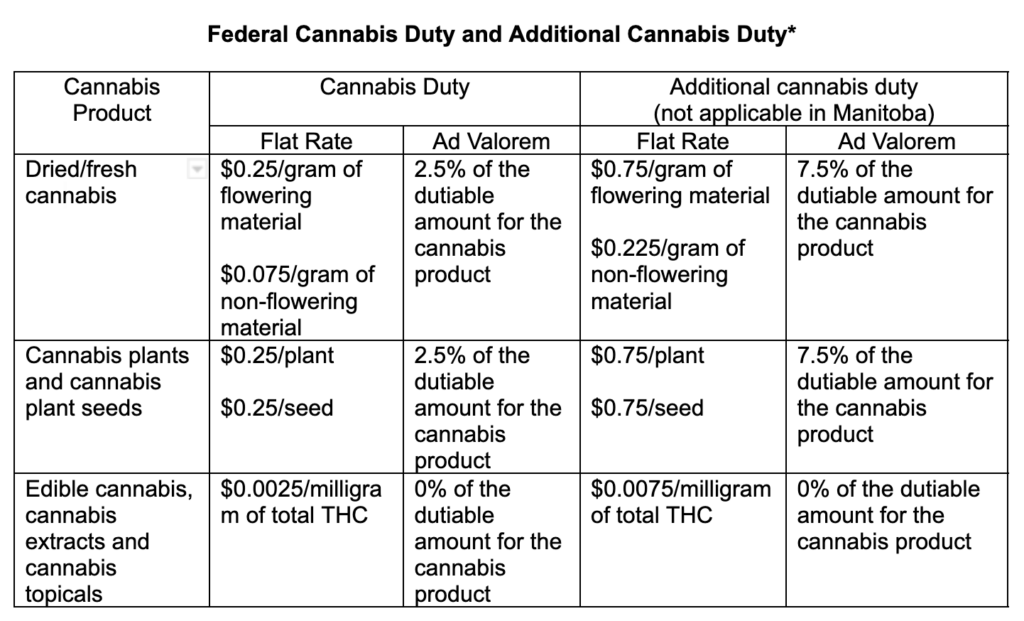
Alberta has an adjustment rate for additional cannabis duty on packaged and stamped cannabis products of 16.8%. Alberta has no provincial sales tax, charging only 5% GST.
Starting February 25, 2022, the AGLC introduced a 6% markup on all wholesale purchases of cannabis by Alberta retailers. At the same time, the 2% public education fee applied to licensed producers was eliminated.
In Alberta, the general liability insurance coverage requirement is $2 million for seeds, $5 million for dried flower, and $10 million for everything else. Micros are exempted from recall insurance.
Alberta has a one-time SKU listing fee of $1,500, which is under review. A 2% damage fee is taken on every order. Shipment errors are subject to a $1,000 fine. Product is shipped at the same price no matter where it’s going.
The provincial security clearance, known as the Cannabis Registration Representative application, costs $3,000. This is paid upfront, on a retainer basis. Some funds could be reimbursed if the process moves more quickly than anticipated. However, as is more common, additional fees can be charged should the process be longer than expected. As well, although security resubmission is required every six years, the government can demand resubmissions at any time, with the same fee requirements. For more details on this process, go here.
Product call schedule
Every month, Alberta has a new product submission deadline for one of three groups of product categories, with SKU creation coming one month after, and an estimated PO date two weeks after that. The three product category groups are: dried flower and pre-rolls; vapes edibles/beverages; and concentrates/extracts topicals. These roll over every three months. Seeds are only ordered once, in January. An example of the schedule structure can be found here.
BRITISH COLUMBIA
Distribution Model
BC has a wholesale cannabis distribution model governed by The Cannabis Distribution Act (CDA). Under the Ministry of Finance, BC’s Liquor Distribution Branch (LDB) has a General Manager and CEO responsible for administering the CDA, subject to direction from the Minister.
For retail, the province has a hybrid public-private model. The BC Liquor Distribution Branch (LDB) operates standalone retail stores, as do private retailers, both of which procure their products from the government. Online sales are from government-owned BC Cannabis Stores.
Fees
The LDB applies a 15% mark-up on the landed cost of cannabis. British Columbia’s combined GST/PST is 12%, with the exception of vaping products (devices, cartridges, parts and accessories, cannabis e-juice), which are subject to 20% PST, with a combined GST/PST of 25%.
Retail stores are subject to a one-time $7,500 application fee, a first-year licensing fee of $1,500, and annual renewal fees of $1,500. Some cities in BC have by-laws requiring retail fees. For example, the annual fee in Vancouver is $5,000 (formerly $13,500).
Product call schedule
The LDB maintains an open product call, and product submissions are evaluated on an ongoing basis. However, the LDB issues a winter-season product call for the temporary introduction of seasonal products during the winter season (October to December).
Information about the LDB’s vendor registration and product registration processes, and the winter season product call, is available on the LDB’s vendor portal. If a licensed producer wants to access the vendor portal, they can email [email protected] to request access.
MANITOBA
Distribution Model
Manitoba Liquor & Lotteries Corp. (MLLC) sources and distributes recreational cannabis to private retailers in Manitoba. All cannabis must be purchased from MLLC.
Fees
Manitoba does not impose listing fees on suppliers. It is in the process of repealing the six percent Social Responsibility Fee (SRF) it charges to retailers. The province charges 5% GST on recreational cannabis and 13% GST/PST on medical cannabis.
Product call schedule
In Manitoba, licensed producers may list a product whenever they wish, as MBLL does not have a regular call schedule. The only time they would issue a call for listings is if there was a gap in the catalogue where suppliers were not proactively meeting the retailers’ needs.
NEWFOUNDLAND & LABRADOR
Distribution Model
In Newfoundland & Labrador, cannabis is sold through private retailers licensed by the Newfoundland and Labrador Liquor Corporation (NLC), which acts as regulator and distributor. NLC controls the possession, sale and delivery of cannabis, and sets prices for cannabis products.
All Newfoundlanders and Labradorians can buy online from NLC at ShopCannabisNL.com.
Products are shipped directly from NLC’s Distribution Centre in St. John’s. Products are typically delivered within 1 to 2 business days, with some exceptions.
Fees
Newfoundland & Labrador charges 15% HST.
The province works on a consignment model and charges a nominal cost-of-service fee, currently 2.25% of landed cost (as defined in the NLC Cannabis Pricing Policy), effective April 1, 2023. Suppliers are charged this fee to cover warehousing, distribution, and inventory management costs. The fee may be adjusted annually and/or as deemed appropriate by NLC to cover warehousing and distribution costs.
The cost of shipping from the online store is $9.00 + HST.
Product call schedule
For the fiscal year, the call schedule is as follows.
+ January. Spring OTO product call. Launch April/May.
+ March/April. Full product call and review. Launch June/July.
+ June. Fall OTO product call. Launch September/October.
+ August. Holiday OTO product call. Launch November/December.
+ October. Full product call and review. Launch December/January.
To reference this schedule, including the category review process, go here.
*Adjustment rates for the additional cannabis duty are: Alberta, 16.8%; Nunavut, 19.3%; Ontario, 3.9%; and Saskatchewan, 6.45%. NB. With some exceptions, across Canada licensed providers (LPs) selling their cannabis products wholesale (to another licensed producer or a provincially-authorized distributor) are not subject to PST.
NEW BRUNSWICK
Distribution Model
The province’s Cannabis Management Corporation oversees sales, with the New Brunswick Liquor Corporation (known as “NB Liquor”) operating the cannabis retail operations via its subsidiary, Cannabis NB. Cannabis NB includes online sales. New Brunswick is migrating from a government-owned and operated retail model to a hybrid public-private model, as in BC.
Fees
New Brunswick charges 15% HST.
For online sales, Cannabis NB charges a $7 flat rate for shipping to the end consumer. Same-day delivery is $11. Orders over $150 have free delivery. New Brunswick has a social responsibility fee of 2% of the pre-HST invoice value of any cannabis product purchased by CNB. This amount is withheld from each payment made to a supplier.
Cannabis NB charges for onboarding, handling, maintenance, and administration of cannabis products and accessories. Short, late, and inaccurate shipments can be subject to fines up to $5,000, with products possibly returned at the supplier’s sole expense and risk of loss.
Data inaccuracy fines are in the $2,000–$5,000 range, with $250 per instance of data administration fees. Non-compliant packaging can be subject to a $5,000 fine. CNB also reserves the right to charge a supplier a reasonable fee for inspecting and handling unsatisfactory products. Suppliers must have $5,000,000 in liability insurance.
A supplier may request 14-day payment terms by contacting [email protected]. Expedited payments will be processed for a fee equal to 3% of the pretax purchase order invoice.
Product call schedule
Cannabis NB is currently revamping the new product listing process, along with PO terms and product requirements.
NORTHWEST TERRITORIES
Distribution Model
The Northwest Territories Liquor and Cannabis Commission (NTLCC) regulates the distribution, purchase, and sale of cannabis in the NWT. Legal cannabis is only available in the NWT through NTLCC-approved vendors and/or the NTLCC-approved online store. In total, there are six retail stores in the NWT.
Fees
Northwest Territories charges 5% GST.
Call schedule
There is no published call schedule.
NOVA SCOTIA
Distribution Model
In Nova Scotia, the sale and distribution of cannabis is restricted to one provider, the Nova Scotia Liquor Corporation (NSLC). Cannabis can be purchased at designated NSLC physical stores or the NSLC online store. However, to access the website’s content, customers must first visit a physical location to confirm they are 19 years of age and to receive an online access code.
Fees
There are no unique fees for LPs in Nova Scotia. HST is 15%.
Product call schedule
Nova Scotia currently doesn’t have a published product call schedule for LPs, but it plans to publish one later in 2023. The anticipated schedule will include two annual product calls—one in the fall and one in the spring. The fall product call will be open to any licensed producer for new products that will hit the market in the spring. The spring call will be limited to existing LPs for new products that will go to the market in the fall.
NUNAVUT
Distribution Model
At present, the retail market for recreational cannabis in Nunavut is made up of a single licensed private retailer in Iqaluit, under a licence from The Nunavut Liquor and Cannabis Commission.
Fees
Nunavut charges 5% GST. In Nunavut, the total adjusted cannabis duty on packaged and stamped cannabis products is 19.3%. This is the highest in Canada. Retailers in Nunavut are charged a $2,000 application fee.
Product call schedule
There is no product call schedule, per se, in Nunavut.
ONTARIO
Distribution Model
As partners of the Ontario Cannabis Store (OCS), LPs are required to enter into a Master Supply Agreement (MSA) with the OCS as part of their onboarding process. The Ontario Cannabis Retail Corporation, operating as Ontario Cannabis Store (OCS), is a Crown corporation that manages the online retail and wholesale distribution of recreational cannabis. This legal monopoly distributes to consumers and to privately operated brick-and-mortar retailers.
Fees
In Ontario, the total adjusted cannabis duty on packaged and stamped cannabis products is 3.9%.
While the OCS does not charge LPs additional ongoing fees, there are other financial requirements for working with OCS, including general liability insurance. Upon signing an MSA, LPs must provide a Certificate of Insurance, which shows that they have Commercial General Liability coverage of no less than $15M per occurrence. Based on LP feedback, OCS waived the product recall liability insurance requirement as of November 17, 2022.
Ontario charges 13% HST on recreational cannabis. Qualified medical cannabis receives an 8% PST rebate, resulting in payment of only the 5% GST.
The MSA includes a Data Subscription Agreement. The Data Program provides LPs with supply chain and/or market information, such as unit sales and warehouse inventory levels, to help facilitate their product forecasting and to enable greater fulfilment service levels. The Data Program currently comes with an annual fee of $2,500 plus: an amount equal to 0.2 percent of each Purchase Order sent to the OCS (Level 1), an amount equal to 0.3 percent of each Purchase Order sent to the OCS (Level 2).
With Level 1 access, LPs gain insight into their products’ sales performance across Ontario. With Level 2 access, LPs can access data pertaining to their competitors’ products to help determine relative market share and explore market opportunities. Attributes include an inventory snapshot and data on unit/dollar sales at an SKU level, with various ways to filter and visualize data.
In Ontario, a Cannabis Retail Manager Licence is $750 for the first two-year term, with a two-year renewal fee of $500, and a four-year term costing $1,000.
A Retail Operator Licence is $6,000 for an initial two-year term, with a two-year renewal fee of $2,000 and a four-year term costing $4,000.
Retail Store Authorization is $4,000 for the first two-year term, with a two-year renewal fee of $3,500 and a four-year renewal fee of $7,000.
Product call schedule
The OCS product call schedule is a complex process. Currently, the OCS issues product calls four times each calendar year: in spring, summer, fall and winter. The OCS warehouse delivery window and rolling launch dates are updated once Purchase Orders (POs) are issued for each call.
Each of the four calls has ten steps: publications of assortment needs bulletin; pre-submission form deadline; feedback from pre-submission; submission deadline; NTP sent; NTP received by OCS; PO issuance; launch of OCS catalogue; last arrival into OCS warehouse; and anticipated product launch. The schedule can be found here.
PRINCE EDWARD ISLAND
The Prince Edward Island (PEI) Cannabis Management Corporation, which operates as PEI Cannabis, has the exclusive right to purchase recreational cannabis, and to conduct retail sales. There are four stand-alone stores on the island.
Distribution Model
In PEI, adult-use cannabis is sold through four (4) stand-alone PEI Cannabis retail stores. There is an online sales storefront (peicannabiscorp.com) with direct-to-home delivery. The PEI Cannabis Management Corporation oversees the operation of cannabis retail locations and the e-commerce platform.
Fees
Prince Edward Island charges 15% HST.
The province’s standardized mark-up structure is applied against the excise exclusive mark-up base to determine retail prices. There is a system for inventory buy-backs, also known as Return-to-Vendors (RTVs). If a product being returned is treated as unsaleable, it will be added to the PEI Cannabis quarterly unsaleable consolidation and will be subject to chargeback conditions. For more information on RTV policies, go here.
PEI does not charge listing fees but does offer 12 merchandising periods for LPs to participate in programs at a cost. This is a complex program, with details available here.
Product call schedule
PEI currently doesn’t have a product call schedule.
QUEBEC
Distribution Model
The Société Québécoise du cannabis (SQDC), a subsidiary of the Société des alcools du Québec (SAQ), Québec’s Liquor Commission, is the only authorized retailer of recreational cannabis in Quebec. All cannabis retail stores are owned and operated by the provincial government.
Fees
Quebec charges 14.975 GST/QST. The additional duty rate in Quebec for the ad valorem duty is 7.5%.
Product call schedule
Quebec has two product call cycles, each lasting six months. The province also has a product call program for small batch products, called Petite Lot or Project Petits lots de fleurs séchées, that allows for new lots of cannabis under 40 kg and new to the Quebec market.
SASKATCHEWAN
Distribution Model
Saskatchewan has a competitive private model for the wholesale/distribution and retail sale of recreational cannabis. Private and online stores are regulated by the Saskatchewan Liquor and Gaming Authority.
Fees
Saskatchewan charges 11% GST/PST. In Saskatchewan, the total adjusted cannabis duty on packaged and stamped cannabis products is 6.45%.
For retail, a permit application fee is $2,200. The annual permit fee is $3,300 if the cannabis retail store is located within a city; and $1,650 for all other cannabis retail stores.
Licensed providers must pay a registration application fee of $550 and an annual registration fee of $1,650, initially payable at the time of application.
Product call schedule
LPs ship directly to retailers. As a result, product calls are unique to the requirements of each store.
YUKON
Distribution Model
The Yukon Liquor Corporation (YLC) purchases recreational cannabis products from licensed producers as the wholesaler. The YLC then sells to licensed cannabis retail stores, which in turn sell to consumers.
Fees
Yukon charges 5% GST. There are no fees for licensed producers wishing to sign a supplier agreement with the YLC.
The initial application fee for retail is $2,050, and the renewal application fee is $1,550. There is also an annual licence fee of $2,150, which renews on April 1. If the licence is not issued on April 1, the fee will be pro-rated from the month it is issued to March 31.
Product call schedule
The Corporation shares inventory lists three times per week with the Yukon’s licensed private retailers, and hosts weekly calls.
Activists who have been working to put a recreational cannabis measure on the 2024 ballot in Florida have scored a major victory. The state’s department of health has announced that the initiative had tendered the required number of voter signatures to qualify the measure for next year’s ballot.
The measure, aimed at amending the state’s constitution in order to legalize adult-use marijuana, submitted 967,528 verified voter signatures. This number of signatures exceeds the minimum required by at least 70,000 voter signatures. Smart & Safe Florida spearheaded this campaign. However, it isn’t all done and dusted for the advocates. The measure still has the hurdle of clearing a review by the state’s Supreme Court, and the attorney general is expected to mount a spirited challenge to the ballot measure.
The campaigners revealed in April that they had so far injected $38.4 million into the push to let voters decide whether recreational marijuana should be legalized in the state next year. Trulieve Inc., a multistate cannabis company, bankrolled this effort. CEO Kim Rivers observed that the company was pleased to see the campaign had passed the signature requirement. She added that company officials looked forward to having the measure on the upcoming ballot in 2024.
Under this proposal, adults who are at least 21 years of age or older would be free to possess a maximum of 85 grams of cannabis for recreational use. In addition, companies that have licenses to sell medical cannabis would be allowed to be licensed to trade in recreational cannabis. Medical cannabis has been legal in the state since 2016 after a referendum approved this change to the existing drug laws.
Florida Attorney General Ashley Moody sent the measure to the highest court in the state for review. She has in the past opposed recreational cannabis legalization and is expected to maintain her stance once the matter comes up for review by the Supreme Court. The AG’s letter to the Supreme Court accompanying the measure indicates that she has reservations about the initiative’s compliance with state law. She points out that in the opinion of her office, this measure doesn’t adhere to the requirement stipulating that any ballot measure must be unambiguous and clear.
Both sides of the petition are expected to turn in their briefs to the Supreme Court by July 12, 2023. Thereafter, the court will schedule hearings to determine whether or not the proposed ballot measure should get the nod and be added to 2024’s ballot.
If this measure lands on the ballot, the turnout for the polls is expected to be boosted, especially among the younger voter demographic, because marijuana legalization has been a hot topic in the state. The matter could also be one of the major talking points during the entire campaign, possibly influencing the elections for all the positions available in the state.
Medical marijuana has had a fairly long history not only in Florida but in many other states that have legalized its use. It is not surprising that we are seeing plenty of enterprises such as IGC Pharma Inc. (NYSE American: IGC) looking to commercialize FDA-approved treatments from the cannabis plant.
NOTE TO INVESTORS: The latest news and updates relating to IGC Pharma Inc. (NYSE American: IGC) are available in the company’s newsroom at https://cnw.fm/IGC
About CNW420
CNW420 spotlights the latest developments in the rapidly evolving cannabis industry through the release of two informative articles each business day. Our concise, informative content serves as a gateway for investors interested in the legalized cannabis sector and provides updates on how regulatory developments may impact financial markets. Articles are released each business day at 4:20 a.m. and 4:20 p.m. Eastern – our tribute to the time synonymous with cannabis culture. If marijuana and the burgeoning industry surrounding it are on your radar, CNW420 is for you! Check back daily to stay up-to-date on the latest milestones in the fast -changing world of cannabis.
To receive instant SMS alerts, text CANNABIS to 21000 (U.S. Mobile Phones Only)
Please see full terms of use and disclaimers on the CannabisNewsWire website applicable to all content provided by CNW420, wherever published or re-published: http://CNW.fm/Disclaimer
Do you have questions or are you interested in working with CNW420? Ask our Editor
New Reishi turkey tail capsules, Bee stings, Healing potential of bees, electricity related to bees, black and white mode, healing the eyes, color tvs, and much more.
1:00 New Reishi Turkey Tail Capsules
4:00 Bee sting experience and bee sting with electric
7:30Bees and Electricity
11:00 Pollen and Monatomics
15:00 Stinging and connections
17:00 Bees, Pyramids, and the Key of A
23:00 Redwood trees and information
29:00 Bees and Electroculture
30:30 Railroads and Trains here before the 1800s
33:00 Deprogaming our minds and putting it out there
41:00 *Mold Allergy solutions
47:30 How to setup black and white mode
50:30 Leds versus LCDS
54:00 When the sun goes down you’re in the home
57:00 Lodestone and Lapis Lazuli
58:30 Color Tvs and X-rays
[embedded content]
Nourishment, detox, healthy teeth, super powers of wonder and more. A healthy body allows for maximum increase in energy which can do much more than we’ve been told. If you’re experiencing any sort of physical challenges perhaps your next beginning steps for healing can be found here!
Detox with Dragon’s Blood Code: TheNewNOW – Save 10% Here:
That’s what John Lennon was singing about and it is true, all we need is love. But do we really know what love is? Love is a word that is sung about in songs, written in poems, talked about a lot and it is something many people long for one way or the other, mostly in form of a partner. We hear it a lot these days: “Be heart-centered” and “Be love”, “Love is the answer, because love always wins!”, “Send Love and Light!” and so on. People post it on Facebook as their Religion: Love, and use it casually in conversation in their every day lives. It is seen as the solution to all the world problems. All you need is Love!
If that’s so easy, how come nothing has changed fundamentally on planet earth despite the obvious technological progress? It’s 2011 and we still see genocide, oppression and wars happening. Hundreds of thousands of children and civilians have died in the Middle East and around the world because of the war machine under the control of psychopathic leaders who couldn’t care less about anyone who holds up the peace sign with a proclamation of love as the force for change.
“For the great majority of mankind are satisfied with appearances, as though they were realities, and are often more influenced by the things that seem than by those that are.”
– Niccolo Machiavelli
There is personal love between humans, motherly love, love of family and community, love for oneself, love for something greater than the self, love for god and even love for man-made ideologies and concepts such as for a nation and country, etc.
So what is love? How can we describe or define such a powerful force? Words are very limiting and can only point to it, but are not it. Maybe we can start by examining what love is not.
When it comes to interpersonal relationships we often see control games, jealousy, and envy which is obviously not love, but expressions and behaviors based on fear and need. Love is related to emotions and feeling, but they can be merely based on chemical reactions in the brain that result in a “high”, where people feed off each other which is also be the basis for psychic vampirism. Many relationships are based on this feeding mechanism, which has nothing to do with love, but is a parasitic need resulting in co-dependance. Sexual attraction is also mistaken for love at times. Many people get into relationships for the wrong reasons, be it to escape their loneliness, to fill a hole in their lives or feed off another person. For the most part this happens unconsciously and so people tend to lie to themselves about love and their relationships in many ways, not seeing the other person as he/she is and not even seeing themselves clearly as they are.
“People convince themselves of their own lies, becoming victims of their own inventions as they begin to direct their lives by standards of behavior, ideas, feelings, or instincts which do not correspond to their inner reality. What is truly serious in this matter is that the individual loses all points of reference regarding what comprises truth, and what comprises lies. He becomes used to considering as true only that which is convenient for his personal interests; everything that is in opposition to his self-esteem or in conflict with already established prejudices, he considers false.”
To truly love another person we need to see the other as he/she is without trying to change that person. That is the basis for unconditional love, but for that to happen we also need to know ourselves and see us as we truly are, so we don’t fall into the trap of illusory projections which only result in disappointment and hurt once the romantic phase is over. It’s about acceptance and consideration, being able to give and receive, to be externally considerate and not expect anything.
But beyond personal relationships, the idea of love has also been distorted and used superficially as slogans, especially in the so-called New Age and “Love and Light” movement. It is equated with being positive, open, friendly, not saying or focusing on anything “bad” or “negative”, to be always cheerful and have a smile on ones face. Of course there is nothing wrong with kindness and friendliness as well as being positive, but it must be based on truth and reality, not lies, self-calming rationalizations or avoidance, including political correctness which only leads to complacency and ignorance. As I wrote in The Positivity of Objectivity and the Time of Transition:
Something that I hear a lot these days as well is the need to be more “”heart-centered”, loving and compassionate. I agree, obviously we all need to connect more to our heart, show empathy and compassion, especially extending it the whole world, beyond our close friends and family. But what does that really mean? Many people seem to associate love with emotions and feelings or “niceness”, but is it not more than that, like a higher state of consciousness/being? We seem to mistake many things for “love” and even judge the intellect as “bad” (mistaking it for the monkey/predator mind), hence many suggest that we should “think” with our heart and do what we “feel” like doing, which mostly results in mere self-deception and lack of critical thinking. It’s about aligning the heart with the intellect, intuition with logic, mysticism with science.
I’ve come across many individuals who seem to force themselves into this artificial and superficial state of “love” through contrived affirmations and “feel good” spirituality, ignoring anything that may be a threat to their “positive” life view. However, the body (physically and energetically) doesn’t lie and in some of the people I worked on in my massage & bodywork practice I encountered suppression and armor that is manifested by denying the shadow part of themselves and the world as they ignore objective reality. On the surface they don’t even think that anything is “wrong” with them. It’s very much a blissful ignorant state, trying to stay “high” on artificial emotional projections, avoiding anything that may give them a “downer” and living in a subjective tunnel vision with blinders on. I can see this kind of attitude in many self-proclaimed “aware” and “conscious” people who follow shallow New Age teachings and pop psychology resulting in self-calming but lacking deeper healing, growth and essentially real love.
“The Shadow describes the part of the psyche that an individual would rather not acknowledge. It contains the denied parts of the self. Since the self contains these aspects, they surface in one way or another. Bringing Shadow material into consciousness drains its dark power, and can even recover valuable resources from it. The greatest power, however, comes from having accepted your shadow parts and integrated them as components of your Self. Everyone carries a Shadow, and the less it is embodied in the individual’s conscious life, the blacker and denser it is. At all counts, it forms an unconscious snag, thwarting our most well-meant intentions. One does not become enlightened by imagining figures of light, but by making the darkness conscious.”
– Carl G. Jung
“When you distance yourself from the source of suffering, when you name it as opposite to what you want to be (I assume that you all want to be good, don’t you?), you lose a chance to change it. Because it continues to live inside you, as part of you, making you make many of your choices, but you refuse to recognize it, so you remain in ignorant bliss and you continue to suffer.”
– Olga Kharitidi, “The Master of Lucid Dreams”
Love is not merely an emotional state, but a state of consciousness. Just like there are different levels of consciousness, there are also different levels of love one can access on the spectrum of consciousness based on ones level of being and awareness. There is carnal love based on the sexual center and animal part in man which is the biological drive to procreate, ensuring that organic life on earth continues. This drive is mechanical tied to the General Law and somnambulistic state sapiens is under.
“As a cell of humanity, man forms part of organic life on Earth. This life in its ensemble represents a very sensitive organ of our planet, playing an important role in the economy of the solar system. As a cell of this organ, man finds himself under the influence of the General Law, which keeps him in his place. In fact, this law leaves him a certain margin or tolerance. It allows him some free movement within the limits it sets. Within these boundaries, which are very limited objectively although subjectively they appear vast, man can give free rein to his fantasies and his ambitions.
Without going too far into the definition of these limits and detailed description of the components of this General Law, we can say as an example that one of those factors is hunger: the servitude of working to assure our subsistence. The chain: sexual instinct; procreation; and the care of parents for their children, is another factor. The esoteric maxim that applies to this aspect of life is conceived thus: carnal love is necessary for the general good.”
– Boris Mouravieff
Then there is courtly love based on the higher centers, which is a higher state of being that can only be accessed through sincere self-work, not giving in to mechanical and chemical driven behaviors and choices. It means to see the world, oneself and others more objectively. From an esoteric perspective it’s about evolving towards this objective love. In other words, the more we are objective with ourselves and the world, raising awareness and see things as they are, the higher the degree of love we can access. It is based on knowledge, being and understanding, not merely emotional states and “happy thoughts”.
“Subjective love is attached to one’s own idea of the other or to what can be gained or obtained from the other. People call the most various desires love. These can have to do with social status, addiction to power over or domination of another, sexual interest and so forth. The emotion fluctuates between satisfaction of getting and fear of losing and is generally centered on the self. Subjective love seeks to somehow forcibly appropriate another into one’s extended self. One example of this is showing off what a clever or good-looking partner or child one has in order to somehow increase oneself. Any games of domination or co-dependence which often involve the term love fall in this category.
The relationship between love and attachment is subtle. The subjective perspective hardly makes any difference between love, desire to possess, need and attachment. Still, love completely without wish to be or interact with the beloved or some emotional bond or attachment to the person seems a contradiction in terms. We should not take the notion of ‘if you love someone set them free’ to the extreme of seeing all as potentially interchangeable objects of love. This misses the possibilities of specificity and reciprocity inherent in the concept.
Love often gets confused with need. If love in the objective love sense is to be a giving interaction, in order to love one must be willing to and have something appropriate to give. The idea of need reverses this concept and makes the love of the other into love of self. There is much pop psychology hype about the concept of loving self before loving another. This ties in with the idea of giving versus needing but the notion of self-love gives this a self-serving twist.
It is better to say that one needs to be in order to love. Being and self-love as intended in the above paragraph are entirely different. Being here means internal consistency. One cannot love if one I loves, the other obsesses over jealousy, a third sees this as foolish and a fourth does not even know of the whole thing. Besides, to love anything except one’s illusion, one needs to know the beloved. The capacity of knowing is again predicated on being. Love often implies specific dedication or commitment. Again, these mean little if one is without internal consistency of being. Thus work on the self is needed for better to love.”
– from Cassiopedia
However, by doing the work towards objective love one shouldn’t ignore or suppress anything that doesn’t live up to the ideal of higher love beyond the self. Everyone is on a different level of being with different lessons to learn and integrate. It seems to happen very often in spiritual and esoteric circles that people claim attributes to themselves and inflate their being above the actual state of where they are and what they need to learn and confront in order to grow and evolve. Objective love is not a detached unemotional state of existence. It simply means to act from one’s true self beyond conditioning, programming and projections with a “clean” emotional center, not one that is shut down.
Our emotions are the gateway to love, but they are not love. It’s about opening up to vulnerability and not suppressing negative emotions such as anger, sadness, jealousy, grief, but work through them which leads to compassion and empathy, not only for oneself or close friends and family but for the world and humanity at large. This also means to experience and feel emotions so we can let them go without suppressing them or projecting them on someone else. There are many ways to do this. Art, music, journaling as well as breathwork, bodywork and other healing modalities can help in the process of transmuting the shadow into light through emotional cleansing. It’s a delicate and deep process that doesn’t happen over night. In that sense relationships are also lessons in love and not an end it itself. We also tend to attract people who can show us valuable lessons as they serve as mirrors and expose parts of ourselves we wouldn’t be able to see as we all have subjective blind spots.
“According to the Great Work, a friend is one in which you support and encourage the others expansion in either the mind or the spirit.Otherwise they are people you are sentimentally attached to it because they would eat cinnamon bun with you. And they will say ‘hee, hee, hee’ aren’t we having fun”. Drug addicts do the same thing. Drug addicts want to be around people who will support them and be away from real friends. Do you know why? Because it feels good. To be a member of a mystery school can be catastrophic to the ego and to the ego’s habits and to the propensity for mediocrity. No one ever cried striving for excellence. They only cried when their mediocrity was taken away from them and pointed out to them.”
– Jerhoam
The more lessons are learned, the more knowledge gained, understood and applied, the more we purify our emotions, the more one’s being and awareness raises as the higher centers are activated and the more we can “see the unseen”. This is a process that is different for each depending on many factors.
There is also the topic of “Organic Portals”, a type of human who has no access to the higher states of love because the inner wiring is missing so to speak. That doesn’t mean that they are automatically “bad” people. They simply have a different experience of love based on their level of being. As mentioned in the article about Organic Portals, we all are on the level of the Organic Portal until one makes the effort and engages in the work to activate the higher centers. Different levels of being and consciousness is not a value judgment based on better or worse, but just shows the different states we live in as not everyone is the same.
Psychopaths on the other hand have no capability to experience anything close to love, compassion and empathy by birth. It’s not a psychological disposition but a genetic one. That is another topic which is very misunderstood and ignored, especially since most psychopaths can appear as “normal” through their “mask of sanity”. They are not necessarily criminals in prisons, but can be CEO’s, politicians, spiritual leaders, a husband, wife, child or the neighbor next door. To assume that we are all the same and that everyone has access to this higher love (or any form of love) is self-deceiving at best and we see those kind of assumptions in the oversimplified idea of “we are all one!”. You cannot BE what you’re not, nor can you give what you don’t have.
If one looks into accounts of Near-Death experiences (NDE) and what people have “seen” or realized, there is a common theme: This profound experience of “objective” Love, which is not related to the Love as the human personality experiences it and cannot even be expressed in words. It can only be described as what it is not. They can’t truly explain what they experienced or what love is but only what it isn’t. It is for example, as one person who had a NDE said, “not a sentimental, get a tear, ‘feel someone’s pain’ feeling, not an emotion. It is beyond sentiment or feeling someone else in this form, but relates more to an all expansive, knowing and understanding.”
“The problem is not the term “love”, the problem is the interpretation of the term. Those on third density have a tendency to confuse the issue horribly. After all, they confuse many things as love. When the actual definition of love as you know it is not correct either. It is not necessarily a feeling that one has that can also be interpreted as an emotion, but rather, as we have told you before, the essence of light which is knowledge is love, and this has been corrupted when it is said that love leads to illumination. Love is Light is Knowledge. Love makes no sense when common definitions are used as they are in your environment. To love you must know. And to know is to have light. And to have light is to love. And to have knowledge is to love.”
– from the Cassiopaean sessions
Ultimately there is no love where there is no truth and knowledge. Love entails to see the world as it is not as we like, want it or assume it to be, hence true love is essentially linked to how much one can access objective reality. In order for love to be the agent of change towards a better world and to bring about positive change we also need to acknowledge the darker side of life and the world we live in, the things and issues many people look away from, believing that by simply focusing on the “good” and “positive” there will be a shift in consciousness. That kind of thinking is the blind spot in many New Age teachings these days, which actually results in the opposite of what is intended for the unacknowledged shadow grows bigger and stronger, manifesting itself unconsciously through our collective. As the saying goes, the road to hell is paved with good intentions.
“An Ideal is merely an escape, an avoidance of what is, a contradiction of what is. An ideal prevents direct action upon what is. To have peace, we will have to love, we will have to begin not to live an ideal life but to see things as they are and act upon them, transform them.”
– J. Krishnamurti
The many ideas of just focusing on love (and how people interpret that) or sending love to the world leaders and humanity or even to the planet are not acts of real love, but merely emotional projections which are self-deceiving and put man more into sleep, believing he’s actually doing something and bringing about positive change. True love respects free will and one cannot give or send love to someone who didn’t ask for it.
I have to wonder when people talk about world peace and love but still vote for Obama and believe the lies we’re being told by our governments, be it about 9/11, the war on terror or anything else that has been clearly used for social control. One can have as many positive/loving/nice thoughts and emotional highs as one like, if one still believes in lies, follows teachings based on lies, there will be no raise in consciousness nor access to a higher love that can actually be a true agent of healing and awareness. The contrary, believing in lies feeds entropy, no matter how well-meaning the intent.
Love is beyond words and no change is going to happen if people simply repeat that “love is the answer” or “all you need is love” while still clinging to illusions and not engaging in sincere self-work. Without a deep understanding and knowledge of what love truly is and entails we just keep going in circles as history is repeating itself. If we really want a shift in consciousness then we need to take a look into the mirror and also do the work to see the world as it is without ignoring things that may not look that “pretty”. There is still much we have to confront before we can enter a new world based on love, peace and truth.
“To search means, first, I need Being, Truth; second, I do not know where to find it; and third, an action takes place that is not based on fantasies of certainty— while at the same time a waiting takes place that is rooted not in wishful thinking but in a deep sense of urgency.”
– Jacob Needleman
[embedded content]
“Love is not a behavior, an attitude, a mannerism. It is not etiquette. It is not convention. Love may express itself in many different ways—softly or forcibly. Love can appear meek. Love can appear strong. Love can challenge you. Love can criticize you. Love can expose your illusions, your fantasies and your self-deception. Love is not what people really mean when they talk about love, in nearly all circumstances…. Real love emanates from Knowledge. It in essence is the expression of Knowledge.
It is this greater love that is so far beyond and distinct from the love you hear about in conversation. People say, “I love this. I love him. I love her. I love this food. I love this place. I love your dress. I love nature. I love the woods. I love the ocean.” Real love is something beyond all this. The real love that moves you to give your life, that refocuses your life, that tells you that you are in error, that confronts you with the fact that your life has been misspent and you are trying to take it in a direction that is not its true direction, this is love!
The love that keeps orienting you towards your greater purpose for coming into the world regardless of your plans and goals, the love that does not change, the love that does not adapt to your wishes, this is the love.
Knowledge will take you somewhere you could not take yourself. Knowledge will take you beyond your fears and your preferences because all preferences are based on fear—the fear of not having, the fear of being wrong, the fear of losing, the fear of death.
What is love? Love is the movement of Knowledge.
It is only when you realize that getting more of what you want will not make a difference that you will turn to Knowledge. It is only when your plans for personal fulfillment are shown to be weak and fallible and unfulfilling that you will turn to Knowledge. Here profound disappointment is extremely important and holds a great opportunity for you. But extreme disappointment is what everyone wants to avoid, so they keep trying to plan and scheme and focus their life to get what they want. Their predicament is only deepened. Knowledge is speaking to them all along, but they cannot hear. They are not open to that. They want what they want. They are driven by fear and preference. And so love is unknown to them.
There is a greater love. This love does not have only one appearance. It is not associated with a certain kind of behavior or etiquette. It is not a social convention. This love will pull you away from danger. This love will challenge your thinking and your attitudes. This love will show you that your life is going nowhere. This love will move you to go one way when you want to go another. This love will restrain you. This love will redirect you.
You take everything you are doing in life, and you ask yourself, “Fundamentally, is this what I really need to be doing?” Every relationship, “Is this relationship helping me? Is it important for me now?” Everything! And you will have a deeper sense of it coming from Knowledge, way deep inside of you. Perhaps it will be a feeling. Perhaps it will be an image. Perhaps the answer will come a week from now. You have to keep asking and listening. You are asking for the Great Love to redeem you, to reunite you, and to put you in a position where your greater gifts can be realized and given to the world.
Only Knowledge can take you there. Knowledge can bring two people from opposite ends of the world together for a greater purpose. That is the power of the Great Love. And the Great Love is what the world needs now.”
Adolphus Pruitt, St. Louis City’s NAACP president, was initially a vocal supporter of a marijuana legalization amendment aimed at addressing the lack of Black participation in the industry. However, his perspective changed when he discovered details of the requirements for those seeking microbusiness licenses outlined in the amendment.
The application was set to be released on June 6, 2023, and Pruitt was shocked to find that the list of qualifying zip codes did not include any areas in north St. Louis, where a significant portion of the Black population resides. Out of the 121 listed zip codes, only nine are from the St. Louis general area, and not a single one is from north St. Louis. Some zip codes are for post office boxes or institutions with higher-than-average mail traffic, while others cover areas with minimal residential presence or affluent suburbs. Only one zip code represents a predominantly Caucasian population. Applicants are required to prove their residence within the confines of those zip codes through utility bills, property tax receipts/bills or lease documents.
Following his discovery, Pruitt promptly wrote to the Health & Senior Services department of the state demanding corrections before the application’s release. The state plans to award 48 licenses to microbusinesses this coming fall, with the application window open from July 27–August 10, 2023.
Pruitt emphasized that the issues with the zip codes in St. Louis are just one aspect of the problematic nature of the state’s cannabis rules. Many of the listed zip codes are either post office boxes and unique codes, or are referred to rural locations with sparse populations.
The Cannabis Regulation Division’s head, Amy Moore, responded to Pruitt’s concerns, stating that the department stood by the listed zip codes. Moore explained that the analysis was based on incarceration data provided by the State Highway Patrol, the only comprehensive dataset available.
When questioned about the inclusion of specific St. Louis zip codes, the DHSS spokesperson mentioned their association with tract areas during census, but the highway patrol denied providing those zip codes to DHSS. Pruitt raised doubts about whether the zip codes accurately represented residents’ locations, suggesting that the presence of correctional facilities might explain the prevalence of rural zip codes. Moore clarified that correctional facilities did not skew the data, as only a few prisons fell within the listed zip codes.
Other concerns included the lack of education and outreach regarding the program. The law mandates the hiring of a chief equity officer to ensure social and economic equity requirements are met, but little outreach has been observed so far.
As these concerns are addressed and the recreational cannabis market gets underway, there could be openings for plenty of companies, including Advanced Container Technologies Inc. (OTC: ACTX), to build on their footprint within this region of the country.
NOTE TO INVESTORS: The latest news and updates relating to Advanced Container Technologies Inc. (OTC: ACTX) are available in the company’s newsroom at https://cnw.fm/ACTX
About CNW420
CNW420 spotlights the latest developments in the rapidly evolving cannabis industry through the release of two informative articles each business day. Our concise, informative content serves as a gateway for investors interested in the legalized cannabis sector and provides updates on how regulatory developments may impact financial markets. Articles are released each business day at 4:20 a.m. and 4:20 p.m. Eastern – our tribute to the time synonymous with cannabis culture. If marijuana and the burgeoning industry surrounding it are on your radar, CNW420 is for you! Check back daily to stay up-to-date on the latest milestones in the fast -changing world of cannabis.
To receive instant SMS alerts, text CANNABIS to 21000 (U.S. Mobile Phones Only)
Please see full terms of use and disclaimers on the CannabisNewsWire website applicable to all content provided by CNW420, wherever published or re-published: http://CNW.fm/Disclaimer
Do you have questions or are you interested in working with CNW420? Ask our Editor
In only a few short years, psychedelics have gone from being criminalized drugs enjoyed by a small niche community to alternative medicines with the psychedelics’ potential to completely revolutionize the psychiatric industry. With initial research indicating that several psychedelics could be potent, safe and effective mental-health treatments for various disorders, lawmakers across the United States are considering relaxing their psychedelic policies.
While Denver, Colorado was the first city in the U.S. to decriminalize all psychedelics, other regions are quickly amending their policies to allow the nascent psychedelic industry to flourish. The San Francisco Bay Area, which is somewhat famous among psychonauts for being the location where novelist and essayist Ken Kesey held the acid test parties in the 1960s, is developing its own psychedelic culture.
Amid a wave of reform that has seen several states and cities across the country pass more permissive psychedelic policies, people in the San Francisco Bay Area are forming communities and coming together to take psychedelics in tandem. These community groups involve people meeting to microdose psychedelics and take part in fun outdoor activities together. The groups are specifically focused on psilocybin, the main hallucinogenic agent in magic mushrooms.
Research has revealed that psilocybin can offer relief against anxiety, depression, alcohol and nicotine dependence.
Like Denver, San Francisco has also decriminalized natural psychedelics, including ayahuasca and magic mushrooms. More relaxed regulations coupled with permissive attitudes toward psychedelics have encouraged the formation of groups around the use of natural psychedelics, such as magic mushrooms.
Seth Warner, a magic mushroom cultivation expert and a prominent figure in the local psychedelic community, notes that people are sharing psychedelics more broadly now that both the mainstream media and science are aware of their potential medical benefits.
Since a majority of people who are interested in hallucinogenic substances have zero experience with psychedelics, Warner says, microdosing provides them with a safe and easy way of dipping their toes into the water. He observes that there is a “real argument for psychedelic decriminalization at the local level,” stating that it would make it possible for the community to adopt noncapitalist models that encourage distribution, connection and healthy, informed use.
Warner said that the community system allows people to learn through their peers while dealing with a problem that affects most people with mental health disorders: feeling disconnected from society. Local groups such as the East Bay Psychedelic Healing Collective gives people a chance to connect with the community while discussing their psilocybin experiences.
Group founder, social worker and somatic psychedelic integration counselor Christina Sandwen notes that people come to the group in search of a community that provides “deep connection and inclusivity.”
That said, psychedelics are potent and can have unexpected effects, which is why startups such as Seelos Therapeutics Inc. (NASDAQ: SEEL) recommend that these substances be used only in clinical settings where experienced professionals can oversee the entire process and respond to any situation that arises.
About PsychedelicNewsWire
PsychedelicNewsWire (PNW) is a specialized content distribution company that (1) aggregates and distributes news and information on the latest developments in all aspects and advances of psychedelics and their use, (2) creates PsychedelicNewsBreaks designed to quickly update investors on important industry news, (3) leverages a team of expert editors to enhance press releases for maximum impact, (4) assists companies with the management and optimization of social media across a range of platforms, and (5) delivers unparalleled corporate communication solutions. PNW stays abreast of the latest information and has established a reputation as the go to source for coverage of psychedelics, therapeutics and emerging market opportunities. Our team of seasoned journalists has a proven track record of helping both public and private companies gain traction with a wide audience of investors, consumers, media outlets and the general public by leveraging our expansive dissemination network of more than 5,000 key syndication outlets. PNW is committed to delivering improved visibility and brand recognition to companies operating in the emerging markets of psychedelics.
To receive instant SMS alerts, text “Groovy” to 844-397-5787 (U.S. Mobile Phones Only)
Please see full terms of use and disclaimers on the PsychedelicNewsWire website applicable to all content provided by PNW, wherever published or re-published: https://www.psychedelicnewswire.com/Disclaimer
Do you have questions or are you interested in working with PNW? Ask our Editor
Toronto – Cannabis retailer Fire & Flower Holdings Corp. says it has received a court order for creditor protection under the Companies’ Creditors Arrangement Act.
The company had been pursuing additional financing to raise capital to fund its operations.
It says the board determined that it was is in the best interests of the company to file an application for creditor protection following a review of its strategic options and a consideration of all of its available alternatives.
Fire & Flower operates under several banners including the Fire & Flower, Friendly Stranger and Firebird Delivery brands.
Advertisement
The company says its board will remain in place and management will remain responsible for the day-to-day operations, under the oversight of a court-appointed monitor while it works to streamline operations and conduct a sales process for the business.
In order to fund the CCAA proceedings and other short-term working capital requirements, Fire & Flower says it has signed an agreement with an affiliate of Alimentation Couche-Tard Inc. for a $9.8-million debtor-in-possession loan.
Integrated Pest Management (IPM) takes an ecosystem approach to pest/disease management. It focuses on the long-term prevention of pests and diseases with multiple types of practices to reduce reliance on pesticides. Pesticides are always the last line of defense in the philosophy of IPM, not the first, because building resistance to pesticides is not a matter of “if” but “when” and how fast. Also, IPM accepts pests/diseases as part of the natural system.
Creating Balance
Having any pest or pathogen in our garden can make us uncomfortable. We want to eradicate all threats and sterilize pests and diseases from our cultivation spaces. Still, a balance of pest/disease presence versus the tipping point of unacceptable proliferation and damage is a crucial threshold for cultivators to understand and embrace. Without some pest presence, you will not have the prey-specific beneficial predators and parasites you want in your garden to assist in controlling that pest. In a sterile environment, a plant may not trigger the biological and chemical responses needed for a heartier, healthier, and higher-quality crop.
Know Your Environment
Get to know the environment that surrounds your cultivation space. Teach yourself about your area’s various pest and disease risks, the native soil type, how the water moves above and below ground through your location, the parameters of your climate and weather, and the surrounding vegetation, organisms, and habitats. Do you know the name of the watershed you are cultivating in? Find out! Whether it’s acres or a backyard, urban or rural, or even if you are growing indoors, knowing the environment and what it may bring to your garden will inform your IPM choices and build a more conscious value for the resources in your region that make it a success.
IPM Strategies
All IPM strategies and practices are based on the type of pest and disease risk experienced in your cultivation ecosystem and what your crop needs to thrive. Therefore, all cultivators must develop a foundational knowledge of the pest and disease risks posed by their environment and plants, as well as an understanding of your crop’s nutritional and biological needs. Traditionally, IPM practices are defined into four categories to help growers select effective techniques they can appropriately implement in their growing spaces. The four IPM categories are cultural management, mechanical management, biological management, and chemical management.
Cultural Management
Cultural management includes practices focused on keeping plants healthy and stress-free. The most important cultural practices you can implement are selecting plants with healthy genetics well adapted to your site conditions, proper soil nutrient management, and routine stress, pest, and disease monitoring. Other cultural practices may include crop rotation, interplanting, trap crops, weed control practices, and the proper timing for planting and pruning. The bottom line is prevention; being proactive rather than reactive is vital.
Mechanical Management
Physical and mechanical methods include fences, screens, barriers, or traps. Good hygiene is also essential, like cleaning tools between plants and working from the healthiest to the sickest plant. Physical responses like pruning, debris removal, handpicking or knocking pests off plants are also involved. These methods work well for a smaller garden or high-value crop, but they often require a lot of time, and depending on the size of your operation, it may not be easy. Everything is always a balance, and developing that action threshold is a nuance that is important to embrace. Large-scale producers do this with economics and cost-benefit analysis so that the action threshold becomes very black and white to their production. Smaller-scale or hobby growers may have a more intuitive approach to this threshold. Still, we should always develop some key tipping point clues for action, like noticing pest populations increasing quickly or the pest spreading from one plant type to another.
Biological Management
Biological management uses predators, parasites, or disease organisms to control pests. When monitoring, note beneficial insect predators and parasites that you are seeing. Including plants in your cultivating environment that attract and harbour beneficial insect predators is another tactic of biological management. Having beneficial species that naturally populate themselves is ideal. These can be acquired at a garden store if your natural populations need a boost or a specific predator or parasite. Predators are pest-specific, so proper pest identification is critical. Disease organisms are pathogens that target the pest you are treating. They are often bacteria-based and target a specific pest, so correct identification is needed.
Chemical Management
Chemical management is the last resort; the treatments you apply after deciding that all other management routes have been exhausted, the damage is too severe, or the risk of loss is too great. Insecticides and fungicides are used to control these acute pest and disease situations. Using these practices sparingly is ideal because pests will build resistance to the product causing populations to recover and become even more problematic. Another drawback to chemical management is that many of these products will kill beneficial insects and the pest, effectively destroying the balance and biodiversity you have worked so hard to maintain.
Five Tips to Succeeding at IPM
So how do you do IPM? Some very basic steps can be taken away from the concepts just discussed.
Monitor routinely – correctly identify pests and beneficial insects, learn biology and lifecycle, and keep logs.
Set action thresholds so you know when you are reaching that tipping point of pest presence to pest nuisance.
Learn and implement prevention for your site-specific garden.
Evaluate results. What happened? Did it work? And (again) keep notes!
Observe, consider, and then decide.
That last tip is probably the most important. So often, I see smart and experienced cultivators get in their heads about how to manage a situation. They project an internalized idea or bias onto their crop, and these strategies often fail. When assessing a management issue, give space for observation and consideration before making decisions. The land, the plants, the insects, and the animals will show you how to operate in their world more effectively rather than asserting our ideas upon them.
Regenerative and organic gardening is about taking a page from Mother Nature when growing plants. Imitating what happens naturally in a forest or wildflower field can produce tremendous results in our home gardens. The best part? Making homemade sprays and solutions to enrich, treat, and maintain your plants is relatively easy and affordable. There are countless tips and tricks for regenerative and organic gardeners in this edition; let’s wrap things up with our list of 5 Cool Ways Homemade, Natural Solutions Help The Garden Thrive.
Boost Soil And Plant Health
Mulching is a process not to be skipped in the regenerative and organic garden! This process warms the soil, enriches it with nutrients, and prevents erosion, water evaporation, and weeds from sprouting. One stone, so many birds! Compost is an excellent mulch that can easily be made using kitchen scraps and brown material from around the yard. Shredded leaves, wood chips, and seaweed are excellent forms of all-natural mulch, as are straw, grass clipping, pine needles, and cardboard. Living mulch, like a low-growing groundcover, works wonders and looks beautiful. And when a plant’s lifecycle ends, the chop-and-drop method of mulching involves cutting stems, leaves, and flowers back and allowing them to decompose naturally in the soil. Be sure the plant is pest and disease-free before attempting this at home.
All-Natural Fertiliser
Not for the faint of heart, making comfrey tea stinks something fierce, but it works miracles as a fertilizer for fruiting plants! This homemade brew uses all-natural materials, boosts plant growth, and encourages better flowering. Perennials and annual veggie crops love it, so grab some gloves and a clothespin for your nose. Once you find a bushy comfrey plant in the garden, chop half the volume to about 2″ from the ground. Fill a bucket with the comfrey leaves, stems, and flowers, and add water to steep the plant material. After about two weeks, the tea will be ready; the darker and smellier the brew, the better! If you gag easily and know the stench will be too much to handle, you can simply add comfrey leaves to some mulch or compost, but the benefits won’t be as immediate. If you’re tough as nails like Garden Culture’s Martyna Krol, check out her article on making comfrey tea fertilizer.
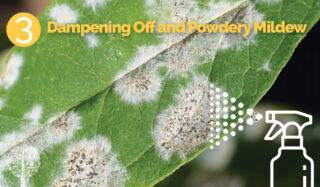
Dampening Off and Powdery Mildew
Dampening off strikes seedlings in humid environments like grow rooms and greenhouses, appearing as a fuzzy moldy growth on stems and seeds. Luckily, there’s a homemade solution for this fungal disease! Chamomile tea is easy to make; combine 1 part fresh chamomile with 3 parts rainwater or dechlorinated water in a mason jar and place on a sunny windowsill for a day. Strain and use the mixture to water seedlings or put it into a spray bottle to mist the plants and soil daily. You can also use this tea as a foliar spray to prevent disease in mature plants. Of course, in the dog days of summer, no outdoor garden is spared from the clutches of powdery mildew. These ‘powder’ spots are typically found on cucumber and squash plants and spread rapidly. Prune and discard the affected leaves before applying a classic milk spray to the remainder of the plant to prevent further spread. Mix 1 part cow’s milk to 3 parts water and apply in direct sunlight. You can use it every few weeks as preventative medicine or every three to five days when disease strikes.
When pests show themselves in the garden, many gardeners look to kill. Unfortunately, other beneficial bugs might fall victim to our eradication efforts. Before going to the extreme, try repelling pests instead. A repellant will mask the scent or change the taste of the plant, encouraging pests to look for food elsewhere. We all go home happy! Joe Lamp’l offers his favorite homemade insect repellent in The Vegetable Gardening Book: Your complete guide to growing an edible organic garden from seed to harvest. You’ll need your gloves for this spicy brew! He recommends blending 2 cups of water with 2 cups of hot peppers. Strain the solution through a cheesecloth and pour the liquid into a spray bottle. Don’t have peppers on hand? Replace them with 2 garlic cloves instead! Or, if the pest situation is out of control, use garlic and hot peppers. Lamp’l suggests adding dish soap to the solution to help it stick to the plants.
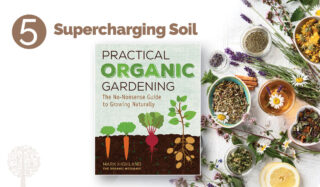
Supercharging Soil
We’re saving the most complicated homemade garden amendment for last. Biochar is garden gold! An ancient technology thousands of years old, the native people of the Amazon created charcoal, mixed it into their soil, and watched as the beautiful earth became more productive than ever. According to Mark Highland, author of Practical Organic Gardening: The No-Nonsense Guide to Growing Naturally, even 2,000 years later, crops can be grown in biochar-enriched soil with little to no additional fertilizer application. Biochar is made through pyrolysis, the process of burning organic materials without oxygen. The result is a highly-porous carbon that improves nutrient adsorption and offers a permanent home to soil biology. Believe it or not, you can make small amounts of this miracle soil enhancer at home using a top-lit updraft stove (TLUD); a quick online search will teach you everything you need to know. Highland says when using a TLUD, each batch makes about one to two cups of biochar ready to offer your plants more than a lifetime of benefits.














Recent Comments