Article content
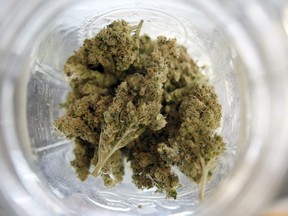
A Reddit post detailing a sibling’s struggle with a “spoiled brother” and a cannabis caper has gone viral.

‘If he had asked me nicely I would have helped him pack and reminded him of the law’
A Reddit post detailing a sibling’s struggle with a “spoiled brother” and a cannabis caper has gone viral.
Advertisement 2
Story continues below
Article content
The post, written by a Vancouver resident with dual citizenship, recounts the woman’s experience with her younger brother and parents who “seem to consider me his servant since he was born.”
Article content
The woman writes that after the family made a recent trip to visit her, the brother, who is five years younger, demanded she pack his bag, which she refused to do.
After politely telling her brother that they were no longer in their parent’s home and she didn’t have to follow their rules, the brother angrily “crammed his stuff in his bag.”
It appears the brother should have taken more care and heeded the warning signs at the airport advising not to travel with cannabis. The woman writes that her brother was caught with weed in his luggage and her parents are now mad at her “because I was so irresponsible to let him pack that in his luggage.”
Advertisement 3
Story continues below
Article content
“I actually feel quite badly about that idiot getting in trouble. He is a spoiled little jerk but I do love him. And if he had asked me nicely I would have helped him pack and reminded him of the law,” she writes.
The post has garnered significant attention on Reddit, with many commenters expressing sympathy for the author’s situation and frustration with the younger brother’s entitlement.
“I’m glad you set a boundary and stuck to it. Natural consequences for him and your parents,” notes the top comment in the thread.
“The mental gymnastic your family had to do to try to turn this around on you is almost impressive,” notes another.
While it’s legal to travel domestically with up to 30 grams of cannabis, crossing the border with weed without a permit or exemption “remains a serious criminal offence subject to arrest and prosecution.”
It’s not clear what punishment the brother received but travellers who arrive at a U.S. port of entry or border crossing with cannabis in their possession may be denied admission, including a lifetime ban, in addition to seizure, fines and apprehension.
Recommended from Editorial
Article content

Analytical and research licenses will allow students to gain students industry experience
Saskatchewan Polytechnic has been awarded federal analytical and research licenses to study cannabis, opening the door for students to work with the industry while still completing their education.
Advertisement 2
Story continues below
Article content
“What I’d like to bring to the table is helping them [companies] with some of the big questions that they have in R&D — and being able to utilize Sask Polytech’s equipment,” Blaine Chartrand, program head for the BioScience Technology program at Saskatchewan Polytechnic said in a news release.
Article content
Chartrand added that the new licenses allow students to get more cannabis-specific training by participating in applied research projects. The analytical equipment includes Next Generation Sequencing equipment, Inductively Coupled Plasma Mass Spectrometry (ICP-MS), Gas Chromatography Mass Spectrometry (GC-MS) and Liquid Chromatography-Mass Spectrometry (LC-MS).
Chartrand said Sask Polytech is not looking to compete with the industry but provide services that might not otherwise be available, including offering another local option for sample analysis.
Article content
Advertisement 3
Story continues below
Article content
“We can look at terpenes, we can look at cannabinoids, we can do microbiome analysis and genotyping by sequencing, which might help with some of the breeding. We can analyze micronutrients or heavy metals — things like that. This could also be helpful for looking at the microbial community presence in soils that you’re growing in,” said Chartrand.
Cannabis use, however, remains prohibited in all Saskatchewan Polytechnic buildings, facilities and on all properties, including in designated smoking areas.
A number of Canadian colleges and universities now offer cannabis-focused programs, from business operations to cultivation. Programming focused on psychedelics has also increased in recent years.
Advertisement 4
Story continues below
Article content
Last October, the University of Guelph became one of the first Canadian universities to be granted a licence to cultivate mushrooms that produce psilocybin. Researchers at the school are studying psychedelic mushrooms to gain a firmer grasp of their biology and genetics, learn what other functional compounds they might contain and “provide well-characterized and chemically consistent material for preclinical and potentially clinical evaluation.”
Recommended from Editorial
Article content

A licensed cannabis production site in Cambridge, Ont. has hit the market.
Article content
Listed for $250K, the location is currently licensed as an Access to Cannabis for Medical Purposes Regulations (ACMPR) production site and can be converted for cannabis micro cultivation/craft cannabis production, according to the listing.
Article content
Described as a turnkey operation, the listing says the industrial unit is fully operational and compliant. The 3,160 square-foot site includes a bloom room, vegetation room, drying room, nursery and office and storage areas. It is also equipped with an HVAC and electrical system and a commercial reverse osmosis system.
Interested buyers will need a new license to start growing.
The Health Canada ACMPR program allows individuals who are authorized to use cannabis for medical purposes to register to produce a limited amount of cannabis for their own use, designate someone to produce it on their behalf or register to possess cannabis from an authorized retailer or online seller.
Article content
Applicants must complete and submit the registration application form with the original medical document issued by their health care provider, meet certain requirements such as being 18 years of age or older and mail the application package to Health Canada.
The possession limit for medical cannabis is in addition to the possession limit of 30 grams for non-medical use.
For those eyeing a larger opportunity, Hyde Advisory recently listed a B.C.-based 24,000-square-foot facility licensed for indoor and outdoor cultivation with a recreational sales amendment. The site has been used to produce bulk dried flower, isolates, concentrates, vapes, tinctures and pre-rolls.
According to the listing, the seller is seeking an outright or partial sale of the LP business, which is valued at $6.5M. The facility contains seven cultivation rooms, four extraction/post-extraction rooms, four processing/packaging rooms, two large secure storage rooms in addition to shipping/receiving areas and office space.
Recommended from Editorial
Share this article in your social network

‘If you want to do your stuff, do it somewhere else’
Ontario Premier Doug Ford responded to a question about his government’s stance on cannabis lounges earlier this week during a press conference in Vaughan.
Ford was asked about a recent report from the Ontario Chamber of Commerce (OCC) which recommended establishing cannabis consumption spaces, among other measures, to modernize the sector.
Article content
Ford is not on board, at least with the concept of outdoor consumption spaces.
“I don’t like the idea of having a lounge outside and they’re smoking their doobies or their weed … and some kids walk by and there’s all this smell,” he said. “I don’t like that, personally. If you want to do your stuff, do it somewhere else.”
Advertisement 2
Story continues below
Article content
Establishing cannabis consumption spaces has long been a focus of industry advocates and while there has been some progress, the concept has yet to gain much support from any level of government.
In Ontario, businesses can apply for a permit to have designated outdoor areas for cannabis consumption, which was the case last summer at Toronto’s Exhibition Place. A patio adjoined to the Grand Bizarre supper club temporarily allowed guests to consume cannabis in a restricted area called Cannabis Carnival.
No cannabis (or alcohol) was sold on-site and guests had to be 19 and older to visit.
“I think cannabis smokers in general need a safe, responsible place to smoke when they go out,” said club owner Zlatko Starkovski, adding that they had noticed many people smoking cannabis in the area and wanted to come up with “a proactive approach.”
Article content
Advertisement 3
Story continues below
Article content
In 2021, Ontario entrepreneur Laura Bradley opened a cannabis consumption space behind her cannabis store, dubbed Behind the Bend. The space serves foods and non-alcoholic drinks and visitors can partake in their legally purchased cannabis goods.
Located on the shores of Lake Huron, where smoking is banned on the beach and the main strip, Bradley said municipal officials have been supportive of the space, which follows the regulations laid out by the Smoke Free Ontario Act.
The OCC report notes that the cannabis industry is one of Canada’s fastest-growing sectors, contributing more than $43 billion to the national GDP, but is hindered by “an overly restrictive regulatory regime.”
Its recommendations include allowing licensed producers and retailers to have a direct relationship, establishing tougher penalties for noncompliance and addressing issues related to the clustering of cannabis retailers.
Advertisement 4
Story continues below
Article content
On that front, Ford also shared his thoughts.
“I always said, the market’s going to dictate. If you go to a strip mall, you can’t have three convenience stores side by side, eventually, there’s going to be one left. That’s what’s happening to cannabis stores, in my opinion. The market always dictates. Not government. The market will.”
Reports of concerns about “cannabis clustering” have been ongoing since about 2020 and have prompted warnings of “market rightsizing” from the head of the Ontario Cannabis Store.
After a sluggish retail rollout, Ontario is now home to more than 1,700 cannabis stores. According to a recent report from Cannabis Retailer, 219 dispensaries are in Toronto, with 43 stores either open or in the process of opening in the city’s busy Queen Street West and East corridor.
A 2021 study published in the journal Drug and Alcohol Review found substantial variation in cannabis access across Canada, with the fewest number of stores per capita occurring in Quebec and Ontario (0.6 and 1.6 per 100,000, respectively), and the highest in Alberta and Yukon (14.3 per 100,000 in both).
Recommended from Editorial
Article content

Around 1.6 million Australians aged 45 or over have been living with persistent pain, according to newly released data from the Australian Institute of Health and Welfare.
Advertisement 2
Story continues below
Article content
The figures, which cover 2016-17, reveal that GP consultations for chronic pain increased by 67% in the preceding decade. The number of visits for lower back pain increased by 400,000.
Article content
Dealing with chronic pain also means you are likely to face longer hospital stays, much poorer mental health and are three times more likely than normal to be taking painkillers regularly. About 105,000 people were hospitalised with chronic pain in 2017-18, with a typical hospital stay three times longer than average.
Behind those figures lies the human cost. As a clinical specialist in pain medicine, I see the jobs lost, the mortgage defaults, the superannuation withdrawals, and the family roles given up because of debilitating pain.
Article content
Advertisement 3
Story continues below
Article content
Lower back pain, migraine and pain following trauma are among the top 10 causes of years lost to disability worldwide, and this has barely changed over the past 20 years. Because chronic pain can happen at any stage of life, many people have to live with it for decades.
A 2019 Deloitte Access Economics report commissioned by advocacy group Painaustralia estimated the annual cost to Australia’s economy at A$139.3 billion per year, more than A$20 billion of which comes directly out of the pockets of pain patients.
The most expensive and inefficient way to manage this national crisis is pretty much the way we are currently doing it. Chronic pain care is too fragmented and too often delivered by those without the most up-to-date training.
Advertisement 4
Story continues below
Article content
Yet most of the really effective treatments can be delivered at a relatively low cost and with low-tech means. Here are some potential solutions that pain doctors and researchers are confident will work.
Advertisement 5
Story continues below
Article content
In the void created by the huge unmet need and the limited availability of expert pain care, an industry of highly dubious usefulness has been allowed to flourish. Social media is full of false hope. Supplements such as glucosamine, curcumin and fish oil are not supported by credible studies, yet they are still promoted commercially as effective.
Dodgy arthritis “cures” and devices that claim to relieve pain using magnets or electricity are everywhere. Despite dismal supporting evidence, the medical cannabis industry continues to sell itself to chronic pain patients.
While the COVID-19 pandemic continues, it can be hard to focus on other health issues. But Australia already has a path to improving life for many thousands of chronic pain sufferers. The federal government has developed a strategic plan for pain management that offers a blueprint for future action.
Advertisement 6
Story continues below
Article content
The plan calls for upskilling of all primary care health professionals to help them recognise the early stages of a chronic pain problem and nip it in the bud. If implemented, it will bring the dream of timely access to well-resourced expert interdisciplinary pain teams in the regions and outer suburbs closer to reality.
Most importantly, we need a community-wide effort to destigmatise persistent pain and those who suffer from it. After all, the chances are you either have it or you live or work with someone who does.
This article was first published on May 6, 2020
Recommended from Editorial
This article is republished from The Conversation under a Creative Commons license. Read the original article.
Article content
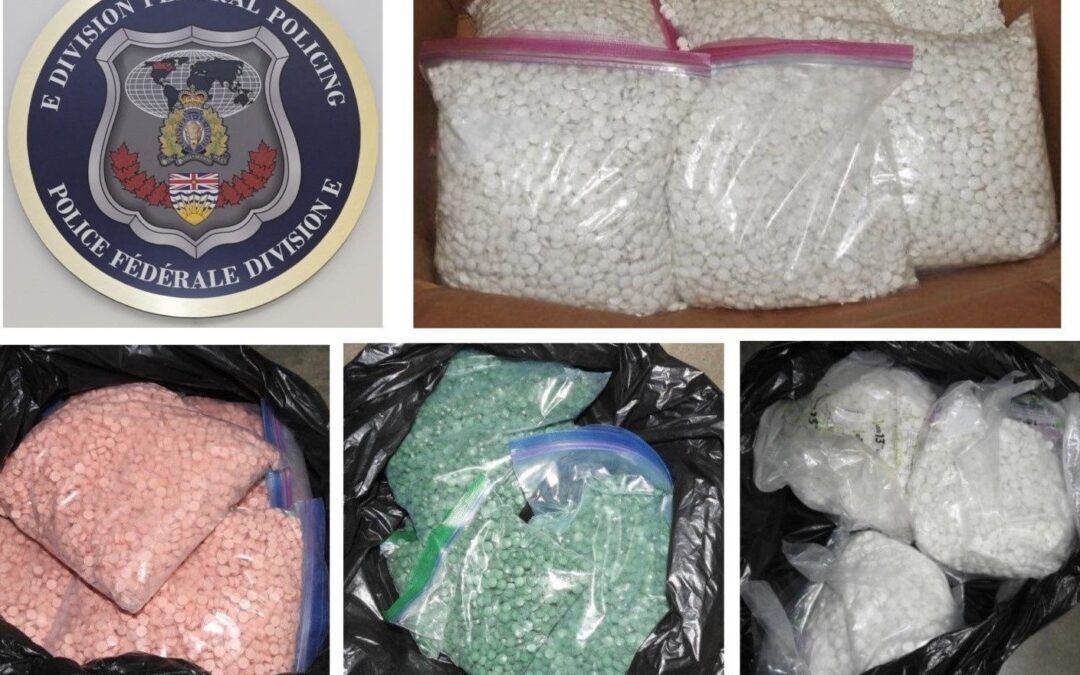
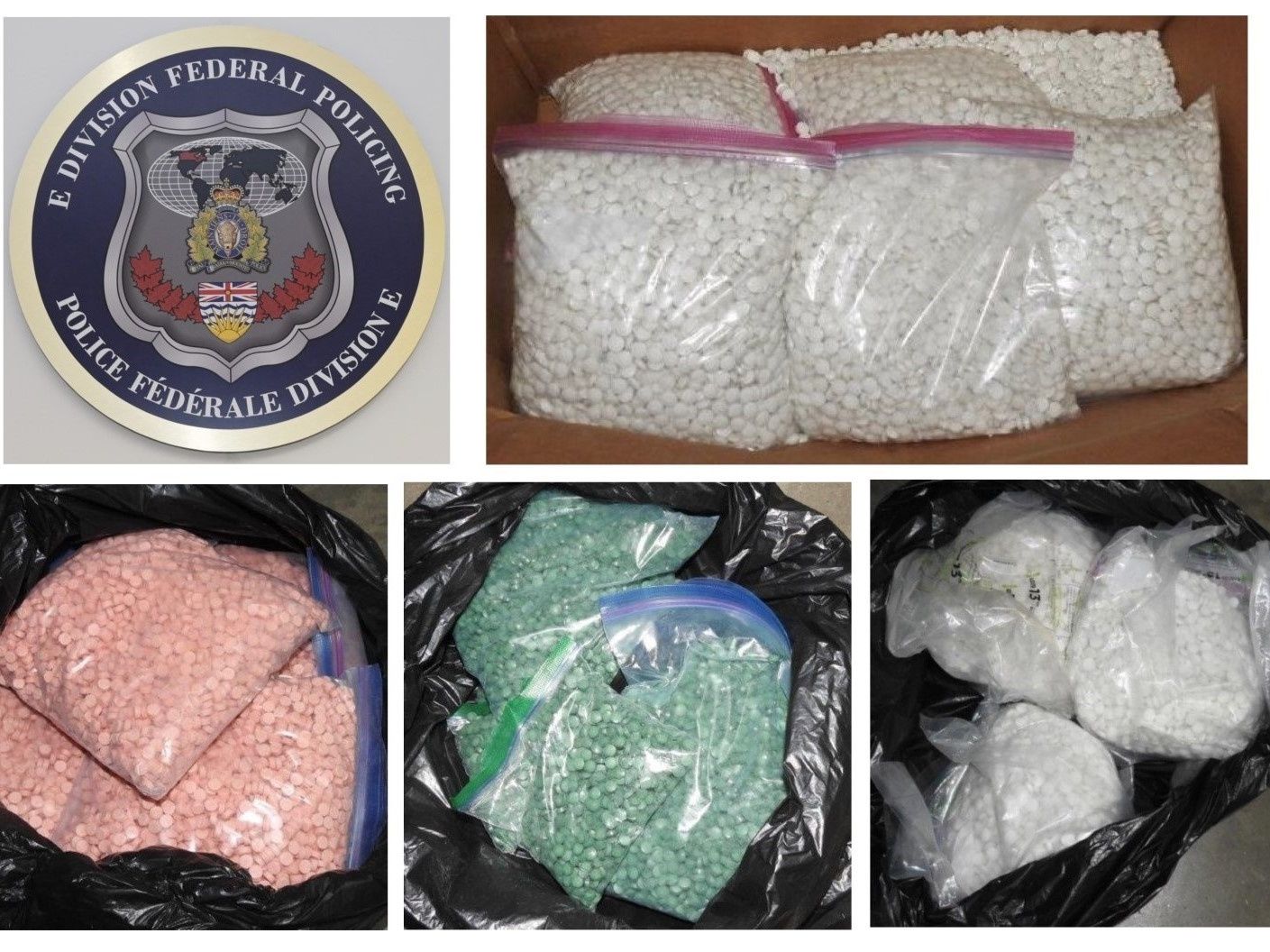
Police in B.C. say they have taken down one of the largest and most sophisticated pill-pressing operations in the province’s history.
Article content
The seizure of the pill press, capable of producing approximately 60,000 pills an hour, was part of two separate investigations, according to B.C. RCMP.
Article content
The investigations focused on multijurisdictional and transnational organized crime and led to the execution of 11 search warrants in five B.C. municipalities, including Vancouver, North Vancouver, Delta, Richmond and Surrey.
Police seized more than a million pills, numerous firearms, cash, luxury goods and other illicit drugs. Police also recovered “large caches” of precursor chemicals capable of producing several hundred million doses of fentanyl and millions of doses of MDMA.
“As a result of these two major investigations, hundreds of millions of potentially lethal doses of toxic drugs have been kept out of our communities; having possibly saved thousands of lives, and spared an untold number from having to grieve the loss of their loved ones,” said Will Ng, a criminal operations officer with the Federal Investigative Services and Organized Crime (FSOC) unit of the B.C. RCMP.
Share this article in your social network

American Patriot Brands made false and misleading statements to raise more than $40 million from investors
A U.S.-based cannabis company, its CEO and five other entities and individuals have been charged with fraud after pocketing millions of dollars from investors for personal enrichment.
Advertisement 2
Story continues below
Article content
The charges relate to a scheme in which the company, American Patriot Brands Inc. (APB), raised more than US$30 million ($41.2M) from over 100 investors, according to a release from the U.S. Securities and Exchange Commission.
Article content
Since mid-2016, the company and its executives made a series of false and misleading statements to investors about various aspects of the company, including its financial condition, the scope of its operations, the value of its Oregon cannabis farm, and the safety and security of investing in the business.
They also allegedly directed millions in investor proceeds to the APB executives’ personal accounts and spent tens of thousands on the executives’ personal expenses.
“As the SEC complaint alleges, American Patriot Brands Inc. and some of its senior executives fabricated business profits and prospects to entice investors with falsehoods that in the end left investors with essentially worthless securities,” said Carolyn M. Welshhans, Associate Director of the SEC’s Enforcement Division. “This action reflects the SEC’s ongoing commitment to holding accountable those who seek to profit through lies and deception.”
Advertisement 3
Story continues below
Article content
In total, seven individuals and entities were charged with violating federal securities laws. The agency is encouraging investors who believe they may have been affected by the alleged fraud to contact the SEC.
Earlier this year, prosecutors in Federal Court in Seattle recommended a 10-year sentence for a man who lied about his background, education, military service and finances to dupe cannabis investors.
The man, who posed as a billionaire and a twice-wounded Special Forces Iraq veteran, pleaded guilty to securities fraud and admitted to scamming cannabis business owners and both private and public investors out of millions of dollars.
His tactics included stealing from cannabis businesses that relied on him for banking services, lying to investors about his background and financiers and making false statements about his companies.
The 42-year-old man was arrested in a remote area of Southern California in 2022 while en route to Mexico in the hopes of fleeing prosecution. At the time of his arrest, he was carrying fake identification documents, US$60,000 ($82,425) in cash, gold bars, Mexican pesos, two designer watches and gem-encrusted jewelry.
Recommended from Editorial
Article content
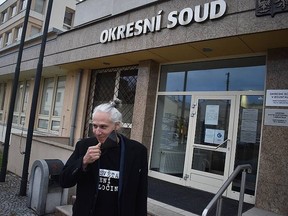
Publisher says judgment is ‘biased and grossly limiting freedom of speech, the right to express a political opinion and the right to information’
Czechia may be working toward cannabis legalization but publishing information about the plant remains a punishable offence, as one journalist recently found out.
Advertisement 2
Story continues below
Article content
Robert Veverka is the editor-in-chief and publisher of Legalizace, a cannabis magazine which has existed for more than a decade. After a yearlong court battle, Veverka has been fined 250,000 Kč, about $15,200, for “spreading drug addiction,” according to translated local media reports.
Article content
The ruling effectively bans Veverka from publishing Legalizace in the future, reports Volteface.
According to one report, police examined 60 editions of the magazine, published between 2010 and 2020, and found more than two hundred “illegal acts,” such as cannabis-infused recipes, information about the effects of cannabis and cultivation tips.
The case began five years ago when police in Krnovsk seized 38 cannabis plants from a local grower, who said he had collected the seeds, which are not illegal to possess, from advertising bags attached to the magazine. The grower added that he learned how to cultivate the plants from information in the magazine.
Article content
Advertisement 3
Story continues below
Article content
While the case against the grower, who used cannabis to treat skin problems, was dropped, police began looking more closely at Veverka and Legalizace.
Responding to the court’s decision on Instagram, Veverka said he considers “the judgment to be very biased and grossly limiting freedom of speech, the right to express a political opinion and the right to information.”
In 2021, Veverka received a conditional sentence and was fined 50,000 Kč (about $3K) but appealed that ruling, stating that he was convicted under a “rubber law.”
“It is very flexible, [and] includes a paragraph that says that the promotion of illegal substances, with the exception of alcohol, can be considered a crime,” he said, per CannaReporter.
Advertisement 4
Story continues below
Article content
Noting that Czech media is filled with advertisements that prompt alcohol consumption, Veverka added you can end up in court “if you tell somebody they may want to try cannabis ointment on their knee.”
Possession of less than 15 grams of cannabis and cultivating less than five plants in Cezchia has been legal since 2010, while medical cannabis was legalized in 2013.
In November, it was reported that Czechia, which has long been considered one of the more progressive countries in Europe when it comes to weed, would follow Germany’s path to recreational legalization.
“We are in contact with our German colleagues, and we have repeatedly confirmed that we want to co-ordinate by consulting each other on our proposals,” Jindřich Vobořil, the Czech Republic’s drug commissioner, shared in a Facebook post.
Advertisement 5
Story continues below
Article content
Earlier this week, German officials said they were moving forward with their legalization bill after receiving “very good feedback” from the European Union (EU).
According to Volteface, Veverka has received support from the Czech Pirate Party.
“The Pirate Party will always protect free access to information. In my opinion, in the case of Robert Veverka, the courts are criminalizing the sharing of information that is completely harmless to society,” Ivan Bartoš, Minister of Regional Development and Deputy Prime Minister for Digitalization, wrote on Facebook.
Recommended from Editorial
Article content

A judge has ordered Ignite to produce the documents within five days
Dan Bilzerian’s cannabis company, Ignite International Brands, is facing a court order to turn over 65 documents in a contract dispute case with Consulting by AR LLC.
Advertisement 2
Story continues below
Article content
A judge has ordered Ignite to produce the documents, which it was first asked to provide last August and again in February, within five days. Ignite has also been ordered to pay the attorney fees and costs incurred by Consulting by AR LLC. Ignite will face sanctions like daily fines until it produces the documents, according to Green Market Report.
Article content
Citing a report from Law360, lawyers representing Ignite said they believe the order is a mistake and that the company had “updated its privilege log as directed by the court, and that the court therefore does not have authority to find it in contempt and levy sanctions.”
The case dates back to August 2021, when Ignite sued Consulting by AR, saying it had paid the consulting company to secure a contract, which never materialized, with Resorts World Las Vegas to purchase Ignite’s products. Consulting by AR, however, says it did manage to secure a contract and the terms were even more favourable than Ignite had initially asked for.
Article content
Advertisement 3
Story continues below
Article content
It’s not the only legal trouble plaguing the company, as it is also facing a U.S. Securities and Exchange Commission investigation into potential accounting fraud regarding its 2020 financial results.
The agency issued a litigation release last August, noting that it “has filed an action against Ignite International Brands, Ltd., a publicly traded company based in Ontario, Canada, seeking an order directing it to comply with an investigative subpoena for documents.”
Ignite has also failed to produce the requested documents in that case, which include accounting records, purchase orders and other invoices. That same month the company, which had previously been publicly traded on the Canadian Securities Exchange, went private.
Advertisement 4
Story continues below
Article content
Ignite sells a line of cannabis and CBD products, such as CBD-infused lip balm, and reportedly lost $67 million in 2019. The company continues to sell its products online.
Bilzerian, the CEO of Ignite and a former professional poker player, routinely documents a lavish lifestyle on his Instagram account, which has more than 33 million followers. He is the son of millionaire Paul Bilzerian, who served 13 months in prison in the 1980s as a result of filing incomplete disclosures to the SEC.
The company pulled out of the Canadian market in 2021, citing “too many barriers to build a successful cannabis business.”
“The government’s excessive restrictions of the marketing, sales and distribution of products has diminished the business opportunity while simultaneously making the consumer experience less than optimal,” Bilzerian said at the time.
Recommended from Editorial
Article content

Drugs such as cocaine and cannabis are seldom out of the headlines, but it is rare to read about another class of drugs – volatile substances. Volatile substances cover a range of gases and chemicals that are commonly found in legal household products. Many people will be familiar with nitrous oxide (laughing gas), but these substances also include butane, glue and alkyl nitrites (poppers).
Advertisement 2
Story continues below
Article content
Once inhaled, they are quickly absorbed through the lungs into the bloodstream, passing to the brain. As central nervous system depressants they produce intoxicating effects that last only a few minutes. This can range from euphoria to less welcome visual or auditory hallucinations.
Article content
A report from the Office for National Statistics reveals that these substances are not completely benign. Between 2001 and 2020, 716 people in England and Wales died as a result of using volatile substances.
While the annual rate of death has remained stable at 36 people a year, what is striking is the rise in the average age of fatalities, from 28 years old in 2001 to 46 in 2020. The majority (78%) of these are male.
Although we don’t know why there has been a rise in the average age of death, it is possible that, as with drugs like heroin, there is an ageing cohort of users. And like those using heroin, this older group often has complicating physical health problems such as respiratory or heart-related problems that increase their risk of dying.
Article content
Advertisement 3
Story continues below
Article content
Although nitrous oxide was recorded in 56 deaths between 2001 and 2020, and is currently subject to government review potentially ahead of further legal controls, it is gases such as butane and propane that are the most commonly recorded on death certificates, accounting for 324 and 123 deaths respectively during the same period.
Both are found in lighter fuels and some aerosols. The most common risks from exposure to these gases is from choking or asphyxiation or from heart failure referred to as sudden sniffing death syndrome.
A popular perception is that the use of volatile substances as drugs largely ceased in the 1980s, but surveys of population drug use suggest otherwise. Volatile substances are second only in popularity to cannabis in schoolchildren. They are also more likely to be used at much earlier ages, which is a risk factor for more problematic substance use in later adolescence.
Advertisement 4
Story continues below
Article content
Nearly one in ten people aged 16-24 years old reported using nitrous oxide in the year up to March 2020 – the last year that data is available because of the pandemic. This compares with one in 50 adults aged 16-59. Unfortunately, despite concerns about use in children, data on the use of other volatile substances such as glue and aerosols is not routinely reported in older age groups.
Given how widely available these volatile substances are, and their use in everything from baking equipment to DIY, restricting access to those who might misuse them is difficult. As volatile substances are marked for household or industrial purposes, they are readily available for the adult population. However, the supply for intoxicating purposes (except for alkyl nitrites) is an offence under the Psychoactive Substances Act 2016. Likewise, age-restricted sales of butane lighter fuel for any purpose is controlled under the Cigarette Lighter Refill (Safety) Regulations 1999.
Advertisement 5
Story continues below
Article content
But health promotion campaigns offer some hope. Analysis of an earlier UK Department of Health campaign in February 1992, which was aimed at parents warning them of the dangers of misusing volatile substances, appears to have had some effect on fatalities. At the time, there was an estimated 62% fall in deaths related to these substances following the campaign.
However, with new products on the market, and the rise in popularity of nitrous oxide, these campaigns need to be updated. Despite the clear harms, there has been little in the way of official public health activity regarding these substances.
The recent UK Drug Strategy makes no specific mention of these compounds, nor does the updated guidance to health professionals and others who might come into contact with people who use drugs.
Advertisement 6
Story continues below
Article content
Although drugs education forms part of the statutory health education delivered in English schools, there is no mention of volatile substances in the official training materials for teachers from the Department for Education. It is left to charities such as the PSHE Association and Re-Solv to provide resources and activities for schools to address these substances.
There is also a concern that not only are deaths from volatile substances under-recorded, but due to the stigma associated with using substances like glue and lighter fluid, even within people who take drugs, those that develop problems are not seeking treatment.
These substances are rarely asked about when someone does present to services, and there are workforce issues in drug services generally, with high caseloads, and training that is orientated towards drugs such as heroin and crack cocaine. This means that even if someone does decide to seek support, then workers may not have the necessary skills to support them. There is a risk that none of the recently announced increases in funding for drug services will be spent on developing activities to help people experiencing problems with volatile substances.
Advertisement 7
Story continues below
Article content
The most pressing need is for government, education and health agencies to recognise the problem. The average number of deaths related to volatile substances has not decreased over the last 20 years, and, without action, this trend will continue. Unlike other drugs, data on volatile substance deaths, hospitalisations, and treatment episodes are rarely reported, with this new report being something of a rarity.
A renewed public health campaign about the risks of using these substances should be accompanied by advice on how to reduce the potential risks. It may seem counter-intuitive to provide information on how to minimise harm when using these substances, but it could save lives.
This story was first published on February 28, 2022
Recommended from Editorial
, Associate Professor of Addiction, University of York; and , Professor in Substance Use, Liverpool John Moores University
This article is republished from The Conversation under a Creative Commons license. Read the original article.
Article content
















Comments
Postmedia is committed to maintaining a lively but civil forum for discussion and encourage all readers to share their views on our articles. Comments may take up to an hour for moderation before appearing on the site. We ask you to keep your comments relevant and respectful. We have enabled email notifications—you will now receive an email if you receive a reply to your comment, there is an update to a comment thread you follow or if a user you follow comments. Visit our Community Guidelines for more information and details on how to adjust your email settings.