Article content
Imagine a life without pain. No toothache. No period pain. No arthritis.



Jo Cameron came to the attention of researchers in her late 60s, after undergoing normally excruciating arthritis surgery with only paracetamol for post-recovery pain
Imagine a life without pain. No toothache. No period pain. No arthritis.
Advertisement 2
Story continues below
Article content
Article content
Article content
A woman who feels no pain has been in the news recently, linked to a case study published in the British Journal of Anaesthesia.
Jo Cameron came to the attention of researchers in her late 60s, after undergoing normally excruciating arthritis surgery with only paracetamol for post-recovery pain. Her life was full of more or less painless injury. Even childbirth barely fazed her.
Life without pain might seem like a blessing. But Cameron’s case — and how we understand what pain really means — is more complex than it first appears.
People with rare genetic conditions can be born entirely insensitive to pain. They often self-injure when young, and the collective weight of injury and micro-traumas means they rarely live to adulthood.
Article content
Advertisement 3
Story continues below
Article content
That’s no surprise. Pain plays a vital protective role. It protects us from injury. It limits our motion when parts of our body are damaged. Without that inbuilt system, the weight of unhealed injuries can eventually overwhelm us.
Cameron presents a striking challenge to this view.
But detailed testing of Cameron’s pain thresholds suggests that, outside of heat pain, she has some normal pain perception. She reports broken bones and numerous scars, suggesting that her longevity is at least partly a matter of luck.
Childbirth was easier on her, but she did receive gas analgesia. She does use paracetamol, though in situations that would make most of us reach for the morphine. Her pain perception, then, seems to be diminished in a great number of cases (and often to her detriment) — but not absent.
Advertisement 4
Story continues below
Article content
The key to her unusual experience may have to do with another striking fact about her experience: her lack of anxiety or fear. Even a recent car crash appears to have left her unmoved.
So what could be going on in a biological sense?
Sequencing of Cameron’s genes revealed she is deficient in the enzyme FAAH (fatty-acid amide hydrolase), which breaks down the neurotransmitter anandamide.
Neurotransmitters are chemicals that have effects on the signals between nerve cells, or neurons. Different drugs have different effects because they mimic different neurotransmitters: Prozac targets the neurotransmitter serotonin, for example, while cocaine targets dopamine.
Anandamide, named after the Sanskrit word for “bliss”, is the best studied of the neurotransmitter molecules known as cannabinoids that our bodies make.
Advertisement 5
Story continues below
Article content
As the name might suggest, the actions of cannabinoids can be mimicked by the active ingredients in marijuana. They appear to have similar effects, too. Elevated levels of anandamide reduce both pain and anxiety in lab animals.
Since Cameron doesn’t break down anandamide, it accumulates in her blood. So she not only feels less pain, but she also feels less anxiety about the pain she does feel.
Intriguingly, what she reports is quite similar to another odd phenomenon long noted by pain researchers, that of painless injury after serious accidents.
Many very serious injuries are initially painless. Injured soldiers and car crash victims often report that they felt no pain at all until they found safety. Pain scientist Patrick D Wall suggested this was an important evolutionary adaptation.
Advertisement 6
Story continues below
Article content
Pain limits motion, which is bad in emergencies: a system to dampen down pain and fear until you’re safe makes a lot of sense. Our inbuilt cannabinoid system may well play a crucial role in this circuit breaker for pain.
Certainly though, there’s a strong body of evidence supporting the idea that pain is about more than just tissue damage.
In one famous case, a builder presented in the emergency room in excruciating pain with a 15cm nail driven through his boot. When the doctors removed the boot, they found that the nail had passed between his toes. He was completely uninjured; the pain was completely psychologically driven.
Anticipation and fear are important drivers of pain.
The link between Cameron’s condition and cannabinoids made by our bodies adds fuel to a growing interest in using cannabis-based drugs to replace opioid drugs. Conversely, there is evidence that opioid abuse is often driven by the ability of opiates to moderate fear and anxiety as well as pain. Perhaps cannabinoid drugs might kill two birds with one stone by managing both pain and anxiety, but without the side-effects of opioids.
Advertisement 7
Story continues below
Article content
We are still a way off from that, though. Previous trials with FAAH-based drugs have shown mixed results.
Cameron herself reports “long-standing memory lapses,” which suggests that cannabinoids made in our bodies may share some side-effects with their recreational cousins.
Researchers once thought of pain as a simple signal of bodily damage. The past 75 years of pain science have emphasized the complexity of pain. The interaction between pain and anxiety is a crucial part of this picture.
Individuals like Jo Cameron add yet another piece to a fascinating puzzle.
This article was first published on April 4, 2019.
Colin Klein, Associate Professor of Philosophy, Australian National University
This article is republished from The Conversation under a Creative Commons license. Read the original article.
Article content
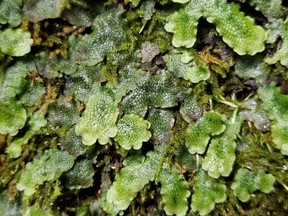
The particular liverwort in question, Radula, is endemic to New Zealand and Tasmania and is used as a herbal medicine by the Maori people
This story was first published on Oct. 24, 2018.
Advertisement 2
Story continues below
Article content
Article content
Article content
Most of us know that the cannabis plant produces compounds that react with the human body. That’s because we have our own system that makes similar compounds, cannabinoids, that have a wide range of actions from appetite control to immune function.
Cannabis contains a cannabinoid called THC that interacts with the brain, resulting in euphoria and relaxation, as well as increased hunger and anxiety. It was long thought that there was no other natural source of cannabinoids — and along with a long list of supposed medical uses the mythical power of cannabis, and the psychoactive properties of THC, has grown.
But as it turned out, another plant contains something similar: a compound that has the structural hallmarks for it to act on the brain in a similar way to THC. The discovery of this lost twin, called cis-PET (perrottetinene), or PET, was tucked away in specialist chemistry journals in papers published in 1994 and 2002, with no subsequent research confirming its biological activity. But in a study published in Science Advances, a group of Swiss scientists delved into the mechanism by which PET may be acting on the brain.
Article content
Advertisement 3
Story continues below
Article content
The particular liverwort in question, Radula, is endemic to New Zealand and Tasmania and is used as a herbal medicine by the Maori people. Preparations using this plant are also sold as a THC-like legal high on the internet.
But while similar to THC, does PET actually produce the same effects that THC does at a cellular and molecular level? Does it mimic the physiological effects? And is it different in ways that could give it therapeutic advantage or disadvantage? Some 24 years after its first discovery, the team of chemists and biochemists behind the study have teased some of the answers out.
Their research was no mean feat. It required a new synthesis method to produce enough PET to do meaningful experiments. Once this was achieved, the researchers looked at two mirror versions of the two compounds, cis (the version found in the liverwort) and trans (a version they artificially created in the lab).
Advertisement 4
Story continues below
Article content
In chemistry, the cis and trans terms tell us which side of the carbon chain the functional groups are (the bit of the molecule that does the work). The researchers wanted to find out if these two versions of PET were able to interact with the two receptors found in humans that mediate the psychoactive effects of cannaboids — CB1, the receptor that produces the “high” effect from THC, and CB2 — in the same way as THC (how strongly they bound and how much is needed to produce an effect).
The researchers found intriguing similarities between the two versions in PET and THC. For both PET and THC, the trans versions (the abundant THC version found in cannabis and the lab-synthesized version found in liverwort) bound to the CB1 receptor better than the cis versions.
Advertisement 5
Story continues below
Article content
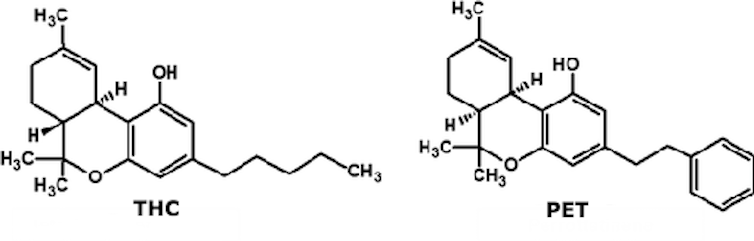
What’s interesting about this is that while the levels of cis-PET found in the liverwort plant are too low to produce the “high” effects produced by THC (hence why smoking PET won’t produce a high), it could explain why PET might still have a medicinal effect (similar to the effect produced by lower dose THC). However, any methods to extract and concentrate the liverwort compound could lead to the same problems as THC.
But what about CB2, the other cannabinoid receptor? This receptor plays a role in immune responses. Here the Swiss scientists found that the cis versions of both THC and PET bound this receptor better than the trans versions. The implications of this are yet to be explored, but it again hints at a potential medicinal benefit worth exploring further.
Advertisement 6
Story continues below
Article content
The authors of the study then went on to test whether the binding of the CB1 receptors in the brains of mice had the same recognizable THC effects. Usually when THC binds with this receptor it produces four key effects: reduced body temperature, muscle rigidity, reduced movement and decreased sensitivity to pain. In this behavioural test, all four effects were also achieved in the mice using cis-PET, albeit in a much bigger amount.
But there was one notable difference. Inflammation in the brain is mediated by molecules called prostaglandins that can be derived from metabolic pathways involving our own body cannabinoids or plant-derived trans-THC. In contrast, the production of these mediators was reduced by cis-PET. It remains to be seen whether this is a good thing or a bad thing.
Advertisement 7
Story continues below
Article content
So while the study is just a start in understanding the mechanisms and effects of PET on the brain, there’s much we still don’t know.
What we do know now, however, is that the levels of PET that are found in the natural liverwort plant are too low to produce the recognized effects of THC, so smoking it is unlikely to lead to a high. But it is also interesting that this compound could well have medicinal benefits without the high — one of the key reasons that THC has previously been dismissed as a medicine. Illegal trading and cultivation has confounded much meaningful clinical research, but this is changing and this new compound will add to the treasure trove of plant-derived cannabinoids that we still have much to understand.
This article is republished from The Conversation under a Creative Commons license. Read the original article.
Karen Wright, Lecturer in Biomedical and Life Sciences, Lancaster University
Article content
Comments