Article content
A Montreal man received an unexpected delivery recently when a drone carrying contraband ended up stuck on his backyard clothesline.



‘There is someone, somewhere, who has just fallen heavily into debt with a criminal organization, because he could not complete the delivery as planned’
A Montreal man received an unexpected delivery recently when a drone carrying contraband ended up stuck on his backyard clothesline.
Advertisement 2
Story continues below
Article content
Article content
Article content
The package contained nearly a kilogram of cannabis, hash and tobacco, along with a homemade knife and cellphones with SIM cards, reports CBC.
The contraband was coiled into several long cylindrical arms, totalling about seven metres. The shape makes it possible to slide the packages between prison bars, according to Mathieu Lavoie, the president of the union of peace officers in Quebec’s correctional services.
The haul is believed to have an institutional value of about $45K.
“There is someone, somewhere, who has just fallen heavily into debt with a criminal organization, because he could not complete the delivery as planned,” said Lavoie.
The Montreal man, who remains anonymous, told CBC he lives about four kilometres from Bordeaux jail, which is the largest provincial prison in Quebec.
Article content
Advertisement 3
Story continues below
Article content
“The whole family is still amazed to have found this package, which clearly accidentally fell from a drone,” he said.
It’s not the first time that a drone carrying contraband has veered off course.
Last January, deputies with the Richland County Sheriff’s Office were called to Mansfield, Ohio to investigate a drone that crashed into a home. In that instance, there were two prisons located about three kilometres from the home.
The beeping drone, which had its LED on-board lights covered with duct tape to reduce detection, was carrying a package that contained cannabis and loose tobacco, as well as two cellphones and chargers.
Just last month, another drone delivery was busted near Beaver Creek Institution in Gravenhurst, Ontario, reports the Toronto Sun. Nearby residents alerted Bracebridge OPP about the drone, which had been flying in the area before an unintended crash landing.
Advertisement 4
Story continues below
Article content
While investigating, police located a trespassing man who was searching for the downed drone and charged him with two counts of possession of a schedule 1 substance for the purpose of trafficking, and one count each of possession of contraband before visitor control point at a penitentiary, possession for the purpose of distributing cannabis, trespass by night, and possession of property obtained by crime under $5,000.
Perhaps in an attempt to avoid any technical glitches, a tried and true contraband delivery method was put to the test last year in B.C. when a pigeon carrying containing 30 grams of crystal methamphetamine in a mini “backpack” was discovered at the Pacific Institution in Abbotsford.
The bird was freed of its backpack and set free after correctional officers were able to corner it. It’s unclear whether the bird was trained by someone within or outside the institution.
Pigeons are well known for their ability to travel long distances and home in specific locations. According to BirdNote, specially bred homing pigeons can cover distances of up to 1,000 km and reach speeds of nearly 100 km/h.
Recommended from Editorial
Article content
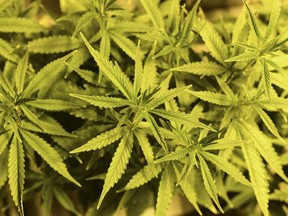
200 packages of vacuum-sealed bud found in shipment said to contain absorbent animal mats
A recent shipment to Italy from Canada manifested to contain absorbent mats for animals was actually packed with 108 kilograms of cannabis.
Advertisement 2
Story continues below
Article content
Article content
Article content
According to local reports, first identified by StratCann, police made the discovery earlier this week and seized the shipment from a company that reportedly deals with logistics and shipments in the Milan area.
Employees called the police after detecting the odour of cannabis wafting from several parcels on a pallet arriving from Canada. Upon inspection, police found 200 vacuum-packed bags of bud in the shipment. Investigations into the sender and recipient are ongoing.
Per Reuters, recreational weed in small quantities and consumption for medical purposes is allowed in Italy, but selling and producing cannabis is a criminal offence.
It’s far from the first time that large quantities of cannabis from Canada have arrived at international destinations.
Article content
Advertisement 3
Story continues below
Article content
Last month, 34 kilograms of meth and 38 kg of cannabis were discovered in a shipment of 57 piles of ceiling tiles that landed in Hong Kong. Authorities report the tiles were hollowed-out in the centre and the drugs were hidden inside. The bust was valued at around $4 million and reportedly sparked joint a joint investigation from Hong Kong and Canadian authorities.
In 2019, an agreement was signed between the Canada Border Services Agency and customs and excise of Hong Kong to work together on a number of issues, including cannabis smuggling. The pact came a few months after authorities in Hong Kong reported a 500 per cent increase in drug confiscations and pointed a finger at Canada, noting a surge in cannabis confiscations after federal legalization was implemented.
Advertisement 4
Story continues below
Article content
Also in January, two Calgary men in their 30s were charged after allegedly shipping methamphetamine, hash and cannabis to destinations around the world, including Australia, Greenland and the United Kingdom.
The investigation began after a shipment of 1.5 kg of meth was intercepted in Australia. Canadian authorities later executed search warrants in the Calgary area after one of the accused attempted to ship packages to the U.K. and Greenland. Those searches resulted in the seizure of 1.08 kg of hash and 1.1 kg of cannabis.
In 2021, detector dog Bruno alerted U.S. Customs and Border Protection officials to a shipment of humidifiers from Canada en route to the U.K. that contained 187 kgs of weed. All 12 dehumidifiers in the order contained cannabis, and police estimated the cannabis to have a street value of almost $1.5 million.
Recommended from Editorial
Article content
Cape Breton police have seized $20K worth of illegal cannabis products from a Mercedes cargo van with plates from out of province.
Article content
A 47-year-old man from Ontario and a 28-year-old woman from New Brunswick now face multiple charges, reports SaltWire.
It’s not clear what prompted the stop in Membertou but police reportedly spotted several large cargo boxes inside the van, as well as large amounts of cash and “visible documentation indicating transactions for cannabis products.”
Police obtained a search warrant and seized the van, 25 boxes of cannabis, cannabis resin, hash and thousands in cash.
The duo was charged with possession of illicit cannabis, possession of illicit cannabis resin, possession of cannabis for the purpose of selling, possession of cannabis for the purpose of distributing, possession of cannabis resin for the purpose of distributing and possession of property obtained by crime.
Article content
Possession of illegal cannabis, pot that is not purchased through a licensed retailer, can lead to a maximum fine of up to $5,000 and/or up to six months of jail time, per Kruse Law. Trafficking charges can result in a ticket for small amounts up to a maximum of 14 years in prison for large amounts.
On Cape Breton, legal cannabis products are available at the Nova Scotia Liquor Corp. (NSLC) Cannabis stores. Currently, there are 46 locations across Nova Scotia.
Earlier this month, the NSLC released its third-quarter financial results and noted that cannabis sales increased 9.2 per cent in the quarter, running from Oct. 3, 2022, to Jan. 1, 2023. Total sales for both alcohol and cannabis reached $228 million in the quarter, with cannabis accounting for nearly $30 million of all sales.
Locally produced cannabis products continue to attract attention and saw almost 30 per cent growth in the quarter. Local products now account for 31 per cent of all cannabis sales at the NSLC, the most to date.
The average price per gram also fell 1.1 per cent in the quarter, dropping to $6.30.
Recommended from Editorial
Share this article in your social network
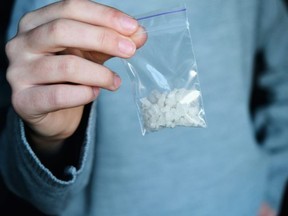
“Recent move to eliminate criminal penalties for the possession of small amounts of illicit drugs for personal use is an important step toward the decriminalization of addiction”
Substance use disorder is a chronic but treatable medical condition.
Advertisement 2
Story continues below
Article content
Article content
Article content
Unlike other physical and mental health conditions, however, substance use disorder — or addiction — has historically been seen as a moral failing and was for many years relegated to the fringes of the medical community.
Instead of receiving treatment in an accessible medical setting, many individuals went untreated or turned to a largely unregulated system of public and private treatment options. Drug use was criminalized and because many still believe that people who use drugs are engaging in deliberately deviant behaviour, we often choose to punish, rather than treat, drug addiction.
That’s why British Columbia’s recent move to eliminate criminal penalties for the possession of small amounts of illicit drugs for personal use is an important step toward the decriminalization of addiction.
Article content
Advertisement 3
Story continues below
Article content
Policies that label drug users as criminals only enhance the stigma experienced by people attempting to manage a debilitating and sometimes life-threatening health condition, and in many cases hamper or even prevent them from receiving appropriate medical treatment.
Stigma surrounding drug use and addiction has an enormous impact on the social determinants of health and treatment outcomes for individual users. Criminal convictions stemming from drug use can impact someone’s ability to secure housing and employment. And perceptions of stigma and discrimination can prevent or delay people with substance use disorders from seeking treatment.
A recent study found that nearly half of respondents reported perceiving stigma because of their addiction from friends and family, from work colleagues and even from medical providers.
Advertisement 4
Story continues below
Article content
In some cases, fear of negative opinions from people in their social circles is one reason people who know they need help with substance use do not pursue treatment.
Instead of receiving treatment, many individuals with addiction go untreated, and for some of them, their first exposure to treatment can come as a result of involvement with the criminal justice system.
A recent report found that three in four people in prison in B.C. have a substance use disorder or other mental health condition, and half of federal prisoners report that their arrest was in some way related to substance use.
And while most incarcerated people do have access to some form of treatment, much of that treatment is not based on best practices and the experience of incarceration can worsen their addiction and their physical and mental health.
Advertisement 5
Story continues below
Article content
Decriminalization has an important role to play in recharacterizing addiction as a chronic health condition instead of a criminal activity, reducing the stigma associated with drug use and improving treatment options for this vulnerable population.
Studies in Portugal, which decriminalized all illicit drugs in 2001 and shifted to a harm-reduction approach to substance use, have shown significant reductions in drug-related illnesses and mortality.
Importantly, resources that were previously devoted to the prosecution and imprisonment of drug users in Portugal are now available for treatment. And because the public has witnessed these improvements, there has been no substantial push to return to a criminal model of drug use.
Advertisement 6
Story continues below
Article content
B.C.’s decision to decriminalize the possession of only small amounts of drugs is not without its critics. Many point out that the allowable amount of drugs, 2.5 grams, is less than a daily supply for many, and is especially unhelpful for those who must travel long distances to purchase drugs.
Other harm reduction strategies that have been implemented since B.C. declared drug use a public health emergency in 2016 have often come up short. Safe supply programs have been limited to a small number of users, and safe consumption sites have been unavailable to users who smoke, even though inhaled drugs account for many drug-related overdoses in the province.
It’s also still difficult for many people who do seek treatment for addiction to find available treatment providers in the community.
Advertisement 7
Story continues below
Article content
Notwithstanding these ongoing challenges, the criminal justice system is not the appropriate place to treat people with addiction — and decriminalization represents a choice to respond with treatment, not punishment.
While B.C. has a long way to go in its approach to the treatment of addiction, decriminalization is an important step toward reducing the stigma associated with drug use. In turn, it will improve individual outcomes and reduce the significant impact that the criminalization of drugs has on public health.
Recommended from Editorial
Article content


Williams Lake RCMP is reporting two recent same-day drug busts as a result of traffic stops, including one motorist that was transporting 250 cannabis plants.
Article content
Last week, an officer with the Williams Lake RCMP, BC Highway Patrol unit stopped a motorist on Highway 97, between One Hundred Mile House and Williams Lake, after observing a Motor Vehicle Act violation.
During the stop, the officer discovered the driver was transporting in excess of 250 cannabis plants without proper authorization. All the plants were seized.
“It is important to know that a maximum of four non-medical cannabis plants can be transported without proper authorization documents, in a vehicle, but they cannot be budding or flowering,” said a spokesperson with the Williams Lake BC Highway Patrol unit.
Growing more than four recreational cannabis plants can lead to fines ranging from $2,000 to $100,000, imprisonment of three to 12 months, or both, reports Legal Line, citing B.C.’s Cannabis Control and Licensing Act.
Share this article in your social network

It’s important to know the potential adverse effects of weed before you run to your local dispensary and pick up a strain that’s supposed to help you focus
One of the most common and exaggerated marijuana stereotypes is the image of a thoughtless and lazy stoner. This is because weed has been historically associated with a lack of motivation, forgetfulness and an overall unambitious state of being for decades.
Advertisement 2
Story continues below
Article content
Article content
Article content
As marijuana has gone more mainstream, these stigmas have, at least partially, been broken. This is especially true as more high-functioning individuals admit that they regularly get high to help achieve their successful feats. Still, limited research has been conducted on marijuana’s ability to help improve concentration and stimulate productivity.
Using weed for concentration issues can have both positive and negative consequences. There are certain effects of THC that you should be wary of if you have a deadline, but also certain qualities in several marijuana strains that may help you complete a lingering task with pleasure and ease. For example, some people claim that cannabis sativa strains in particular can help relax an anxious mind, which makes it easier to focus on other things.
Article content
Advertisement 3
Story continues below
Article content
The type of marijuana strain you pick should target whatever inhibits your ability to focus. The tricky part is that there are many reasons people have difficulty concentrating. Concentration issues can steam from “mild cognitive impairment, or a mood disorder, like depression and anxiety,” according to Harvard Medical School. They can also come from common lifestyle issues “such as stress, fatigue, poor sleep, dehydration, an unhealthy diet, or sedentary behaviour.”
Since there are so many different factors involved in why people struggle to concentrate, there is no singular cannabis-induced “cure” to concentration issues. There are, however, a few general rules of thumb if you are in the market for weed that helps you focus. For example, sativa is known as “the energy queen” of cannabis.
Advertisement 4
Story continues below
Article content
While sativa has been known to help those who struggle to concentrate due to a lack of motivation, indica strains may help those whose concentration problems stem from elsewhere, like a racing mind. With that said, nowadays, the lines between sativas and indicas are blurred, with some experts even referring to them as “meaningless.”
As we’ve previously reported, cannabis has been extensively crossbred over the years, resulting in plants that contain both indica and sativa strains. It also depends on where the plant was grown; the same strain might be different when grown in Colorado than when grown in California.
More research must be conducted to determine whether or not different weed strains genuinely improve concentration. Still, there are many who speak to its therapeutic benefits in the focus department. In fact, there are online discussions that suggest cannabis can be therapeutic for those with ADHD. While significantly more testing must be done before cannabis can be used to treat ADHD, some who suffer from a difficulty holding attention have found marijuana helpful.
Advertisement 5
Story continues below
Article content
It is important to know the potential adverse effects of marijuana on your brain function and productivity before you run to your local dispensary and pick up a strain that is supposed to help you focus. While certain strains may help you get in the right mindset to focus on tasks (especially creative ones), there are studies linking THC to side-effects that inhibit focus and steady workflow.
The THC in marijuana can have several negative impacts on your ability to function and concentrate, “from basic motor coordination to more complex executive function tasks, such as the ability to plan, organize, solve problems, make decisions, remember, and control emotions and behaviour,” according to a 2011 study published in the Journal of Addiction Medicine.
Advertisement 6
Story continues below
Article content
When you suffer from a lack of focus, a lingering task can feel like a giant shadow cast over your life. A cure for a lack of motivation and the ability to concentrate would improve millions of lives, but it simply does not exist. Marijuana will not miraculously cure an ability to concentrate. Some, however, have found it helpful in reducing the root causes of concentration problems, which sounds more optimistic than staring at a blank wall and waiting for inspiration to come.
The FreshToast.com, a U.S. lifestyle site that contributes lifestyle content and, with their partnership with 600,000 physicians via Skipta, medical marijuana information to The GrowthOp.
Recommended from Editorial
Article content
Psilocybin is a hallucinogen that changes the brain’s response to a chemical called serotonin
Up to 30% of people with depression don’t respond to treatment with antidepressants. This may be down to differences in biology between patients and the fact that it often takes a long time to respond to the drugs – with some people giving up after a while. So there is an urgent need to expand the repertoire of drugs available to people with depression.
Advertisement 2
Story continues below
Article content
Article content
Article content
In recent years, attention has turned to psychedelics such as psilocybin, the active compound in “magic mushrooms”. Despite a number of clinical trials showing that psilocybin can rapidly treat depression, including for cancer-related anxiety and depression, little is known about how psilocybin actually works to relieve depression in the brain.
Now two recent studies, published in The New England Journal of Medicine and Nature Medicine, have shed some light on this mysterious process.
Psilocybin is a hallucinogen that changes the brain’s response to a chemical called serotonin. When broken down by the liver (into “psilocin”), it causes an altered state of consciousness and perception in users.
Previous studies, using functional MRI (fMRI) brain scanning, have shown that psilocybin seems to reduce activity in the medial prefrontal cortex, an area of the brain that helps regulate a number of cognitive functions, including attention, inhibitory control, habits and memory. The compound also decreases connections between this area and the posterior cingulate cortex, an area that may play a role in regulating memory and emotions.
Article content
Advertisement 3
Story continues below
Article content
An active connection between these two brain areas is normally a feature of the brain’s “default mode network”. This network is active when we rest and focus internally, perhaps reminiscing about the past, envisioning the future or thinking about ourselves or others. By reducing the activity of the network, psilocybin may well be removing the constraints of the internal “self” – with users reporting an “opened mind” with an increased perception of the world around them.
Interestingly, rumination, a state of being “stuck” in negative thoughts, particularly about oneself, is a hallmark of depression. And we know that patients with higher levels of negative rumination tend to show increased activity of the default mode network compared with other networks at rest – literally becoming less responsive to the world around them. It remains to be seen, however, if the symptoms of depression cause this altered activity, or if those with a more active default mode network are more prone to depression.
Advertisement 4
Story continues below
Article content
The most compelling evidence of how psilocybin works come from a double-blind randomized controlled trial (the gold-standard of clinical studies) that compared a group of depressed people taking psilocybin with those taking the existing antidepressant drug escitalopram – something that’s never been done before. The trial was further analysed using fMRI brain scans, and the results were compared with other fMRI findings from another recent clinical trial.
Just one day after the first dose of psilocybin, fMRI measures revealed an overall increase in connectivity between the brain’s various networks, which are typically reduced in those with severe depression. The default mode network was simultaneously reduced, while connectivity between it and other networks was increased – backing up previous, smaller studies.
Advertisement 5
Story continues below
Article content
The dose increased connectivity more in some people than others. But the studies showed that the people who had the biggest boost in connection between networks also had the greatest improvement in their symptoms six months later.
The brains of people taking escitalopram, on the other hand, showed no change in connectivity between the default mode and other brain networks six weeks after treatment started. It is possible that escitalopram may bring about changes at a later time point. But the rapid onset of psilocybin’s antidepressant effect means it may be ideal for people who don’t respond to existing antidepressants.
The study proposes that the observed effect may be due to psilocybin having more concentrated action on receptors in the brain called “serotonergic 5-HT2A receptors” than escitalopram. These receptors are activated by serotonin and are active throughout network brain areas, including the default mode network. We already know that the level of binding by psilocybin to these receptors leads to psychedelic effects. Exactly how their activation leads to changes in network connectivity is still to be explored though.
Advertisement 6
Story continues below
Article content
This does raise the question of whether the altered activity of the brain’s networks is required for treating depression. Many people taking traditional antidepressants still report an improvement in their symptoms without it. In fact, the study showed that, six weeks after commencing treatment, both groups reported improvement in their symptoms.
According to some depression rating scales, however, psilocybin had the greatest effect on overall mental well-being. And a greater proportion of patients treated with psilocybin showed a clinical response compared with those treated with escitalopram (70% versus 48%). More patients in the psilocybin group were also still in remission at six weeks (57% versus 28%). The fact that some patients still do not respond to psilocybin, or relapse after treatment, shows just how difficult it can be to treat depression.
Advertisement 7
Story continues below
Article content
What’s more, mental health professionals supported both treatment groups during and after the trial. The success of psilocybin is heavily dependent on the environment in which it is taken. This means it is a bad idea to use it for self-medicating. Also, patients were carefully selected for psilocybin-assisted therapy based on their history to avoid the risk of psychosis and other adverse effects.
Regardless of the caveats, these studies are incredibly promising and move us closer to expanding the available treatment options for patients with depression. What’s more, internalized negative thought processes are not specific to depression. In due course, other disorders, such as addiction or anxiety, may also benefit from psilocybin-assisted therapy.
Recommended from Editorial
, Teaching Fellow in Neuroscience, University of Leeds
This article is republished from The Conversation under a Creative Commons license. Read the original article.
Article content





Comments