Although NDEs only last for a few minutes (at the most), they almost always have a transformational effect (psychedelic experiences usually last much longer, up to several hours)
Published Feb 21, 2023 • Last updated Feb 21, 2023 • 4 minute read
NDEs and psychedelic experiences have some very different characteristics.Photo by Getty Images
Article content
Occasionally, people who suffer intense turmoil and trauma undergo a profound change. They feel a new sense of well-being, purpose and appreciation of life. Their relationships become more authentic and intimate. They feel as if they’ve woken up and are living in a more intense way.
Advertisement 2
Story continues below
This advertisement has not loaded yet, but your article continues below.
Article content
Article content
Article content
In my recent bookExtraordinary Awakenings, I show that transformation often follows bereavement, cancer diagnosis, a period of depression or addiction or time in prison. However, I’ve found the most transformational event human beings can have is a near-death experience (NDE), when a person either comes extremely close to death or dies for a short time.
I was fascinated to read a new study, comparing the transformational effects of NDEs and psychedelics, conducted by researchers at John Hopkins University School of Medicine in the US.
The study analyzed the experiences of over 3,000 people who reported changes in their attitude to death after either a psychedelic experience or an NDE. Four psychedelic substances were examined, including psilocybin (the active ingredient in magic mushrooms) andayahuasca, a South American brew that contains the natural hallucinogen DMT.
Advertisement 3
Story continues below
This advertisement has not loaded yet, but your article continues below.
Article content
In the study, people described both drug and NDE experiences that brought a more positive attitude to death, with less fear. People reported significant increases in psychological insight, welfare and meaning in their lives.
The study found some differences between different psychedelics. Compared to people who took psilocybin or LSD, those who took ayahuasca or DMT reported longer-lasting and more positive effects.
Participants described both types of experience as spiritual or mystical, featuring a sense of oneness, transcendence, sacredness and awe. These elements were stronger in psychedelic experiences. However, people who had NDEs were more likely to report the event as “the single most meaningful, spiritually significant, insightful and challenging experience of their lives.”
By clicking on the sign up button you consent to receive the above newsletter from Postmedia Network Inc. You may unsubscribe any time by clicking on the unsubscribe link at the bottom of our emails or any newsletter. Postmedia Network Inc. | 365 Bloor Street East, Toronto, Ontario, M4W 3L4 | 416-383-2300
Thanks for signing up!
A welcome email is on its way. If you don’t see it, please check your junk folder.
The next issue of will soon be in your inbox.
We encountered an issue signing you up. Please try again
Article content
Advertisement 4
Story continues below
This advertisement has not loaded yet, but your article continues below.
Article content
NDEs and psychedelic experiences have some very different characteristics. Common elements of NDEs include travelling through the darkness towards a light (or a transcendent place), reaching a border or point of no return, encountering deceased relatives or a life review. But these don’t feature in psychedelic trips.
So it might seem strange that they have similar transformative effects.
But both types of experiences take us beyond the limitations of our familiar awareness. Our regular state is to see the world through a filter of thoughts, with a never-ending stream of associations passing through our minds.
Our everyday surroundings seem familiar and mundane. We have a sense of living in duality to the world, inside our minds and bodies with the rest of the world“out there”.
Advertisement 5
Story continues below
This advertisement has not loaded yet, but your article continues below.
Article content
In NDEs and psychedelics, the world becomes a different place. There is a sense of unity and harmony which feels like a natural quality of the world somehow edited out of our normal awareness. This heightened awareness has a revelatory quality. Although many psychedelic experiences have hallucinatory elements, in this sense, the experiences are actually a glimpse into a deeper reality.
NDEs involve a close encounter with death, which makes us aware of the preciousness of life. Many people who have NDEs feel thatthey actually have diedfor a short time. This is probably why the study found that NDEs were more transformational than psychedelic experiences.
In manynear-death experiences,a person briefly dies in a clinical sense. For instance, after cardiac arrest the brain and body may shut down for a short period before being resuscitated. In many cases of cardiac arrest (around 20%, according tosome studies) people report that even though their brains showed no signs of activity, they had a remarkable series of experiences.
Advertisement 6
Story continues below
This advertisement has not loaded yet, but your article continues below.
Article content
Typically, they report leaving their body and looking down from above (sometimes describing medical procedures in detail), then floating away into space. They may see areview of their whole lives, flashing by in the space of a few seconds.
Although NDEs only last for a few minutes (at the most), they almost always havea transformational effect(psychedelic experiences usually last much longer, up to several hours). People undergo a major shift in perspective and values.
They becomeless materialisticand more altruistic. They feel more connected to nature, with more love and compassion for others. They have a heightened sense of beauty, and often relish solitude and inactivity in a way that they had never done before.
Advertisement 7
Story continues below
This advertisement has not loaded yet, but your article continues below.
Article content
There have beenmany attemptsto rationalize NDEs as a hallucination caused by unusual brain activity, but to dateno satisfactory explanation has emerged. In my view, the fact that the experiences almost always bring a powerful and permanent transformation strongly suggests thatthey are not a hallucination. Surely they wouldn’t have such a powerful effect if they were illusions.
Not all – or even most – psychedelic experiences are life-changing, of course. In the above study, there is no discussion of how frequently psychedelics have such an effect. For all we know, the participants may have had several other psychedelic experiences which didn’t affect them deeply. In contrast, NDEs are almost always transformational.
Advertisement 8
Story continues below
This advertisement has not loaded yet, but your article continues below.
Article content
A2012 paperexamined the similarities between NDEs and DMT and found that permanent change was much less common following DMT. The effect of psychedelics depends on context, and the person’s intention and psychological traits. Psychedelics are more likely to be transformational if they are approached in a spiritual context as opposed to casual use.Recent researchalso suggests that psychedelics can help to alleviate depression and anxiety and lead to increased emotional well-being.
Psychedelic journeys should not be undertaken lightly. But, in the right circumstances, they can be almost as revelatory as near-death experiences.
A researcher discusses recent trials, possible risks
Published Feb 17, 2023 • Last updated Feb 17, 2023 • 4 minute read
“Psychedelic basically means ‘mind manifesting,’ suggesting that the compound assists one in uncovering subject matter that perhaps is otherwise deeply hidden from the conscious mind.”Photo by Getty Images
Article content
New research is exploring whether psychedelic drugs, taken under strict medical supervision, might help in treating post-traumatic stress disorder, chronic pain, depression and obsessive-compulsive disorder. SciLine interviewedDr. Jennifer Mitchell– a professor in the Departments of Neurology and Psychiatry & Behavioral Science in the School of Medicine at the University of California, San Francisco – to discuss what scientists have found so far about the effectiveness of these drugs in treating these disorders and how they might safely be administered.
Advertisement 2
Story continues below
This advertisement has not loaded yet, but your article continues below.
Article content
Article content
Article content
The Conversation has collaborated with SciLine to bring you highlights from the discussion, which have been edited for brevity and clarity.
Jennifer Mitchell:Psychedelicbasically means “mind manifesting,” suggesting that the compound assists one in uncovering subject matter that perhaps is otherwise deeply hidden from the conscious mind.
It’s a slightly different term from hallucinogen, which you see used almost interchangeably at times with the term psychedelic.
A hallucinogen by definition is something that makes you see, hear, smell something that isn’t otherwise there, so you can imagine there’s a lot of overlap between psychedelics and hallucinogens.
By clicking on the sign up button you consent to receive the above newsletter from Postmedia Network Inc. You may unsubscribe any time by clicking on the unsubscribe link at the bottom of our emails or any newsletter. Postmedia Network Inc. | 365 Bloor Street East, Toronto, Ontario, M4W 3L4 | 416-383-2300
Thanks for signing up!
A welcome email is on its way. If you don’t see it, please check your junk folder.
The next issue of will soon be in your inbox.
We encountered an issue signing you up. Please try again
Article content
Advertisement 3
Story continues below
This advertisement has not loaded yet, but your article continues below.
Article content
Jennifer Mitchell:The two most well-studied drugs at this point are MDMA and psilocybin.
MDMAis being evaluated mainly for treatment of post-traumatic stress disorder treatments, andpsilocybinmainly for treatment of resistant depression and major depressive disorder.
MDMA is the furthest along because there’s phase 3 data (data from late-stage research) and the possibility that a new drug application would be submitted to the FDA sometime later this year.
LSDis also being evaluated for a number of different indications, most notably obsessive-compulsive disorder.
And then a couple of sort of heavier hitters are now being tested in primarily healthy control populations, including drugs likemescalineandayahuasca.
Advertisement 4
Story continues below
This advertisement has not loaded yet, but your article continues below.
Article content
Jennifer Mitchell:The drugs so farappear to be quite effective. I think one key, though, is that they’re typically being administered in conjunction with some form of psychotherapy.
So it’s important to keep that in mind when we look at theresults from some of these recent trialsthat these are not drugs that are being administered in isolation. You are not taking home a bottle of pills and taking those twice a day as you would, say, an antidepressant. These are administered in a very particular way.
Jennifer Mitchell:Typically, prior to taking the drug at all, subjects participate in a number of preparatory sessions so that they understand a little bit about what is going to happen on an experimental session day.
Advertisement 5
Story continues below
This advertisement has not loaded yet, but your article continues below.
Article content
And then subjects come into a room that looks very much like a comfortable living room, and they spend all day there. The drug is administered typically in the morning. For psilocybin, you’re looking at a six-hour dosing session, and for MDMA, an eight-hour dosing session.
You are in the company of a group of trained providers: therapists, psychedelic facilitators, psychiatrists and clinical research coordinators.
Jennifer Mitchell:One concern we’ve had is cardiovascular risk, and so we are taking great care in some of the clinical trials at presentto evaluate cardiovascular burden, including heart attack risk, during and after the experiment. This evaluation includes tracking the heart rate and blood pressure of the participants.
Advertisement 6
Story continues below
This advertisement has not loaded yet, but your article continues below.
Article content
In addition, researchers are worried about suicidality, in part because these are treatment-resistant populations that we’re starting off with, and so there’s a concern that perhaps, if they’re destabilized – either by the psychedelic, or just by tapering off their other meds in order to be part of a psychedelic trial – that we could run the risk of suicidality.
Lastly, I think the FDA has been concerned about the possibility that psychedelics are addictive, and so we’ve been following up with study participants to ensure that they aren’t engaging in drug seeking or drug taking outside of the study.
Jennifer Mitchell:I think we’ve all heard stories from the ‘60s and ’70s of people taking psychedelics andhaving very bad experiences. What we know now is that the environment in which you take the psychedelic is of the utmost importance. It’s not appropriate at this point to try to take some of these substances or replicate some of these protocols on your own without oversight.
Advertisement 7
Story continues below
This advertisement has not loaded yet, but your article continues below.
Article content
Watch thefull interviewto hear more about psychedelic medicine.
SciLineis a free service based at the nonprofit American Association for the Advancement of Science that helps journalists include scientific evidence and experts in their news stories.
$35M figured expected to grow to $60M in 2024-25 and compound annually as market grows
Published Feb 16, 2023 • Last updated Feb 16, 2023 • 2 minute read
The provincial wholesaler for private retail stores expects the changes to “enable a vibrant marketplace” that’s better positioned to compete with the illicit market. Photo by Sean Kilpatrick/The Canadian Press
Article content
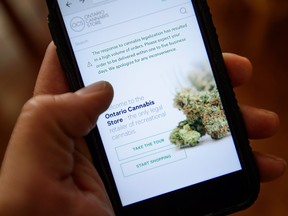
In an effort to boost struggling retailers and combat the illicit market, the Ontario Cannabis Store (OCS) has announced a plan to transition to “a fixed mark-up pricing model” and reduce its margins.
Advertisement 2
Story continues below
This advertisement has not loaded yet, but your article continues below.
Article content
Article content
Article content
The OCS says it’s making the changes after completing a review of its pricing structure. In a news release, the OCS said the tweaks will “create greater transparency and consistency for licensed producers.”
The provincial wholesaler for private retail stores expects the changes to “enable a vibrant marketplace” that’s better positioned to compete with the illicit market.
“The OCS is pleased to use its growth in scale to establish a more balanced share of product margins to help enable a vibrant cannabis marketplace,” said OCS president and CEO David Lobo.
The changes will be implemented in September, allowing time for the OCS to work with licensed producers on any changes to existing products or products scheduled to launch in the fall.
By clicking on the sign up button you consent to receive the above newsletter from Postmedia Network Inc. You may unsubscribe any time by clicking on the unsubscribe link at the bottom of our emails or any newsletter. Postmedia Network Inc. | 365 Bloor Street East, Toronto, Ontario, M4W 3L4 | 416-383-2300
Thanks for signing up!
A welcome email is on its way. If you don’t see it, please check your junk folder.
The next issue of will soon be in your inbox.
We encountered an issue signing you up. Please try again
Article content
Advertisement 3
Story continues below
This advertisement has not loaded yet, but your article continues below.
Article content
The OCS estimated that the reduced margins will contribute approximately $35 million into the marketplace in 2023-24, and grow to $60 million in the following fiscal year, while compounding annually in years ahead.
In an emailed statement, David Klein, CEO of Canopy Growth, applauded the moves.
“The OCS deserves credit for implementing these important changes which will accelerate industry sustainability and ultimately profitability as we intend to hold our prices due to the already highly competitive product pricing within the sector,” Klein said.
“This announcement demonstrates the potential for expedient and meaningful regulatory change, and we encourage the Federal Government to follow suit and take immediate action to crack down on the illicit market and to support a viable national cannabis industry.”
Advertisement 4
Story continues below
This advertisement has not loaded yet, but your article continues below.
Article content
In an emailed statement to The Canadian Press, Charlie Bowman, chief executive and president of Hexo Corp., said the changes will particularly help when it comes to dried flower.
“This is an important step in giving Canada’s cannabis companies the upper hand over illegal producers,” Bowman said.
Earlier this month, citing a briefing note from the Department of Public Safety, the Toronto Sun reported that 33 per cent of the cannabis market is still controlled by the illicit drug trade.
The price for regulated cannabis products has dropped significantly since the start of 2019, when the average cost per gram was $11.78, according to a market report from Deloitte Canada, market research form BDSA and Hifyre Inc., the technology subsidiary of Fire & Flower Holdings Corp.
The changes come amid a number of layoffs and restricting initiatives from Canadian licensed producers, including Canopy laying off 800 workers and shuttering its main facility in Smiths Falls, Ont.
CANNA PRESENTS THE NETWORKING LOUNGE AT GROW UP SHOW IN EDMONTON MAY 2023
Grow Up Conference is excited to have CANNA presenting our Networking Area & The Growers Luncheon for this edition. Grow Up Conference will take place downtown at the Edmonton Convention Center on May 28-30, 2023. Dutch company CANNA is the pioneer and global market leader in the world of intensive indoor growing, and we are thrilled to be working along side them once again. The Growers Luncheon has been a highlight at previous Grow Up Conferences and we look forward to another successful event with a CANNAtalk spinoff. The CANNA networking lounge has become a show staple; a comfortable meeting place for friends and colleagues alike to put up their feet after exploring the show floor.
CANNA is there to help all growers at every scale to achieve an optimal result, by offering easy-to-use, quality & consistent products. Research and development is the cornerstone of CANNA and they pride themselves on sharing their extensive knowledge & experiences with growers worldwide.
CANNA Production facility in the Netherlands Video:
Get the full CANNA Experience by exploring the pillars of their philosophy below:
INNOVATION & RESEARCH
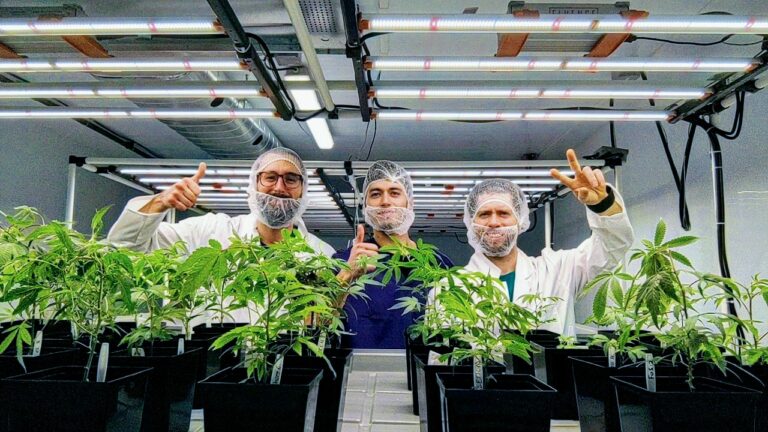
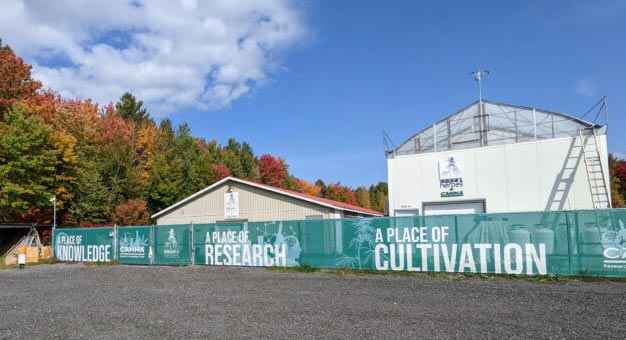
CANNA has partnered with a fully licensed cannabis cultivator, Mauve et Herbes to establish their first Canadian Research & Knowledge center with the objective to further conduct on-going research for the best input on how to grow quality crops.
CANNA Canada Research Facility Video:
QUALITY & CONSISTENCY
CANNA strives for security in the production process by using consistent and clean inputs, and ultimately to ensure that the grower has, one less thing to worry about!
EASE OF USE
We offer different product ranges for multiple ways of growing. Each product range is specifically designed for the characteristics of the growing medium. We’ve got your back when it comes to maximizing the yield of your crops.
SHARING KNOWLEDGE & EXPERIENCES
At CANNA, they are passionate people that strive to help growers understand plants better, overcome challenges, support each other and get optimal results. The CANNAtalk events offer the unique opportunity for passionate growers to interact and discuss current opportunities and challenges within the industry.
Data from Statistics Canada show that more than one-third of teenagers between the ages of 15 and 19 have tried vaping
Published Feb 16, 2023 • Last updated Feb 16, 2023 • 4 minute read
Of those who reported vaping in the last 30 days, approximately 80 per cent had vaped nicotine.Photo by Getty Images
Article content
Vaping is most prevalent in Canadaamong 15- to 24-year-olds and has significantly increased since e-cigarettes with nicotine werelegalized in 2018. Ensuring that young people understand the health risks involved may help encourage them to steer clear of vaping.
Advertisement 2
Story continues below
This advertisement has not loaded yet, but your article continues below.
Article content
Article content
Article content
Recent data from Statistics Canadashow that more than one-third of teenagers between the ages of 15 and 19 have tried vaping, and 15 per cent report having done so within the last 30 days. Of those who reported vaping in the last 30 days, approximately 80 per cent had vaped nicotine.
Unfortunately, teens may underestimate the amount of nicotine in the vaping products they use, while one in 10 users reported having tried vaping without knowing whether it containednicotine.
There is evidence that vaping among young people may be a “gateway behaviour” to cigarette use — another smoking behaviour that contains nicotine. By extension, we may be seeing a new generation of tobacco smokers who will likely have serious health problems.
By clicking on the sign up button you consent to receive the above newsletter from Postmedia Network Inc. You may unsubscribe any time by clicking on the unsubscribe link at the bottom of our emails or any newsletter. Postmedia Network Inc. | 365 Bloor Street East, Toronto, Ontario, M4W 3L4 | 416-383-2300
Thanks for signing up!
A welcome email is on its way. If you don’t see it, please check your junk folder.
The next issue of will soon be in your inbox.
We encountered an issue signing you up. Please try again
Article content
Advertisement 3
Story continues below
This advertisement has not loaded yet, but your article continues below.
Article content
Vaping is not without health risks. Some studies suggest that it could lead tolung damageor evenpneumonia. Many vaping products in Canada and the United States have also been made withfruit-flavoured aerosols, leading to concern from some advocates about how these products are marketed and their potential appeal to young people.
In response, Health Canada and advocates have called for more measures beyondwarning labelson e-cigarette products, including ways to make them less accessible to youths, particularly when it comes to online sales which can be difficult to regulate for teens.
Working in the area of behavioural medicine with expertise in health behaviour change, our research suggests ways to help university students steer away from vaping. Providing health risk information about vaping through expert advice and personal testimonies is an effective strategy. This is important because it tells us how information can be presented to have a strong impact on how young adults think about the consequences of vaping.
Advertisement 4
Story continues below
This advertisement has not loaded yet, but your article continues below.
Article content
In January 2021, weconducted a 45-day studyon undergraduate students from six provinces, all of whom consistently vaped e-cigarettes. Most vaped at least five to 15 times a month.
Our goal was to investigate whether young adults can refrain from vaping using an informational video about the potential health risks of vaping told by health experts and other e-cigarette users. Participants were randomized into two groups: one watched the vaping information video, and a control group watched a more general nutrition and healthy lifestyle video that did not offer in-depth information on the health effects of vaping.
Over the course of 45 days, we followed the students to see how their feelings about vaping changed. We found that those who viewed the informational video were more likely to express intentions to stop or reduce their vaping habits.
Advertisement 5
Story continues below
This advertisement has not loaded yet, but your article continues below.
Article content
Those feelings remained strong over the study period, including three follow-up sessions when participants were asked to report how they felt about the perceived severity of the threats posed by vaping and their vulnerability to them.
The study showed vaping intentions — and, to a lesser degree, vaping behaviour itself — can be reduced after learning about the potential consequences in this way. The students’ intentions were significantly altered after learning about possible health effects, but those intentions to reduce vaping were not seen in the control group. The emphasis on intention formation is crucial because it drives the necessary actions (such as goal setting and motivation) towards achieving the desired change.
Advertisement 6
Story continues below
This advertisement has not loaded yet, but your article continues below.
Article content
Overall, vaping use in both groups dropped over the study, however this drop was more pronounced in the intervention group, specifically towards the end of the study. This intervention does underline a successful strategy to reach young people engaged in harmful behaviours.
Curbing vaping remains the ultimate goal. While health risk information can lead regular vapers in university to form intentions to vape less, more research is needed on how to convert those intentions into convincing behaviour change. For now, to reduce harmful habits like vaping, we encourage others to educate themselves on the potential harms of these behaviours.
Evidence of health risks associated with the use of e-cigarettes continues to grow. However, there is limited evidence to illustrate health benefits ofstopping vaping. Research is needed to address this knowledge gap.
Advertisement 7
Story continues below
This advertisement has not loaded yet, but your article continues below.
Article content
Similar to tobacco and cigarettes in the past, a full understanding of the harm from using vaping products, and how reducing their use affects one’s health, may take several decades. Current evidence suggests e-cigarette use may follow the trend of tobacco cigarettes: multiplelong-term health riskswith continued use.
We envision provincial and federal health agencies will implement evidence-based interventions like our study in settings like schools, clinics and community centres to help clear the “smoke” around the true health effects and harms of vaping to motivate them to steer away.
A 27-year-old Ontario woman has been charged with possession of over 30 grams of dried cannabis in a public place after a traffic stop in the Township of Madawaska Valley.
Article content
Ontario Provincial Police in Killaloe conducted the traffic stop earlier this month in the township, which is about two hours west of Ottawa, reports CFRA.
The report does not note what prompted the stop but the charge was laid after OPP checked the contents of the vehicle.
Additionally, the driver was charged with driving a motor vehicle with no licence, contrary to the Highway Traffic Act and failure to surrender an insurance card contrary to the Compulsory Automobile Insurance Act.
The 27-year-old, a resident of Barry’s Bay, was released ahead of a scheduled court appearance next month.
Under the Cannabis Act, possession of more than 30 grams of dried cannabis (or the equivalent) can lead to a fine or a maximum sentence of five years in jail.
Article content
The Canadian government offers an online calculator to help determine if individuals are staying within that limit while carrying different classes of cannabis products, such as edibles or concentrates. According to that tool, 7 grams of cannabis concentrates is equivalent to 28 grams of dried cannabis, or 93 per cent of the legal limit.
Last week, another traffic stop, this time prompted by stunt driving, led to multiple charges against two Ontario men, including drugs and proceeds of crimes offences.
Orillia OPP made the stop on Highway 400 and recovered more than 250 grams of fentanyl from the vehicle and located cannabis accessible to the driver. Both the driver, 26, and passenger, 24, were charged with possession of a Schedule 1 substance for the purposes of trafficking and possession of proceeds of crime under $5,000.
In December, another traffic stop in Orillia led to the seizure of more than $100,000 worth of drugs. Two Toronto area men were charged after police observed a Highway Traffic Act offence and later recovered approximately 1.1kg of suspected cocaine, 85 grams of cannabis and brass knuckles from the vehicle.
‘This policy change helps further the mainstream acceptance of cannabis as a plant, a substance and an industry’
Published Feb 15, 2023 • Last updated Feb 15, 2023 • 3 minute read
FILE – The Twitter logo outside the company’s headquarters in San Francisco, California.Photo by CONSTANZA HEVIA/AFP via Getty Images
Article content
Twitter has quietly moved to open up its advertising guidelines for regulated THC and CBD products and services in the U.S.
Article content
Article content
An update on the company’s website notes that, subject to restriction, Twitter will “permit approved Cannabis (including CBD– cannabinoids) advertisers to target the United States.”
Beyond products containing THC and CBD, Twitter will also allow ads for related products and services, like labs and growing technology.
This advertisement has not loaded yet, but your article continues below.
Article content
BREAKING NEWS 📢@Twitter has announced major policy changes effective immediately:
Now allowing #cannabis advertisers to promote content for CBD, THC and cannabis services across the USA, officially becoming the largest 420-friendly social network. https://t.co/vXhv3vUMjD
Under the new guidelines, cannabis-related advertisers must be pre-authorized by Twitter and licensed by the appropriate authorities and can only target jurisdictions in which they are licensed to promote their products or services.
Ads promoting or offering the sale of cannabis remain prohibited, save for hemp-derived CBD topical products that contain 0.3 per cent THC or less, the U.S. federal limit.
Advertisers may not target customers under the age of 21 and landing pages must be age-gated. Claims of efficacy, health benefits, or ads that depict people using cannabis are also not allowed.
For Canadian brands, it appears not much has changed, as the platform already allowed restricted cannabis advertising.
By clicking on the sign up button you consent to receive the above newsletter from Postmedia Network Inc. You may unsubscribe any time by clicking on the unsubscribe link at the bottom of our emails or any newsletter. Postmedia Network Inc. | 365 Bloor Street East, Toronto, Ontario, M4W 3L4 | 416-383-2300
Thanks for signing up!
A welcome email is on its way. If you don’t see it, please check your junk folder.
The next issue of will soon be in your inbox.
We encountered an issue signing you up. Please try again
Article content
Advertisement 3
Story continues below
This advertisement has not loaded yet, but your article continues below.
Article content
Similar to the rules for the U.S., Canadian cannabis advertisers must be licensed by Health Canada and pre-authorized by Twitter and may only promote informational or brand-preference content.
Advertising content that communicates information about price or distribution, offers a testimony or endorsement or presents a person, character or animal remains prohibited.
Despite the restrictions, the policy shift makes Twitter the first major social network to allow cannabis advertising in the U.S.
AdCann commended Twitter for “making a brave move and creating a new advertising avenue for cannabis marketers.”
“This policy change helps further the mainstream acceptance of cannabis as a plant, a substance and an industry. Twitter treating cannabis like any other regulated CPG category will hopefully encourage other social networks, marketing platforms and government regulatory agencies to do the same,” the agency noted.
Advertisement 4
Story continues below
This advertisement has not loaded yet, but your article continues below.
Article content
Facebook, which acquired Instagram in 2012 for US$1 billion, prohibits “attempts by individuals, manufacturers, and retailers to purchase, sell, or trade non-medical drugs, pharmaceutical drugs, and marijuana,” according to the company’s community standards.
On Instagram, the policy is similar, with the platform noting that it “doesn’t allow people or organizations to use the platform to advertise or sell marijuana, regardless of the seller’s state or country.”
Noted cannabis inhaler Elon Musk bought Twitter last October in a $44 billion deal. Musk has long tweeted about cannabis and it seems a tweet earlier this month, that simply read “420” may have foreshadowed the recent changes.
Rick Moscone, partner with Fogler, Rubinoff LLP and the co-chair of a cannabis marketing group from the Canadian Marketing Association, previously told The GrowthOp that tech giants have cracked down on cannabis content from legal companies because there is currently no incentive to allow it.
Advertisement 5
Story continues below
This advertisement has not loaded yet, but your article continues below.
Article content
“This is not that important to them from a business perspective,” he said. “They’ve got other battles that they’re fighting. They’re looking at this and saying we don’t need to be caught in the middle here. There are not enough dollars to be made. We’ll wait until there’s absolute clarity around this stuff and then we’ll play in this sandbox.”










 INNOVATION & RESEARCH








Comments