Article content
A molecule that weakens brain signals meant to counter seizures can be hindered by cannabidiol (CBD), a new study has found.

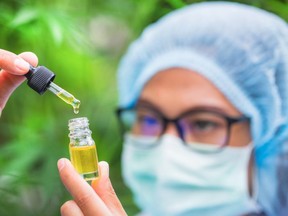
‘The study also clarified, not just how CBD counters seizures, but more broadly how circuits are balanced in the brain’
A molecule that weakens brain signals meant to counter seizures can be hindered by cannabidiol (CBD), a new study has found.
Advertisement 2
Story continues below
Article content
Article content
Article content
Published in the peer-reviewed journal Neuron, the study confirmed previous findings that CBD can block signals by the molecule lysophosphatidylinositol (LPI) and argues that LPI weakens signals that counter seizures. The findings shed light on the role CBD can play in reducing seizures in pediatric patients with treatment-resistant epilepsy.
Led by researchers at NYU Grossman School of Medicine, the findings “deepen the field’s understanding of a central seizure-inducing mechanism, with many implications for the pursuit of new treatment approaches,” said corresponding author Richard W. Tsien, chair of the Department of Physiology and Neuroscience at NYU Langone Health.
“The study also clarified, not just how CBD counters seizures, but more broadly how circuits are balanced in the brain,” added Tsien. “Related imbalances are present in autism and schizophrenia, so the paper may have a broader impact.”
Article content
Advertisement 3
Story continues below
Article content
Neuronal circuits require coordination between synaptic excitation and inhibition to function properly and dysfunction in the excitatory-inhibitory (E:I) ratio can result in seizures, explains New Atlas.
The researchers used a rodent model to test the relationship between LPI and a protein called G-coupled receptor 55 (GPR55) as a potential modulator of E:I ratio.
After confirming that CBD blocks LPI signals, researchers discovered that when LPI interacts with GPR55, it also weakens the signals that suppress seizures. CBD can help restore the E:I ratio and break up a feedback loop that can result in prolonged seizure activity.
Previous studies have found that CBD is associated with reduced seizure frequency in patients with refractory epilepsy and in children with intractable epilepsy.
Advertisement 4
Story continues below
Article content
In 2018, the U.S. Food and Drug Administration approved Epidiolex, a CBD oral solution, for the treatment of Lennox-Gastaut and Dravet syndromes in children. Epidoleix is both the first FDA-approved drug that contains a purified drug substance derived from cannabis and the first FDA-approved drug for the treatment of Dravet syndrome.
A rare form of intractable epilepsy that begins in infancy, Dravet syndrome has an estimated incidence rate of 1:15,700, per the Dravet Foundation.
Both syndromes produce large numbers of seizures that are resistant to traditional epilepsy treatments. A 2020 study found that CBD as an oral solution can reduce the frequency of seizures by more than 25 per cent and, in some cases, patients can become seizure-free.
Recommended from Editorial
Article content

Ketamine’s rapid action and unexpected dissociative effects make it a potentially worthwhile option for treating mental health problems
Which factors determine what we believe about our world, ourselves, our past, and our future? Cognitive neuroscience suggests that our beliefs are dependent on brain activity, specifically on the way our brains process sensory information in order to make sense of our environment.
Advertisement 2
Story continues below
Article content
Article content
Article content
These beliefs (defined as probability estimates) are central to our brain’s predictive processing function, which enables it to predict the probabilistic structure of the world around us. These predictions could even be the fundamental building blocks of mental states, such as perceptions and emotions.
Many psychiatric disorders, such as depression and schizophrenia, are characterized by irregular beliefs whose origins we still don’t fully understand. But if we can identify the cerebral systems governing them, we could target those very areas in a bid to alleviate the pain associated with these illnesses.
This is one of the findings of our study recently published in the journal JAMA Psychiatry. For this study, I explored with my team how the dissociative psychotropic, ketamine, affects mechanisms of belief updating (that is, how we change our beliefs upon receiving information) in patients with treatment-resistant depression.
Advertisement 3
Story continues below
Article content
While traditional antidepressants take weeks to show any results, ketamine — an antagonist molecule that acts on the NMDA (N-methyl-D-aspartate) receptors — produces antidepressant effects within hours. When administered, it also causes a dissociative experience of depersonalization typically associated with a sensation of leaving the body (known as “autoscopy”).
Given that ketamine’s rapid action and unexpected dissociative effects make it a potentially worthwhile option for treating mental health problems, we are on a mission to unpack this mystery, at the crossroads between pharmacology and neuroscience.
According to the World Health Organization, depression affects approximately 280 million people in the world and 700,000 people die due to suicide every year. One of the most specific symptoms of depression is depressive beliefs (e.g., pessimism, self-deprecation, rejection, and feelings of failure), described as “mood-congruent” beliefs when their content matches the subject’s affective state.
Article content
Advertisement 4
Story continues below
Article content
By influencing the patient’s perception and action, these beliefs play a vital role in triggering the phenomenon of negative auto-reinforcement. For example, the belief that we have been rejected by our peers gradually makes us more withdrawn, which in turn reinforces feelings of worthlessness. Once this feedback loop has been closed, it can be difficult not to spiral downward.
Ever since the pioneering research of psychiatrist Aaron Beck, many studies have suggested that the ways in which information is encoded in belief networks according to their valence (that is, their positive or negative nature) could be linked to the emergence of depressive beliefs.
This innovative research has shown that our brains are likelier to encode positive information. Known as “affective bias,” this phenomenon is responsible for generating beliefs that are slightly more positive than reality. For instance, we tend to think we are more intelligent, more attractive, better drivers or better lovers than what is shown in statistical reality.
Advertisement 5
Story continues below
Article content
However, with depression, this bias disappears or flips, with patients taking in more negative-valence information that gradually generates gloomier beliefs about the world, themselves, or the future. This phenomenon of an inverted affective bias could well be key to understanding the origins of depressive beliefs.
We launched our study on the back of a surprising clinical observation made at our unit at Paris’s Hôpital de la Pitié-Salpêtrière. When given ketamine as an antidepressant, patients with treatment-resistant depression reported feeling a strange sensation whereby their perspectives on the world seemed to have shifted, almost as though their very point of view had been altered.
Advertisement 6
Story continues below
Article content
The negative beliefs that they had been carrying for several months appeared to have faded. Some patients even expressed a feeling of foreignness, as if their thoughts belonged to someone else. Even more intriguingly, these changes appeared to result from the drug’s antidepressant effect, although we still don’t understand the causality of this.
In light of our patients’ accounts, we suspected that ketamine had affected the brain’s belief-updating mechanisms. In an effort to understand this phenomenon, we conducted an experiment intended to assess ketamine’s influence on the ways we generate beliefs, using pre- and post-treatment experimental tasks and computational modelling.
Before the ketamine administration, we asked patients and healthy subjects to assess their likelihood of experiencing 40 different future negative events (e.g., being bitten by a dog or having a car accident). After being informed of the actual occurrence risks in the general population, the two groups were again asked to assess the probability of these events occurring in their lives. Results show healthy subjects took into account new positive facts to update their beliefs, whereas this was not the case for depressed persons.
Advertisement 7
Story continues below
Article content
However, this changed only four hours after receiving the first ketamine dose: patients were far less sensitive to negative information and recovered their ability to update their beliefs. This meant the positive affective bias had been restored among patients with treatment-resistant depression. All the more surprisingly, this effect was directly linked to a reduction in depressive symptoms after one week, which suggests that these cognitive changes may even occur before clinical improvement.
Further research is needed to understand the brain processes associated with these changes, but many clues point to the involvement of NMDA receptor-mediated signalling. These neuronal receptors contribute to the brain’s excitation-inhibition balance, and appear to be essential to predictive processing and brain plasticity.
Advertisement 8
Story continues below
Article content
Ketamine’s direct action on the activity of these receptors may constitute a direct pharmacological pathway that regulates predictive mechanisms, which would explain the drug’s rapid-onset antidepressant effects and its dissociative properties. By controlling the way the brain uses its sensory building blocks to generate beliefs, ketamine could help change the mechanisms behind depressive symptoms.
These hypotheses open up numerous perspectives for developing treatments targeting brain processing, or for combining these molecules with augmented psychotherapy, protocols that focus specifically on belief systems. This goal is at the core of debates in so-called psychedelic medicine, particularly in treatment using psilocybin, a hallucinogenic molecule that also presents rapid antidepressant effects. Could this research help bring pharmacological and psychotherapeutic approaches together in psychiatry?
Advertisement 9
Story continues below
Article content
This article is based on the results of “Evaluation of Early Ketamine Effects on Belief-Updating Biases in Patients With Treatment-Resistant Depression,” a study that was recently published in the journal JAMA Psychiatry.
Translated from the French by Enda Boorman for Fast ForWord.
This article is republished from The Conversation under a Creative Commons license. Read the original article.
Recommended from Editorial
Article content
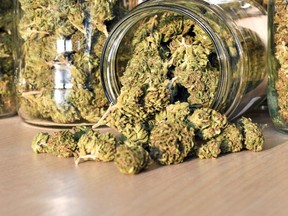
Lucky hire to review “the standards of our growers in the sourcing countries of Australia, Canada, Portugal, Macedonia and Denmark”
A German cannabis company is looking to hire a “cannabis sommelier” with a salary of up to $142,500 a year.
Advertisement 2
Story continues below
Article content
Article content
Article content
Cologne-based Cannamedical sells medical cannabis products to German pharmacies and the lucky hire will be responsible for reviewing and monitoring “the standards of our growers in the sourcing countries of Australia, Canada, Portugal, Macedonia and Denmark,” Cannamedical CEO David Henn told Bild.
Applicants will need to live in Germany and be active patients in the country’s medical system.
Per Hanf Magazine, the cannabis sommelier will help the company develop its product portfolio.
“Cannabis strains must be evaluated based on set criteria and the product portfolio requires constant quality controls,” the publication notes. “The sommelier also supports the company in the selection and purchase of medicinal cannabis cultivars and also in supply chain management.”
Article content
Advertisement 3
Story continues below
Article content
Beyond that, the sommelier will perform market analysis, write specialist articles and provide educational work in connection with medical cannabis.
Germany’s coalition government announced last October that it had agreed on a plan to legalize adult-use cannabis in 2024. Under the proposal, personal possession of up to 30 grams would be allowed, while licensed shops and pharmacies would act as pot purveyors.
The change would make the country of more than 83 million the world’s largest cannabis market.
According to a leaked document, translated by Politico, advertising promoting cannabis would be banned and THC would be capped at 15 per cent.
Malta became the first European Union country to legalize cannabis recreational cannabis in 2021. Other countries, like Czechia, reportedly plan to follow Germany’s lead on legalization.
Advertisement 4
Story continues below
Article content
Germany has long relied on Canada for the bulk of its medical cannabis and set a record in 2020 by importing nearly 10,000 kilograms, but its relationship with exporters is changing as more countries sign supply agreements and domestic production ramps up.
According to an analysis from Prohibition Partners, a global cannabis market intelligence firm, the country is sourcing more cannabis from countries with lower production costs, such as Uruguay, Spain, Austria and Israel.
Domestic cultivation is also a factor, with Germany expected to supply at least 2,600 kg of cannabis per year, and potentially much more than that, in the future.
In an interview with The GrowthOp last June, Niklas Kouparanis, CEO of the Frankfurt-based Bloomwell Group predicted that legalization will take effect in Germany by early 2024.
Advertisement 5
Story continues below
Article content
“Legalization will never happen overnight. We all know that, and it’s important that it doesn’t happen overnight. Because legalization is a huge step for a country. We saw that, for example, in Canada, where a lot of mistakes were made. We see it in the U.S. still today, where there is a fragmented market, but no government legalization. These are mistakes Germany should not make and that’s why it’s good that it will take some time,” he said.
A recent report by Hanway, a London-based consultancy agency, found that 55 per cent of Europeans now support legalizing recreational cannabis.
Recommended from Editorial
Article content

While prescription CBD is safe when used as directed, other forms of the molecule come with risks. This is especially true for CBD oils. The over-the-counter CBD oil industry is unregulated and not necessarily safe, in that there are no regulatory requirements for monitoring what is in a product.
What’s more, rigorous science does not support the unsubstantiated marketing claims made by many CBD products.
In a 2018 commentary, the author describes the results of his own study, which was published in Dutch (in 2017). His team obtained samples of CBD products from patients and analyzed their content. Virtually none of the 21 samples contained the advertised quantity of CBD; indeed, 13 had little to no CBD at all and many contained significant levels of THC, the compound in marijuana that leads to a high – and that was not supposed to have been present.
In fact, studies have shown that there is little control over the contaminants that may be present in over-the-counter products. The FDA has issued scores of warning letters to companies that market unapproved drugs containing CBD. In spite of the marketing of CBD oils as all-natural, plant-derived products, consumers should be aware of the risks of unknown compounds in their products or unintended interactions with their prescription drugs.
Regulatory guidelines for CBD are sorely lacking. Most recently, in January 2023, the FDA concluded that the existing framework is “not appropriate for CBD” and said it would work with Congress to chart a way forward. In a statement, the agency said that “a new regulatory pathway for CBD is needed that balances individuals’ desire for access to CBD products with the regulatory oversight needed to manage risks.”
As a natural product, CBD is still acting as a drug – much like aspirin, acetaminophen or even a cancer chemotherapy. Health care providers simply need to better understand the risks or benefits.
CBD may interact with the body in ways that are unintended. CBD is eliminated from the body by the same liver enzymes that remove a variety of drugs such as blood thinners, antidepressants and organ transplant drugs. Adding CBD oil to your medication list without consulting a physician could be risky and could interfere with prescription medications.
In an effort to help prevent these unwanted interactions, my colleague Dr. Paul Kocis, a clinical pharmacist, and I have created a free online application called the CANNabinoid Drug Interaction Resource. It identifies how CBD could potentially interact with other prescription medications. And we urge all people to disclose both over-the-counter CBD or recreational or medical marijuana use to their health care providers to prevent undesirable drug interactions.
In the end, I believe that CBD will prove to have a place in people’s medicine cabinets – but not until the medical community has established the right form to take and the right dosage for a given medical condition.
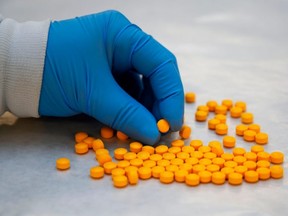
‘That’s enough fentanyl to kill every American five times over’
More than 4,200 kilograms of fentanyl has been seized at U.S. borders over the last three months, according to data from U.S. Customs and Border Protection.
Advertisement 2
Story continues below
Article content
Article content
Article content
Just three months into the fiscal year, the amount seized is already approaching the total amount seized in 2022 of 6,667 kilograms.
Rep. Tim Burchett cited the figures this week as two U.S. Border Patrol chiefs were asked about border security during a Congressional hearing.
“That’s enough fentanyl to kill every American five times over,” Burchett said, via the New York Post.
That math is based on the U.S. Drug Enforcement Administration’s information that a dose as small as two milligrams of the synthetic opioid can be lethal.
Citing data from the U.S. Centers for Disease Control and Prevention, the Post reports that synthetic opiate deaths averaged over 70,000 a month in 2022, the highest number on record.
Article content
Advertisement 3
Story continues below
Article content
In Canada, there were 32,632 apparent opioid-related deaths between Jan. 206 and June 2022, according to the federal government.
Approximately 20 deaths a day from opioid toxicity occurred in Canada between Jan. and June 2022. In the years leading up to the pandemic, there were between 8 (2016) to 12 (2018) deaths per day.
“The COVID-19 pandemic has worsened long-standing challenges regarding substance use and the opioid overdose crisis, with some communities reporting record high numbers of overdose deaths, hospitalizations, and emergency medical service calls,” notes information from the government.
Last September, a new order was issued for the Controlled Drugs and Substances Act (CDSA) in hopes of reducing the illegal importation and distribution of a group of novel fentanyl precursors. The substances are used in the production of fentanyl and substances chemically related to fentanyl.
Advertisement 4
Story continues below
Article content
“With the signing of this order, we are giving law enforcement the tools needed to take action to halt the importation, distribution and use of chemicals being used in the illegal production of fentanyl and fentanyl analogues in Canada,” said then-minister of mental health and addictions and associate minister of health Carolyn Bennett. “The presence of fentanyl and fentanyl analogues in the toxic illegal drug supply has been a main driver in the overdose crisis, resulting in a tragic loss of lives in Canada.”
Health Canada has also granted the province of B.C. a three-year exemption from the CDSA, which began last month. Adults 18 years and older in the province will not be subject to criminal charges for personal possession of up to 2.5 grams total of opioids, cocaine, methamphetamine, or MDMA, or some combination thereof, until January 31, 2026.
Advertisement 5
Story continues below
Article content
“This exemption is a vital step to keeping people alive and help connect them with the health and social support they need,” said Dr. Bonnie Henry, B.C.’s provincial health officer. “By removing the fear and shame of drug use, we will be able to remove barriers that prevent people from accessing harm reduction services and treatment programs.”
Recommended from Editorial
Article content


The RCMP has announced the seizure of more than 17 kilograms of cannabis and 170 cartons of unstamped tobacco from a home in Athabasca, Alta.
Article content
Last June, Alberta RCMP’s Roving Traffic Unit announced it had issued 177 fines and seized more than $498,000 in contraband, including cannabis, unstamped cigarettes and cash, over a six-month period.
In one incident, after illegal tobacco was seized from a vehicle in Lake Louise, a further search of the vehicle led to the seizure of two kilograms of suspected crystal methamphetamine and a kilogram of cocaine.
Two months later, police in Edmonton busted an Alberta-based online cannabis retail operation and seized $3.3 million worth of cannabis products.
The five-month-long investigation found the unlicensed retailer was growing cannabis in multiple locations in the Edmonton area.
Police recovered 2,589 cannabis plants, more than 134 kilograms of dried cannabis and 636 grams of cannabis concentrates. The police estimated the pot to be worth $3,393,000.
Growing equipment was also seized across multiple sites and is valued at $177,000. Police also seized 947 grams of psilocybin, valued at $12,000, and $15,500 in cash.
Investigators reported that cannabis production licenses for personal medical needs were being misused to facilitate production.
Alberta is home to nearly 800 cannabis retailers, though a majority are located in large city centres like Edmonton and Calgary.
We’d love to hear from you. Get in touch with feedback and story tips at thegrowthop@postmedia.com
Share this article in your social network





Comments