Canada’s competition watchdog is putting its weight behind some longtime cannabis industry asks including easing restrictions on cannabis packaging and adjusting limits on how much of pot’s psychoactive component can be in edible products.
In a submission to Health Canada and a panel reviewing cannabis legislation published Friday, the Competition Bureau positioned changing tetrahydrocannabinol (THC) limits and giving pot companies more freedoms around packaging and marketing as a way to boost competition.
“The bureau believes that stronger competition in the cannabis industry would help foster innovation and benefit consumers by providing them with increased choice and quality,” it wrote in its submission.
Advertisement
“Importantly, these benefits would serve to further displace illicit market activity and bolster the legal cannabis industry.”
A 2022 survey from Health Canada found nearly half of the 10,048 respondents who used cannabis in the past year purchased the substance exclusively from legal sources, an increase from 43 per cent in 2021.
Some believe the true share of the illicit market is higher because of the stigma around revealing cannabis use.
Pot producers and shops have long felt THC and packaging changes would chisel away at the market share illicit sellers have and help them reduce the hefty number of layoffs, facility closers and writedowns they’ve taken in recent years to keep their businesses afloat.
Their calls for change have grown in recent months after Ottawa launched a review last year of the Cannabis Act, which set purchase and possession limits and established safety requirements for growing, selling and transporting the substance.
When legalization legislation came into effect in 2018, it prevented cannabis products from being packaged in a way that is enticing to youths and limited THC in edibles to 10 mg per package. Illicit products often exceed the limit.
Stakeholders have told the bureau increasing the limit to 100 mg “could make edible cannabis products more appealing to consumers, especially those currently sourcing them from the illicit market.”
The bureau suggested easing restrictions on cannabis promotion, packaging and labelling would also give producers more room to innovate and help consumers make more informed purchasing decisions.
To comply with regulations, most pot companies package their products in staid, black or white containers devoid of eye-catching branding, which could help differentiate one product from another.
The bureau also took aim at the cannabis licensing process and compliance costs, suggesting they be made “minimally intrusive to competition, where possible.”
The process currently requires cannabis producers to have facilities nearly completed – a process often costing millions – before they can receive licenses. Then, there are “lengthy and costly” security requirements and annual regulatory fees.
“By minimizing the regulatory burden of the licensing process and reducing compliance costs, where possible, decision-makers can reduce barriers to entry and expansion, as well as stimulate even more effective competition,” said the Bureau.
Rounding out its recommendations was a suggestion regarding excise duties, an area outside of the panel reviewing the act’s purview.
The duties are imposed on products when they’re delivered to buyers. For dried and fresh cannabis, plants and seeds, they amount to the higher of $1 per gram or a 10 per cent per gram fee.
For edibles, extracts and topicals, it’s a flat rate based on the number of milligrams of total THC in the product. There are additional duties in Alberta, Nunavut, Ontario and Saskatchewan.
The total amount of unpaid cannabis excise duties has risen since legalization, the bureau said. As of September 2022, 66 per cent of licensees required to remit excise duties had an outstanding debt with the Canada Revenue Agency, the bureau said.
“Many stakeholders interviewed by the bureau raised Canada’s excise duty framework – and excise duty rates specifically – as a major barrier to competition in the cannabis industry,” the submission said.
“These stakeholders told the bureau that the current excise duty regime makes profitability and viability in the industry very challenging.”
Canopy Growth Corp., a Smiths Falls, Ont. cannabis company, welcomed the Bureau’s recommendations, chief executive David Klein said.
He found the suggestions mirror many of the industry’s pleas.
“Legal producers need to be able to deliver the range of formats and potency that consumers are looking for to compete with the illicit market and support a sustainable cannabis industry in Canada,” he said in a statement.
“It’s equally critical that restrictions on engagement with consumers be revised to facilitate informed purchasing decisions and we hope government will act swiftly on these recommendations as time is of the essence.”
Organigram, a Moncton, N.B.-based cannabis firm, is also aligned with the Bureau, especially because it believes changes to the THC cap are necessary.
The cap “drives consumers to the illicit market,” chief executive Beena Goldenberg said in an email, while packaging restrictions “hinder our ability as licensed producers to effectively communicate and differentiate our products.”
Cannabis extracts, or concentrates, are a unique and robust product category. One that blends science and art to create cannabinoid-rich products like shatter, budder, rosin, live resin, hash and more. The concentrate market in Canada is growing steadily, though it remains a relatively small part of legal cannabis sales.
Concentrates are the third best-selling ‘cannabis 2.0’ category behind vape pens and edibles. Their market share has increased from 2.9 per cent to 3.8 per cent of total cannabis sales, according to Headset data. Despite recent growth and ever-improving extract products, there are numerous barriers unique to this category.
Product innovation meets popularity in shatter, hash and infused pre-rolls New product formulations and growing sales make the cannabis extracts product category alluring to many licensed producers. Mera Cannabis and Organigram have both seen success in their cannabis concentrate offerings as the format’s popularity grows.
Organigram’s most successful concentrate is hash, especially from their brands Edison, Tremblant, and Shred. “Our Cherry Limelight Bubble Hash Joints is one of our popular extract products,” writes Borna Zlamalik, Organigram’s senior vice president of R&D and innovation. The bubble hash and the dried flower are the same cultivar, which was specifically pheno-hunted for its unique aroma.
Advertisement
The mix of Black Cherry Punch and Limelight produces a pungent cherry and lime scent reminiscent of convenience store slushies. “When you open the pack, it’s like a slushy hitting you in the face,” he says. “It is so aromatic that people believe we add [terpenes]; which is absolutely not true.”
While Tremblant is the company’s OG hash brand, Organigram also released a new spin on an old classic with ‘rip-strip’ hash through Shred, a brand that is known for its milled flower and pre-roll products. Instead of the more traditional brick or ball-shaped hash, this product is pressed into perforated strips for easy tearing.
“Hash has traditionally had a difficult adoption curve among new cannabis consumers. Our Rip Strips were designed with the new consumer in mind – this is a product that is super convenient, designed to fit in any pre-roll, and with the ability to easily be portioned.”
This one-of-a-kind product was created by considering the best way to reinvent the hash experience.
“Given its millennia of history, hash has very loyal and very passionate legacy consumers, so we made sure that whatever we created would live in a distinctly different space so that we don’t alienate our connoisseurs,” shares Zlamalik, innovater for Canada’s No. 1 player in hash and concentrate markets.
Mera Cannabis is also well-known for creating cannabis concentrates geared towards legacy consumers, at scale, which can be tricky for aspiring extractors. Mera products are formulated by an “awesome mix of legacy cannabis extractors, enthusiasts and scientists,” says Abi Roach, head of marketing and merchandising at Mera Cannabis.
“One of the first brands we launched in the concentrate space was through our partners, Shatterizer,” shares Roach. “The Shatterizer portfolio is all about shatter and shatter-based infusions, from the ‘pull-and-snap’ classic shatter texture to shatter-infused pre-rolls and vapes. This portfolio has been a huge hit in Ontario and is building momentum in western Canada.”
Mera is also behind bringing a legacy market extract into the legal space. Under their medical brand Ellevia, they launched the first legal RSO to market. “It is a beautiful full-spectrum phoenix tears; a multi-use extract focused on wellness that can be inhaled or ingested.
“Although the industry has been slow to ramp up, and has historically lacked appealing offerings for the consumer, the category is now growing quickly,” writes Roach.
Organigram personnel walks down a hall to which their grow rooms may be accessed. Photo: Organigram
Extract products among the hardest to transition to the legal market The burgeoning cannabis industry isn’t without its difficulties, of course. And the concentrate category in particular has seen its fair share of challenges. The steep learning curve, regulatory challenges and burdensome excise taxes are significant barriers for extract producers.
“The concentrate category was the toughest to transition to the legal market. Many legacy extractors were resistant to sharing their knowledge or converting their operations,” says Roach. “We are lucky at Mera to have such a great group of legacy extractors with a wealth of knowledge who we have been able to build our business around.”
In addition to finding the right growers and extractors, Roach explains how excise taxes are particularly burdensome for concentrate products. “While concentrates are already a costly product to produce, particularly in the legal market, excise tax and provincial markups make legal concentrates a hard category to compete against illegal sellers.”
However, Roach notes that these barriers will ease as consumers’ understanding of the category deepens and the government addresses regulatory and tax burdens.
Recently, Health Canada sent out a letter that changed the game for certain extract products, stating they had been incorrectly categorized as concentrates when they were, in fact, edible cannabis products. Organigram was one of many companies affected, their popular product Edison Jolts has been for sale in retail stores as an ingestible extract.
Health Canada didn’t ask these products to be pulled from retail stores but has given companies the deadline of May 31, 2023, to cease manufacturing and distributing products like Jolts. However, Organigram maintains that these products aren’t edibles but ingestible extracts correctly labelled.
Jolts by Edison were created intentionally and strategically, using ingredients that they assert satisfy the strict requirements for extracts under the Cannabis Act and Regulations, says Zlamalik. While the company will be complying with the Health Canada notice, Organigram isn’t ready to give up on the popular product. “We are rooted in our strong scientific process and at the core, our extreme dedication to creating compliant products with no shortcuts,” writes Zlamalik. “We disagree with Health Canada’s determination that Jolts are improperly classified as an extract, and we are pursuing a Judicial Review to challenge their decision.”
The future of cannabis concentrates is a blend of art and science The next big thing in the extracts category has yet to be discovered, but whatever product or trend it might be will likely be highly influenced by the consumer, according to our experts.
Organigram personnel inspects cannabis plants in a three-tiered grow room. Photo: Organigram
“Concentrates are a really amazing yet underdeveloped space in Canada,” says Zlamalik. “The way we will re-invent this category is to really listen to consumers – why they use concentrates,” as well as what makes them apprehensive about the product category.
“The next big thing in concentrates is going to be about hitting the right potency and cannabinoid profile. I am bullish on having concentrates deliver a full spectrum stack of cannabinoids as this category is used not just for recreation but also heavily for therapy/medical needs,” writes Zlamalik.
“I believe by striking the balance between art and science we can change the trajectory and prominence of this category. It’s about simple consumer unmet needs – both emotional and functional. And most of all the love of how concentrates can highlight the best characteristics of great flower.”
Concentrate lovers are notoriously hard to please. Connoisseurs often come from the legacy space and expect the same quality and potency from pre-legalization, and new consumers are hard to capture as the format can be daunting due to its complexity of use and vast range of products.
“I see the potential for growth in two sub-categories: ready-to-use formats like vapes and infused pre-rolls, as well as high-quality cannabinoid-rich extractions,” writes Roach. She notes that newer consumers, as well as younger consumers, are all about easy and effective – propelling the popularity of disposables vapes, pre-rolls, beverages, and edibles.
“The cannabis connoisseur will always look for aesthetics and effect, and as we perfect the ancient art of hash making, you will see evolutions to classic techniques with incredible results full of rich flavours and beautiful colours that will entice a small but enthusiastic segment of the market,” she concludes.
Ashley Keenan is a journalist, consultant, and patient advocate who uses reporting and storytelling to educate, entertain, and empower folks curious about cannabis.
Phytochemicals are naturally occurring substances present in plants. Often they are involved in the plants defense mechanism and they can be produced through primary or secondary metabolism. Among the primary plant components there are proteins, amino acids, sugars and chlorophyll while secondary constituents are alkaloids, phenolic compounds, flavonoids, saponin, tannins and many more. [1]
Phytochemicals generally possess a biological activity and have been used and studied since ancient times for their potential health benefits or intoxicating action.
The medicinal power of traditional plant species lies in the phytochemical content producing a specific pharmacological action. [1]
For this reason the extraction, isolation and qualitative and quantitative analysis of the phytochemical content of a plant is necessary in order to reveal the unique plant composition thus the specific phytochemical properties.
The heterogeneity of plant samples and the difficulties linked to the sample preparation can be the hurdles to overcome when analyzing a plant biomass.
The initial extraction of a plant gives generally a crude extract, that is an unrefined mixture of plant components. In order to reveal the plant composition and isolate each compounds from this crude mixture it is possible to employ chromatographic methods including:
Flash chromatography;
High-performance liquid chromatography (HPLC);
Gas chromatography (GC).
The goal of chromatography is the separation of compounds based on polarity, size or chemical functionalization. [2] Once “fractions” of the crude extract are obtained is possible to proceed in their analysis through spectroscopic techniques including:
Mass spectrometry (MS);
Nuclear magnetic resonance (NMR);
Ultraviolet-visible spectroscopy (UV-Vis).
It should be noticed that nowadays hyphenated or hybrid techniques are often used in plant composition analysis. Analytical methods such as chromatographic techniques and spectroscopic or spectrometric methods can be paired in order to analyze samples and exploit the advantages of both methods for qualitative and quantitative sample analysis. [3]
Chromatographic methods
Chromatography can be preparative or analytical. The preparative chromatography is a form of purification in which the crude extract is separated in fractions. This method usually involves large amounts of solvents and it is generally laborious and expensive. Analytical chromatography is generally performed with small amounts of samples and solvents and the purpose is to reveal the presence and the relative proportions of the analytes in a mixture.
Flash chromatography is an example of preparative chromatography while HPLC can be used for both preparative or analytical purposes.
The general principle of this technique involves the separation of analytes from a mixture by dissolving the crude extract in a liquid or gaseous mobile phase that is pumped or flushed through a stationary phase. Depending on the nature of the analytes and the kind of mobile and stationary phases the mixture will separate through the chromatographic column and ideally each component will be eluted in some fractions. In the case of liquid chromatography, before running a column, the behavior of the chemical entities of the mixture is checked through thin layer chromatography (TLC). This permits us to have an idea of the way in which compounds will run in the column and to refine the ratio of the mobile phase solvents in terms of polarity, to elute the desired compounds in an efficient way.
High Performance Liquid Chromatography (HPLC)
This chromatographic method involves the use of small size silica particles (2-50 μm) packed in a column. In case it is used for qualitative and quantitative analysis of botanicals, the process involves first the measurement of a small amount of reference standards of specific analytes of interest. The mobile phase, with specific ratios of solvents, is pumped through the column producing a chromatogram. The fractions or the crude extract is then analyzed and each peak of the chromatogram is compared with the peaks of the reference standards both in terms of elution time for the qualitative analysis and the peak area for the analyte quantification.
Each peak of the chromatogram represents a compound or groups of compounds with a similar characteristic (polarity, size, functionalization etc.) present in the crude extract.
If HPLC is used with the appropriate programsolvents ratio permits to obtain peaks with good resolution meaning that it is possible to discriminate between data of an analyte from another one. The peak resolution is the relative distance between the apexes of two neighboring peaks.
The separation efficiency in the column is measured by the width at half height of the peak: the thinner the peak, the more efficient the column. Analytical HPLC systems are used in the food safety, manufacturing and pharmaceutical industries and also in the medical research laboratories.
Gas chromatography (GC)
This kind of chromatography can be used to find out how many compounds are present in a mixture. In the case of plant extracts, GC is a suitable and efficient method to quantitatively determine the amount of bioactive components. This analytical method is mainly used to analyze and quantify volatile compounds. In particular the most reliable GC analyses are performed on small molecular weight non-polar volatiles.
In any case GC is generally used on compounds that can be vaporized without decomposition. In fact this method is not reliable on compounds that degrade with the heat. In order to perform the quantitative analysis of a sample the analyst has to measure the sample size injected, determine the response of the instrument and measure the peak areas of the gas chromatogram.
The target compounds that are heated and vaporized during the injection of the sample are transported to the column by the carrier gas. Commonly used carrier gasses are helium, nitrogen and hydrogen.
In the column the mixture is separated into the various components and the amount of each analyte is measured by the detector.
The detector turns the amount of compounds into electrical signals that can be then sent to a data processing unit and reported into a chromatogram. The horizontal axis of the chromatogram indicates the time at which the compound reaches the detector while the vertical axis indicates the signal intensity. The retention time is specific for each compound and depends on many factors including:
type of column;
analysis conditions;
contaminations;
type of compounds analyzed;
temperature;
carrier gas;
column pressure.
Spectroscopic techniques
These techniques are frequently employed to produce highly detailed information regarding the molecular structure and properties of the analyte of interest. In fact, through spectroscopic methods based on the study of the quantized interaction of electromagnetic radiations with matter, it is possible to elucidate bond length and bond angles. [4]
There are various forms of electromagnetic radiation, including light (visible), ultraviolet (UV), infrared (IR), X-rays, microwaves, radio waves, cosmic rays etc.
Depending on the intended purpose, the wavelength region used and the type of the material, different spectroscopic techniques exist.
Mass spectrometry (MS)
The mass-to-charge ratio (m/z) of charged molecules can be measured using this analytical technique. The main principle of MS consists in generating ions or molecular fragments through electron bombardment (electronic ionization) and to measure the quantity of the matter related to the electric charge of a given particle. In order to produce ionized particles various methods can be used including:
Among the specific applications of MS technique there are: drug testing, drug discovery, pesticide residue analysis, protein identification, food contamination detection, isotope ratio determination, etc.
With the combination of MS, computer technology and software, the range of MS applications is always more extensive.
Nuclear magnetic resonance (NMR)
In the case of NMR radio frequency waves are used to promote transitions between different nuclear energy levels (resonance). [5]
This spectroscopic technique has been employed on solids, gas, liquids to perform kinetic and structural studies. The molecule or the mixture can be analyzed by placing it in a strong magnetic field. This allows the nuclear spins to be visible and measurable, elucidating details regarding the molecular structure and conformation. In NMR spectroscopy the number of signals describes the different environment in which the hydrogens atoms are in. In order to reveal the number of atoms in each molecular environment it is possible to do the peaks area ratio.
Ultraviolet-visible spectroscopy (UV-Vis)
The amount of absorbed or transmitted discrete UV-wavelengths of visible light can be measured by a UV-Vis spectrophotometer. The measurement involves the sample comparison to a reference also called “blank” that is usually the solvent made to prepare the sample. The amount of absorbed or transmitted light is dependent on the sample composition and can give a hint about the presence or not of analytes in the sample. Moreover the UV-Vis measurement can also give an indication of the sample concentration. The info is collected in an absorbance graph as a function of the wavelength. This spectroscopic method finds many uses including: DNA and RNA analysis, pharmaceutical analysis, bacterial culture, food and beverage analysis, etc. [6]
Combined techniques
Many instruments combine two or more techniques in order to provide more detailed and reliable analysis results. Among the most widely used analytical hybrid techniques there are:
gas chromatography-mass spectrometry (GC-MS);
liquid chromatography-mass spectrometry (LC-MS);
liquid chromatography-nuclear magnetic resonance spectroscopy (LC-NMR);
gas chromatography-infrared spectroscopy (GC-IR).
The separation capability of chromatographic methods is usually combined with Mass Spectrometry (MS). The main advantage of HPLC combined with MS (HPLC-MS) and GC-MS is that the mixture can be separated and then the individual components can be identified using MS.
When compounds reach the MS sensor they are fragmented into ions by electron impact ionization. Each fragment is reported in the mass spectrum. The peculiar fragment formation helps define the structure of the molecule of interest.
If the chromatographic techniques are combined with NMR, the components are first separated into single compounds or less complex mixtures and then analyzed exploiting their magnetic properties. Depending on the chemical environment each atom will vibrate differently giving microscopic chemical and physical information. As the signals are unique or highly characteristic to individual compounds, NMR is considered a definitive technique to identify organic compounds.
Using IR techniques when performing chromatographic analysis permits the visualization of results almost in real time. The principle is the different frequencies absorbed by molecules in order to deduce their structure. The different IR signals permit the characterization of functional groups and help elucidate the molecular structure of the analyte.
These hybrid techniques are widely used in research laboratories, medical, environmental and pharmaceutical industries.
References:
[1] Agidew, M.G. Phytochemical analysis of some selected traditional medicinal plants in Ethiopia. Bull Natl Res Cent 46, 87 (2022). https://doi.org/10.1186/s42269-022-00770-8
[2] Albuquerque, Ulysses Paulino; de Lucena, Reinaldo Farias Paiva; Cruz da Cunha, Luiz Vital Fernandes; Alves, Rômulo Romeu Nóbrega (2019). [Springer Protocols Handbooks] Methods and Techniques in Ethnobiology and Ethnoecology || Methods in the Extraction and Chemical Analysis of Medicinal Plants. , 10.1007/978-1-4939-8919-5(Chapter 17), 257–283.doi:10.1007/978-1-4939-8919-5_17
[3] Patel KN, Patel JK, Patel MP, Rajput GC, Patel HA. Introduction to hyphenated techniques and their applications in pharmacy. Pharm Methods. 2010 Oct;1(1):2-13. doi: 10.4103/2229-4708.72222. PMID: 23781411; PMCID: PMC3658024.
BC’s direct delivery program for small-scale cannabis producers is beginning to mature but still receives mixed reports from the local industry.
British Columbia launched its direct delivery program in August 2022 with a goal of helping small-scale producers establish a better foothold in the legal market.
Now that the program is approaching one year this summer, more producers and retailers are beginning to lean into the model but say there are still significant challenges to making it a truly viable model for small BC cannabis growers.
Rather than sending products to the BC Liquor Distribution Branch’s (LDB) central warehouse in the Lower Mainland, the LDB allows producers to register and list products for sale through the direct to retailer program. Retailers can then select products from that list and contact the producer directly to arrange delivery.
“It allows for cash up front before we deliver it, which is at least 30-45 days faster than BC LDB. It also creates a one-on-one bond with the dispensary, thereby creating a two-way relationship of understanding.”
While the LDB’s centralized distribution system allows a more one-stop service for producers and retailers. It also means products can be less fresh and creates more of a homogenized product selection across the province. Direct sales to retailers, on the other hand, can mean one less middleman between the grower and the retailer.
The program is limited to growers located in BC who produce the equivalent of less than 3,000 kg of dried cannabis flower per year. The program grew from a precarious launch that happened to coincide with a strike at the LDBs warehouse, with only a few SKUs of an array of products from dried flower and pre-rolls to edibles, beverages, vape pens, topicals, concentrates, seeds, and clones.
In the first eight months, the LDB sold the equivalent of nearly one metric ton of cannabis through direct delivery worth $5.7 million. Although this represents a small fraction of the several hundred million in wholesale sales during the same time period, the program was designed to serve a niche of small-batch BC growers rather than the entire provincial market.
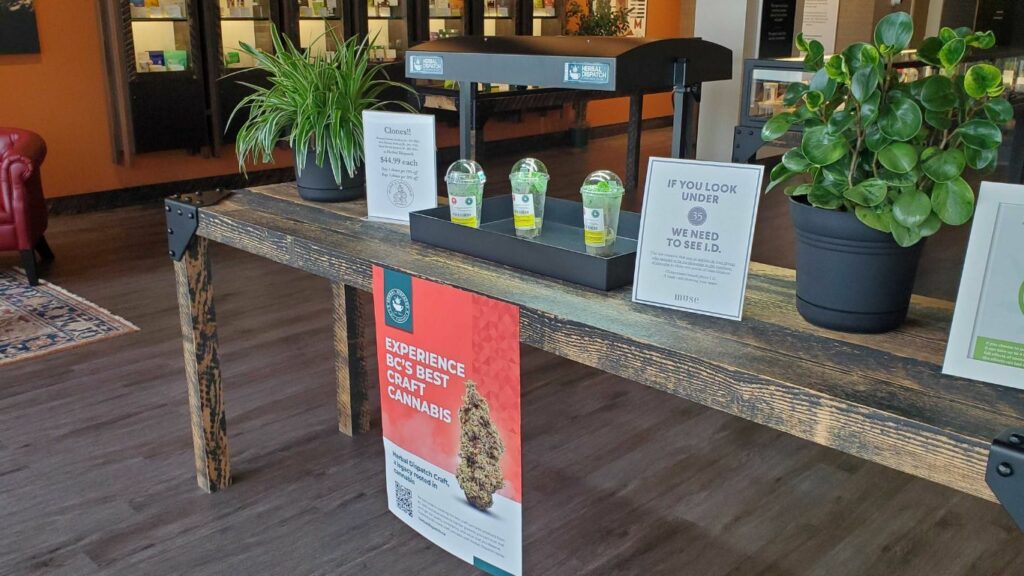
Cannabis clones sold direct to retailers
Janeen Davis, VP of sales at Joint Venture Craft Cannabis Inc (JVCC), says the program is not without its challenges, especially a hefty 15% fee the BC government places on any direct delivery sales. Still, JVCC, primarily through their BC Black brand, has seen significant increases in the sales of products they have been selling through the program.
One of the big advantages, she explains, is that it allows a more fresh product onto shelves, and more closely resembles the supply chain for cannabis growers and sellers prior to legalization.
“One of the nice things about direct delivery is you know exactly who’s brought your product in, and it allows us to give a superior level of customer service,” says Davis. “With the LDB, we don’t always know who is even carrying our product.
“Another nice thing about it is we can get an order to a retailer in under 48 hours. Going through the LDB, that can be two or three weeks. So it’s just not as fresh of a product.”
However, one of the challenges is the 15% proprietary fee the LDB levies on the program. This is the same 15% they charge producers to sell through their central distribution system, without most of the LDB’s support. This means delivering the product to each retailer, either personally or through a delivery service, and extra logistics like handling individual payments, tracking shipments, more internal record keeping, etc.
“If it weren’t for that, it would be incredible. And if that fee were reduced, some of that could go back to the retailer, and some could go back to the small batch producers.” She points out this will help a lot for smaller businesses that are struggling to survive.
William Marshall, the Founder of Aaron’s BCBud, located on Vancouver Island, says he’s been using the program since shortly after its launch. While most of Aaron’s BCBud products sold in BC still go through the LDB, he says the advantage of the direct delivery program is not only a fresher product for retailers and consumers, but also ensures the grower is paid faster.
“The one thing I’m hoping for is getting rid of that 15 percent fee, or at least reducing it. That would make direct delivery a lot more attractive for people. They’re not actually doing anything for that 15 percent. Getting rid of it could give us that competitive edge and give more incentive for the retailers to come over to the direct delivery side.”
“Direct delivery is a dream for the grower,” explains Marshall. “It allows for cash up front before we deliver it, which is at least 30-45 days faster than BC LDB. It also creates a one-on-one bond with the dispensary, thereby creating a two-way relationship of understanding.”
Once a local retailer likes how much fresher the product is, they will sometimes drive to the facility to pick it up themselves.
The grass isn’t always greener
Not everyone is entirely sold on the program, though.
Cam McKinnon from Papa Joe’s Organics, a micro producer in Sooke, BC, just began using the direct delivery model in May. While he likes it, he says he prefers to sell through the LDB’s central warehouse because he thinks products will sell faster.
“I like the direct delivery approach because it’s more honest. You’re getting paid, and it’s gone, rather than potentially sitting around (at the LDB) for 90 days before it gets pulled and returned to vendor for not selling fast enough.”
“But the downside is only about a quarter of the stores will do it in BC. The larger chains don’t seem to be all that interested in it. And it is more paperwork. Obviously, it would be easier to just ship one pallet to central delivery.”
“The one thing I’m hoping for is getting rid of that 15 percent fee, or at least reducing it. That would make direct delivery a lot more attractive for people. They’re not actually doing anything for that 15 percent. Getting rid of it could give us that competitive edge and give more incentive for the retailers to come over to the direct delivery side.”
“We’re getting closer to how it was before everyone was legalized, where everything was this kind of farm-to-table type system.”
Vince Collard of 642 Cannabis
Ryan Brown, the owner of Just Kush Enterprises, a producer in Kootenays, says he was initially using the program when it first launched but noticed sales slowing in early 2023. Although he still uses the program with a handful of retailers, he says the sales volume isn’t enough to keep the lights on.
Although the handful of retailers who buy his products directly are supportive, he points to the extra logistics involved in each of those orders compared to one single shipment through the LDB.
“If we just deliver a pallet to the LDB, then we’re done. Whereas if we keep direct delivery going, we have to put shipments together for each store, track it, and report it. It’s a lot. And for no discount. We still have to pay 15 percent. There’s no advantage, really, for us.”
Getting listed and carried by the LDB still gives him access to hundreds more stores and broader brand recognition.
“Then all the stores see you. It helps get your name out there and into more stores around the province. So we still like direct delivery for a few stores who support it, but we couldn’t survive on it. Not yet, at least.”
Inside Papa Joe’s organic cananbis
One of those retailers, who Brown says is the exception, is Mike Babins of Evergreen Cannabis in Vancouver. Babins says nearly every product in his store is currently ordered through direct delivery.
He says he loves dealing with a company like Just Kush because they are a small business. And while some retailers might find it easier to get one consistent weekly order from the LDB, he says he prefers the flexibility of ordering direct from the retailer based on his needs, not the LDB’s.
“We’re supposed to be supporting locals, right? People complain about the big growers in Ontario coming in. Well, we have the opportunity to do that, and this is how we do that.”
“In the old days, you ordered what you needed when you needed it. With the provincial model, you have to order by your cutoff date whether you have the money or need the product; that’s what you order for the week. With direct delivery, we can see what is out and contact them directly if we need something. It’s so much easier and makes much more sense. You pay people as you’re buying what you need. And you don’t have weed sitting in the stock room for a week until it goes out because you had to buy it on a certain date.”
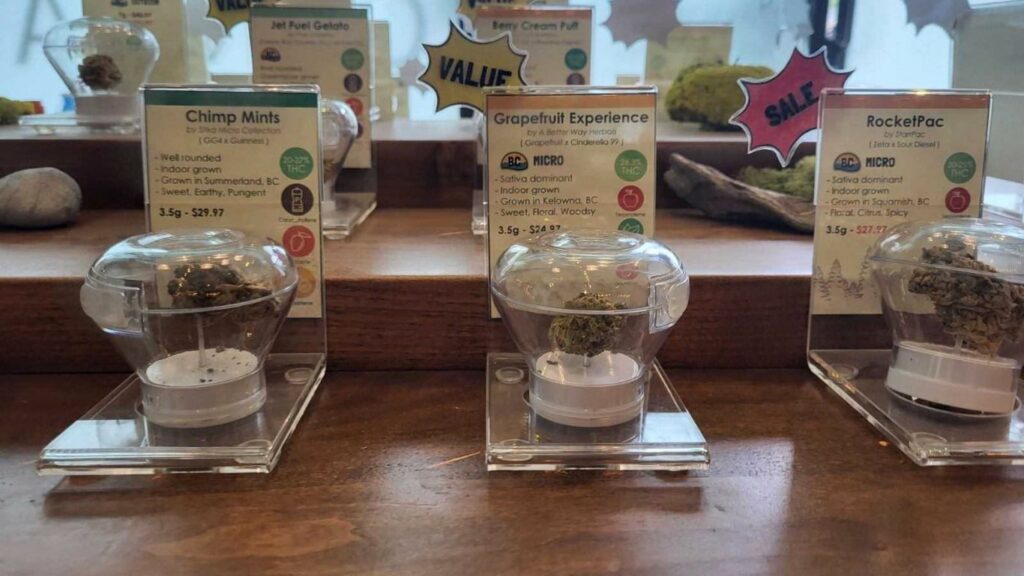
Direct Delivery cannabis available at Evergreen Cannabis in Vancouver
Grown just down the road
Vince Collard of 642 Cannabis, a cannabis retailer in Sooke, is just down the road from Papa Joe’s. While only a small portion of their overall stock is direct delivery, he says it’s been increasing significantly because it delivers a higher quality, more unique product. It also gives a path to market for more BC growers who might not otherwise get picked up by the LDB.
“The LDB doesn’t take all the products grown in British Columbia, so with direct delivery, I have a much larger network of products I can actually pick from.
I’m happy the program exists, and it does allow access to some of these growers who the BC LDB won’t take their SKUs—and these can be some of the best companies with the best products. But through direct delivery, as long as they have it registered, they can sell it to me.”
Collard has been buying products through direct delivery since the program was launched and says he was happy to see the first Papa Joe’s product listed recently.
“Why should he ship it to Burnaby where they hold onto it, put it on a website, and then ship it back to me? It’s a waste of everyone’s time and resources, and it’s bad for the environment.”
“We’re getting closer to how it was before everyone was legalized, where everything was this kind of farm-to-table type system.”
The first and second parts of this series look at living organic soil, its benefits and how to build it following nature’s lead. This final part will help you maintain and improve it over time.
The nutrition in living soil comes from the microbes in the compost that start to feed on the inputs and break them down into their mineral forms so the plants can use them. Until the bacteria have done their work, the minerals are locked up in the amendments, and therefore, the plants do not get overfed. The plants release something called “root exudates” into the soil to attract the different microbes they need to release their desired minerals. It is a trade between plants and microbes – exudates for minerals – working together to help each other. This type of exchange is what soil scientists and ecologists call “mutualism”.
When growers bottle-feed organic nutrients, they create a similar blast of microbial activity that causes a flash of nutrition, but it is gone as fast as it comes. A well-made living soil will have continuous availability of nutrition.
Working Worms
Another benefit of real organic living soil is that you can introduce worms to your containers and use them as a team of composters and aerators working 24/7 to keep the cycle of nature moving. They don’t eat and digest but rather filter the decomposing organic matter into its mineral forms and coat it with enzymes that help with the availability of nutrition. With worms, you can reuse the same body of soil repeatedly, just like in nature.
Mulching
Most living soil growers use a mulch layer to cover the soil’s surface, keeping moisture in and allowing root and microbial activity at the soil surface. Popular materials for mulches are chopped straw, hay, and even stalks and leaves from the previous crop’s waste trimmings. If you can create a good layer of composting nutritious mulch, it will feed the soil as you water. If you have worms in your soil, they consume the decomposing mulch and create vermicompost on the soil surface.
No-Till
If growing no-till style with mulch and worms, you will also develop other insects beneficial to the living soil system. Don’t be put off by these insects; they will protect your plants and keep things in balance. The most common is hypoaspis miles (now called stratiolaelaps scimitus), which feed on fungus gnat larvae and thrips pupae. They often build up good populations and commonly come from the compost source, helping you by patrolling for bad guys. You can use many other specialist predator species to combat common grow room pests and avoid the need for sprays and pesticides.
Cover Crops
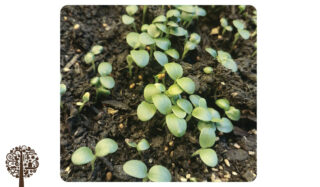
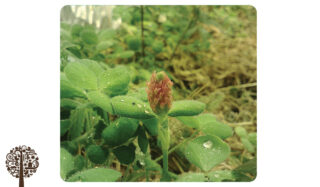
To get the soil life working well, having more than one plant species growing in the pot can help. Living soil growers often cultivate a ‘cover crop’ such as clover, peas, millet, vetch, and buckwheat. These plants establish quickly and can help fix nitrogen while promoting the establishment and continued growth of mycorrhizal fungi. Cover crops can grow through the mulch layer and help form a living mulch. Once the plant canopy is well established, a common technique is to ‘chop and drop’ the cover crop, allowing it to decompose and become food for the soil microbes and worms.
Top Dressing
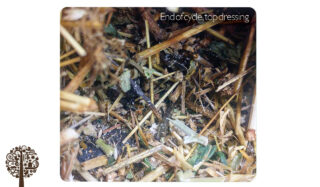
Depending on what you’re using in your soil mix and the pot size, some growers like to supplement additional inputs throughout the cycle. The easiest and most effective way is often to top dress; this means dusting the soil surface with whatever you choose to use and then letting it get drenched into the soil as you water. Top dressing the same balanced blend of organic inputs and minerals used for the original soil mix is ideal, or you can use other straight dry amendments such as malted barley powder, insect frass, or comfrey powder.
If growing long term in containers, a regular top dressing of amendments and a fresh layer of compost at the start of bloom and again at the end of each cycle keeps everything status quo. If adding some inputs you didn’t have in the soil initially; top dressing is also ideal. Compost teas have been widely used and recommended within the no-till scene. If using compost teas, we suggest making a compost extract instead of a brew. Add compost to water, agitate thoroughly, and then apply straight away. This allows microbial development in the soil, not in a tub of bubbly water. The same can be said about instant microbial teas, which are equally effective.
You can also use liquid additives such as seaweed extract, liquid fish hydrolysate or emulsion, amino acids, humic and fulvic acids, coconut water, and Aloe Vera extract. If you are keen on using bloom boosters, be sure to do your research and find out what’s in them. You don’t need to apply PK booster with living soil, but some organic bloom boosters from fermented plant extracts are compatible. Many no-till growers use Korean Natural Farming (KNF) techniques to make their fermented plant extracts.
Of course, anything added should be carefully considered as the quality is of the utmost importance. Do not add something unless necessary. Keep it simple, and nature will provide.
Pot Sizing
It is recommended to use four 40L to 50L pots per square metre to provide an adequate reservoir of nutrition for your plants. That’s 160-200L of living soil per square metre of the canopy! Choosing fabric pots with handles is a good option, as the plants remain fairly portable if required. Some growers like to plant cuttings or seedings directly into these final pots, but if it is a new soil mix, then it is often best to have plants already established in smaller containers with a good root ball ready to adapt to its new home.
Watering Living Soil
The key to living soil is the moisture level; it is essential not to over or underwater the containers. Because they are much larger than growers may be used to, they can hold water longer, and if the plant is still small, it may cause overwatering. When starting with living soil, you need to ease the plant in gradually by watering it a little and often. A good rule of thumb for watering after planting is 5-10% of the total pot volume (40L pot = 2-4L of water). Watch how they use that water by checking the soil surface over a few days, then steadily increasing the water volume the more they transpire.
Keep the top wet without water-logging the bottom. Water will sink to the bottom of the pot, which means there is a risk of overwatering while trying to keep the top moist. You may need a pump sprayer or fine rose watering can to moisten the top layer regularly rather than drench the whole container. While the plants are small, it is best to be extra careful, but once in full bloom, they will be able to drink much more. Typically, a grower using 40L pots will water each pot up to 2-4L daily, but some plants may even need a bit more every few waterings.
With timer and pump-powered drip irrigation systems, it is highly recommended you know precisely how much water the soil needs in your growing environment before switching to full automation. Autopot irrigation systems fed by a valve in the bottom tray or other sub-irrigated planter systems are also suitable for living soils. With systems like this, it’s still important to get the living soil volume per M2 correct (160-200L). It is also best practice to water by hand from the top until the plants need watering daily; then, you can automate the bottom feeding.
Repeat!
The most attractive aspect of growing using living soil and no-till methods is what happens at the end of the growing cycle. Rather than throwing away the soil or adding it to outdoor beds, growers can retain the same containers of soil for reuse. That means no tipping out containers, no dust, and no re-filling. If you look after the soil, it will improve over time, and your harvestable goods will also get better. If intending to re-use the soil from the start, you should already have worms doing their work and a mulch layer creating a compost effect from the top. This way, all that is needed is the addition of new plants as space becomes available. Just dig a little hole and go again!
Reinvigorating Living Soil
If you didn’t plan to re-use the soil but still want to, you only need to remix it with some fresh compost or vermicompost, along with a few other amendments. Most growers start with the 40L pots and then end up with 50L once they have added around 10% more compost plus the amendments. When remixing, you will need to empty the container but don’t worry about removing any root mass, as it will get consumed by the microbes. Depending on the pot size the new mix goes into, it may heat up and feel warm to the touch. This is where the microbes break down the quick-release inputs for immediate nutrition, but it will cool down after 7-10 days and be ready to use. Planting a cover crop and waiting to see if it comes up green and healthy is an excellent way to tell if the soil is ready for the main crop. Some companies now sell amendment kits that include everything you need to re-amend used living soil but remember, it is crucial to start with high-quality living soil, not just regular potting soil.
When the soil life is well-fed and in harmony, the plants will grow themselves. Use what is available locally, and don’t overcomplicate anything unnecessarily. Just remember to start with high-quality organic soil, and you will already be halfway to having abundant, glorious produce for your effort!
Many people (myself included) talk sometimes about “resonating” with something or not when determining the “truth” of a particular writing, teaching or information. It’s that non-verbal intuitive “knowing”. However, there can also be “false resonating” (positively or negatively) when it is mistaken for wishful thinking or based on (unconscious) projections or triggers. Sometimes, the false part within us based on conditioning, programming, and wounding resonates with something which we mistake for our true self, resulting in false resonance, or we reject the truth of something because it challenges deep ingrained belief systems we are identified with and hence “don’t resonate with it” because it brings up uncomfortable feelings… which also ties into cognitive dissonance.
“Sometimes people hold a core belief that is very strong. When they are presented with evidence that works against that belief, the new evidence cannot be accepted. It would create a feeling that is extremely uncomfortable, called cognitive dissonance. And because it is so important to protect the core belief, they will rationalize, ignore and even deny anything that doesn’t fit in with the core belief.”
– Frantz Fanon
While there is validity to the idea of “resonating” with a certain teaching or source, it can easily be misapplied if the “reading instrument”, the Self, is not “tuned” correctly. For example “feel good” messages are not necessarily proof of truth and can also be very emotional manipulative (especially when ego feeds off of it)… just like information that brings up fear is not necessarily false either nor is it “fear mongering”.
In order to find the true resonance one needs to separate the false self (with its assumptions, conditioning, expectations, wishful thinking, wounding, buffers, bias, emotional hooks and ego desires) from the true self connected to the Divine, that small non-verbal voice inside that can always separate a lie from truth, using intuition and critical thinking alike, even if the truth is not very “pleasant” and challenging to one’s world view and especially to one’s self-image.
In other words, honest sincere self-work is needed in order to detect the lies we tell ourselves and confronting all the rationalizations and denial that come with it so we can get more and more in tune with our soul resonance/knowing. From an esoteric perspective, lies to the self are the most harmful and hardest to detect, way harder than detecting the lies “out there” via an intellectual thought process. Essentially, one’s level of Being (soul embodiment) also determines how much (higher) Knowledge one can access via direct experience (Gnosis) that goes ways beyond a mental approach of “thinking” or just intellectually dissecting/processing information.
“False resonance” is the reason why many well-meaning people spread disinformation and corrupted/pop-spiritual (New Age) teachings. I don’t take myself out of the equation for I have done that as well, especially in my New Age days when I was not very discerning but mistook my own wishful thinking and emotional projections for “resonating”.
False resonance is also what COINTELPRO (Counter Intelligence Programs) targets and forms the basics of Matrix Mind Control. Good disinformation is most often lies mixed with truth. Enough truth to use as a bait to get the seeker’s attention/resonance or hook his/her ego and then put him/her on a false lead, because she/she swallow the lie as well, keeping him/her asleep while he/she believes to awaken.
Finding “true resonance” is related to the triad of Knowledge – Being – Understanding:
“Knowledge is one thing, understanding is another thing. People often confuse these concepts and do not clearly grasp what is the difference between them. Knowledge by itself does not give understanding. Nor is understanding increased by an increase of knowledge alone. Understanding depends upon the relation of knowledge to Being (soul embodiment/integration). Understanding is the resultant of knowledge and Being. And knowledge and Being must not diverge too far, otherwise understanding will prove to be far removed from either.
At the same time the relation of knowledge to Being does not change with a mere growth of knowledge. It changes only when being grows simultaneously with knowledge. In other words, understanding grows only with the growth of Being. In ordinary thinking, people do not distinguish understanding from knowledge. They think that greater understanding depends on greater knowledge. Therefore they accumulate knowledge, or that which they call knowledge, but they do not know how to accumulate understanding and do not bother about it.”
~ G.I. Gurdjieff, In Search of the Miraculous (by P.D. Ouspensky)
It also relates to the fallacy or misapplication of the idea that “truth must be simple”:
“It is generally accepted that nobody can go on to secondary school without having completed an elementary education. Exactly the same is true in the esoteric Tradition. However, in our modern world, we encounter a curious phenomenon. For example: we would not seek to discuss Newton’s binomial theorem without having studied algebra, for without this, every opinion we expressed on the subject would be worthless.
Yet, in the esoteric field, we find a host of “experts” who declare their opinions on esotericism without having ever learned even the rudiments of this knowledge. At the same time, some of them demand “simplicity” from esoteric teachings on the generally accepted principle that Truth itself must be simple. They conclude from this that access to Truth ought to likewise be simple. Then they assert that the methods to access Truth must be easily assimilable.
This argument would be perfectly correct if human beings and the problems they face were simple and just. However, that is not the case. There is a long road to travel from our state of distorted inner disorder to any “original simplicity.”
In practice, the doctrine of “simplicity” – if regarded as an axiom – turns the student aside from the strait gate and the narrow way that leads to Life. Impelled by this counter-truth, he believes he stands before this door, when he is in reality – although undoubtedly in perfectly good faith – walking the wide path that leads to perdition, ad majorem Diaboli gloriam, of course.
The Doctrine of Simplicity, correct in itself, but wrongly interpreted, becomes a snare for hearts and minds that are already too corrupt; a danger which should be recognized and avoided.
Some people complain that the subject of the fundamentals of esotericism is not simple. Others have said that it leads to great clarity. This apparent contradiction is explained by the fact that esotericism is addressed to readers who are predisposed to esoteric culture by their nature, formation or personal experience.
It is difficult, if not impossible, for an esoterically unevolved person to discern false prophets spontaneously.He will recognize them more easily by their “fruits,” by the observable results of their works, which serve as signs.”
~ Boris Mouravieff, Gnosis
Metaphysical and Psychic Discernment
Have you ever felt off about someone’s writings or spoken words even though the words themselves he/she writes/speaks may be “true”? This is an important point about deeper discernment to trust these intuitions. Obviously we all need to check ourselves for possible shadow projections but we all (those with soul potential) do have access to deeper “objective” energetic impressions/intuitions that do not stem from our shadow (hence the limitation of Jungian psychology, especially in today’s over-simplified pop-spirituality).
Some people are naturally more in tune with these correct psychic energetic impressions they receive from others beyond the words they say or write. But everyone who is sincerely engaged in esoteric and psychological self-work can access them since it is a natural “by-product” of self-realization (connecting more with the true self and shedding the conditioned/wounded/programmed false personality). It ties into the esoteric meaning of “seeing the unseen” and also relates to the concept of “resonating” with something or not as explored before.
“Seeing the unseen” entails developing “sixth sensory cognitive perception” beyond the five senses and the intellect/mind. Obviously basic critical thinking is needed as well to learn how to use the mind/intellect properly for basic discernment, but the deeper discernment happens on metaphysical levels.
This deeper discernment is very important in this day and age with many popular “false prophets” who mislead people consciously (Cointelpro agents) or unconsciously (usually hijacked by entities working through them). Literally anyone who has some talent with words in spoken or written form – a good range of vocabulary and basic understanding of grammar and “eloquent” speech – can write/say anything “profound” and “inspiring” even if he/she doesn’t truly means it or embodies it. It’s also very easy in this day and age to regurgitate popular spiritual or psychological “truths” intellectually in written or spoken form which we see in the rise of mainstream pop-spirituality and New (C)Age religion.
Intellectually gifted people can also easily manipulate others via NLP techniques and intellectual sophism. Psychopaths with a high IQ and a charismatic “mask of sanity” are excellent at that and many people “worship” or admire public personas (including spiritual leaders) who are essentially wolves in sheep clothing. They are masters of deception and can even fake emotions (empathy, love and tears). Many politicians fall into this category and the true psychopaths are not that obvious (hint: it’s not the current presidential puppet but Obama played that game very well and “eloquent”, for example).
If you are truly sensitive to energies of other people and have done your inner work to separate these impressions from your own stuff/triggers/projections, you can literally “see” or sense the true energy behind written or spoken word, regardless of what the person is saying (content). Most often, “clinically perfect” writings or “clinically eloquent” charismatic speech feels exactly like that: clinical, fake, artificial. It’s “too perfect”. Like a technical gifted musician playing Beethoven’s 9th symphony note for note on the piano with technical superb precision with all the dynamics but depth, feeling and soul are missing. It’s like talking/writing from a head-centric space but there is lack of embodiment. Some people also take pride in their intellectual vocabulary and show it off, rendering it down to sophisticated intellectual masturbation – just getting off of it themselves, like a narcissist looking into a mirror.
When I read the original works of esoteric masters and teachers or anyone who is truly embodied, the words have a very deep impact on me. Sri Aurobindo’s work is a good example. Most of his work he wrote is actually in English, so they are not translations. Just reading a few paragraphs of his work has a deep impact on me because the words he writes are coming from a place way beyond “him” (and no, I’m not implying that he’s “channeling”). They touch something very deep inside of me, way beyond the words themselves – it is the energy of the state he was in when writing it – fully embodied, connected to source. The same goes for any music or artwork. Beyond the physical manifestations (painting, recording) you also absorb and can sense the impressions of the energy of the artist.
Personallly speaking I’m also very sensitive to body language and I can read bodies pretty well (due to my profession as a bodyworker). The eyes also always give it away. Sometimes there is no one in there or they are inhabited by “something else”. Have you ever noticed someone telling you the perfect most eloquent words that make sense intellectually/rationally, but something feels off and you get a very different impression on energetic levels? That’s what you need to trust, the energy behind the words (or his/her whole energy), not the words themselves, even if they are “true” in themselves .
Limitations of the Intellect and Online Communication
When it comes to separating truth from lies and connecting to our intuition and true resonance, intellectual critical thinking (while it is very much needed and has its place) is not enough and has its limitations because this isolated head-centric thinking is cut-off from the body-intelligence (and essentially from the Divine and Spiritual Self). If there is no emotional intelligence and embodiment (soul integration) combined with sincere self-work to raise one’s level of Being, one will get stuck on an intellectual level and one can appear very “smart” (even with an high IQ) without progressing any further – esoterically speaking – from the perspective of soul evolution. This is the state of Knowledge overriding Being Gurdjieff talked about in the quote above.
A head-centric highly intellectually “intelligent” person can write or say all the “right” and profound things without any internal alignment/integration/embodiment, i.e. no living experience of what he/she is talking about. For example, we all have had experiences when someone is telling us something but energetically we pick up something different from the person, the underlying non-verbal impressions and communication – when we feel something is off, a lack of authenticity, or literally an emptiness behind a very well crafted exterior shell (which Narcissists, Sociopaths and Psychopaths know very well to manipulate with) .
These energetic impressions are more obvious when we interact in person, hence, online conversations can be more deceiving and challenging, especially when interacting with highly intellectual personas who have little or no emotional intelligence and are very cut off from their bodies. They also tend to self-justify and rationalize to extremes, always trying to be “in the right”. In other words, don’t get fooled by appearances and words alone.
“A dangerous habit is constant self-justification. When this becomes strong in the seeker, it is impossible to turn him in this part of the being to the right consciousness and action because at each step his whole preoccupation is to justify himself. His mind rushes at once to maintain his own idea, his own position or his own course of action.
This he is ready to do by any kind of argument, sometimes the most clumsy and foolish or inconsistent with what he has been protesting the moment before [but not obvious to him], by any kind of mis-statement or any kind of device. This is a common misuse, but non the less a misuse of the thinking mind; but it takes in him exaggerated proportions and so long as he keeps to it, it will be impossible for him to see or live the Truth. […] All this our reason cannot grasp because it is the instrument of an ignorance with a very limited vision and a small stock of accumulated and not always very certain or reliable knowledge and because too it has no means of direct awareness; for this is the difference between intuition and intellect, that intuition is born of a direct awareness while intellect is an indirect action of a knowledge which constructs itself with difficulty out of the unknown from signs and indications and gathered data.”
– Sri Aurobindo, Integral Yoga
The internet and social media have connected us to many people we would have never met in person. It has helped us to communicate our thoughts and share information world wide. However, at the same time there is only so much we can communicate through a keyboard and screen. Words are very limiting to begin with and a lot of non-verbal communication is lost – unspoken communication which we can only perceive in the physical presence of another: Eye contact, body language, energetic impressions, tone of voice, touch and embrace. All that is left out when we communicate online.
Projections, assumptions, and misunderstandings are una
voidable online. Emotions are being shared via emoticons as if they can possible express our vast emotional inner life, our life experiences. People judge us (or we judge others) based on our (their) online presence and the words we (they) type when in fact there is so much more to who we (they) are. We forget our bodies when we are glued to the screen too much. Our body is also constantly communicating to us just like Nature and the Divine. When we are caught in head-centric living we do not “hear” nor feel the messages and guidance within and around us – we are cut off from our intuition.
Let’s not forget to get more into our body, listening to its signals and connect more in person if possible – to look into another person’s eyes, truly listen (as in not waiting to talk), to feel the other person, and being more aware of the vast realm of non-verbal communication that reveals way more than the words spoken or typed. Being more grounded in our bodies connects us also to our intuition, internal guidance, and true resonance-ability.











Recent Comments